
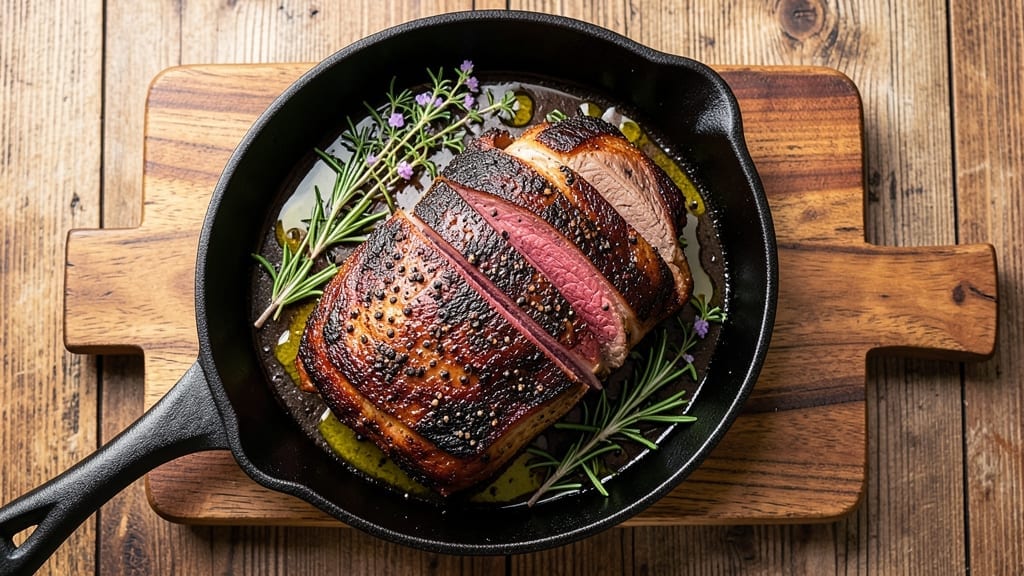
This 4 lb bone-in ribeye roast recipe reveals how to unlock restaurant-quality flavor—juicy pink beef, rich marrow, and all the tenderness you crave. The bone-in cut infuses the meat with deep, savory notes as it roasts, creating a crust that’s impossible to resist.
This recipe focuses on precision timing and proper resting to ensure every slice is perfect—whether you’re serving a holiday table or a special family dinner.
The secret to success lies in the sear and slow roast method, which builds a flavorful crust while keeping the interior tender. A simple dry brine enhances the natural beef flavors without overwhelming them, while high-heat searing locks in juices.
The bone acts as a built-in thermometer, signaling when the meat is ready—no guesswork required.
What you’ll achieve is a roast with a crusty seared crust and a juicy pink core, served at the ideal doneness for your table. The bone adds depth to the flavor profile, making this more than just a roast—it’s an experience.
Pair it with classic sides like roasted garlic mashed potatoes or a bold red wine reduction for the full effect.
This method works equally well for special occasions or weeknight dinners, adjusting only the resting time to fit your schedule. The bone-in cut ensures every bite is packed with flavor, while the precise cooking technique guarantees a perfect result every time.
Let’s get started on creating your most impressive roast yet.
Ingredients for 4 lb bone in ribeye roast
Six ingredients transform a simple roast into restaurant-quality beef with deep flavor and perfect doneness.
| Ingredient | Amount | Notes |
|---|---|---|
| Bone-In Ribeye Roast 🥩 | 4 lb | Center-cut, 1-1.5 inches thick |
| Kosher Salt 🧂 | 1 ½ tbsp | Diamond Crystal preferred |
| Freshly Ground Black Pepper 🌶️ | 1 tbsp | Coarse grind for texture |
| Extra-Virgin Olive Oil 🫒 | 2 tbsp | High smoke point preferred |
| Fresh Rosemary 🌿 | 2 sprigs | Thin stems removed |
| Fresh Thyme 🌿 | 4 sprigs | Leaves stripped from stems |
| Garlic Cloves 🧄 | 4 cloves | Smashed, skin-on |
| Yellow Onion 🧅 | 1 whole | Cut into 1-inch chunks |
| Beef Tallow or Duck Fat 🧈 | 2 tbsp | For high-heat searing |
| Red Wine 🍷 | ½ cup | Bold, dry variety (Cabernet) |
| Beef Bone Broth 💧 | 1 cup | Homemade or high-quality store |
| Unsalted Butter 🧈 | 2 tbsp | Cold, cubed for basting |
| Fresh Parsley 🌿 | ¼ cup | Chopped, for garnish |
The ribeye roast is non-negotiable here—center-cut with a thick cap of fat ensures juiciness. Local butchers or high-end grocery stores like Whole Foods or Wegmans carry the best cuts. Look for a roast with good marbling and a bright red color. If buying online, Snake River Farms or Crowd Cow deliver premium cuts. The bone should be intact and centered—this acts as your built-in thermometer. For a 4 lb roast, aim for 1-1.5 inches thick to ensure even cooking.
No kosher salt? Diamond Crystal kosher salt is ideal, but Morton coarse salt at 1.5 times the amount works. Fresh herbs are best, but dried rosemary and thyme at one-third the amount will suffice. Running out of red wine? Beef broth with a splash of balsamic mimics the depth. The tallow or duck fat can be swapped for extra-virgin olive oil if needed—just watch the smoke point. For the garlic, roast it whole with the roast for extra flavor, then squeeze out the cloves before serving. The onion adds sweetness as it caramelizes during roasting.
The roast develops best when rested 15-20 minutes before slicing. Store leftovers in an airtight container for 3-4 days in the fridge, or freeze for up to 3 months. For reheating, use a skillet with a splash of beef broth to revive the juices. The bone can be saved for bone broth—simmer it with veggie scraps for a rich, flavorful stock. Garnish with fresh parsley just before serving to keep it vibrant.
Why You’ll Love This Recipe
- Minimal Prep Required: I swear this takes less time than deciding what to watch on Netflix. Just a quick rub of olive oil, salt, pepper, and rosemary—no fancy marinades or chopping. The bone-in ribeye does all the work while you sip your drink.
- Crispy, Juicy Magic: That rosemary-infused crust? Chef’s kiss. The bone keeps the meat insanely tender, but the edges get this perfect caramelized crunch—like biting into a steakhouse slice without the hassle.
- Weeknight Hero: Between us, this is my go-to when I’m too tired to think. Toss it in the oven, and by the time you’re done with emails, you’ve got a showstopper dinner. (Yes, even on a Tuesday night.)
- Leftovers That Don’t Suck: Sliced thin, this roast turns into the best sandwiches or fries the next day. Honestly, I make it bigger than I need just for the leftovers—because reheated ribeye? Still a win.
Step-by-step instructions for 4 lb bone-in ribeye roast
This method delivers a perfectly seared crust with a juicy pink center every time.
Prep and Season the Ribeye Roast
Pat the 4 lb bone-in ribeye roast dry with paper towels—this is critical for that crispy crust. Remove any silver skin or excess fat from the surface, leaving just a thin layer for flavor. In a small bowl, combine the 1.5 tbsp kosher salt and 1 tbsp freshly ground black pepper, then rub this mixture all over the roast, including the cavity if your cut has one. The salt needs time to penetrate, so let the seasoned roast sit at room temperature for 30 minutes while you prepare the aromatics.
While waiting, strip the leaves from the 4 sprigs fresh thyme and remove the thin stems from the 2 sprigs fresh rosemary. Slice the 1 whole yellow onion into 1-inch chunks and smash the 4 garlic cloves skin-on with the flat side of your knife. These aromatics will form the flavor base for your roast. The room temperature prep ensures even cooking throughout the thick cut.
Build the Flavor Base in the Pan
Heat a large Dutch oven or heavy oven-safe skillet over medium-high heat. Add the 2 tbsp beef tallow or duck fat and let it melt completely. Add the onion chunks and cook for 5 minutes until they begin to soften and release their juices. Add the smashed garlic cloves and cook for another 30 seconds until fragrant but not browned—burnt garlic will make the dish bitter.
Add the thyme leaves and rosemary sprigs, stirring for 1 minute until the herbs release their oils. Remove the pan from heat and carefully pour in the 0.5 cup red wine, scraping up any browned bits from the bottom. Return to medium heat and simmer for 3 minutes until the wine reduces by half. This aromatic base will infuse the meat during roasting.
Sear the Roast for Maximum Crust Development
Increase heat to high and add the 2 tbsp extra-virgin olive oil to the pan. Place the seasoned roast fat-side down and sear for 4 minutes without moving it—this creates the foundation for your crust. Flip the roast and sear the other side for another 4 minutes. The goal is to develop a deep brown crust while keeping the interior pink and tender.
Transfer the roast to a plate and tent loosely with foil. Return the pan to medium heat and add the 1 cup beef bone broth, scraping up any browned bits. Let this reduce by half, about 5 minutes, then remove from heat. This rich pan sauce will later baste the roast for extra moisture and flavor.
Roast to Perfect Doneness
Preheat your oven to 325°F. Place the seared roast back in the Dutch oven or skillet with the reduced bone broth. Cover tightly with a lid or foil and transfer to the oven. Roast for 2 hours and 15 minutes, or until the internal temperature reaches 125°F when measured in the thickest part of the meat. This medium-rare temperature ensures a juicy pink center while developing a tender texture.
For the final 10 minutes, increase the oven temperature to 425°F and remove the lid. This broiling step creates a beautiful crust while keeping the interior moist. The roast is done when it reaches 125°F internally—any hotter and you risk drying out the meat.
Rest and Serve with Pan Sauce
Transfer the roast to a cutting board and tent loosely with foil. Let it rest for 20 minutes—the most important step for juicy slices. While resting, place the Dutch oven or skillet back on the stove over medium heat. Add the 2 tbsp cold unsalted butter and let it melt, then whisk in the reduced pan sauce until smooth and glossy.
Slice the roast against the grain into ½-inch thick slices. Serve immediately with the pan sauce spooned over the top and garnished with the 0.25 cup chopped fresh parsley. Each slice should reveal a beautiful pink center with a crispy exterior—proof of perfect execution. The resting period ensures every bite stays juicy and flavorful.
Pro Tips For Making 4 Lb Bone In Ribeye Roast
- SEAR HARD AND FAST: Get that pan screaming hot—like, cast-iron-on-the-stove-for-5-minutes hot—before adding the roast. I used to hover over it like a nervous parent, but the crust only forms when the oil is so hot it shimmers like a mirage. A quick 2-3 minute sear on each side locks in flavor better than anything else.
- SALT THE NIGHT BEFORE: Toss the roast with salt 12-24 hours ahead and leave it uncovered in the fridge. This isn’t just “seasoning”—it’s a dry brine that works magic with bone-in beef, keeping it juicy and letting the salt penetrate deep. (Yes, even if you’re the type who forgets to plan ahead—just do it the night before dinner.)
- SKIP THE CROWDED PAN: Resist the urge to add onions or garlic to the sear—this roast doesn’t need sidekicks. A crowded pan steams instead of browns, and you’ll end up with soggy rosemary instead of crisp, fragrant crust. Save the aromatics for later; focus on the beef.
- CHECK TEMP WITH BONE: Use an instant-read thermometer in the thickest part of the meat, away from bone—but don’t stop there. Bone-in cuts run hotter, so pull it at 120°F for medium-rare (it’ll hit 125°F while resting). I learned this the hard way after serving a guest a “medium” roast that was actually well-done.
Regional styles of these flavors
Texas Style
In Texas, ribeye roasts are often cooked low and slow with a focus on tenderizing the meat through long cooking times.
I recommend using chuck roast instead of ribeye for this style, but if you’re committed to ribeye, add a 1-hour dry brine with 2 tbsp smoked paprika and 1 tbsp brown sugar to enhance the crust.
Texans often serve this with red-eye gravy—made by deglazing the pan with coffee and beef broth after roasting. The bold flavors complement the rich beef perfectly. 🔥
French Classic
The French approach emphasizes a high-heat sear followed by a gentle oven finish. For a French-style ribeye roast, sear the meat in duck fat> (traditionally used) until deeply browned, then roast at 275°F> with a sprig of fresh tarragon> and a bay leaf.
Finish with a red wine reduction>—simmer 1 cup red wine>, 2 tbsp shallots>, and 1 tbsp cold butter> until syrupy. This method highlights the beef’s natural richness with elegant simplicity. ✨
Argentinian Asado
Argentinian asado> traditions bring bold flavors to roasted beef. For an authentic touch, marinate the ribeye in 1/4 cup soy sauce>, 2 tbsp olive oil>, 1 tbsp crushed oregano>, and 1 tsp red pepper flakes> for 4 hours>.
Grill the roast over charcoal> for 20 minutes per side> before transferring to the oven. Serve with chimichurri>—a mix of 1 cup parsley>, 3 garlic cloves>, 2 tbsp red wine vinegar>, and 1/2 cup olive oil>.
The smoky, herby sauce cuts through the richness beautifully. 🌶️
Italian Bistecca
In Italy, ribeye roasts are often prepared with a focus on simplicity and high-quality ingredients. For a bistecca-style> roast, season the meat with coarse sea salt>, freshly cracked black pepper>, and a pinch of fresh rosemary>.
Sear in extra-virgin olive oil> until deeply browned, then roast at 300°F> until medium-rare. Serve with a side of creamy polenta> and a drizzle of aged balsamic glaze>. The Italian method highlights the beef’s natural flavor without overwhelming it. 💛
American Holiday Style
For holiday gatherings, Americans often take a more decadent approach. Add 1/2 cup beef bone broth> to the roasting pan and top the meat with 4 slices of prosciutto> and 2 sprigs of fresh sage> before roasting.
This creates a flavorful crust while keeping the interior juicy. Serve with garlic mashed potatoes> and a red wine reduction> made from the roasting juices. The combination is hearty and perfect for sharing. 🎄
Nutrition facts
Frequently asked questions
How do I know when my 4 lb bone-in ribeye roast is perfectly cooked?
Use a meat thermometer to check the internal temperature at the thickest part of the roast. For medium-rare (juicy pink center), aim for 125°F—this is the ideal doneness for this cut. The bone acts as a natural insulator, so the meat will continue cooking slightly even after removing it from the oven. Never rely on time alone, as oven temperatures can vary.
Can I cook this roast without a Dutch oven?
Use a heavy oven-safe skillet or even a roasting pan. The key is to ensure your pan can handle high heat for searing and has a lid to trap moisture during roasting. If using a regular pan, cover it tightly with foil to mimic the Dutch oven’s effect. A cast-iron skillet works beautifully for both searing and roasting.
What’s the best way to slice a bone-in ribeye roast?
Slice against the grain for maximum tenderness. Start by removing the bone carefully, then cut the meat into ½-inch thick slices. Use a sharp carving knife and work slowly to avoid tearing the fibers. For easier slicing, let the roast rest for 15-20 minutes after cooking—this helps the juices redistribute and makes clean cuts possible.
How far in advance can I prepare the seasoning and aromatics?
You can prep all the aromatics (onion, garlic, herbs) and measure the seasoning up to 24 hours ahead. Store them in the fridge in airtight containers. For the roast itself, season it no more than 4 hours before cooking to prevent over-salting. The red wine and bone broth should be added fresh just before roasting for maximum flavor.
What if my oven runs hot or cold? How do I adjust the cooking time?
If your oven runs hot, reduce the temperature by 25°F (e.g., cook at 300°F instead of 325°F) and check the temperature 15 minutes early. For cold ovens, increase by 25°F and monitor closely. Always use an oven thermometer to verify your oven’s actual temperature—most home ovens are inaccurate. The bone-in cut gives you extra leeway since it cooks more slowly.

- 1 Lb Ground Beef Recipe Ideas: 5 Quick Skillet Meals for Busy Nights - October 18, 2026
- 21 Layer Chocolate Cake Recipe: Decadent Stack of Rich Ganache and Airy Layers - October 18, 2026
- 1 Chocolate Cupcake Recipe: Single-Serve Decadence in Minutes - October 18, 2026