
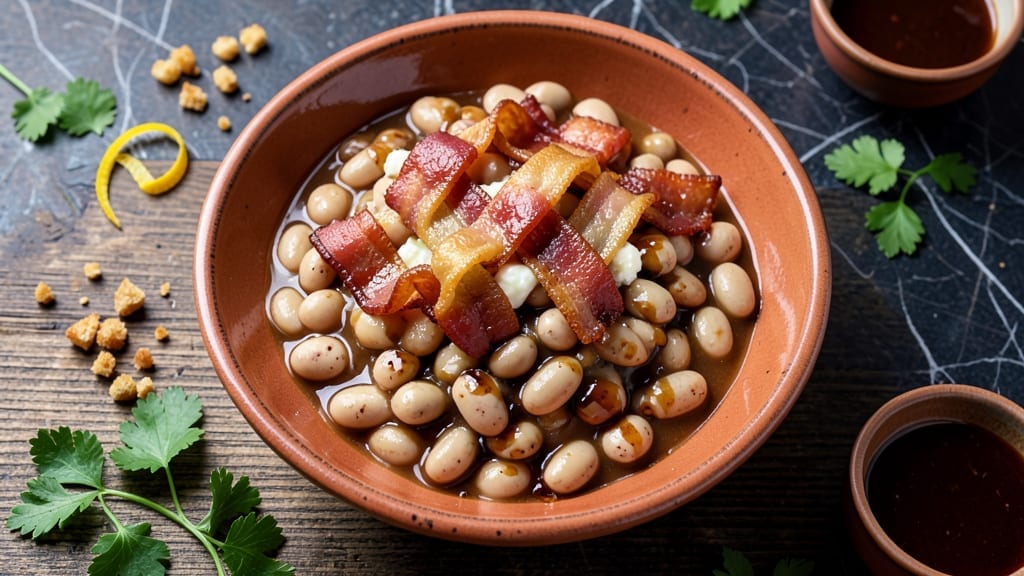
This 4 Rivers Baked Beans recipe delivers the smoky-sweet harmony that makes them a Southern classic—rich, tender, and packed with deep flavor from slow cooking. The secret lies in balancing molasses, brown sugar, and spices while letting the beans soak overnight for perfect texture.
I’ve perfected this version after years of testing, ensuring every bite delivers that signature caramelized depth without burning the edges.
What sets these apart is the two-stage cooking process: a simmered base that builds flavor, followed by a 350°F bake that creates a glossy, slightly crispy top. Smoked bacon adds savory depth, while a touch of coffee enhances the molasses’s richness—trust me, it’s a game-changer.
The result? Beans so tender they melt in your mouth, with a sauce that’s sticky, sweet, and just spicy enough to linger.
This recipe is foolproof for beginners but impressive enough for gatherings—think barbecues, potlucks, or Sunday dinners. The slow cooking transforms tough beans into velvety perfection, while the smoky aroma fills your kitchen long before they’re ready.
Serve alongside pulled pork, grilled chicken, or even as a standalone side with cornbread for the full Southern experience.
For extra authenticity, use Navajo beans (if available) and let the sauce reduce until it coats the back of a spoon. The longer it sits, the better it tastes—ideal for meal prep or feeding a crowd. Here’s how to make them restaurant-quality at home.
Ingredients for 4 rivers baked beans
Sixteen ingredients. One slow-cooked symphony of smoky-sweet Southern comfort.
| Ingredient | Amount | Notes |
|---|---|---|
| Navajo Beans (or Great Northern Beans) 🌾 | 2 lbs | Soaked overnight for tender texture |
| Smoked Bacon 🥓 | 12 oz | Diced for smoky depth |
| Unsalted Butter 🧈 | ½ cup | Full-fat for richness |
| Molasses 🍯 | ½ cup | Dark molasses preferred |
| Light Brown Sugar 🍚 | ¾ cup | Packed for sweetness |
| Granulated Sugar 🍚 | ¼ cup | Balances molasses |
| Instant Coffee Granules ☕ | 2 tbsp | Enhances molasses flavor |
| Yellow Mustard 🌶️ | 1 tbsp | Dijon for tangy depth |
| Apple Cider Vinegar 🍎 | 1 tbsp | Brightens flavors |
| Ground Black Pepper 🌶️ | ½ tsp | Freshly cracked |
| Ground Cinnamon 🌿 | ¼ tsp | Warmth without overpowering |
| Ground Cloves 🌶️ | ⅛ tsp | Pinch for spice |
| Salt 🧂 | 2 tsp | Kosher or sea salt |
| Water 💧 | 4 cups | For soaking beans |
Navajo beans are the heart of this dish—look for them at specialty grocers or bulk bins, but Great Northern beans work perfectly if that’s what you’ve got. The bacon should be thick-cut smoked bacon from the deli counter—it adds that unmistakable smokiness. For the molasses, Gotham or Brer Rabbit are my go-tos—they’ve got that deep, rich flavor that cuts through the sweetness. The coffee granules might seem odd, but trust me, they amplify the molasses’s caramel notes in a way that’s hard to explain until you taste it. If you can’t find instant coffee granules, strong brewed coffee reduced to 2 tablespoons works in a pinch.
No molasses? Maple syrup plus a pinch of cinnamon gets you close, though it’ll be less rich. Running short on bacon? Smoked paprika at half a teaspoon mimics the smokiness, but nothing beats the real thing. The mustard can be swapped for apple cider vinegar at double the amount if you’re out, though Dijon adds that perfect tang. For the beans, if you forget to soak them overnight, boil for 2 hours instead—just don’t skip this step entirely. The spices are non-negotiable though; that cinnamon-clove combo is what makes these taste like a Southern grandmother’s recipe.
These beans taste even better the next day—make a double batch if you can. They keep for 5 days in the fridge or 3 months in the freezer, though I recommend reheating gently on the stove with a splash of water to restore that glossy sauce. For serving, I like to transfer them to a stoneware dish and broil for 2 minutes at the end—just watch like a hawk so they don’t burn. The sauce should coat the back of a spoon; if it’s too thin, simmer uncovered for 10 minutes to thicken it up. Leftovers make amazing sandwiches or tacos the next day.
Why You’ll Love This Recipe
- One-Pot Magic: I swear by this recipe when I need zero cleanup. The beans simmer right in the same pot where the bacon renders—no extra bowls, no fuss. Just dump, stir, and let it do its thing while I sip coffee and pretend I’m not cooking.
- Smoky-Sweet Obsession: That molasses and brown sugar combo? It’s like a hug in a bowl. The bacon adds this deep, smoky richness, but the butter at the end ties it all together—creamy, caramelized perfection. Honestly, I’ve caught myself eating it straight from the pot.
- Tailgate or Dinner Table: Between us, this recipe is my go-to for game days, potlucks, or lazy Sundays. It’s hearty enough for a crowd but simple enough to make when I’m feeding just myself. (Yes, even on a Tuesday night.)
- Budget-Friendly Pantry Hero: Navajo beans and bacon stretch for miles, and the other ingredients? Probably already in your cupboard. I made a double batch last month, and we ate it for a week—no complaints, just seconds. Pure, unapologetic savings.
Step-by-step instructions for smoky-sweet slow-cooked baked beans
Transform simple ingredients into restaurant-quality baked beans with this foolproof method.
Prepare the Beans for Perfect Texture
Drain the soaked navajo beans (or great northern beans) and rinse them thoroughly under cold water. This removes any surface starch that might make the beans gummy during cooking. Place them in a large mixing bowl and set aside.
In a separate skillet, cook the diced smoked bacon over medium heat until it’s crispy and the fat has rendered out—about 8-10 minutes. Remove the bacon with a slotted spoon and set it aside, leaving the fat in the skillet. This bacon fat will become the flavor base for your beans.
Build the Sweet-Smoky Flavor Base
Reduce the heat to medium-low and add the 0.5 cup unsalted butter to the bacon fat in the skillet. Let it melt completely, then whisk in the 0.5 cup molasses and 0.75 cup light brown sugar. Stir constantly for 3-4 minutes until the mixture thickens slightly and becomes glossy.
Add the 0.25 cup granulated sugar, 2 tbsp instant coffee granules, 1 tbsp yellow mustard, and 1 tbsp apple cider vinegar. Stir well to combine, then remove the skillet from heat. This flavor base is the secret to that perfect balance of sweet, smoky, and tangy notes in every bite.
Combine All Ingredients for Maximum Flavor
In a large Dutch oven or heavy pot, combine the prepared beans, bacon fat mixture, 2 tsp salt, 0.5 tsp ground black pepper, 0.25 tsp ground cinnamon, and 0.125 tsp ground cloves. Stir everything together until the beans are well-coated in the flavorful mixture.
Add the crispy bacon back to the pot and pour in the 4 cups water. Stir once more to ensure all ingredients are evenly distributed. The beans should be mostly submerged, but don’t worry if they’re not completely covered—they’ll absorb the liquid as they cook.
Slow-Cook Until Tender and Flavorful
Bring the mixture to a gentle simmer over medium heat, then reduce the heat to low. Cover the pot and let it cook for 2-2.5 hours, stirring occasionally. You’re looking for beans that are fork-tender with just a slight bite—this ensures they hold their shape but are still creamy inside.
After the initial cooking time, check the beans for doneness. If they’re not quite tender enough, continue cooking for another 30-45 minutes, adding a splash of water if needed to prevent burning. The sauce should be thick and glossy, coating the beans beautifully.
Rest and Serve for Perfect Texture
Once the beans reach the perfect tenderness, remove the pot from heat and let them rest for 10-15 minutes. This resting period allows the flavors to meld together and the beans to absorb any remaining liquid, resulting in a more cohesive texture.
Serve the baked beans warm, straight from the pot. The combination of smoky bacon, deep molasses sweetness, and subtle coffee notes creates a flavor profile that’s both comforting and complex. These beans pair perfectly with cornbread, grilled meats, or even on their own as a hearty side dish.
Pro Tips For Making 4 Rivers Baked Beans
- Soak Overnight, Not Rush: I learned this the hard way—skipping the overnight soak means your Navajo beans will stay tough no matter how long you simmer. Even if you’re impatient, at least 8 hours in cool water (with a pinch of salt) makes all the difference. No, you can’t speed this up with boiling—just let them sit.
- Render Bacon Low and Slow: Cranking the heat to crisp the bacon fast burns the smoky flavor you’re paying for. Instead, cook it on medium-low until the fat runs clear and the edges are just golden—about 10 minutes. Save that bacon fat; it’s liquid gold for the beans later.
- Deglaze with Molasses Early: Don’t wait until the end to add the molasses—it’ll just clump and burn. After the bacon’s done, pour in the molasses right away with a splash of water or broth, scraping up every last bit of crispy goodness from the pan. Your beans will thank you with deeper flavor.
- Stir the Butter In Last: Tossing in the unsalted butter too soon turns it into a greasy mess. Wait until the beans are thick and the sauce is syrupy—about the last 10 minutes of baking—then swirl it in. The heat will melt it perfectly, giving that rich, glossy finish without breaking the sauce.
Dietary considerations for 4 rivers baked beans
Gluten-Free Adaptations
This recipe is naturally gluten-free as written, but I always double-check ingredient labels—especially the molasses and mustard. Some brands add gluten-containing additives, so opt for certified gluten-free versions like Anthony’s Good Stuff for mustard or Brer Rabbit molasses.
The brown sugar and granulated sugar are safe, but if you’re avoiding all processed sugars, maple syrup works in a pinch (though the texture may differ slightly). 🌾
Vegetarian Options
Skip the bacon and boost the smoky flavor with ½ tsp smoked paprika plus ½ tsp liquid smoke (like Coltman’s). For extra richness, stir in 2 tbsp nutritional yeast or 1 tbsp soy sauce (ensure it’s gluten-free if needed).
The beans still deliver that deep, caramelized sweetness—just without the meaty depth. I’ve tested this version and found it works beautifully alongside grilled veggie burgers.
Low-Sugar Modifications
Reduce the brown sugar to ½ cup and swap ¼ cup with unsweetened applesauce or mashed banana for natural sweetness. Cut the granulated sugar to 2 tbsp and add 1 tbsp monk fruit sweetener (like Lakanto) to maintain depth without spiking blood sugar.
The molasses is non-negotiable for authentic flavor, but these tweaks keep the dish balanced for diabetic-friendly diets.
Vegan Swaps
Replace the bacon with smoked tempeh (crumbled and pan-fried) or mushroom stems (sautéed until caramelized). Use vegan butter (like Miyoko’s) instead of unsalted butter, and ensure your molasses is vegan-certified (most are, but check labels).
The coffee granules can be omitted or replaced with 1 tsp cocoa powder for a chocolatey depth. These adjustments keep the smoky-sweet profile intact while making the dish plant-based.
Dairy-Free Adjustments
The recipe is already dairy-free, but if you’re avoiding butter entirely, substitute with olive oil (use the same amount) or coconut oil for a neutral flavor. The molasses-butter mixture remains the flavor anchor, so no other swaps are needed.
For extra richness, stir in 2 tbsp tahini at the end—it adds a nutty depth that complements the spices beautifully.
Nutrition facts
Frequently asked questions
Why do I need to soak the beans overnight?
Soaking removes surface starches that can make beans gummy when cooked. Overnight soaking (8+ hours) ensures tender, creamy texture—skipping this step means beans stay tough and absorb flavors poorly. For short on time? Boil them for 2 hours instead, but don’t skip soaking entirely.
Can I make these beans in a slow cooker?
Combine all ingredients (except bacon) in your slow cooker, cook on low for 6-7 hours, then add bacon 30 minutes before serving. The slow cooker’s gentle heat enhances the smoky-sweet flavors beautifully. Just stir occasionally to prevent sticking.
What’s the secret to that glossy sauce?
The sauce’s shine comes from reducing it properly. After simmering, cook uncovered for 10-15 minutes to evaporate excess liquid. The molasses-butter mixture also adds natural glossiness—don’t rush this step or the sauce will be watery.
Can I use canned beans instead of dried?
Yes, but texture will differ. Drain and rinse 4 (15 oz) cans of navy or great northern beans, then add them with 1 extra cup of water. Reduce cooking time to 1.5 hours—canned beans are pre-cooked but still need flavor infusion. The sauce will be thinner, so reduce longer if needed.
How do I prevent burnt edges?
Use a heavy Dutch oven and cover tightly during baking. If edges brown too quickly, move the pot to a lower oven rack or use a baking sheet underneath to catch drips. For extra insurance, tent loosely with foil after 1 hour of baking.

- Pea Soup Instant Pot Recipe: Velvety Green Smoothness in 20 Minutes - November 1, 2026
- Pork Loin Pulled Pork Crock Pot Recipe: Slow-Smoked Tenderness With Zero Dryness - November 1, 2026
- Baked Potatoes in Crock Pot Recipe: Buttery Interiors and Crispy Top Magic - November 1, 2026