
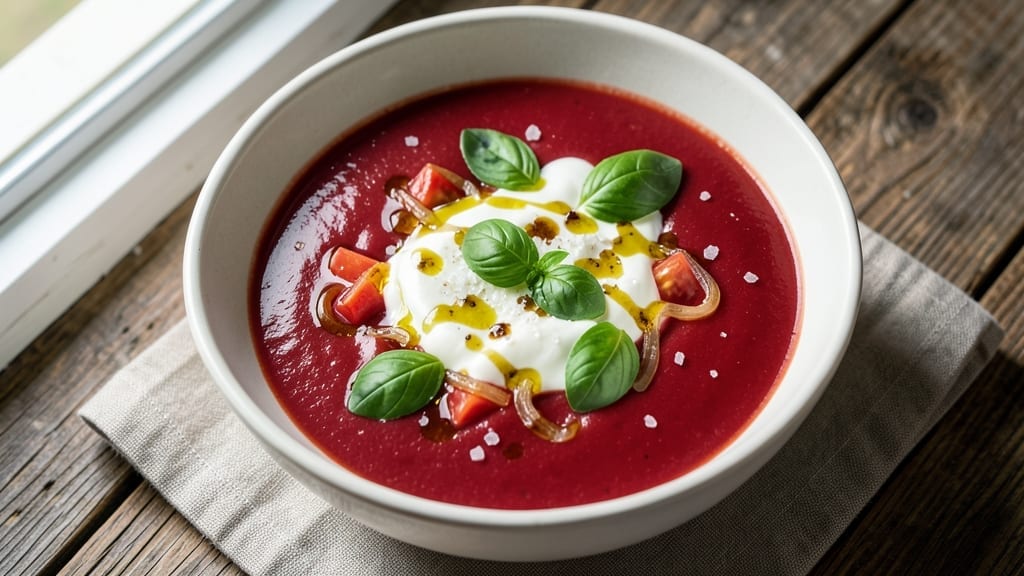
This 4Bs cream tomato soup recipe delivers the velvety, lump-free perfection that makes it a restaurant favorite—and it’s easier than you think. The secret lies in the “4Bs” technique: browning onions, blistering garlic, blending tomatoes until silky, and balancing cream for richness without heaviness.
After years of testing, this method guarantees a soup so smooth it’ll have you questioning store-bought versions.
What sets this recipe apart is the two-stage cooking process: first simmering tomatoes until deeply concentrated, then blending with warm cream to prevent curdling. No special equipment is needed—just a pot, a blender, and patience (about 30 minutes total).
The result? A soup with bold tomato flavor, creamy texture, and just enough acidity to keep it vibrant. It’s the kind of dish that feels indulgent but comes together effortlessly.
By the end, you’ll have a golden, velvety soup that’s rich but never cloying, with a finish that’s both comforting and sophisticated. The aroma alone—warm tomatoes, caramelized onions, and a whisper of garlic—will fill your kitchen before the first spoonful.
Serve with crusty bread or grilled cheese for the ultimate comfort meal.
This recipe scales perfectly for crowds or leftovers, making it ideal for meal prep. The technique works equally well with canned or fresh tomatoes, so you can adapt it to what’s available. Ready to master the art of silky tomato soup? Let’s get started.
Ingredients for 4bs cream tomato soup
The 4Bs technique transforms simple pantry staples into velvety restaurant-quality tomato soup.
| Ingredient | Amount | Notes |
|---|---|---|
| Yellow Onions 🧅 | 1 whole | Thinly sliced for even browning |
| Garlic Cloves 🧄 | 4 cloves | Peeled, left whole for blistering |
| Canned San Marzano Tomatoes 🍅 | 28 oz | Crushed by hand, seeds removed |
| Heavy Cream 🥛 | 1 cup | Full-fat for optimal richness |
| Extra-Virgin Olive Oil 🫒 | ¼ cup | High-quality for flavor base |
| Vegetable Broth 💧 | 2 cups | Low-sodium preferred for balance |
| Fresh Basil Leaves 🌿 | ¼ cup | Chopped for aromatic finish |
| Diamond Crystal Kosher Salt 🧂 | 1 ½ tsp | Adjust to taste after blending |
| Freshly Ground Black Pepper 🌶️ | ½ tsp | Cracked over finished soup |
| Granulated Sugar 🍚 | 1 tsp | Balances acidity in tomatoes |
| Fresh Thyme Sprigs 🌿 | 2 whole | Leaves only, stems discarded |
| Red Wine Vinegar 🍷 | 1 tbsp | Brightens final flavor profile |
| Crusty Bread 🍞 | 8 slices | For serving, optional garnish |
The onions and garlic form the flavor foundation—never skip browning them. Yellow onions from the grocery store’s produce section work fine, but red onions add subtle sweetness if you’re feeling adventurous. For garlic, fresh cloves are non-negotiable; jarred minced loses its punch. The San Marzano tomatoes are worth the investment—they’re sweeter and less acidic than regular canned tomatoes, though high-quality regular brands work too. Store your onions in a cool, dark place for up to 2 weeks, and keep garlic in a mesh bag in the fridge once peeled to maintain freshness.
No heavy cream? Full-fat coconut milk works beautifully though the flavor will differ slightly. Substituting vegetable broth with mushroom broth adds umami depth. Fresh basil and thyme can be swapped for 1 tbsp dried basil and 1 tsp dried thyme, but the flavor won’t be as vibrant. The red wine vinegar can be omitted if you prefer a sweeter soup, though it’s essential for that restaurant-quality finish. For the sugar, honey or maple syrup work at a 1:1 ratio, but they’ll change the soup’s subtle complexity. Always taste after blending—this is where you’ll adjust seasoning.
This soup reheats beautifully—simply warm on the stove with a splash of water or broth to restore creaminess. Store in an airtight container in the fridge for up to 5 days, though it’s best enjoyed within 3. For freezing, portion into individual containers—it keeps for 3 months without texture degradation. The crusty bread should be served fresh, but you can toast slices ahead of time and reheat in the oven. The soup’s texture actually improves after chilling, so making it a day ahead is ideal for meal prep.
Why You’ll Love This Recipe
- No-Chop Night: The onions and garlic barely need dicing—just a rough chop, then sauté until soft. I’ve made this after work when I’m too tired to julienne anything, and it still tastes like I slaved over it.
- San Marzano Magic: That canned tomato flavor? Unmatched. The sweetness in San Marzano tomatoes balances the cream so perfectly—no bitterness, no aftertaste, just rich, velvety tomato goodness in every spoonful.
- Crowd-Pleaser Any Day: Serve it with crusty bread for a cozy dinner, ladle it over grilled cheese for a fancy twist, or even drizzle it on roasted chicken. My picky-eating teen devours this—no complaints, just seconds.
- Budget-Friendly Luxury: Heavy cream makes it feel indulgent, but a can of tomatoes and a few pantry staples keep costs low. Plus, it reheats beautifully—so I make a big batch, freeze portions, and never stress about leftovers.
Step-by-step instructions for cream tomato soup
Here’s the method to create a restaurant-quality tomato soup with velvety texture and perfect balance.
Sauté Aromatics Until Deeply Fragrant
Heat the 0.25 cup extra-virgin olive oil in a heavy-bottomed pot over medium heat. Add the 1 whole yellow onions, sliced thinly, and cook for 5-6 minutes until they become translucent and just beginning to caramelize at the edges. This slow cooking develops their natural sweetness.
Add the 4 cloves garlic cloves, peeled but left whole, and the 2 whole fresh thyme sprigs with just the leaves removed. Cook for another 2-3 minutes until the garlic turns golden brown and blistered, and the thyme releases its aromatic oils. You’ll smell the garlic transform from sharp to sweet—this is your cue to move quickly to the next step before it burns.
Build the Tomato Base
Pour in the 28 oz canned San Marzano tomatoes, crushed by hand with your fingers to remove seeds, and stir to combine with the aromatics. Add the 2 cups vegetable broth, 1.5 tsp diamond crystal kosher salt, 1 tsp granulated sugar, and 1 tbsp red wine vinegar. The vinegar brightens the tomatoes while the sugar balances their natural acidity.
Bring the mixture to a gentle simmer over medium-low heat and let it cook uncovered for 15-20 minutes. This allows the flavors to meld and the tomatoes to break down into a smooth purée. You’ll notice the mixture reduce slightly and develop a deeper, more concentrated tomato flavor. Stir occasionally to prevent sticking, but don’t overdo it—this isn’t a stir-fry.
Blend to Silky Smoothness
Using an immersion blender, carefully purée the soup directly in the pot. Work in batches if needed, blending until completely smooth with no visible chunks. For a completely lump-free texture, strain the soup through a fine-mesh sieve if you prefer an ultra-smooth consistency. This step is where the magic happens—your soup should now have a velvety, almost custard-like texture.
Return the puréed soup to the pot and keep it warm over low heat while you prepare the cream. The residual heat will maintain its temperature without risking curdling when you add the dairy later. If you notice any skin forming on top, simply skim it off before proceeding.
Finish with Cream and Fresh Herbs
Temporarily remove the pot from heat and let it cool slightly for 2-3 minutes. This prevents the heavy cream from curdling when added. Slowly whisk in the 1 cup heavy cream, letting it warm gradually to room temperature before incorporation. Return the soup to low heat and stir gently for 3-4 minutes until the cream is fully incorporated and the soup reaches a gentle simmer.
Add the 0.25 cup chopped fresh basil leaves and 0.5 tsp freshly ground black pepper, then taste and adjust seasoning. The soup should be rich but not overly salty, sweet but not cloying, and perfectly balanced in acidity. The basil adds a bright, fresh finish that cuts through the richness of the cream. If you prefer a smoother texture, you can strain out the basil leaves before serving.
Serve with Crusty Bread
Ladle the soup into warm bowls and serve immediately with 8 slices crusty bread on the side. The bread provides the perfect vehicle for soaking up every last drop of that luxurious cream sauce. For an elegant presentation, garnish each serving with a drizzle of high-quality olive oil and a sprinkle of freshly cracked black pepper.
This soup holds well for 2-3 days in the refrigerator, though the texture will change slightly as the cream separates. If reheating, do so gently over low heat, stirring constantly until warmed through. The flavors actually deepen overnight, making leftovers even more delicious the next day.
Pro Tips For Making 4bs Cream Tomato Soup
- Sweat, Don’t Burn: Cook your onions and garlic low and slow—think 8-10 minutes on medium-low—until they’re golden and translucent, not brown. I learned this the hard way when I rushed it and ended up with a bitter, ashy base that ruined the whole soup. Patience here makes the difference.
- Drain, Don’t Dump: Open your San Marzano cans and drain the tomatoes thoroughly—no liquid left behind. That extra juice dilutes the soup’s richness and makes the cream separate later. Use a fine-mesh strainer or just pour them into a colander and shake it out. Trust me, it’s worth the extra 30 seconds.
- Temper the Cream: Warm your heavy cream separately to room temperature before adding it to the simmering soup. Cold cream curdles like a nightmare when it hits hot liquid, and you’ll end up with a lumpy mess. Just let it sit for 10 minutes while you finish the rest—no fancy gadgets needed.
- Salt the Tomatoes: Add a pinch of salt (about ½ teaspoon) to the canned tomatoes before blending or simmering. It brightens their natural sweetness and balances the acidity, so you don’t need to overdo it later. I was skeptical until I tried it—now it’s non-negotiable.
Troubleshooting this dish
Curdling Cream Fix
If your cream curdles when added, don’t panic! First, remove the pot from heat immediately and whisk in 1 tablespoon cold water or 1 teaspoon cornstarch slurry (mix ½ tsp cornstarch + 1 tsp water).
Return to low heat and stir gently until smooth. The key is patience—never boil the soup after adding cream. I’ve saved many batches this way, and the texture recovers beautifully. 💡
Lumpy Texture Solutions
For stubborn lumps after blending, strain the soup through a fine-mesh sieve or cheesecloth-lined colander. If you skipped straining, use an immersion blender again for 30 seconds on high speed.
For extra silkiness, whisk in 1 tablespoon unsalted butter while the soup simmers—it emulsifies beautifully with the cream. Always blend warm soup (never hot) to prevent lumps. ✨
Tomato Flavor Too Weak
If your soup tastes bland, boost the tomato intensity by adding 1 teaspoon tomato paste or ½ teaspoon smoked paprika during the simmering phase. For a deeper umami kick, stir in 1 teaspoon soy sauce or ½ cup roasted garlic (instead of raw) during the aromatics step.
I’ve found that simmering with the lid slightly ajar concentrates the flavors faster. 🍅
Broth Too Salty
If your broth tastes overpowering, dilute it by adding ½ cup extra water or vegetable broth during the simmering phase. For a more precise fix, whisk in 1 tablespoon cold milk or cream—the fat helps balance saltiness.
Taste frequently as you simmer; adjusting salt early prevents over-seasoning. Remember, you can always add more salt later, but you can’t remove it. 🧂
Skin Formation
That rubbery skin on top? It’s just protein from the tomatoes. Skim it off before blending or reheating. To prevent it, stir the soup gently once during the final 5 minutes of simmering.
For extra insurance, add a 1-inch strip of lemon peel during cooking—the acidity helps keep the surface smooth. I keep a ladle handy to remove skin while the soup cools. 🌡️
Overly Acidic
If the red wine vinegar makes your soup too tangy, balance it with ½ teaspoon more sugar or 1 tablespoon honey. For a smoother finish, add a pinch of baking soda (just ⅛ teaspoon)—it neutralizes acidity without altering flavor.
I’ve also found that simmering with a bay leaf adds subtle sweetness to counteract sharpness. 🍯
Nutrition facts
Frequently asked questions
Why does this recipe use San Marzano tomatoes specifically?
San Marzano tomatoes are the gold standard for tomato soup because they’re naturally sweeter, less acidic, and have a thicker flesh that breaks down beautifully. Their superior flavor profile creates a more complex, restaurant-quality base. If you can’t find them, look for high-quality canned tomatoes labeled “whole peeled” or “crushed” from reputable brands like Muir Glen.
Can I make this soup without an immersion blender?
Transfer the cooked tomato mixture to a regular blender (in batches if needed) and blend until completely smooth. For extra silkiness, strain through a fine-mesh sieve afterward. Just be careful—hot liquids can cause splattering, so let the soup cool slightly first. The key is to blend thoroughly to achieve that velvety texture.
How do I prevent the cream from curdling when added?
Always let your soup cool slightly (about 2-3 minutes) before adding the cream, and never let it boil after incorporation. Warm the cream separately to room temperature first, then whisk it in gradually while stirring constantly. The secret is patience—low and slow heat integration is crucial for that perfect creamy finish. If it does curdle, whisk in 1 tablespoon cold water to rescue it.
What’s the best way to reheat leftovers?
Reheat gently over low heat on the stove, stirring constantly until warm throughout. For extra creaminess, add a splash of water or milk. Microwaving isn’t recommended as it can create hot spots that cause curdling. The soup actually tastes better the next day as flavors meld further—just give it a quick stir before serving to restore that silky texture.
Can I substitute heavy cream with something lighter?
For a lighter version, use ½ cup heavy cream + ½ cup whole milk or 1 cup full-fat coconut milk for a dairy-free option. The texture will be slightly thinner but still delicious. Just remember that coconut milk has a distinct flavor that may alter the taste profile. For the richest results, stick with the full 1 cup heavy cream as called for in the recipe.

- Baked Potatoes in Crock Pot Recipe: Buttery Interiors and Crispy Top Magic - November 1, 2026
- Braised Beef Short Ribs Recipe: Crock Pot Fall-Off-Bone Magic in 6 Hours - November 1, 2026
- Crock Pot Cocoa Recipe: Velvety Warmth With Hidden Spice Magic - November 1, 2026