
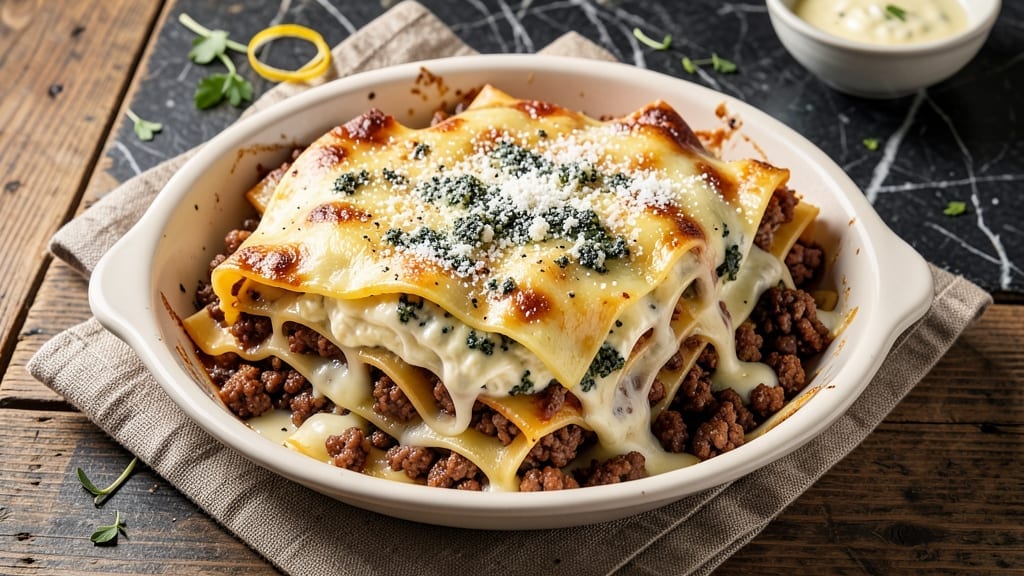
This 5 cheese lasagne recipe delivers the ultimate comfort food experience—rich, gooey layers of melted cheeses perfectly balanced with al dente noodles and tender meat. The secret lies in five distinct cheeses working together: creamy ricotta, sharp gorgonzola, nutty fontina, stretchy mozzarella, and aged parmesan.
After years of perfecting the technique, I’ve developed a method that ensures every bite has that signature lasagne texture—silky sauce, crispy top layer, and cheeses that melt into luxurious pockets.
The beauty of this recipe is its flexibility—whether you’re using traditional baked lasagne noodles or quick-cooking pre-cooked sheets, the layering technique remains the same. What sets this apart is the cheese blend, which creates depth of flavor without being overwhelming.
The gorgonzola adds a subtle tang, the fontina brings creamy richness, and the parmesan provides that unmistakable umami finish. Each layer is built with precision to prevent soggy noodles while maximizing melt potential.
By the time it emerges from the oven, you’ll have a lasagne with a golden, bubbling top crust that cracks slightly when cut, revealing layers of creamy cheese sauce and perfectly cooked noodles.
The aroma alone will have everyone gathering around the table, and the first bite delivers that perfect combination of textures and flavors. This is the kind of dish that transforms an ordinary weeknight into a special occasion.
Serve with a simple arugula salad and crusty garlic bread to complete the meal. The leftovers reheat beautifully, making this an excellent make-ahead dish for gatherings. Let’s create this restaurant-quality lasagne at home!
Ingredients for 5 cheese lasagne
Five cheeses, one perfect lasagne—these ingredients deliver restaurant-quality layers at home.
| Ingredient | Amount | Notes |
|---|---|---|
| Lasagne Noodles 🍝 | 12 pieces | Baked or pre-cooked sheets preferred |
| Ground Beef 🥩 | 1 ½ lb | 80% lean, finely ground |
| Ricotta Cheese 🧀 | 15 oz | Whole milk, drained well |
| Gorgonzola Cheese 🧀 | 4 oz | Crumbled, mild variety |
| Fontina Cheese 🧀 | 8 oz | Shredded, not pre-shredded |
| Mozzarella Cheese 🧀 | 12 oz | Low-moisture, shredded |
| Parmesan Cheese 🧀 | 1 cup | Freshly grated, aged |
| Onions 🧅 | 1 whole | Yellow, finely diced |
| Garlic Cloves 🧄 | 4 cloves | Fresh, minced |
| Large Eggs 🥚 | 2 whole | Room temperature |
| Tomato Sauce 🍅 | 2 ½ cups | High-quality jarred or homemade |
| Olive Oil 🫒 | 2 tbsp | Extra-virgin, for sautéing |
| Dried Basil 🌿 | 1 tbsp | Or 1/4 cup fresh |
| Salt 🧂 | 2 tsp | Diamond Crystal preferred |
| Black Pepper 🌶️ | ½ tsp | Freshly ground |
The cheese selection is non-negotiable for authentic flavor. Gorgonzola should be mild to avoid overpowering the dish—BelGioioso is my go-to brand, available at specialty stores or well-stocked supermarkets. For the ricotta, whole milk yields creamier layers than part-skim, and draining it for 15 minutes removes excess moisture. Fontina and mozzarella must be freshly shredded—pre-shredded contains anti-caking agents that prevent proper melting. The Parmesan? Parmigiano-Reggiano only—none of that granular store-brand stuff. For the beef, 80% lean ensures juiciness without excess fat. Buy it pre-ground at Costco or your butcher counter for the best quality.
No gorgonzola? Blue cheese crumbles work in a pinch, though the flavor profile differs slightly. Short on ricotta? Cottage cheese blended smooth substitutes at half the amount. The lasagne noodles can be traditional baked sheets or quick-cooking pre-cooked—just adjust baking time accordingly. For the tomato sauce, San Marzano tomatoes make all the difference if making from scratch, but quality jarred brands like Rao’s or Barilla are perfectly acceptable. The onions and garlic should be sautéed slowly to develop their sweetness—don’t rush this step. And if you’re using pre-cooked noodles, boil them just until al dente before assembling to prevent mushiness.
Assembled lasagne keeps 3-4 days in the fridge, fully covered to prevent drying. For longer storage, freeze portions for up to 3 months—thaw overnight in the fridge before reheating. The best method? Cover tightly with foil before refrigerating or freezing to lock in moisture. When reheating, low and slow at 350°F until bubbly—microwaving creates a rubbery texture. I always make a double batch—leftovers reheat even better as the flavors meld overnight. Portion into individual containers for easy grab-and-bake meals during the week.
Why You’ll Love This Recipe
- No-Bake Layers: Honestly, the ricotta and fontina blend is so thick and spreadable—no need to fuss with boiling noodles separately. Just layer, bake, and let the cheese do the work while you sip your wine (or coffee, no judgment).
- Cheese Overload: Between the creamy ricotta, tangy gorgonzola, and melty fontina, every bite has that perfect balance of rich and sharp. My picky eaters actually fight over seconds—proof it’s that good.
- Weeknight Hero: This feeds six but takes less than 45 minutes to assemble. I make it midweek, reheat portions all week, and still feel like I cooked a fancy meal. (Between us, my kids think it’s restaurant-quality.)
- Budget Stretch: Ground beef and store-brand cheeses keep costs down, but the flavor? Ridiculously indulgent. I’ve made this for game nights, potlucks, and even a lazy Sunday—always a hit without breaking the bank.
Step-by-step instructions for 5 cheese lasagne
Assemble this rich lasagne with precise layering and baking techniques for perfect al dente noodles and gooey melted cheeses.
Prepare the Ricotta Cheese Mixture
In a medium bowl, combine the 15 oz ricotta cheese, 2 whole large eggs, 1 cup freshly grated parmesan cheese, 4 oz crumbled gorgonzola cheese, 2 tsp salt, and 0.5 tsp black pepper. Mix thoroughly using a wooden spoon until fully incorporated and smooth. The ricotta should be well blended to prevent separation during baking.
I like to press the mixture through a fine-mesh sieve to remove any lumps, ensuring an ultra-smooth texture in each layer. Cover the bowl and refrigerate while you prepare the meat sauce. This chilled mixture will hold its shape better when layering, preventing runny spots in your lasagne.
Cook the Ground Beef and Sauté Aromatics
Heat the 2 tbsp olive oil in a large skillet over medium-high heat. Add the 1.5 lb finely ground beef and cook, breaking it apart with a wooden spoon, until it loses its raw color and begins to brown—about 5-7 minutes. Drain excess fat, leaving about 1 tbsp in the pan.
Add the 1 whole finely diced onion and 4 cloves minced garlic to the skillet. Cook for 3-4 minutes until the onions are translucent and the garlic is fragrant. Stir in the 2.5 cups tomato sauce and 1 tbsp dried basil, then reduce heat to medium-low and simmer for 10 minutes to develop the flavors. Season with additional salt and pepper if needed.
Assemble the Lasagne Layers
Preheat your oven to 375°F. In a 9×13-inch baking dish, spread 1 cup of the meat sauce on the bottom to prevent sticking. Place 4 of the 12 lasagne noodles (pre-cooked or baked as preferred) over the sauce, ensuring they cover the dish completely without overlapping.
Spread half of the ricotta cheese mixture evenly over the noodles, followed by 4 oz of the 8 oz fontina cheese and 6 oz of the 12 oz mozzarella cheese. Repeat the layering process with another 1 cup of meat sauce, 4 lasagne noodles, remaining ricotta mixture, and the remaining 4 oz fontina cheese and 6 oz mozzarella cheese. Finish with the last 1 cup of meat sauce and top with the remaining 1 cup parmesan cheese.
Bake to Perfection
Cover the baking dish tightly with aluminum foil and bake for 30 minutes. Remove the foil and continue baking for an additional 20-25 minutes until the top is golden brown and the edges bubble slightly. The lasagne is done when the noodles are al dente and the cheese has melted into a creamy, gooey layer.
Let the lasagne rest for 15-20 minutes before slicing. This resting period allows the layers to set, making it easier to cut clean slices without everything sliding apart. Serve immediately with a side of garlic bread or a fresh green salad.
Pro Tips For Making 5 Cheese Lasagne
- Pre-Cook Noodles 90%: DESCRIPTION: I learned this the hard way—boiling lasagne noodles all the way makes them mushy by layer 3. Instead, cook them just until al dente (about 2 minutes less than package says), then shock in ice water. They’ll finish cooking in the oven while staying firm. Trust me, your lasagne won’t turn to glue.
- Brown That Beef: DESCRIPTION: Ground beef left pale? You’re missing flavor. Cook it in batches over medium-high heat until it’s deep brown, not just cooked through—this builds the rich base for your cheese layers. (Yes, even if it means extra time.) Skip this, and your lasagne will taste like a sad meatloaf.
- Gorgonzola First: DESCRIPTION: Mix the ricotta with half the gorgonzola first—it’s bold enough to dominate if you go all in. The rest gets crumbled on top for sharp, melty pockets. Also, drain ricotta in a sieve for 10 minutes—wet ricotta = soggy lasagne. (Your future self will curse you if you skip this.)
- Bake Covered, Then Unleash: DESCRIPTION: Start lasagne covered with foil at 375°F (190°C) for 25 minutes—this locks in moisture. Then uncover for the last 10-15 minutes to let the fontina turn golden. No peeking! The cheese needs that final blast of heat to get properly gooey. (I know, I know—but resist the urge.)
Pro cooking tips for this recipe
Layering Like a Pro
Lasagne success starts with perfect layering—think of it like building a sandwich, but with more cheese. Use 12 baked lasagne noodles (or pre-cooked sheets) and divide them evenly into three layers of 4 noodles each.
Spread 1 cup meat sauce on the bottom to create a moisture barrier, then add noodles, ricotta mixture, and cheeses in this order: fontina, mozzarella. This sequence prevents soggy noodles while maximizing melt potential. 🧀
For clean slices, use a sharp 8-inch chef’s knife and cut through the center first, then make parallel cuts on either side. This prevents the lasagne from sliding apart.
I always rest the dish for 15 minutes before serving—this lets the layers set and makes cutting much easier. Trust me, skipping this step leads to messy plates!
Cheese Temperature Matters
Room-temperature cheese melts evenly and creates smooth layers, while cold cheese can lead to clumps or uneven browning. Take all cheeses out of the fridge 30 minutes before assembling.
For the ricotta mixture, I press it through a fine-mesh sieve to remove lumps—this ensures a silky texture in every bite. Pro tip: Pre-shredded cheese contains anti-caking agents that prevent proper melting, so always shred your own using a box grater.
Baking at the Right Temp
Bake lasagne at 375°F—any hotter, and the top burns before the center cooks. Start with 30 minutes covered in foil to trap steam, then uncover for 20-25 minutes to develop that golden, bubbly crust. Use a meat thermometer to check doneness—165°F at the center ensures safety.
I love the bubbling edges test: when the cheese pulls away slightly from the pan, it’s ready. Overbaking dries out the noodles, so pull it out just as it reaches peak gooeyness. ✨
Preventing Soggy Noodles
Soggy noodles ruin lasagne, but proper layering fixes this. Always start and end with meat sauce—this creates a moisture barrier. For pre-cooked noodles, boil them just until al dente (about 1 minute less than package instructions) to prevent them from turning mushy during baking.
If using baked noodles, no pre-cooking is needed—they absorb sauce perfectly. The ricotta layer should be evenly spread (about ½ inch thick) to avoid watery spots.
Resting for Perfect Texture
Never skip the 15-20 minute rest after baking—this lets the layers set and the juices redistribute. Cutting too soon causes cheese slides and soggy layers. For restaurant-quality results, I cover the lasagne loosely with foil during resting to keep it warm.
If serving ahead, reheat covered at 350°F for 15 minutes—this revives the gooey texture without drying it out. Leftovers reheat beautifully, making this a weeknight staple. 💪
Nutrition facts
Frequently asked questions
Can I use pre-cooked lasagne noodles instead of baked?
Yes, but adjust your cooking time! Pre-cooked noodles need 1 minute less boiling than package instructions to prevent mushiness. For baking, reduce total time by 10-15 minutes since they absorb sauce differently. The key is al dente texture—test with a fork before assembling.
What if I don’t have gorgonzola? What’s the best substitute?
Use 4 oz blue cheese crumbles for a similar tangy bite, or 2 oz goat cheese blended into the ricotta for creaminess. Avoid sharp cheddar—it overpowers the delicate balance. The gorgonzola’s mild funk is what elevates this 5-cheese blend, but these alternatives work in a pinch.
How do I make this vegetarian?
Replace the beef with 1 lb mushrooms (cremini or portobello) sautéed with garlic and onions. Add 1 cup lentils or 15 oz white beans for protein. Boost umami with 1 tbsp soy sauce in the sauce. The cheese layers remain the same—just reduce baking time by 5 minutes to account for the moisture difference.
Why did my lasagne come out dry? How can I fix it?
This usually happens from overbaking or insufficient sauce. For future batches, cover with foil during baking and check at 30 minutes. If reheating dry lasagne, sprinkle 2 tbsp heavy cream over the top and bake at 350°F for 10 minutes covered. The moisture will redistribute—just avoid slicing until fully reheated.
Can I freeze this lasagne before baking?
Assemble completely (even with top cheese), cover tightly with plastic wrap and foil, then freeze for up to 3 months. Bake straight from frozen at 375°F for 50 minutes covered, then 20 minutes** uncovered. For best results, thaw overnight in the fridge before baking—this ensures even cooking.

- Baked Potatoes in Crock Pot Recipe: Buttery Interiors and Crispy Top Magic - November 1, 2026
- Braised Beef Short Ribs Recipe: Crock Pot Fall-Off-Bone Magic in 6 Hours - November 1, 2026
- Crock Pot Cocoa Recipe: Velvety Warmth With Hidden Spice Magic - November 1, 2026