
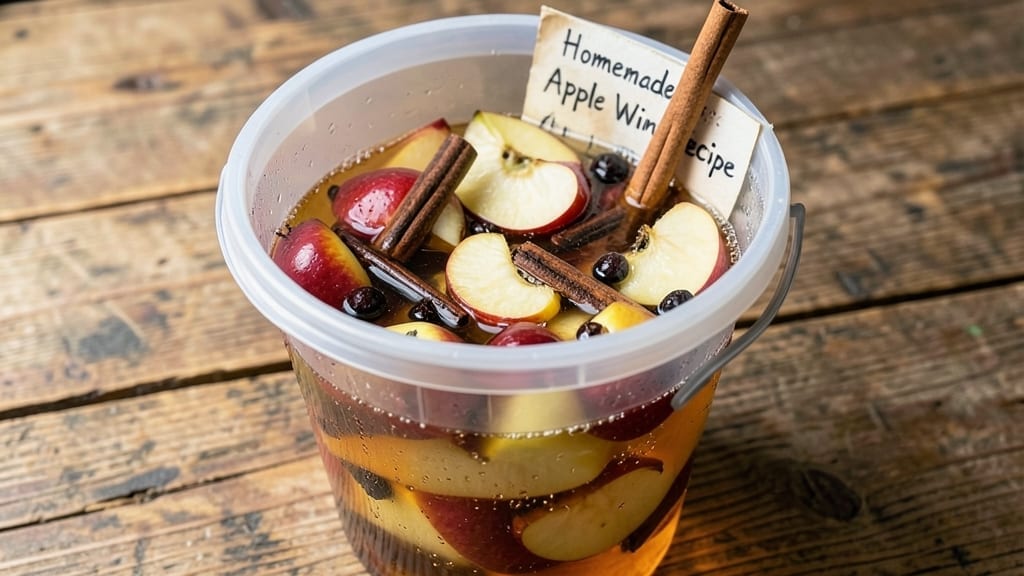
Making 5-gallon apple wine without a press transforms simple apples into a rich, fermented beverage with layers of spiced sweetness—no specialized equipment required. This recipe delivers a smooth, balanced wine perfect for sipping or gifting, using only basic tools and precise fermentation techniques.
The key lies in proper sanitization and temperature control, ensuring a clean, flavorful result every time.
This method relies on crushed apples (no press needed) and a straightforward fermentation process that develops depth over time. You’ll need just five core ingredients—apples, yeast, sugar, water, and spices—to create a wine with natural fruit character and subtle warmth.
The process is beginner-friendly, but attention to detail during fermentation guarantees a professional-quality batch.
By the end, you’ll have a 5-gallon batch of apple wine with a smooth, slightly effervescent texture and flavors that range from crisp apple to spiced caramel notes.
The aging process refines the taste, making it richer with each passing month. Safety is critical—always monitor alcohol content and carbonation levels to avoid over-pressurization.
Whether you’re fermenting for the first time or refining your technique, this recipe ensures a reliable, delicious result. Let’s get started with the step-by-step guide to crafting your own homemade apple wine.
Ingredients for 5 gallon apple wine recipe without a press
Five pounds of apples kickstart this bold, spiced apple wine—no press or fancy gear needed.
| Ingredient | Amount | Notes |
|---|---|---|
| Apples (Mixed Varieties) 🍎 | 15 lb | Granny Smith, Fuji, or Honeycrisp for balance |
| Wine Yeast (Lalvin EC-1118 or Red Star Premier Cuvee) 🍷 | 1 package | For clean fermentation and flavor |
| Granulated Sugar 🍚 | 4 lb | Non-centrifugal preferred for purity |
| Filtered Water 💧 | 5 gallons | Chlorine-free for fermentation |
| Cinnamon Sticks 🌿 | 4 whole | Organic, 2-inch pieces for depth |
| Whole Cloves 🌶️ | 2 tsp | Freshly ground for aroma |
| Orange Peel (Organic) 🍊 | 1 whole | Unwaxed, organic preferred |
| Campden Tablets (Potassium Metabisulfite) 💊 | 1 tablet | Sanitizes must, prevents contamination |
| Pectic Enzyme (Pectolase or equivalent) 🧪 | 1 tsp | For better juice extraction |
| Lemon Juice (Fresh) 🍋 | ½ cup | Acidifies must, prevents bacterial growth |
| Yeast Nutrient (Fermaid O or equivalent) 🍶 | 1 tsp | Enhances yeast fermentation |
| Plastic Food-Grade Bucket (5-Gallon) 🧺 | 1 whole | With airlock lid for fermentation |
| Sanitizer (Star San or equivalent) 🧼 | ¼ cup | For equipment sterilization |
| Cheesecloth or Fine Mesh Bag 🧶 | 1 whole | For spice containment |
The apples are the backbone here. Granny Smith adds tartness, while Fuji or Honeycrisp bring sweetness—mix them for balance. Grab organic if possible (less wax residue), but conventional works too. Core and quarter them before crushing—no need to peel. Local orchards or farmers markets often have cheap bulk bins in fall. Skip the pre-sliced bags; whole apples crush better. For yeast, Lalvin EC-1118 is my go-to (clean, neutral profile), but Red Star Premier Cuvee works too. If your grocery store doesn’t carry wine yeast, order online—it’s worth the splurge for reliability.
No Campden tablets? Potassium metabisulfite from a brewing supply store is the same thing—just crush the tablet into your must. Short on cinnamon? Star anise or cardamom add warmth, but stick to the classic trio (cinnamon, cloves, orange peel) for traditional flavor. The pectic enzyme is optional but helps extract more juice—Pectolase is the gold standard, but any fruit enzyme powder works. For sanitization, Star San is foolproof, but a 1:10 bleach-water mix (5 minutes soak, then rinse) does the job if you’re pinched. Just don’t use it on your must—it’ll kill the yeast too.
Store crushed apples in the fridge until ready to ferment (3-4 days max). The yeast and nutrients can sit at room temp in a sealed container for up to 2 weeks. Once fermented, transfer to a glass carboy with an airlock—keeps for 6-12 months in a cool, dark place. Label everything! This stuff gets stronger with age, but if it tastes too harsh after 3 months, let it breathe another month. Freeze extra for gifting—just thaw in the fridge overnight.
Why You’ll Love This Recipe
- No Press, No Problem: I’ve made this wine with nothing but a knife, a bucket, and a little elbow grease—no fancy equipment required. Just chop apples, toss them in water with sugar and yeast, and let nature do the rest. Honestly, it’s the kind of project that feels rewarding without demanding hours in the kitchen.
- Spiced Perfection: That first sip? Warm, bright, and subtly spiced from the cinnamon sticks simmering in the must. The Lalvin EC-1118 yeast gives it a clean finish, while the mixed apple varieties (tart and sweet) balance like a well-paired cocktail. It’s the kind of flavor that makes you pour another glass—even if you’re sipping it straight from the jug.
- Holiday or Everyday: Between us, this wine is ridiculously good for gift-giving—just bottle it in swing-top jars and tie a ribbon. But here’s the secret: I drink it year-round, especially when I’m roasting a ham or baking an apple pie. The cinnamon notes tie everything together like a cozy hug in a glass.
- Fridge-Friendly & Budget-Smart: The best part? It keeps for months in the fridge, so I can batch-make it in fall and enjoy it through winter. And with just apples, sugar, and yeast, it’s way cheaper than store-bought—plus, you control the sweetness. I’ll be real: my wallet and my taste buds both thank me.
Step-by-step instructions for fermenting apple wine without a press
Here’s the straightforward method to transform 15 pounds of apples into rich, spiced wine.
Prepare and Sanitize Your Equipment
Start by thoroughly cleaning the 5-gallon plastic food-grade bucket with the 0.25 cup sanitizer (Star San), rinsing with chlorine-free filtered water. This ensures no contaminants interfere with fermentation. While the bucket soaks, prepare a large pot for the apples and fill it with 5 gallons filtered water—just enough to cover them completely.
I like to add the 1 tablet Campden Tablets (Potassium Metabisulfite) to the water while heating it to 170°F for 20 minutes. This sanitizes the must and prevents unwanted bacteria. Let it cool to 70°F before proceeding—room temperature is ideal for yeast activation later.
Crush Apples and Extract Juice
Wash the 15 lb apples (Mixed Varieties) thoroughly, removing stems and cores. I use a potato masher or clean mallet to crush them in the pot with the sanitized water. The goal is to break the skins but not pulverize the fruit—this releases juice while keeping solids for flavor. Add the 1 tsp pectic enzyme (Pectolase) and let the mixture sit for 12 hours at room temperature.
After resting, strain the mixture through a clean cheesecloth or fine mesh bag into the sanitized bucket. I press the solids gently to extract every drop of juice, but avoid squeezing too hard—this can introduce bitter tannins. You should have about 4-5 gallons of cloudy liquid. This is your “must,” the foundation of the wine.
Add Sugar, Spices, and Acidification
To the strained must, add all 4 lb granulated sugar, stirring until completely dissolved. This provides yeast food and balances the wine’s acidity. Next, place the 4 whole cinnamon sticks and 2 tsp whole cloves inside the cheesecloth or fine mesh bag, tie it closed, and submerge it in the must. Add the 1 whole orange peel (Organic) and 0.5 cup lemon juice (Fresh)—the acidity helps prevent bacterial contamination.
Give everything a gentle stir, ensuring the spices are fully immersed. The citrus peel and lemon juice will infuse subtle floral notes while maintaining the proper pH for fermentation. Let the mixture sit uncovered for 24 hours at room temperature—this allows the spices to steep and the must to develop complexity.
Pitch Yeast and Begin Fermentation
After 24 hours, add the 1 tsp yeast nutrient (Fermaid O) and the 1 package wine yeast (Lalvin EC-1118) to the must. I like to sprinkle the yeast on top of the liquid rather than stirring it in—this creates a yeast cake that activates more evenly. Attach an airlock to the bucket and let it ferment at 68-72°F for 7-10 days.
You’ll see vigorous bubbling within 12-24 hours—this indicates active fermentation. Keep the bucket in a dark place to prevent light exposure, which can create off-flavors. The goal is to let the yeast convert sugars into alcohol and carbon dioxide. Once bubbling slows significantly (after 7-10 days), the primary fermentation is complete.
Rack and Age for Complexity
After primary fermentation, carefully siphon the wine into a clean, sanitized container, leaving behind the sediment and spent yeast. This process, called racking, clarifies the wine and removes unwanted flavors. Store the wine in a cool, dark place for 6-12 months, topping off with chlorine-free filtered water as needed to maintain headspace in the airlock.
The aging process allows the wine to develop depth and smoothness. Taste periodically—when it reaches your desired sweetness and flavor profile, bottle it in sanitized bottles with airtight seals. Patience here is key; the longer it ages, the more complex the flavors become. Enjoy your homemade apple wine after it’s fully carbonated and clear.
Pro Tips For Making 5 Gallon Apple Wine Recipe Without A Press
- Crush Apples Thoroughly: I learned this the hard way—skipping a food mill or potato masher leaves chunks that rot in your fermenter. Use a sturdy bag and a mallet to smash apples into a pulp, or freeze them first for easier breaking. The goal is juice extraction, not apple sauce.
- Sanitize Everything Twice: Your fermenter, tools, and even your hands carry wild yeast and bacteria that’ll outcompete your Lalvin EC-1118. Boil all equipment in a 170°F water bath for 10 minutes, then rinse with hot (not just warm) water—yeast spores are stubborn. Do this right before pitching yeast, not the day before.
- Pitch Yeast at 70°F: Cold must? Yeast will sulk. Too hot? It’ll get stressed. Aim for 70°F (use a thermometer) and wait 10 minutes after adding yeast to stir gently—this kickstarts fermentation faster. If your kitchen’s drafty, move the fermenter near a warm spot (like a south-facing window) until bubbles form.
- Use 2 Cinnamon Sticks: One stick? You’ll taste it, but it’ll fade fast. Two sticks (or a pinch of ground cinnamon) add depth without overpowering. Add them after fermentation starts—early addition can lead to mold if the must isn’t acidic enough. Remove them after 2 weeks to avoid bitterness.
Serving suggestions for this 5 gallon apple wine recipe without a press
Chilled Serving Style
Serve your apple wine well-chilled at 45-50°F in stemmed wine glasses to enhance its crisp, spiced character. I like to use Riedel Vinum glasses—their shape directs aromas toward your nose while keeping the wine cool.
For casual gatherings, mason jars with metal clamps add rustic charm, especially if you label them with the batch date. Avoid serving too cold (40°F) as it dulls the apple and spice flavors. 🍷
Warm Spiced Pairings
Enhance the wine’s warmth by pairing it with homemade apple cider donuts or spiced apple bread. The cinnamon and clove notes in the wine mirror these desserts beautifully. For savory pairings, try sharp cheddar cheese or smoked gouda—the saltiness cuts through the wine’s sweetness.
I also love serving it alongside slow-cooked pork shoulder or apple-glazed ham during holiday meals. 🍎
Garnish for Presentation
Elevate your serving with a floating cinnamon stick or orange peel twist—both highlight the wine’s natural flavors while adding visual appeal. For a festive touch, rim glasses with crushed freeze-dried apple powder or a sprinkle of ground cinnamon.
These garnishes are simple but make the presentation feel special, especially when gifting bottles. 🌟
Ice and Dilution
If your wine is too bold, dilute it slightly with sparkling water (1:3 ratio) for a refreshing twist—ideal for hot days. For a frozen treat, freeze apple slices in ice cube trays and add them to the wine when serving.
This keeps the drink chilled without diluting it too much. I also like adding a splash of ginger ale for a fizzy, apple-cider-like variation. ✨
Gifting and Storage
When gifting, use amber glass bottles to protect the wine from light and extend shelf life. Label bottles with the batch date and alcohol content (if you’ve tested it).
Store unopened bottles in a cool, dark cellar or fridge—they’ll last up to 2 years. For opened bottles, refrigerate and consume within 2 weeks to preserve freshness. 📦
Food Pairing Cheat Sheet
Sweet: Apple pie, caramelized apple desserts, honeycomb
Savory: Roasted pork, sharp cheeses, spiced nuts
Light: Fresh fruit salads, goat cheese crostini
Rich: Dark chocolate truffles, blue cheese
Pro tip: The wine’s spice-forward profile pairs best with dishes that have warm, earthy, or citrusy notes—think chai spices, orange zest, or even a sprinkle of sea salt. 🍽️
Nutrition facts
Frequently asked questions
Can I use any type of apples for this recipe?
Mixed varieties work best—aim for a balance of tart and sweet apples like Granny Smith (tart) and Fuji or Honeycrisp (sweet). Avoid overly soft or mealy apples as they can make the wine cloudy. Organic apples are ideal since they have less wax residue, but conventional apples work too if washed thoroughly.
What if my fermentation stops too soon?
If bubbling slows after 3-4 days, your wine may need more nutrients or a warmer environment. Add ½ tsp yeast nutrient and keep the bucket in a 70-75°F spot (like near a sunny window). If it still stalls, pitch ½ packet fresh yeast—just be patient, as secondary fermentation may take longer. Avoid stirring, as this can introduce oxygen and spoil the batch.
How do I know when the wine is ready to bottle?
Your wine is ready when it’s clear, smells clean (no vinegar or fruity aromas), and tastes balanced—no harsh alcohol bite. Primary fermentation should take 7-10 days, followed by 6-12 months of aging. Test for doneness by checking the specific gravity (should be below 1.000 if using a hydrometer) or simply by taste. Bottle when bubbles in the airlock are minimal (once every few days).
Can I make this recipe with fewer apples?
Yes, but scale all ingredients proportionally. For a 1-gallon batch, use 3 lb apples, 1 lb sugar, and 1 gallon water, reducing spices and yeast by half. Keep the same ratios for yeast nutrient and Campden tablets. Just ensure your fermenter has enough headspace—never fill it more than 90% to avoid overflow during active fermentation.
What’s the alcohol content of this wine?
This recipe typically yields 10-12% ABV, depending on fermentation efficiency and sugar levels. Use a hydrometer to track alcohol development: subtract the final specific gravity from the starting gravity (e.g., 1.095 – 1.000 = 0.095, which converts to ~11.5% ABV). If you prefer a sweeter wine, stop fermentation early by chilling the must to 35°F for 48 hours.

- 6 Oz Chocolate Chip Cookie Recipe: Perfectly Balanced Crispy Edges and Chewy Hearts - September 25, 2026
- 6-Inch Coffee Cake Recipe: Vanilla Bean Swirls and Buttery Streusel Topping - September 25, 2026
- 1 Hour Soup Recipe: Velvety Richness Without the Wait - September 25, 2026