
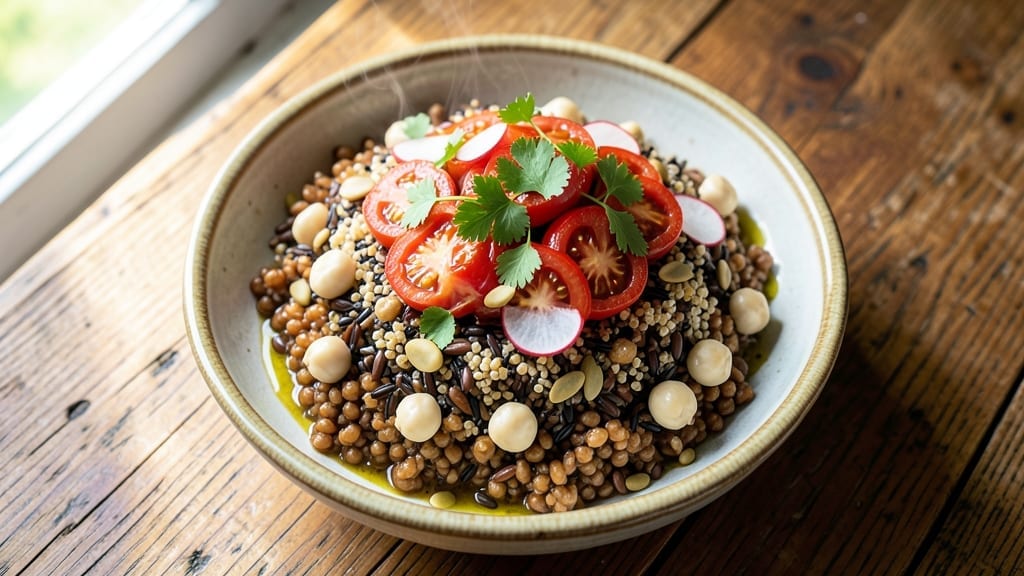
A 5-grain salad recipe transforms simple grains into a nutrient-dense powerhouse packed with texture, flavor, and protein. This balanced dish combines quinoa, farro, barley, wild rice, and buckwheat—each grain bringing its own chewy, crunchy, or nutty quality.
The key lies in cooking them separately for perfect textures before tossing with fresh vegetables, protein, and a bright dressing that ties everything together.
What sets this salad apart is its versatility—it’s hearty enough for a main dish but light enough for a side. The grains absorb flavors beautifully, while the vegetables add freshness, and optional protein (like chickpeas or grilled chicken) makes it a complete meal.
With minimal prep and no last-minute stress, you’ll have a restaurant-worthy salad that’s ready in under 45 minutes.
The result is a crunchy, satisfying salad with layers of flavor—earthy farro, nutty buckwheat, and fluffy quinoa—all balanced by crisp vegetables and a tangy dressing. Whether you’re meal prepping for the week or serving it at a gathering, this salad delivers bold texture, balanced nutrition, and crowd-pleasing appeal.
Here’s how to make it.
For extra depth, toast the grains before cooking to enhance their natural nuttiness, and don’t skip the final toss with dressing—it’s what makes every bite cohesive. This isn’t just a salad; it’s a one-dish meal that keeps everyone coming back for seconds.
Ingredients for 5 grain salad
Five grains, one bowl—nutty, crunchy, and packed with protein for a salad that does it all.
| Ingredient | Amount | Notes |
|---|---|---|
| Quinoa 🌾 | ½ cup | Rinsed thoroughly before cooking |
| Farro 🌾 | ½ cup | Pearled or whole grain preferred |
| Barley 🌾 | ½ cup | Pearl barley for quicker cooking |
| Wild Rice Blend 🌾 | ½ cup | Uncooked wild rice mix |
| Buckwheat 🌾 | ½ cup | Groats, not flour |
| Chickpeas 🥜 | 1 cup | Canned, drained and rinsed |
| Cherry Tomatoes 🍅 | 1 cup | Halved, vine-ripened preferred |
| Cucumber 🥒 | 1 medium | English cucumber, peeled and diced |
| Red Bell Pepper 🌶️ | ½ cup | Diced, any color |
| Red Onion 🧅 | ¼ cup | Thinly sliced, white or yellow |
| Fresh Parsley 🌿 | ¼ cup | Chopped, stems removed |
| Extra-Virgin Olive Oil 🫒 | ⅓ cup | For dressing, fruity variety |
| Apple Cider Vinegar 🍎 | 2 tbsp | For dressing, raw preferred |
| Dijon Mustard 🍯 | 1 tbsp | For dressing, coarse grind |
| Honey 🍯 | 1 tbsp | For dressing, local preferred |
| Salt 🧂 | 1 ½ tsp | Diamond Crystal preferred |
| Black Pepper 🌶️ | ½ tsp | Freshly ground |
The grains are the stars here, and Trader Joe’s or Whole Foods carry the best pre-packaged blends. If buying separately, look for pearled farro and pearl barley for quicker cooking—whole grains take way longer. Wild rice blends are a must for that earthy texture, and buckwheat groats (not flour) give you that nutty bite. Bob’s Red Mill is my go-to for bulk grains—they stay fresh longer. Toast the grains for 2-3 minutes in olive oil before cooking to bring out their natural nuttiness (don’t skip this!).
No wild rice? Brown rice works in a pinch, but the texture won’t be the same. Short on chickpeas? White beans or lentils add protein without changing the vibe. The dressing can be made ahead—just store the dressing separately until ready to toss. For extra crunch, add toasted pumpkin seeds or sunflower seeds at the end. The cucumber should be peeled if it’s large—English cucumbers are seedless and sweeter. If you can’t find them, regular cucumbers work if you remove the seeds.
Grains reheat beautifully—make extras for lunches. Store dressed grains and veggies separately in airtight containers for 4-5 days. The dressing keeps for 1 week in the fridge. For meal prep, assemble the salad the morning you’re serving it—grains stay chewy but crisp veggies stay crisp. Double the dressing recipe if you’re making this for a crowd—everyone will want seconds.
Why You’ll Love This Recipe
- One-Pot Magic: I swear by this—just toss all five grains into a single pot with broth, let them simmer while I chop veggies or fold laundry. No measuring cups flying, no separate timers. The quinoa and buckwheat stay fluffy, the farro gets that perfect chewy bite, and the wild rice adds nutty depth without extra effort.
- Nutty, Earthy, Addictive: Between us, the flavor combo is ridiculously good. The farro’s caramelized edge, the buckwheat’s toasty crunch, and that wild rice blend’s smoky sweetness? It’s the kind of salad where I’ll take seconds even when I’m full. (Yes, even on a Tuesday night.)
- Meal Prep MVP: This keeps like a champ—taste stays fresh for five days in the fridge, and it reheats beautifully. Pack it for work, toss it in lunchboxes, or serve it cold at summer potlucks. Honestly, it’s my go-to when I need something that’s equal parts filling and fuss-free.
- Budget Booster: Five grains for the price of one? That’s how you stretch a grocery budget. Farro and barley bulk up the dish, quinoa adds protein, and buckwheat keeps costs low while packing in flavor. It’s the kind of recipe that makes me feel like I’m feeding a crowd without breaking the bank.
Step-by-step instructions for cooking the perfect 5-Grain medley
Here’s how to transform five distinct grains into a harmonious, nutty foundation for your salad.
Cook Each Grain Separately for Optimal Texture
Start by rinsing the 0.5 cup quinoa thoroughly under cold water to remove any bitterness. In a small saucepan, combine the quinoa with 1 cup water and bring to a boil. Once boiling, reduce heat to low, cover, and simmer for 15 minutes until the water is absorbed and the grains are tender but still slightly firm. Let it sit covered for 5 minutes off heat.
While the quinoa cooks, prepare the remaining grains in separate pots. For the 0.5 cup farro, combine with 1¼ cups water and simmer for 25-30 minutes until al dente. The 0.5 cup barley needs 30 minutes of simmering in 1½ cups water, while the 0.5 cup wild rice blend requires 45 minutes in 1½ cups water. Finally, the 0.5 cup buckwheat cooks in 1½ cups water for 20-25 minutes. Each grain should have its own pot—this prevents uneven cooking and ensures perfect texture for each component.
Blanch and Prepare the Vegetables for Maximum Freshness
While the grains cook, prepare the vegetables to maintain their vibrant colors and crisp textures. Halve the 1 cup cherry tomatoes and place them in a bowl of ice water for 5 minutes to stop any cooking process that might have started. Drain and pat dry with a paper towel—this keeps them bright and prevents a mushy salad.
Peel and dice the 1 medium cucumber into ½-inch cubes, then toss immediately with ½ teaspoon salt to draw out excess moisture. Let it sit in a colander for 10 minutes, then rinse and pat thoroughly dry. Thinly slice the 0.25 cup red onion and 0.5 cup red bell pepper into even strips—this ensures they cook just enough to soften slightly without losing their crunch.
Assemble the Protein and Grain Base
Once all grains are cooked, spread them on a large baking sheet to cool completely. This step is crucial—warm grains will release moisture and make your salad soggy. While cooling, drain and rinse the 1 cup chickpeas thoroughly, then pat them dry with a kitchen towel. Toss the chickpeas with ½ teaspoon salt and ¼ teaspoon black pepper to enhance their flavor.
In a large mixing bowl, combine all the cooled grains with the chickpeas. Add the chopped 0.25 cup fresh parsley and gently fold it in. The parsley should be evenly distributed throughout—this adds freshness and prevents clumping. Taste the mixture and adjust seasoning if needed, adding more salt or black pepper as necessary. Here’s the thing—each grain has its own subtle flavor, so balancing them now ensures harmony in the final salad.
Whisk Together the Dressing for a Silky Finish
In a small bowl, whisk together the 0.33 cup extra-virgin olive oil, 2 tablespoons apple cider vinegar, 1 tablespoon Dijon mustard, and 1 tablespoon honey. Start with a slow whisk to emulsify the ingredients, then gradually increase speed until the mixture is smooth and slightly thickened. This dressing should coat the back of a spoon—if it’s too thin, add a pinch more Dijon mustard; if too thick, whisk in 1 teaspoon water to reach the perfect consistency.
Taste the dressing before adding it to the salad. It should be tangy, slightly sweet, and well-balanced. Adjust the seasoning with more salt, black pepper, or a touch of honey if needed. Real talk: the dressing makes or breaks this dish, so don’t rush this step. Once satisfied, pour half of the dressing over the grain and chickpea mixture and toss gently but thoroughly to coat evenly. This ensures every bite has that nutty, protein-packed goodness.
Combine and Chill for the Best Texture
Add the blanched cherry tomatoes, cucumber, red bell pepper, and red onion to the grain mixture. Gently fold everything together, being careful not to break the vegetables. The goal is to distribute them evenly without crushing them—this keeps the salad’s crunch intact. Pour the remaining dressing over the top and toss one final time.
Transfer the salad to an airtight container and refrigerate for at least 1 hour before serving. This chilling time allows the flavors to meld and the grains to absorb the dressing evenly. When ready to serve, give it one last gentle toss to redistribute any settled ingredients. The salad should be cool, vibrant, and packed with texture—each bite offering a mix of nutty grains, creamy chickpeas, and crisp vegetables. Trust me, the wait is worth it for that perfect balance of flavors and textures.
Pro Tips For Making 5 Grain Salad
- TOAST THE GRAINS: DESCRIPTION:
- RINSE THE QUINOA: DESCRIPTION:
- COOK WILD RICE FIRST: DESCRIPTION:
- LET BARLEY REST: DESCRIPTION:
Common mistakes when making your 5 grain salad
Uneven Cooking
Cooking all grains together is a common mistake that leads to a mushy, uneven texture. Each grain has a unique cooking time—quinoa needs 15 minutes, while wild rice requires 45 minutes.
I always cook them separately in individual pots with their recommended water ratios. Using the same pot for all grains means some will be undercooked while others turn to paste. 🌾
Skipping the Cooling Step
Warm grains release excess moisture, turning your crisp salad into a soggy mess. After cooking, spread the grains on a baking sheet to cool completely before combining with vegetables.
I’ve learned this the hard way—skipping this step means a salad that’s more pudding than powerhouse. Give them 15-20 minutes to dry out.
Overcrowding the Pot
Using too small of a pot for grains leads to uneven cooking and a gummy texture. For 0.5 cup of any grain, use at least a 2-quart pot to allow room for expansion.
I’ve seen home cooks use tiny saucepan lids as pots—this is a recipe for disaster. Double-check your pot size before starting.
Underseasoning the Dressing
The dressing is what ties everything together, and many people underseason it, leaving their salad bland. Always taste the dressing before tossing it with the grains. Start with 1.5 teaspoons of salt and adjust to taste—it should be tangy, slightly sweet, and well-balanced.
I often add an extra pinch of salt or a splash of vinegar if needed. Trust your taste buds here!
Adding Dressing Too Early
Tossing dressing with warm grains causes them to absorb too much liquid, making them mushy. Wait until the grains are completely cool before adding the dressing.
I like to assemble the salad and refrigerate it for at least 1 hour before serving—this lets the flavors meld and the grains absorb just the right amount. Patience pays off with perfect texture. ✨
Ignoring Vegetable Prep
Skipping the ice bath for tomatoes or not salting cucumbers before draining leads to a watery salad. Always shock halved tomatoes in ice water for 5 minutes to stop cooking, and toss cucumbers with ½ teaspoon salt for 10 minutes to draw out moisture.
This keeps your salad crisp and vibrant, not a sad, soggy pile. Don’t skip these small but mighty steps!
Nutrition facts
Frequently asked questions
Can I substitute any of the grains in this recipe?
Swap wild rice for brown rice (though texture will differ) or replace buckwheat with freekeh for a smoky depth. For gluten-free needs, ensure all grains are certified GF (like quinoa and rice). Just maintain equal portions—0.5 cup per grain keeps the balance right. The key is matching cooking times to avoid mushy results.
How long can I store this salad before serving?
Store the grains and protein separately in airtight containers for 4-5 days in the fridge. Assemble the salad 1 hour before serving to let flavors meld. The dressing keeps 1 week separately—just toss it in right before eating to prevent sogginess. For meal prep, dress only half the salad at a time to maintain crispness.
What’s the best way to reheat leftover grains?
Spread cooled grains on a baking sheet and warm in a 350°F oven for 10 minutes to revive texture. For microwave reheating, sprinkle with 1 teaspoon water per cup, cover loosely, and heat in 1-minute intervals until warmed through. Never reheat with dressing—add it fresh to avoid mushiness. This method works for all grains in the recipe.
Can I make this salad ahead for a potluck?
Yes! Prepare all grains and chop vegetables 1 day ahead and store separately. At the potluck, toss everything together with dressing just before serving. For extra crowd appeal, arrange grains in layers with veggies in a large platter—let guests mix their own portions. This keeps textures crisp and prevents soggy bottoms. Bring the dressing in a separate container.
Why does my dressing separate when I toss it with grains?
This happens when the dressing isn’t emulsified properly or when added to warm grains. Whisk the dressing vigorously until thickened (it should coat a spoon). Always add dressing to completely cooled grains—warmth breaks emulsions. For extra stability, add 1 teaspoon cornstarch mixed with cold water to the dressing before whisking. This creates a silky, clingy finish every time.

- Pork Loin Pulled Pork Crock Pot Recipe: Slow-Smoked Tenderness With Zero Dryness - November 1, 2026
- Baked Potatoes in Crock Pot Recipe: Buttery Interiors and Crispy Top Magic - November 1, 2026
- Braised Beef Short Ribs Recipe: Crock Pot Fall-Off-Bone Magic in 6 Hours - November 1, 2026