
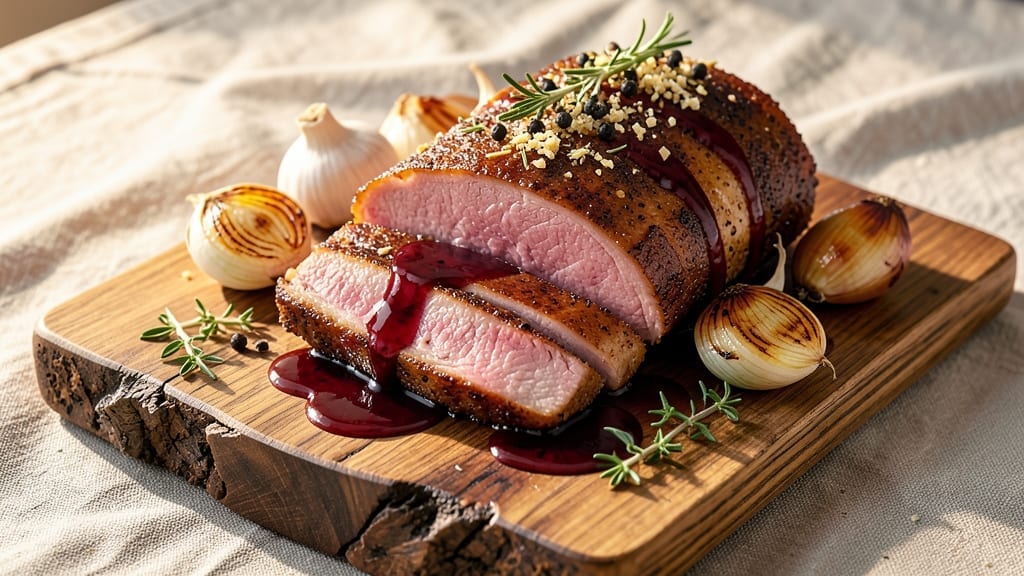
A 5 lb boneless rib roast cooked to juicy pink perfection transforms Sunday dinner into a showstopping centerpiece. This recipe delivers a herb-crusted masterpiece with a tender core and caramelized edges—no dry meat in sight.
The secret lies in precise timing, proper resting, and a flavor-packed crust that seals in every drop of moisture.
Professional chefs rely on this method to achieve restaurant-quality results at home, and with just a few simple steps, you can too. We’ll use a dry brine technique to enhance natural flavors, then build a robust herb crust that adds texture and depth.
The key? Cooking to 130°F internal temperature—rare enough to stay juicy while still safe to eat.
What you’ll end up with is a juicy pink core surrounded by perfectly browned edges, all infused with aromatic herbs and a rich, meaty flavor. The crust stays intact when sliced, revealing tender, melt-in-your-mouth beef that practically falls apart. This isn’t just dinner—it’s an experience worth planning ahead for.
Pair with roasted garlic mashed potatoes and a bold red wine reduction for the ultimate meal. The recipe includes foolproof techniques for resting and carving to ensure every slice delivers that perfect balance of flavor and texture. Let’s get started on your next showstopper.
Ingredients for 5 lb boneless rib roast
Six essential ingredients transform a simple roast into a restaurant-quality centerpiece.
| Ingredient | Amount | Notes |
|---|---|---|
| Boneless Rib Roast 🥩 | 5 lb | Center-cut for best tenderness |
| Kosher Salt 🧂 | 2 tbsp | Diamond Crystal preferred |
| Fresh Black Peppercorns 🌶️ | 1 tbsp | Coarsely cracked |
| Fresh Rosemary 🌿 | ½ cup | Needles finely chopped |
| Fresh Thyme 🌿 | ¼ cup | Leaves only, stems removed |
| Garlic Cloves 🧄 | 6 cloves | Smashed for even distribution |
| Extra-Virgin Olive Oil 🫒 | ¼ cup | High quality, fruity |
| Unsalted Butter 🧈 | ½ cup | Cold, cubed |
| All-Purpose Flour 🌾 | ¼ cup | For crust adhesion |
| Dried Mustard Powder 🌶️ | 1 tsp | Adds depth of flavor |
| Fresh Sage Leaves 🌿 | ¼ cup | Chopped, for herb crust |
| Red Wine 🍷 | ½ cup | Bold, dry variety |
The rib roast is your canvas. Center-cut delivers the most marbling and tenderness—avoid the outer edges if your butcher offers them. For sourcing, Whole Foods or local butchers often carry premium cuts. Look for vibrant color and good marbling. If you’re using a frozen roast, thaw it in the fridge for 24 hours—never at room temperature. The herbs should be fresh, with rosemary and thyme stems removed for maximum flavor. Trader Joe’s usually has great quality at reasonable prices. For the olive oil, California-grown varieties often have the best fruity notes, but any extra-virgin will work.
No fresh rosemary? Dried works at half the amount, but the texture won’t be as nice. Short on thyme? Oregano at one-third the quantity gives a similar earthy note. The red wine can be skipped entirely—just add extra beef broth instead—but it adds that restaurant-quality depth. For the butter, Plugrá or Land O’Lakes are reliable choices. If you’re concerned about the crust sticking, lightly flour your baking sheet before placing the roast on it. The mustard powder is crucial—it helps the crust brown beautifully and adds a subtle tang that balances the richness of the beef.
This roast needs to rest for 30 minutes after cooking—don’t skip this step, no matter how impatient you are. The internal temperature will rise another 10-15°F during resting, so pull it out at 130°F for that perfect pink center. Store leftovers in an airtight container for 3-4 days in the fridge. For longer storage, vacuum-seal portions and freeze for up to 3 months. The herb crust reheats beautifully—just warm in the oven at 325°F for 15-20 minutes with a splash of beef broth to keep it moist. Slice against the grain for the most tender results.
Why You’ll Love This Recipe
- Two-Handed Prep: I swear by this—just salt, pepper, and herbs. No fancy marinades, no peeling garlic, no chopping onions. My daughter sprinkles the rosemary and thyme while I pat the roast dry, and that’s it. Honestly, the hardest part is waiting for it to cook.
- Herb-Crusted Magic: That crust of kosher salt and cracked pepper? It’s not just seasoning—it’s a flavor bomb. The rosemary and thyme release into the fat as it renders, giving every bite that earthy, woodsy punch. Between us, I’ve tried store-bought rubs, but this combo is my secret weapon.
- Leftovers for Days: This roast is so tender it practically falls apart, and that means perfect sandwiches, tacos, or reheated slices the next night. I’ll be real: I’ve frozen portions for months, and it still tastes like Sunday dinner. Not the prettiest, but the taste makes up for it.
- Big Roast, Small Effort: Five pounds feeds a crowd—or my family for three meals—without the stress of carving bones. One pan, one oven, and zero cleanup. My go-to weeknight-friendly dish when I’d rather be on the couch than in the kitchen. (Yes, even on a Tuesday night.)
Step-by-step instructions for herb-crusted rib roast with juicy pink core
Master this technique and you’ll achieve a perfectly cooked rib roast with a rich herb crust and tender pink center.
Prepare the Herb Crust Mixture
In a food processor, combine the 0.5 cup fresh rosemary, 0.25 cup fresh thyme, 0.25 cup fresh sage leaves, 6 smashed garlic cloves, 1 tbsp coarsely cracked fresh black peppercorns, and 1 tsp dried mustard powder. Pulse until finely chopped but not pasty. With the processor running, slowly add the 0.25 cup extra-virgin olive oil and 0.5 cup cold unsalted butter until fully incorporated. The mixture should resemble coarse breadcrumbs with visible herb flecks.
Transfer this herb butter to a bowl and fold in the 0.25 cup all-purpose flour using a silicone spatula. This creates a thick, spreadable paste that will form your flavorful crust. The flour helps the mixture adhere to the meat while adding a subtle texture contrast. Keep this mixture refrigerated until ready to use.
Season and Crust the Rib Roast
Remove the 5 lb boneless rib roast from the refrigerator and let it sit at room temperature for 30 minutes to ensure even cooking. Pat the roast dry with paper towels—this step is critical for achieving a crispy crust. Season both sides generously with the 2 tbsp kosher salt, pressing it into the meat to create a flavor barrier.
Spread the herb butter mixture evenly over the entire surface of the roast, including the cut edges. Press it firmly so it adheres well—this ensures maximum flavor transfer during roasting. Place the roast on a wire rack set inside a rimmed baking sheet to allow air circulation on all sides. This prevents steaming and promotes even browning.
Sear the Roast for Maximum Flavor
Preheat your oven to 425°F. Heat a large oven-safe skillet over medium-high heat until very hot. Place the roast in the skillet and sear for 3-4 minutes per side until deeply golden brown. The high heat develops a rich Maillard reaction that creates complex flavors. Don’t rush this step—wait until you see a deep caramelization before moving to the oven.
Transfer the seared roast to the preheated oven and roast for 20 minutes. This initial high-heat phase establishes the crust while jumpstarting the cooking process. After 20 minutes, reduce the oven temperature to 325°F—this is where we’ll cook the roast to perfection with a juicy pink center.
Cook to Perfect Medium-Rare Doneness
Continue roasting at 325°F for 1 hour and 15 minutes to 1 hour and 30 minutes, depending on your preferred doneness. Use a meat thermometer to check the internal temperature—125°F for medium-rare (the juiciest result). The roast should have a deep golden-brown crust and a pink center that yields slightly to pressure.
Here’s the thing about rib roast—it continues cooking after removal from the oven. If you prefer a slightly warmer center, you can increase the time by 10-15 minutes, but don’t exceed 135°F or you’ll risk drying out the meat. The herb crust should be crisp and fragrant, with the aromas of rosemary, thyme, and sage filling your kitchen.
Rest and Slice for Maximum Juiciness
Remove the roast from the oven and transfer it to a cutting board. Tent loosely with aluminum foil and let it rest for 20-30 minutes before slicing. This resting period is absolutely crucial—it allows the juices to redistribute throughout the meat, preventing them from pooling on your cutting board. The temperature will rise 5-10°F during this time, so your final internal temperature will be closer to 130-135°F.
Slice the roast against the grain into 1-inch thick portions. Each slice should be tender with a juicy pink center and a flavorful herb crust that clings beautifully. Serve immediately with the pan drippings reduced with 0.5 cup red wine for an elegant sauce. The combination of the herb crust, tender meat, and wine reduction creates a restaurant-quality dining experience at home.
Pro Tips For Making 5 Lb Boneless Rib Roast
- SEAR IT HARD FIRST: I learned this the hard way—skipping the initial high-heat sear means your roast will taste bland no matter how much herb you pack on top. Crank your oven to 450°F for the first 15 minutes with the roast uncovered. That crust? It’s what makes the difference between “good” and “wow.”
- SALT THE HERBS TOO: Fresh rosemary and thyme lose their punch when they’re just sprinkled on. Toss the stems in a bowl with 1 teaspoon kosher salt, then chop the leaves—this keeps them bright and prevents them from just floating off the roast. (Yes, even if you’re impatient like me.)
- DON’T SKIP THE REST: I used to cut into that roast the second it hit 130°F, and every time, the juices pooled out like a sad puddle. Let it sit under foil for a solid 15 minutes—your knife will glide through, and the meat will stay juicy. (Your future self will thank you.)
- USE A THERMOMETER: Guessing doneness with a finger? Stop. A meat thermometer is the only way to nail that tender-but-not-mushy texture. For a 5 lb roast, aim for 125–130°F internal temp—pull it out early, then let it carryover to 135°F while resting. No more dry, overcooked disappointment.
Best sauces and condiments for this dish
Red Wine Reduction
The pan drippings from your roast are liquid gold—simply deglaze the skillet with ½ cup bold red wine (like Cabernet Sauvignon or Syrah) after removing the roast. Reduce over medium-high heat for 8-10 minutes until syrupy, then whisk in 1 tbsp cold butter to finish.
This sauce cuts through the richness while amplifying the herb crust’s flavors. 🍷
Horseradish Cream
For a tangy contrast, mix ½ cup sour cream with 1 tbsp prepared horseradish and 1 tsp Dijon mustard. Thin with 1 tbsp beef broth if needed. This brightens the plate and balances the beef’s richness. Serve in a small bowl for dipping or spooning over slices. 🌶️
Garlic-Herb Butter
Use leftover herb butter (from the crust) to make an extra sauce: melt 2 tbsp butter with 2 minced garlic cloves and 1 tbsp chopped parsley in a small pan. Drizzle over slices or serve alongside for dipping. This adds another herbaceous layer without extra effort. 🧈
Mushroom Pan Sauce
Sauté 1 cup sliced mushrooms in the roast’s drippings (after deglazing with wine) for 5-6 minutes until golden. Add 1 tsp thyme and 1 splash beef broth, then reduce to a thick consistency. The earthy mushrooms complement the beef beautifully. 🍄
Balsamic Glaze
Simmer ¼ cup balsamic vinegar with 1 tsp honey and 1 crushed garlic clove for 3-4 minutes until thickened. Drizzle over sliced roast just before serving for a sweet-tangy contrast. This works especially well with the herb crust’s savory notes. 🍯
Cheese Sauce Twist
For a creamy option, melt ½ cup Gruyère cheese with 2 tbsp heavy cream and 1 tsp white wine in a saucepan. Stir until smooth and pour over slices. The nutty cheese enhances the beef’s depth while adding a luxurious texture. 🧀
Nutrition facts
Frequently asked questions
How do I choose the best 5 lb boneless rib roast?
Look for a roast with good marbling (visible fat within the meat) and a vibrant red color. The center-cut section is most tender—ask your butcher to trim any outer edge pieces. For best results, source from a trusted butcher or specialty grocer like Whole Foods or local meat markets. Avoid pre-cut roasts that feel dry or have a grayish tint.
Can I cook this roast to medium or well-done?
Yes, but expect less tenderness. For medium (145°F), cook 15-20 minutes longer than the recipe’s 125°F guideline. For well-done (160°F), add 30-40 minutes more. To prevent dryness, baste with melted butter every 20 minutes and tent loosely with foil during the last 30 minutes of cooking.
Why is my herb crust falling off?
This usually happens when the meat isn’t dry enough before applying the crust or the oven isn’t hot enough. Pat the roast thoroughly with paper towels and let it sit at room temperature for 30 minutes before applying the herb mixture. Also ensure your oven reaches 425°F before searing. For extra adhesion, lightly flour the roast after seasoning before adding the crust.
How should I store leftovers?
Slice the roast and store in an airtight container in the fridge for 3-4 days. For longer storage, vacuum-seal portions and freeze for up to 3 months. To reheat, warm slices in a skillet over medium heat with a splash of beef broth for 2-3 minutes per side. Never microwave—it makes the meat tough.
What sides pair best with this roast?
Rich sides like roasted garlic mashed potatoes, creamy polenta, or buttery egg noodles balance the beef’s intensity. For fresh contrast, try a crisp arugula salad with lemon vinaigrette or roasted seasonal vegetables. The red wine reduction from the drippings makes an elegant sauce for drizzling over both the roast and sides.

- 12 Bean Chili Recipe: Hearty Slow-Cooked Depth With 12 Legumes - October 17, 2026
- 5 Seed Bread Recipe: Nutty Crunch and Artisan Flavor in One Loaf - October 17, 2026
- 1 Lb Macaroni Salad Recipe: Bold, Crunchy, and Crowd-Pleasing - October 17, 2026