
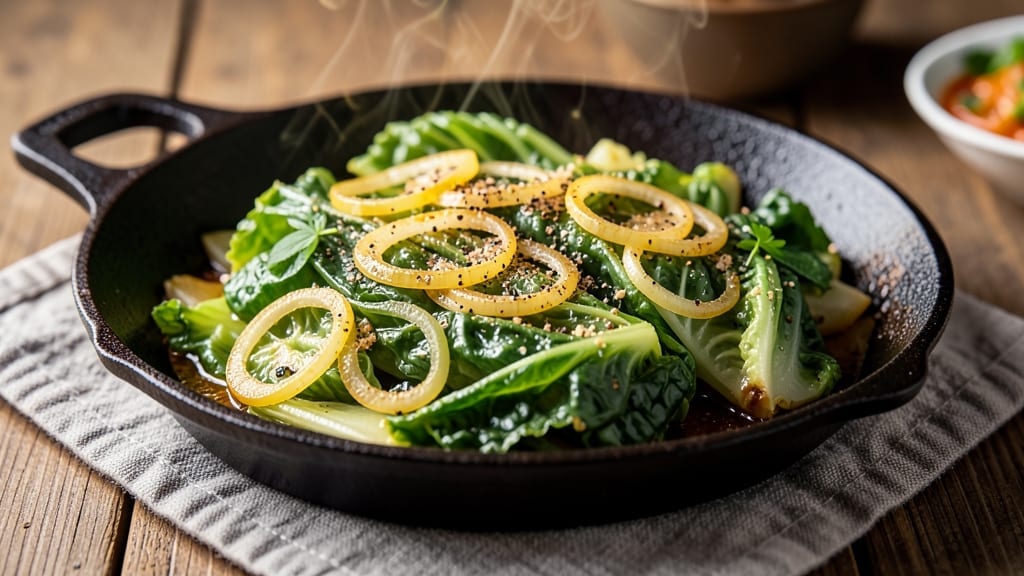
This 2-ingredient fried cabbage and onion recipe delivers crispy, caramelized bites that transform humble vegetables into a restaurant-worthy side. The secret lies in proper slicing and high-heat pan-frying—no fancy techniques required.
I’ve perfected this method to ensure tender cabbage and sweet, golden onions every time, with just a pinch of salt to elevate the flavors. It’s the kind of dish that proves simple ingredients can create something extraordinary.
The beauty of this recipe is its foolproof simplicity: just cabbage and onions, sliced thin and fried until perfectly tender yet crispy at the edges. No butter needed—just a light coating of oil to create that caramelized magic.
The process takes 20 minutes from start to finish, making it ideal for busy weeknights or last-minute side dishes. Whether you’re serving it alongside grilled meats or enjoying it as a light meal, the result is consistently delicious.
What you’ll end up with is a golden, aromatic pile of cabbage and onions that’s crispy on the outside and tender within, with a sweetness that develops as they caramelize. The onions add depth, while the cabbage provides a satisfying crunch.
This dish is versatile enough to pair with almost anything—think burgers, sandwiches, or even as a standalone vegan meal when prepared with the right oil.
The best part? You can customize it further with optional seasonings like garlic powder or black pepper for extra flavor. It’s a recipe that delivers restaurant-quality results with minimal effort, proving that sometimes, less truly is more. Let’s get cooking!
Ingredients for 2-ingredient fried cabbage and onion
Two ingredients, one pan—this vegetarian fried cabbage delivers restaurant-quality crunch and caramelized sweetness.
| Ingredient | Amount | Notes |
|---|---|---|
| Green Cabbage 🥬 | 1 lb | Thinly sliced, core removed |
| Yellow Onions 🧅 | 2 medium | Thinly sliced, peeled |
| Vegetable Oil 🫒 | ½ cup | High smoke point preferred |
| Kosher Salt 🧂 | 1 ½ tsp | Diamond Crystal preferred |
| Black Pepper 🌶️ | ¼ tsp | Freshly ground preferred |
| Garlic Powder 🧄 | ½ tsp | Optional for extra flavor |
The cabbage is your star. Green cabbage works best for its crisp texture, but savoy or red will add color. Look for heads that feel heavy for their size—Trader Joe’s or local farmers markets often carry the freshest. Thin slicing is critical: use a sharp knife or mandoline for even strips. Onions should be yellow or sweet varieties (like Vidalia)—they caramelize faster than red. Costco sells pre-sliced onions in bulk, which saves time. If using, the optional garlic powder adds depth without overpowering the natural sweetness of the vegetables.
No vegetable oil? Avocado oil or canola oil work just as well—stick to high-smoke-point oils to avoid bitterness. For salt, Diamond Crystal dissolves more easily than Morton’s, so use it if you prefer a cleaner finish. Want extra crunch? Add 1/4 tsp cornstarch to the sliced cabbage before frying—it creates a light coating. Black pepper can be omitted if you prefer a milder flavor, but the heat helps balance the sweetness. For a smoky twist, swap garlic powder for 1/4 tsp smoked paprika.
This dish reheats beautifully—just add a splash of water to the pan and warm through. Keeps for 4-5 days in the fridge, though the texture softens after day 2. For longer storage, freeze portions in a single layer before transferring to a bag—3 months of crispy goodness. Double the batch and use leftovers in wraps, tacos, or as a topping for grain bowls. The onions and cabbage can be prepped ahead and stored separately for 2 days before frying.
Why You’ll Love This Recipe
- No-Chop Nightmare: I swear, I’ve burned cabbage before trying to get it too thin—this time, I just slice it into thick wedges and let the oil work its magic. No knife skills required, just hands-on heat.
- Sweet-Savory Magic: The onions caramelize into sticky, golden strands while the cabbage crisps at the edges, salty and peppery with just enough bite. Honestly? It tastes like a hug from your favorite comfort-food grandma.
- Leftover Goldmine: Make a big batch and refrigerate it—it reheats like a dream in the microwave or skillet. My kids grab it for lunchboxes, and I sneak it into sandwiches. (Yes, even on a Tuesday night.)
- Pantry Staple Power: You’re already buying cabbage and onions, right? This uses what you’ve got, stretches it into a meal, and costs pennies per serving. Budget win, flavor win—no compromises.
Step-by-step instructions for crispy fried cabbage and onions
Here’s how to transform simple cabbage and onions into irresistibly crispy, caramelized bites.
Prep Vegetables for Even Cooking
Start by removing the core from the 1 lb green cabbage and thinly slicing it into even strips—about ¼-inch thick. I use a sharp chef’s knife and cut parallel to the cabbage’s natural lines for consistent slices. The 2 medium yellow onions should be peeled and sliced into thin half-moons, similar to how you’d slice for caramelized onions.
Spread the sliced cabbage and onions on separate plates. This prevents moisture buildup that can steam instead of crisp. For best results, I pat them dry with paper towels—this ensures maximum surface area contact with the hot oil, which is key to achieving that crispy texture we’re after.
Season and Heat the Oil
In a large skillet with high sides, heat the 0.5 cup vegetable oil over medium-high heat until it shimmers—about 350°F. You’ll know it’s ready when a small piece of cabbage sizzles vigorously when dropped in. While the oil heats, sprinkle the sliced cabbage and onions with the 1.5 tsp kosher salt, 0.25 tsp black pepper, and 0.5 tsp garlic powder. Toss them gently to ensure even seasoning.
Here’s the thing—don’t rush this step. Cold oil absorbs into the vegetables instead of creating that gorgeous sear we’re after. The oil should be hot enough to create bubbles around the edges of the cabbage and onions within 10 seconds of contact. If it doesn’t bubble immediately, let the oil heat up a bit more.
Fry in Batches for Perfect Crispiness
Working in batches, add about half of the cabbage and onions to the hot oil. Stir gently with a slotted spoon to prevent sticking and ensure even browning. Cook for 3-4 minutes until the edges turn golden brown and crispy. You want to see those edges developing a deep caramel color—this is when all the natural sugars in the vegetables begin to caramelize.
I press down gently on the cabbage with the back of the spoon during the first minute—this prevents it from curling and ensures even contact with the hot oil. If the cabbage starts to stick, carefully lift it and let the oil work its magic for another 30 seconds. Remove the cabbage to a paper towel-lined plate and repeat with the remaining vegetables.
Finish with a Final Crisp
Once all the cabbage and onions are golden brown, return everything to the skillet and cook for an additional 1-2 minutes over medium heat. This final step ensures all the vegetables are uniformly crispy and hot. The residual heat will continue to caramelize the edges while keeping the centers tender.
Taste and adjust seasoning if needed—sometimes the garlic powder needs a bit more emphasis. Serve immediately while still crispy, or let cool slightly if you prefer a less intense crunch. These make a fantastic side dish, topping for burgers, or even a quick stir-fry base. The key to success lies in that initial crisping—once you nail that, the rest is just about timing and patience.
Pro Tips For Making 2-Ingredient Fried Cabbage And Onion
- CUT CABBAGE INTO THIN STRIPS: I learned this the hard way—thick wedges steam instead of crisp up. Use a sharp knife and slice the cabbage as thinly as you can handle (about 1/8-inch). The onions should be similarly thin, so they cook at the same pace and don’t turn mushy.
- START WITH DRY, COLD CABBAGE: Wet cabbage releases water like a sad faucet, turning your pan into a soup. After slicing, spread the cabbage on a towel and pat it dry with paper towels. Cold cabbage also crisps better—let it sit out for 10 minutes before cooking.
- DON’T CROWD THE PAN: I used to toss everything in at once, and the cabbage just sat there, wilting. Work in batches—use a 12-inch pan and fill it no more than halfway with cabbage and onions. Overcrowding steams instead of frying, and you’ll end up with limp, soggy leaves.
- SALT IN STAGES: Dumping all the salt at once makes the cabbage release water like a broken pipe. Instead, salt the onions first and let them soften slightly, then add the cabbage and season again halfway through. This keeps the texture crisp and the flavor balanced—no one wants a bland, waterlogged mess.
Troubleshooting perfect results
Oil Too Hot?
If your cabbage and onions burn before crisping, your oil is likely too hot. Reduce heat to medium and let the oil stabilize at 325°F—just hot enough to sizzle gently when vegetables touch.
I’ve found that avocado oil handles higher heat better than vegetable oil without breaking down. For a quick test, drop a small piece of cabbage in—if it browns instantly, lower the heat immediately. 🌡️
Vegetables Too Soft?
Overcrowding the pan steams the cabbage instead of crisping it. Cook in two batches with no more than half the ingredients at a time. If the cabbage still turns mushy, your oil isn’t hot enough.
Increase heat to medium-high and ensure the pan is large enough—12-inch cast iron works best for even cooking. Pat slices extra dry with paper towels before frying to remove excess moisture.
Onions Not Caramelized?
Sweet onions like Vidalia caramelize faster than yellow onions, but they need lower heat to develop deep color. Cook onions separately in the same pan for 5-6 minutes over medium heat after removing the cabbage.
A splash of 1 tsp water at the end helps create a glossy, caramelized finish. For extra sweetness, add ½ tsp sugar to the onions before frying.
Sticking to the Pan?
Sticking happens when oil isn’t hot enough or the pan lacks enough surface area. Use a nonstick skillet or well-seasoned cast iron—I prefer Lodge for its even heat distribution. If sticking occurs, add 1 tbsp more oil and let it heat for 30 seconds before adding vegetables.
Avoid stirring too frequently—once every 30 seconds is enough to prevent burning while allowing a crispy crust to form.
Uneven Cooking?
Uneven slices lead to inconsistent doneness. Use a mandoline for ¼-inch-thick strips if you’re not comfortable freehand. If some pieces cook faster, remove them early and return them to the pan at the end for a final crisp.
For extra insurance, toss sliced vegetables with ½ tsp cornstarch before frying—this creates a light barrier that promotes even browning. 💡
Final Texture Too Dry?
If your fried cabbage and onions lose crispiness quickly, they likely cooked too long. Aim for golden brown edges in 3-4 minutes total—any longer risks drying them out. To revive texture, reheat in a dry skillet over medium heat for 1-2 minutes until crispy again.
For extra moisture, drizzle with 1 tsp olive oil before serving or toss with 1 tbsp fresh lemon juice to brighten flavors.
Nutrition facts
Frequently asked questions
Can I use this recipe with other vegetables?
While cabbage and onions are the star duo, you can easily swap in 1 cup of shredded carrots or ½ cup of sliced bell peppers for added color and nutrients. Just reduce cooking time by 1 minute since these veggies cook faster. For a heartier dish, try ½ cup of diced potatoes—they’ll need 5-6 minutes of extra cooking time. The key is keeping the total cooking time under 5 minutes per batch to maintain crispiness.
How do I store leftovers to keep them crispy?
Store fried cabbage and onions in an airtight container with a paper towel pressed on top to absorb moisture. They’ll stay fresh for 4-5 days in the fridge, though the texture softens after day 2. For longer storage, freeze portions in a single layer before transferring to a bag—3 months of crispy goodness. To revive texture, reheat in a dry skillet over medium heat for 1-2 minutes until crispy again.
Can I make this recipe without oil?
This recipe relies on oil for that signature crispy texture, but you can try an oven-baked version instead. Toss sliced cabbage and onions with 1 tbsp olive oil, 1 tsp cornstarch, and seasonings, then bake at 425°F for 20-25 minutes on a parchment-lined tray. The result won’t be as crispy, but it’s a healthier alternative with 90% less fat. For extra crunch, broil for 2-3 minutes at the end.
Why does my cabbage turn mushy instead of crispy?
Mushy cabbage usually means one of two things: either your oil wasn’t hot enough or you overcrowded the pan. Cook in two batches with no more than half the ingredients at a time, and ensure your oil reaches 350°F—it should sizzle vigorously when vegetables touch. Pat slices extra dry with paper towels before frying to remove excess moisture. A 12-inch cast iron skillet works best for even heat distribution.
What are the best ways to serve this dish?
This crispy cabbage and onion combo is incredibly versatile! Serve it as a side dish with grilled meats, burgers, or sandwiches. Use it as a taco topping for extra crunch, or mix it into grain bowls with quinoa or rice. For a quick meal, pile it onto toasted bread with a fried egg on top. The caramelized onions add sweetness that pairs perfectly with spicy dishes or rich sauces like balsamic glaze.

- 12 Bean Chili Recipe: Hearty Slow-Cooked Depth With 12 Legumes - October 17, 2026
- 5 Seed Bread Recipe: Nutty Crunch and Artisan Flavor in One Loaf - October 17, 2026
- 1 Lb Macaroni Salad Recipe: Bold, Crunchy, and Crowd-Pleasing - October 17, 2026