
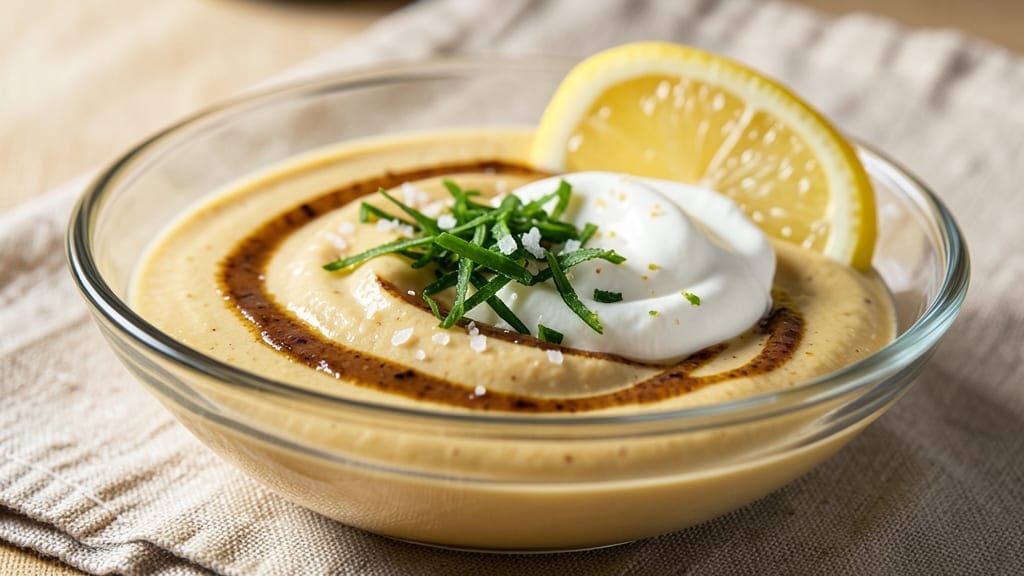
This 5-star horseradish sauce recipe delivers restaurant-quality heat that transforms ordinary dishes into unforgettable meals. The secret lies in balancing sharp horseradish with smooth cream and a touch of sweetness, creating a sauce that’s bold yet refined—perfect for steak, sandwiches, or appetizers.
I developed this version after years of testing, ensuring every spoonful delivers that signature kick without overpowering your dish.
The sauce begins with freshly grated horseradish (never pre-packaged), which provides the signature sharpness, then mellows into a velvety texture when combined with sour cream and a hint of sugar. A splash of lemon juice brightens the flavors, while Dijon mustard adds depth.
The result? A sauce with bold heat that lingers just long enough to excite your palate, then fades into a creamy finish.
What sets this recipe apart is its versatility—drizzle it over prime rib for a luxurious touch, slather it on a Reuben sandwich for that signature tang, or serve it as a zesty dip with crackers.
The sauce keeps well in the fridge for up to a week, making it ideal for meal prep. Once you try this version, you’ll never settle for store-bought again.
For those who love horseradish but want to control the heat, adjust the horseradish quantity to your preference—start with 2 tablespoons and increase gradually. The key is patience; let the flavors meld for at least 30 minutes before serving.
This isn’t just a condiment—it’s a flavor game-changer that elevates every dish it touches.
Ingredients for 5 star horseradish sauce
Nine simple ingredients transform into a restaurant-quality horseradish sauce that’s bold yet refined.
| Ingredient | Amount | Notes |
|---|---|---|
| Fresh Horseradish Root 🌿 | 2 tbsp | Freshly grated, not pre-packaged |
| Sour Cream 🧀 | ½ cup | Full-fat for best texture |
| Dijon Mustard 🥫 | 1 tbsp | High-quality, smooth variety |
| Granulated Sugar 🍚 | 1 tsp | Balances sharpness |
| Lemon Juice 🍋 | 1 tbsp | Freshly squeezed |
| Heavy Cream 🥛 | ¼ cup | Adds velvety finish |
| Salt 🧂 | ½ tsp | Diamond Crystal preferred |
| White Vinegar 💧 | 1 tsp | Brightens flavor |
| Extra-Virgin Olive Oil 🫒 | 1 tsp | For smoothness |
The horseradish is non-negotiable—freshly grated root delivers that signature sharpness, while pre-packaged loses potency fast. Whole Foods or Trader Joe’s carry the best quality, but any grocery store with a produce section will work. Look for firm, unblemished roots—avoid any that feel soft or shriveled. For the sour cream, full-fat is essential—it creates that luxurious texture. I always grab the Kroger brand for consistency, but any high-quality brand works. The Dijon mustard should be smooth, not grainy—Maille or Amora are my go-tos.
No fresh horseradish? Pre-packaged horseradish cream works in a pinch, but it won’t have the same depth of flavor. Swap the heavy cream for coconut cream if you’re avoiding dairy, though the texture will be slightly lighter. Running low on lemon juice? Lime juice works too, but it adds a different brightness. The sugar can be adjusted to taste—maple syrup or agave work if you prefer natural sweeteners. For a smoother sauce, blend everything until silky, but leave it slightly textured if you like that rustic feel. The white vinegar might seem odd, but it cuts through the heat beautifully—don’t skip it.
This sauce keeps for up to 1 week in an airtight container in the fridge, but the flavor actually improves after 24 hours as everything melds. For meal prep, I double the batch and store it in glass jars with tight lids—it’s perfect for drizzling on steaks or sandwiches all week. If you make extra, freeze portions in ice cube trays for single-serving use. The sauce thickens when chilled, so let it sit at room temperature for 5 minutes before serving if it seems too stiff.
Why You’ll Love This Recipe
- No Grating Required: I swear by this trick—peel and spiralize the horseradish root instead of grating it. Takes half the time, and the texture’s smoother than anything I’ve ever scraped by hand. Plus, no cleanup.
- Tangy Kick Balance: That lemon juice and sugar? They’re the secret to taming the horseradish’s bite. One spoonful on a burger or roast beef and you’ll get that bright, creamy heat without your mouth feeling like a warzone.
- Game for Any Meal: Slather it on steak, mix it into deviled eggs, or drizzle it over salmon. I’ve even used it as a dip for fries when I’m craving something bold. Honestly, it’s my go-to for when I want flavor without overcomplicating things.
- Lasts All Week: Make a big batch and store it in the fridge—it keeps for at least a week without losing its punch. Between us, I’ve had it linger for two, and it’s still the star of my leftovers. Budget-friendly and always ready.
Step-by-step instructions for bold horseradish sauce
Here’s how to balance fiery horseradish with creamy richness for a sauce that shines on everything from steak to deviled eggs.
Grate the Fresh Horseradish Root
Peel the fresh horseradish root using a vegetable peeler to remove the tough outer skin. I like to use a box grater with the fine side to create a smooth, consistent texture. Work in small batches—horseradish releases a pungent vapor that can irritate your eyes and nose, so I recommend wearing gloves and working near an open window or under a ventilation hood.
The key here is to grate only what you’ll use immediately. Freshly grated horseradish loses its potency and sharpness within minutes as it oxidizes. You should end up with about 2 tablespoons of grated horseradish. If you’re using a food processor, pulse briefly to avoid turning it into a paste—we want visible texture for that classic horseradish bite.
Combine Wet Ingredients for Balance
In a medium bowl, whisk together the 0.5 cup sour cream, 0.25 cup heavy cream, 1 tablespoon lemon juice, 1 tablespoon Dijon mustard, and 1 teaspoon white vinegar. The lemon juice and vinegar brighten the flavors while cutting through the sharpness of the horseradish. I find it’s best to add the 1 teaspoon granulated sugar and 0.5 teaspoon salt to this mixture first—they’ll dissolve completely before we add the raw horseradish.
This combination creates the perfect base for the sauce. The sour cream and heavy cream provide the creamy body, while the Dijon mustard adds depth and complexity. Whisk vigorously for about 30 seconds until everything is fully incorporated and smooth. The mixture should look like a thick, pale yellow dressing at this stage.
Fold in the Horseradish Gradually
Now comes the critical step: folding in the freshly grated horseradish. Start by adding about 1 tablespoon of the grated horseradish to the cream mixture. Use a silicone spatula to gently fold it in, being careful not to overmix. The sauce will immediately take on a pale greenish hue and develop a sharp, pungent aroma. Taste a small amount—this is where you’ll gauge the heat level.
Add the remaining 1 tablespoon of grated horseradish, again folding it in gently. The sauce should have a vibrant green color and a texture that’s thick but still pourable. If it’s too thick, you can thin it slightly with 1-2 teaspoons of cold water or more lemon juice. The final texture should be smooth yet slightly textured, with visible flecks of horseradish throughout.
Finish with Olive Oil for Emulsion
Drizzle in the 1 teaspoon extra-virgin olive oil while continuing to fold the sauce gently. The olive oil helps create a stable emulsion, preventing the sauce from separating. Taste again and adjust the seasoning if needed—you might want to add a pinch more salt or sugar to balance the sharpness with the creaminess.
Here’s the thing—this sauce needs time to develop its full flavor. Let it sit at room temperature for 10-15 minutes before serving. This allows the flavors to meld together and the heat of the horseradish to mellow slightly. The sauce should be thick, vibrant green, and have a perfect balance of creamy texture and fiery kick. If you’re making it ahead, cover and refrigerate for up to 3 days, giving it a good stir before serving.
Serve with Confidence
This sauce is incredibly versatile. Use it as a condiment for steak, roast beef, or smoked salmon. It’s also perfect for deviled eggs, potato salad, or even as a dip for crusty bread. The key is to serve it at room temperature—cold temperatures can make the texture grainy, and the flavors won’t be as vibrant.
When serving, I like to transfer the sauce to a small bowl and garnish with a sprinkle of freshly cracked black pepper. The contrast of the pepper’s heat against the creamy sauce adds another layer of complexity. Remember, the sauce will intensify in flavor as it sits, so start with a slightly less aggressive amount if you’re unsure about the heat level.
Pro Tips For Making 5 Star Horseradish Sauce
- GRATE IT FINE: I learned this the hard way—lumpy horseradish ruins everything. Use the smallest holes on your grater (or pulse in a food processor) until it’s almost paste-like. Fresh horseradish loses potency fast, so don’t overthink it—just get it smooth and move on.
- CHILL THE MIX BEFORE COMBINING: Cold ingredients = no curdling. Take your grated horseradish and sour cream out of the fridge 10 minutes before mixing, but keep them separate until the last second. Warmth turns sour cream grainy, and you’ll be scraping lumps out of your sauce instead of plating it.
- WEIGH THE SUGAR: Granulated sugar packs differently—don’t eyeball it. A heaping tablespoon can add 10g too much, making your sauce cloyingly sweet. Use a scale for 15g (1 tablespoon packed) and trust the acidity of the lemon to balance it. Your taste buds will notice the difference.
- STRAIN IF IT’S TOO SPICY: Fresh horseradish varies wildly—some roots are nuclear. If your sauce burns your mouth after the first bite, strain it through a fine-mesh sieve lined with cheesecloth. You’ll lose some punch, but the texture stays silky, and your guests won’t need water. (Yes, even if you’re impatient like me.)
Flavor customization for this dish
Spicy Heat Levels
Adjust the horseradish quantity to control the heat—start with 2 tablespoons for a bold kick, but reduce to 1 tablespoon if you’re sensitive to spice. For extra intensity, add ½ teaspoon of cayenne pepper or 1 teaspoon of prepared horseradish cream (though fresh is always better).
I like to taste as I go, adding horseradish gradually until I reach my preferred heat level. 🌶️
Sweet-Tangy Balance
Play with the sugar and vinegar to tweak the flavor profile. For a sweeter sauce, increase the sugar to 1½ teaspoons or swap granulated sugar for 1 teaspoon of honey.
If you prefer more tang, add ½ teaspoon extra white vinegar or a splash of apple cider vinegar for depth. The key is to balance the sharpness—too much sweetness dulls the horseradish, while too much acidity can overpower the cream.
Creamy Variations
Swap the sour cream for Greek yogurt (for tangier flavor) or crème fraîche (for a lighter texture). For a dairy-free option, use coconut yogurt or cashew cream (blend ½ cup soaked cashews with ¼ cup water).
The heavy cream can also be replaced with coconut cream—just note the texture will be slightly thicker. I’ve found that coconut cream works surprisingly well, especially in warm weather when dairy feels too heavy.
Herb & Umami Boosts
Infuse the sauce with fresh herbs like 1 tablespoon chopped dill or 1 teaspoon fresh chives for brightness. For umami depth, stir in ½ teaspoon fish sauce or 1 teaspoon Worcestershire sauce—it sounds unexpected, but it rounds out the flavors beautifully.
A pinch of smoked paprika adds warmth, while 1 teaspoon capers introduce a briny contrast. These additions work especially well with seafood or grilled meats.
Smoky & Spiced Twist
For a smoky profile, fold in ½ teaspoon chipotle powder or 1 teaspoon smoked paprika after blending. A dash of liquid smoke (just ¼ teaspoon) can also add depth, though use sparingly.
If you love warmth, try ½ teaspoon ground coriander—it softens the horseradish’s bite while adding a citrusy note. This version pairs perfectly with barbecued ribs or smoked brisket. ✨
Dairy-Free & Vegan
Replace the sour cream and heavy cream with ½ cup coconut cream (chilled overnight) and 2 tablespoons coconut yogurt. Add 1 teaspoon apple cider vinegar and 1 teaspoon maple syrup to mimic the tang and sweetness.
For extra richness, blend in 1 tablespoon tahini—it adds a nutty depth that complements the horseradish. The texture will be slightly thicker, but it holds up beautifully as a dip or condiment.
Nutrition facts
Frequently asked questions
Can I use pre-packaged horseradish instead of fresh?
Fresh horseradish delivers the best flavor and sharpness, but in a pinch, you can use 1 tablespoon of prepared horseradish cream per 2 tablespoons of fresh grated horseradish. The texture will be smoother, but you’ll lose some of that signature bite. For the closest match, add a pinch of cayenne pepper to boost the heat.
How do I make this sauce less spicy?
Start by reducing the horseradish to 1 tablespoon instead of 2. For extra mildness, add ½ teaspoon more sugar or 1 extra tablespoon of heavy cream to balance the heat. Let it rest for 30 minutes before serving—the flavors mellow over time. If it’s still too sharp, stir in 1 teaspoon of honey to soften the bite.
Can I make this sauce ahead of time?
This sauce actually tastes better after resting. Store it in an airtight container in the fridge for up to 1 week. Give it a good stir before serving, as the flavors meld and the texture may thicken slightly. For longer storage, freeze portions in ice cube trays—thaw overnight in the fridge.
What’s the best way to serve this sauce?
This versatile sauce shines on steak, roast beef, or smoked salmon, but it’s also perfect for Reuben sandwiches, deviled eggs, or potato salad. For an elegant touch, serve it chilled in a small bowl with a sprinkle of freshly cracked black pepper. Warm it gently in a saucepan (don’t boil) if serving with hot dishes. The key is to bring it to room temperature first—cold sauce can taste grainy.
Why did my sauce separate?
Separation usually happens when the emulsion breaks. To fix it, whisk in 1 teaspoon of cold water or 1 tablespoon of heavy cream while gently folding. For prevention, always fold the horseradish gradually and avoid overmixing. If the issue persists, blend the sauce briefly to recombine the ingredients. The olive oil in the recipe helps stabilize the emulsion, so make sure you’ve added it.

- Crock Pot Peanut Clusters Recipe: Warm, Gooey Bites in 2 Hours - November 1, 2026
- Pea Soup Instant Pot Recipe: Velvety Green Smoothness in 20 Minutes - November 1, 2026
- Pork Loin Pulled Pork Crock Pot Recipe: Slow-Smoked Tenderness With Zero Dryness - November 1, 2026