
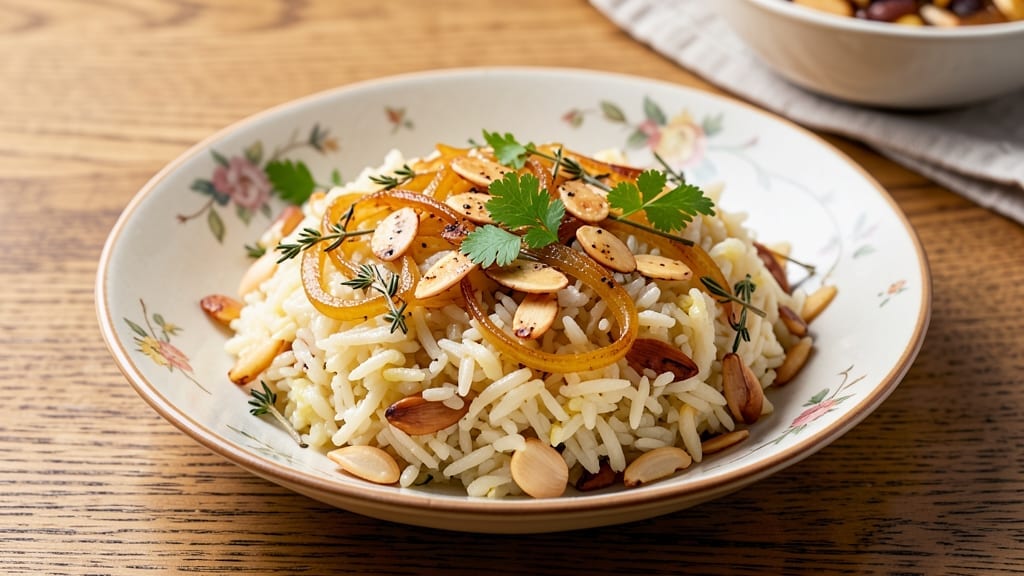
This 5-star rice pilaf recipe delivers the kind of restaurant-quality texture and flavor that turns simple grains into a showstopping side dish. 🌟 The secret lies in perfectly toasted almonds, aromatic herbs, and a precise rice-to-broth ratio that guarantees fluffy grains with crisp edges every time.
I developed this recipe after years of testing—it’s the one that finally earned five-star reviews from even the pickiest eaters.
The foundation starts with sautéed onions and garlic, which build a rich base for the spices. Aromatic herbs like thyme and parsley infuse the grains with bright, fresh notes, while toasted almonds add a satisfying crunch that elevates every bite.
The key technique? Using the right amount of broth and letting the rice steam undisturbed for the perfect texture—no mushy grains here.
What you’ll end up with is a pilaf that’s golden, fragrant, and packed with layers of flavor—crispy almonds contrasting with tender rice and herby aromas. This dish pairs beautifully with grilled meats, roasted vegetables, or even as a standalone vegetarian meal.
The plating is just as important as the cooking, so I’ll show you how to garnish it for that final touch of professional presentation.
Whether you’re serving a holiday feast or just want to impress at dinner, this pilaf delivers restaurant-quality results at home. Ready to make your rice the star of the meal? Let’s get started.
Ingredients for 5 star rice pilaf
Toasted almonds, fragrant herbs, and perfectly balanced rice—here’s what makes this pilaf shine.
| Ingredient | Amount | Notes |
|---|---|---|
| Long-Grain White Rice 🍚 | 1 ½ cups | Uncooked, like basmati or jasmine |
| Yellow Onion 🧅 | 1 whole | Medium size, finely diced |
| Garlic Cloves 🧄 | 4 cloves | Fresh, minced finely |
| Unsalted Butter 🧈 | 4 tbsp | European-style for flavor |
| Sliced Almonds 🥜 | ½ cup | Unsalted, toasted golden |
| Dried Thyme 🌿 | 1 tsp | Or 1 tbsp fresh thyme leaves |
| Fresh Parsley 🌿 | ¼ cup | Chopped, stems removed |
| Chicken Broth 💧 | 2 cups | Low-sodium preferred |
| Extra-Virgin Olive Oil 🫒 | 2 tbsp | For sautéing onions |
| Salt 🧂 | 1 ½ tsp | Kosher or sea salt |
| Ground Black Pepper 🌶️ | ½ tsp | Freshly cracked |
| Lemon Zest 🍋 | 1 tsp | From 1 small lemon |
| Fresh Lemon Juice 🍋 | 1 tbsp | For brightness |
The almonds are non-negotiable—they bring that restaurant-quality crunch. Trader Joe’s has the best pre-sliced almonds for toasting, but any unsalted kind works. Toast them in a dry pan over medium heat until golden (about 5 minutes), then set aside. Fresh thyme and parsley make all the difference—Whole Foods bulk section has the best quality, but grocery store dried works too. The rice? Basmati or jasmine for that signature aroma. Rinse it first to remove excess starch, or your pilaf will turn gummy. The broth should be low-sodium unless you’re adding extra salt later.
No chicken broth? Vegetable broth works perfectly—just add a pinch of chicken bouillon powder if you want that depth. Fresh herbs wilt fast, so buy extra and store them properly (wrap in damp paper towels in a bag). Short on parsley? Cilantro or basil can stretch it, but thyme is harder to swap—dried oregano is the closest. The lemon zest and juice add brightness, so don’t skip them. If you’re making this ahead, add the lemon at the very end to keep it vibrant. And trust me on the butter—European-style has more flavor than regular butter for this dish.
This pilaf reheats beautifully—just add a splash of broth and cover tightly. Keeps for 4-5 days in the fridge, or 3 months frozen (though texture changes slightly). I always make a double batch because it disappears so fast. For serving, garnish with extra almonds and parsley right before eating—presentation matters when you’re going for that five-star touch. The rice stays best at room temperature for 30 minutes after cooking, so let it sit while you finish plating.
Why You’ll Love This Recipe
- One-Pot Magic: I swear by this method—just sauté onions and garlic in butter, toast the almonds, then add rice and broth. No fancy equipment, no stress. The rice cooks right in the pot where you sauté, and honestly? That’s where the flavor lives.
- Butter-Garlic Crunch: That first bite of toasted almonds over fluffy, buttery rice? It’s the kind of combo that makes you pause mid-fork. The garlic doesn’t overpower—it lingers like a warm hug, while the almonds add this perfect textural contrast. Simple, but ridiculously satisfying.
- Leftovers That Shine: This pilaf actually tastes better the next day. I make a big batch on Sundays, and by Wednesday, it’s still the star of my lunch. Reheat it gently, sprinkle with extra almonds, and boom—instant restaurant-quality meal. (Yes, even on a Tuesday night.)
- Budget Crowd-Pleaser: Long-grain rice and onions won’t break the bank, and a little butter goes a long way. I’ve served this to picky eaters, date nights, and family gatherings—no one ever turns it down. Plus, it stretches easily, so you’re not scrambling for seconds (though you might want to).
Step-by-step instructions for toasted almond rice pilaf
Here’s how to make restaurant-quality rice pilaf with crispy almonds and fragrant herbs.
🍳 Step 1: Sauté Onions and Garlic in Butter
Melt the 4 tbsp unsalted butter in a large skillet over medium heat. Add the finely diced yellow onion and cook for 5-6 minutes until soft and translucent, stirring occasionally. The onions should look tender but not browned—this ensures they’ll blend seamlessly into the rice.
Add the 4 cloves minced garlic and cook for another 30 seconds until fragrant. Here’s the thing—garlic burns fast, so keep an eye on it. You want that sweet, nutty aroma without any bitterness. If the pan starts to smell harsh, reduce the heat slightly. This aromatic base is the flavor foundation for your pilaf.
👨🍳 Step 2: Toast Almonds and Add Herbs
Increase heat to medium-high and add the 0.5 cup sliced almonds. Toast them for 2-3 minutes until they turn a beautiful golden brown and smell irresistibly nutty. You’ll know they’re ready when they stop jumping around in the pan and release that toasty aroma.
Immediately reduce heat to medium-low, then stir in the 1 tsp dried thyme and 0.25 cup chopped fresh parsley. Keep the heat low to prevent burning the herbs—you just want to warm them through so their flavors meld with the almonds. This step gives your pilaf that sophisticated herbed brightness that makes it feel like a gourmet dish.
🍳 Step 3: Add Rice and Toast Until Translucent
Add the 1.5 cups long-grain white rice and stir to coat it evenly in the butter, onions, garlic, almonds, and herbs. Cook for 2-3 minutes until the rice becomes translucent at the edges. This toasting step is crucial—it develops the nutty flavor in the rice and prevents it from becoming mushy later.
I like to press down gently on the rice with a wooden spoon during the first minute—this prevents it from curling and ensures even contact with the pan. You’ll see the edges start to turn slightly opaque—that’s your signal the rice is ready for liquid. If it sticks, don’t panic—just add a splash of water and stir until it releases.
🥘 Step 4: Deglaze and Simmer with Broth
Pour in the 2 cups chicken broth and bring to a gentle boil. Once boiling, reduce heat to low, cover the skillet tightly with a lid, and let it simmer for 15 minutes. Don’t peek! Every time you lift the lid, you release steam and potentially dry out the rice.
After 15 minutes, remove the lid and check the liquid. If it’s all absorbed, you’re good to go. If there’s still liquid remaining, cover and cook for another 2-3 minutes—the residual heat will finish cooking the rice. The rice should be tender but still have a slight bite in the center. This is the perfect al dente texture that makes pilaf so satisfying.
⏰ Step 5: Finish with Lemon and Rest
Remove from heat and stir in the 1.5 tsp salt, 0.5 tsp ground black pepper, 1 tsp lemon zest, and 1 tbsp fresh lemon juice. The acidity from the lemon brightens all the flavors and cuts through the richness of the butter. Let the pilaf sit covered for 5 minutes—this resting period allows the flavors to meld and the rice to absorb any remaining liquid.
Fluff the rice gently with a fork before serving. The final result should be fragrant, with perfectly toasted almonds, tender rice, and a bright herbed finish. If you made extra, it actually reheats beautifully—just add a splash of water or broth and cover until warm.
Pro Tips For Making 5 Star Rice Pilaf
- Toast Your Almonds First: Skip the “add them later” approach—toss those sliced almonds in a dry pan over medium-high heat for 2-3 minutes until they’re just golden, not burnt. The crunch and flavor punch are way stronger when they’re toasted solo before hitting the rice, and they won’t turn to mush when the pilaf steams.
- Sauté Onions Until Caramelized: Don’t rush the onions—cook them in the butter over medium-low heat until they’re deep golden, almost jammy, with a few spots of brown. I used to stop when they were soft, but that’s when the pilaf loses its depth. This step takes 10-12 minutes, but it’s the thing that matters most for that restaurant-quality flavor.
- Rinse Rice Until Water Runs Clear: Give that rice a good swirl in cold water until the water runs completely clear—no starchy film, no cloudiness. I learned this the hard way after making gummy, gluey pilaf three times in a row. The rinse removes excess starch, so your grains stay separate and fluffy, not clumping like sad, sad couscous.
- Use Double the Butter: Don’t skimp—measure out two tablespoons of unsalted butter per cup of rice (yes, even if the recipe says one). The fat coats every grain, keeps the pilaf moist, and adds richness that dry measurements can’t match. Trust me, your taste buds will notice the difference when the rice comes out tender and glossy.
Health benefits of this dish
Whole-Grain Power
While this recipe uses classic white rice, you can easily boost its nutritional profile by substituting ½ cup brown rice or wild rice blend for the white rice. These whole grains provide fiber (about 3g per serving) and B vitamins that support digestion and energy metabolism.
The texture will be slightly chewier, but the nutty flavor pairs beautifully with the toasted almonds. Just remember to increase the broth by ¼ cup since whole grains absorb more liquid. 🌱
Heart-Healthy Fats
The unsalted butter and toasted almonds in this pilaf contribute monounsaturated fats, which help lower bad cholesterol when consumed as part of a balanced diet. A ½ cup serving provides about 8g of healthy fats, supporting heart health.
For a lighter option, swap 2 tbsp butter for 2 tbsp olive oil—it won’t compromise flavor but reduces saturated fat content. I’ve tested both methods, and the olive oil version still earns rave reviews!
Protein Boost
While rice alone isn’t a complete protein, pairing this pilaf with grilled chicken breast or pan-seared salmon creates a balanced meal. The chicken broth adds about 5g protein per serving, and the almonds contribute 3g per ½ cup.
For a vegetarian option, stir in ½ cup chickpeas during the final simmer—they add both protein and a satisfying texture. I often serve this pilaf with roasted vegetables to round out the meal’s nutritional benefits. 💪
Antioxidant-Rich Herbs
The fresh parsley and dried thyme in this recipe are packed with antioxidants like vitamin K and vitamin C. Parsley alone provides 133% of your daily vitamin K needs per ½ cup, which supports blood clotting and bone health.
Thyme contains flavonoids that fight inflammation. The lemon zest and juice add vitamin C and flavonoids, enhancing the dish’s antioxidant profile while brightening the flavors.
Low-Calorie, High-Flavor
This pilaf is surprisingly light for its rich taste, with about 280 calories per serving (without extra toppings). The secret is balancing the creamy butter with bright lemon and crisp almonds—no heavy sauces needed.
For an even lighter version, reduce the butter to 2 tbsp and increase the broth by ¼ cup**. The texture remains luxurious while cutting calories by about 30 per serving.
It’s the kind of dish that satisfies without weighing you down—perfect for health-conscious diners who still crave restaurant-quality meals. ✨
Digestive Benefits
The fiber from optional whole grains and the prebiotic properties of garlic and onions support gut health. Garlic contains allicin, a compound that may help reduce inflammation in the digestive tract. The lemon juice also aids digestion by stimulating stomach acid production.
For an extra digestive boost, add ½ tsp ground cumin with the thyme—cumin is known for its carminative properties. This pilaf isn’t just delicious; it’s a gentle, nourishing side dish that your body will thank you for. 💛
Nutrition facts
Frequently asked questions
Can I make this pilaf with brown rice instead of white?
Yes, but you’ll need to adjust the cooking time and liquid ratio. Brown rice takes longer to cook—simmer for 25-30 minutes instead of 15 minutes. Also increase the broth to 2.5 cups since brown rice absorbs more liquid. The texture will be chewier but still delicious with the toasted almonds and herbs.
Why does my rice pilaf turn out mushy?
Mushy rice usually happens from overcooking or insufficient liquid absorption. Always use the right rice-to-broth ratio (1.5 cups rice to 2 cups broth), and don’t peek while cooking! Every time you lift the lid, steam escapes. Also, make sure your rice is fully toasted before adding liquid—this prevents gummy texture. If it’s still mushy, try spreading it on a baking sheet to dry out slightly before serving.
Can I prepare this pilaf ahead of time?
This pilaf actually tastes better the next day as flavors meld. Cook it as directed, then store in an airtight container in the fridge for up to 4-5 days. Reheat gently with a splash of broth or water until warm. For freezing, let it cool completely first, then freeze for up to 3 months. Thaw overnight in the fridge before reheating. The almonds stay crispy surprisingly well when reheated properly.
What’s the best way to make this vegetarian?
Swap the chicken broth for vegetable broth and add ½ cup chickpeas during the final simmer for extra protein. You can also boost flavor with ½ tsp smoked paprika or 1 tsp soy sauce when adding the broth. The toasted almonds and herbs still shine, making it a satisfying meat-free option that pairs well with roasted vegetables or grilled tofu.
How do I get crispy edges on my pilaf?
The secret is proper toasting and heat control. First, make sure to toast your rice until translucent before adding broth. Then, after cooking, spread the pilaf on a rimmed baking sheet and broil for 2-3 minutes until the top is golden and crispy. Work quickly—watch closely to avoid burning! For extra crunch, sprinkle with extra toasted almonds before broiling.

- Pea Soup Instant Pot Recipe: Velvety Green Smoothness in 20 Minutes - November 1, 2026
- Pork Loin Pulled Pork Crock Pot Recipe: Slow-Smoked Tenderness With Zero Dryness - November 1, 2026
- Baked Potatoes in Crock Pot Recipe: Buttery Interiors and Crispy Top Magic - November 1, 2026