
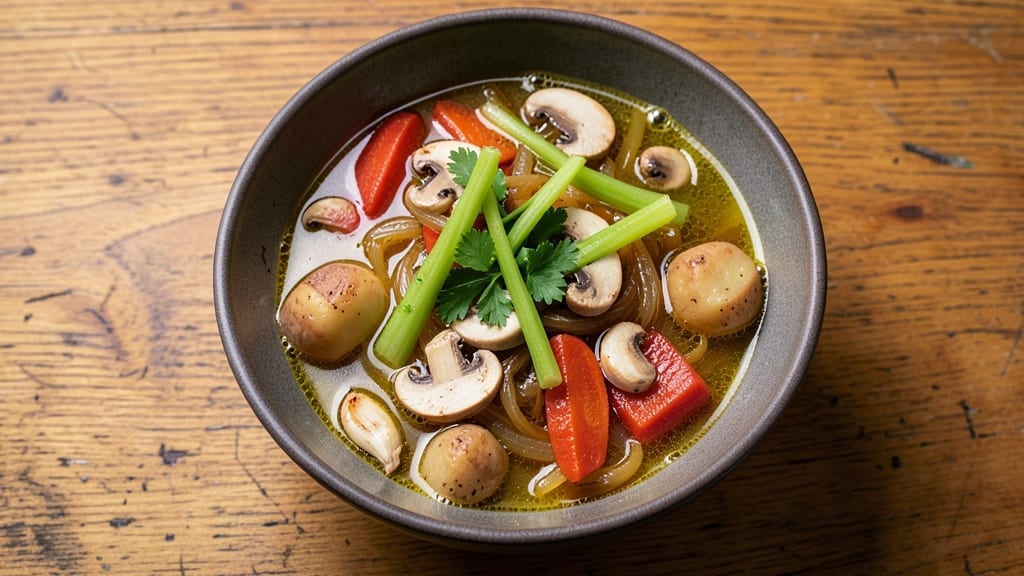
This 5-star vegetable soup recipe delivers restaurant-quality depth in a single pot, where umami-rich mushrooms and caramelized onions build flavor layers that transform simple vegetables into something extraordinary.
The secret lies in proper sautéing—slow-cooking aromatics until they release their natural sweetness—before adding broth and letting everything meld into a velvety, satisfying broth. This isn’t just a soup; it’s a textural masterpiece with crispy chickpeas, tender root vegetables, and herbs that brighten every spoonful.
What sets this recipe apart is the umami-packed base created through proper seasoning techniques: toasted spices, a splash of soy sauce, and a touch of miso paste for depth.
Unlike many vegetable soups that rely on bland broth, this version builds complexity through layered flavors—caramelized onions, earthy mushrooms, and fresh herbs—while maintaining a clean, bright finish. The result is a soup that feels luxurious yet approachable, perfect for weeknight dinners or special occasions.
By the time you finish simmering, you’ll have a golden, aromatic broth filled with perfectly tender vegetables, protein-rich chickpeas, and herbs that add freshness with every bite.
The texture contrast—creamy broth against crispy chickpeas and silky vegetables—makes this soup unexpectedly satisfying, while the umami notes ensure it’s anything but boring. Serve it in deep bowls with crusty bread to soak up every last drop.
This recipe is designed to impress without requiring advanced skills—just patience and attention to detail during the sautéing and simmering stages. The instructions break down each step clearly, ensuring you achieve that restaurant-quality depth at home.
Whether you’re feeding a crowd or meal prepping for the week, this soup delivers five-star results every time.
Ingredients for 5 star vegetable soup
Restaurant-quality umami layers begin with these carefully chosen vegetables and aromatic bases.
| Ingredient | Amount | Notes |
|---|---|---|
| Yellow Onions 🧅 | 2 large | Chopped into even slices |
| Garlic Cloves 🧄 | 6 cloves | Minced for depth |
| Carrots 🥕 | 3 medium | Peeled and sliced into rounds |
| Russet Potatoes 🥔 | 2 medium | Diced into even pieces |
| Celery Stalks 🧅 | 3 whole | Diced for aromatic base |
| Creamy Mushrooms 🍄 | 8 oz | Sliced for umami richness |
| Chickpeas 🥜 | 1 ½ cups | Canned, drained and rinsed |
| Vegetable Broth 💧 | 4 cups | Low-sodium preferred |
| Extra-Virgin Olive Oil 🫒 | ½ cup | For sautéing aromatics |
| White Miso Paste 🍶 | 1 tbsp | For umami depth |
| Soy Sauce 🥢 | 1 tbsp | For savory balance |
| Fresh Thyme Leaves 🌿 | ½ tbsp | Chopped for brightness |
| Fresh Parsley Leaves 🌿 | ¼ cup | Chopped for garnish |
| Vegetable Oil 🫒 | 1 tbsp | For crisping chickpeas |
| Salt 🧂 | 1 ½ tsp | Diamond Crystal preferred |
| Black Peppercorns 🌶️ | ½ tsp | Freshly cracked |
The aromatic vegetables form the soul of this soup. Yellow onions should be sweet and yellow—not red or white—since they caramelize more evenly. Creamy mushrooms like shiitake or oyster add depth, but button mushrooms work in a pinch. For the best flavor, Trader Joe’s or Whole Foods Market carry pre-sliced mushrooms that save time without sacrificing quality. The celery should be crisp with no brown spots—organic celery from the grocery store’s produce section typically delivers the best flavor. Russet potatoes are ideal for their fluffy texture, but Yukon Golds add natural sweetness if you prefer a richer taste. Always peel and dice the potatoes evenly so they cook uniformly.
No white miso? Red miso or soy sauce alone works, though the color will differ slightly. Fresh thyme is ideal, but dried thyme at one-third the amount gets you close. For extra umami without miso, a splash of coconut aminos or liquid aminos delivers similar depth. The chickpeas should be canned and drained—no need to soak. If you want to crisp them separately, toss them in vegetable oil and salt before roasting at 400°F for 15-20 minutes. The vegetable broth should be low-sodium to control seasoning, but homemade broth made from vegetable scraps elevates the dish further.
This soup tastes even better the next day as flavors meld. Store leftovers in airtight glass containers for up to 5 days in the fridge. For longer storage, freeze portions in ziplock bags for 3 months. The broth can be separated and frozen separately to use as a base for other dishes. To reheat, warm gently on the stove—never microwave—and adjust seasoning with a pinch of salt or a splash of soy sauce. The crispy chickpeas lose their crunch when reheated, so always make a fresh batch when serving.
Why You’ll Love This Recipe
- Pantry-to-Pot Magic: I swear by this recipe—no fancy ingredients, just onions, carrots, and potatoes that transform into something rich and satisfying. The secret? Sautéing garlic until it’s golden (not burnt) and letting the celery mellow into the broth. It’s the kind of meal where you realize you’ve got dinner covered without even thinking about it.
- Caramelized Depth: That crispy edge on the potatoes? Pure satisfaction. I cut them into even chunks, let them soften in the broth, then finish with a quick stir-fry to get them golden—just enough to add texture without overpowering the creamy carrots. The onions? They melt into sweetness that ties everything together. Honestly, it’s the kind of flavor that makes you pause mid-sip of wine and go, “Wait, how is this so good?”
- Lunchbox Hero: This soup is my go-to for meal prep—it reheats like a dream and keeps for days in the fridge. I’ll make a big batch on Sunday, portion it out, and grab it for work lunches or quick dinners. The potatoes stay sturdy, the carrots hold their bite, and the broth? Still flavorful even after three days. (Yes, even on a Tuesday night.)
- Budget-Friendly Powerhouse: Between us, this recipe is my secret weapon for stretching groceries. Yellow onions and carrots last forever, potatoes are cheap, and celery? A single bunch goes a long way. I’ll often toss in whatever’s left in the crisper—maybe a leftover bell pepper or wilted spinach—and it still tastes like a five-star meal. No waste, all flavor.
Step-by-step instructions for umami-packed vegetable soup
Here’s how to build layers of savory depth using just one pot.
Develop the Umami Base with Aromatics
Heat the 0.5 cup extra-virgin olive oil in a large pot over medium heat. Add the 2 large chopped yellow onions and cook for 5 minutes until softened and translucent. This foundational step ensures your soup develops the rich, caramelized flavor that carries through every spoonful.
Add the 3 whole diced celery stalks and 3 medium sliced carrots, stirring to coat in the oil. Cook for another 5 minutes until the vegetables begin to soften slightly. The celery and carrots will release their natural sweetness as they cook, creating a balanced aromatic foundation. Here’s the thing—don’t rush this step. You’re building flavor, not just cooking vegetables.
Push the vegetables to the sides of the pot and add the 6 cloves minced garlic and 1 tbsp vegetable oil. Cook for 30 seconds until fragrant—this is when your kitchen should smell like a professional restaurant. The garlic should sizzle gently without burning. If it darkens too quickly, reduce the heat slightly. This quick cook preserves the garlic’s sweetness rather than letting it turn bitter.
Build Depth with Mushrooms and Miso
Add the 8 oz sliced creamy mushrooms to the pot and cook for 4-5 minutes until they release their moisture and begin to brown. The mushrooms should develop a rich, earthy flavor that will become the umami backbone of your soup. Stir occasionally to ensure even cooking and prevent any pieces from sticking to the bottom.
Reduce heat to medium-low and stir in the 1 tbsp white miso paste and 1 tbsp soy sauce. The miso will dissolve into the mushroom juices, creating a velvety, savory base. Cook for 2 minutes while stirring constantly—this ensures the miso integrates completely without developing a raw taste. The soy sauce adds another layer of complexity, balancing the richness of the miso with its salty brightness.
Simmer the Vegetables to Perfection
Add the 2 medium diced russet potatoes, 1.5 cups drained chickpeas, and 4 cups vegetable broth to the pot. Bring to a gentle boil, then reduce heat to low and let it simmer uncovered for 20-25 minutes. You want the vegetables to soften completely while maintaining their shape—this ensures each bite delivers both texture and flavor. The potatoes should be fork-tender, and the chickpeas should be heated through but not mushy.
Season with 1.5 tsp salt and 0.5 tsp freshly cracked black peppercorns, stirring well to distribute the seasoning evenly. Taste the soup at this stage—it should be rich and savory but not overly salty. Adjust the seasoning if needed, remembering that the miso and soy sauce already contribute significant saltiness. The broth should be infused with all the flavors you’ve built so far, creating a complex foundation.
Finish with Fresh Herbs and Garnish
Once the vegetables are tender, stir in the 0.5 tbsp chopped fresh thyme leaves. Let the soup simmer for 2-3 minutes to allow the thyme to release its bright, aromatic qualities. The thyme should perfume the entire pot, adding a fresh contrast to the deep umami flavors. Remove from heat and let it sit covered for 5 minutes—this resting period allows the flavors to meld completely.
Before serving, stir in the 0.25 cup chopped fresh parsley leaves. The parsley adds a final brightness that cuts through the richness of the soup. Ladle into bowls and serve immediately. Each spoonful should deliver a perfect balance of textures—creamy mushrooms, tender vegetables, and the satisfying bite of chickpeas—all wrapped in a broth that sings with umami depth.
Pro Tips For Making 5 Star Vegetable Soup
- SWEAT THE ONIONS FIRST: I used to toss everything in raw and wonder why the soup tasted flat—don’t. Cut the yellow onions into even ¼-inch slices and cook them in 1 tablespoon of butter or oil over medium heat until they’re golden, not just soft. That caramelization builds flavor that nothing else in the soup will replicate.
- PEEL POTATOES AFTER COOKING: Russet potatoes are stubborn to peel raw, and you’ll end up with uneven chunks. Instead, boil them whole in salted water for 10 minutes first, then peel them hot—skin slides off like butter. Cut them into 1-inch cubes afterward, and they’ll stay intact while simmering.
- STOP WHEN CELERY IS TENDER: Celery stalks should break down but not turn to mush. After adding them to the pot, taste one piece—it should be fork-tender but still hold its shape. Overcooking turns it into a sad, watery sludge. If yours disappears too fast, reduce the heat to low and let it simmer gently.
- SALT THE WATER LIKE THE OCEAN: Skip the light sprinkle—this soup needs bold flavor. Use 1½ tablespoons of salt per gallon of water (yes, even if you’re using broth). The potatoes and carrots will soak up that salt, making the final soup taste rich and satisfying, not bland. Trust me, you won’t regret it.
Serving suggestions for this dish
Bread Pairings
Serve this soup with crusty sourdough or baguette—the chewy texture contrasts beautifully with the creamy broth. I like to toast slices until golden and serve them alongside, so guests can soak up every last drop. For extra flair, brush the bread with garlic-infused olive oil before toasting. 🥖
If you prefer something heartier, try rustic whole-grain bread or focaccia with rosemary and sea salt. The nutty grains complement the soup’s earthy mushrooms and carrots, while the herbs echo the thyme and parsley in the dish.
Pre-slice the bread and warm it in the oven at 350°F for 5-7 minutes to keep it fresh.
Toppings for Extra Flavor
Add toasted pumpkin seeds or crushed red pepper flakes for a crunchy, spicy kick. I sprinkle about 1 tbsp seeds per bowl, lightly toasted in a dry pan for 2-3 minutes until fragrant.
For a creamy contrast, dollop with vegan yogurt or cashew cream—just swirl a spoonful into each serving before eating. 🌶️
Fresh lemon wedges brighten the soup’s richness, especially if you prefer a lighter finish. A squeeze of lemon over the top adds a zesty lift that balances the umami depth. For a smoky touch, top with smoked paprika or a sprinkle of nutritional yeast for a cheesy flavor without dairy.
Presentation Tips
Use deep, wide bowls to showcase the soup’s vibrant colors and textures. Ladle the soup carefully so the chickpeas and vegetables are visible—this makes the dish look as delicious as it tastes. Garnish with extra parsley or thyme sprigs for a pop of color and freshness. 🍽️
For a restaurant-worthy touch, serve with small side plates holding the bread, toppings, and a lemon wedge. Arrange everything on a wooden board or slate tray for a rustic, inviting presentation. The contrast of warm soup against cool garnishes makes the dish even more appealing.
Nutrition facts
Frequently asked questions
Can I make this soup without miso paste?
For a similar umami depth, substitute the 1 tbsp white miso with 1 tbsp soy sauce + 1 tsp nutritional yeast or 1 tbsp coconut aminos. The nutritional yeast adds a cheesy note while coconut aminos provides a deeper savory profile. Adjust salt levels afterward since these substitutes contain sodium.
How do I make the chickpeas extra crispy?
Roast them separately before adding to the soup! Toss 1.5 cups drained chickpeas with 1 tbsp vegetable oil and ½ tsp salt, then spread on a baking sheet. Roast at 400°F for 20-25 minutes until golden and crispy. Add them to the soup in the last 5 minutes of simmering so they stay crunchy.
Can I use frozen vegetables instead of fresh?
Yes, but with adjustments. Use frozen chopped carrots and celery (thawed) and fresh mushrooms for best texture. Skip the pre-sautéing step for frozen veggies—just add them directly to the broth after the mushrooms. The flavor will be slightly less concentrated, but still delicious. For potatoes, stick to fresh or thawed frozen cubes (not pre-diced).
Why does my soup taste bland after simmering?
This usually happens from one of three issues: insufficient sautéing of aromatics, skipping the miso/soy sauce, or not tasting as you go. First, ensure you cook onions/celery/carrots for 10+ minutes until deeply caramelized. Second, never skip the miso and soy sauce—they’re flavor anchors. Third, taste the broth before adding salt and adjust with more soy sauce or a pinch of salt if needed.
Can I make this soup in an Instant Pot?
Yes! Sauté onions, celery, carrots, and garlic as directed, then add mushrooms and cook 3 minutes on high. Stir in miso, soy sauce, potatoes, chickpeas, and broth. Seal and cook on high pressure for 8 minutes. Quick-release the pressure, then stir in thyme and parsley. The texture will be slightly different (softer potatoes), but the flavor remains rich and satisfying.

- Baked Potatoes in Crock Pot Recipe: Buttery Interiors and Crispy Top Magic - November 1, 2026
- Braised Beef Short Ribs Recipe: Crock Pot Fall-Off-Bone Magic in 6 Hours - November 1, 2026
- Crock Pot Cocoa Recipe: Velvety Warmth With Hidden Spice Magic - November 1, 2026