
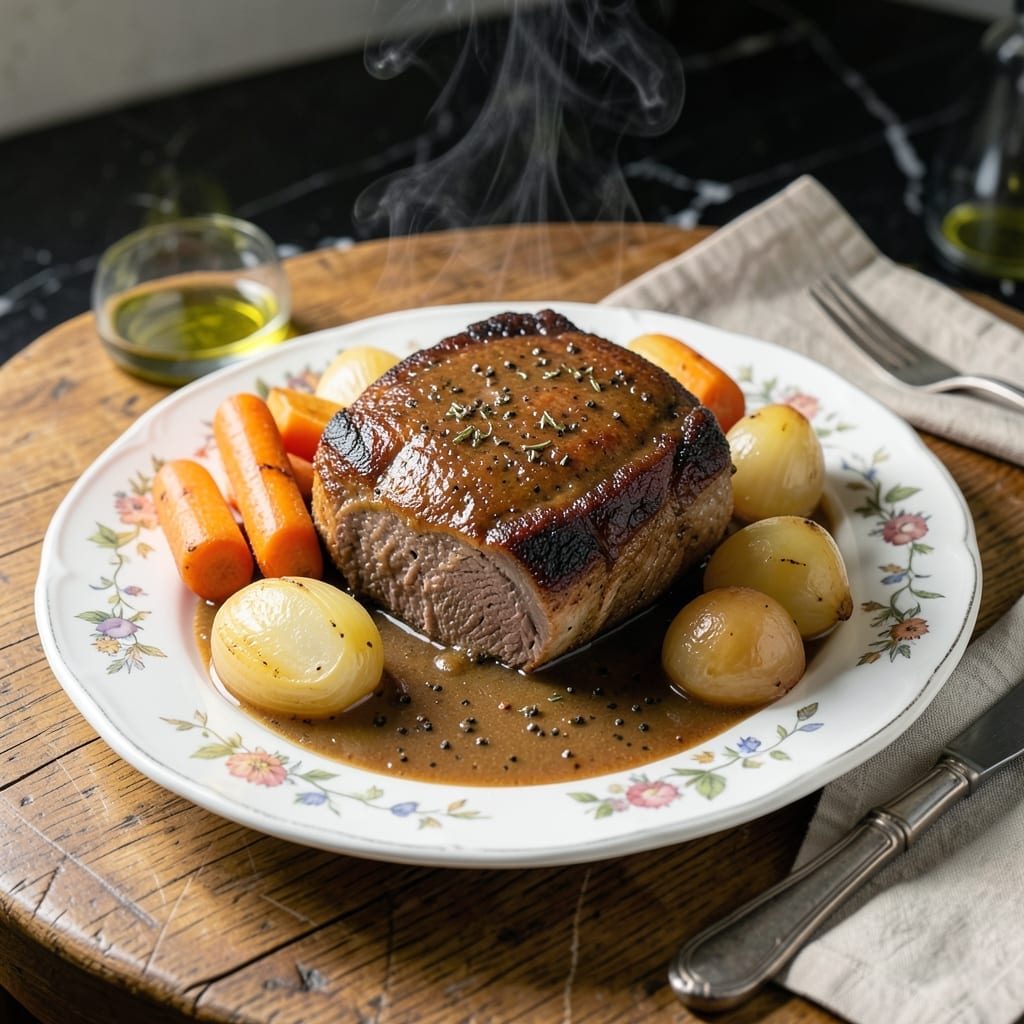
There’s a reason pot roast was a staple on 1950s dinner tables—it delivers comfort in every bite. This slow-braised classic transforms tough cuts into fork-tender perfection with minimal effort.
The technique is timeless: sear the beef, then let it simmer with vegetables in a rich, savory broth. The low, steady heat breaks down the meat into velvety texture while infusing every ingredient with deep flavor.
What emerges is a hearty, nostalgic dish that fills the kitchen with an irresistible aroma. The carrots, potatoes, and onions soak up the beefy juices, creating a meal that feels like a warm hug.
This is the kind of recipe that turns a simple Sunday into something special. Let’s bring back the magic of 50s-era home cooking.
Ingredients for 50’s Prime Time Pot Roast
Classic comfort food requires just these pantry and fresh staples for timeless flavor.
| Ingredient | Amount | Notes |
|---|---|---|
| Beef Chuck Roast 🥩 | 3 lb | Well-marbled, trimmed of excess fat |
| Olive Oil 🫒 | 2 tbsp | Divided for searing and browning |
| Kosher Salt 🧂 | 1 ½ tsp | Diamond Crystal preferred |
| Freshly Ground Black Pepper 🌶️ | 1 tsp | Coarse grind for texture |
| Yellow Onions 🧅 | 2 whole | Medium-sized, quartered |
| Carrots 🥕 | 3 whole | Large, cut into 3-inch chunks |
| Yukon Gold Potatoes 🥔 | 1 ½ lb | Peeled and quartered |
| Garlic Cloves 🧄 | 5 cloves | Smashed, peeled |
| Beef Broth 💧 | 3 cups | Low-sodium preferred |
| Tomato Paste 🍅 | 2 tbsp | For depth of flavor |
| Dry Red Wine 🍷 | 1 cup | Cabernet Sauvignon or Merlot |
| Fresh Thyme Sprigs 🌿 | 3 pieces | Plus 1 tsp chopped leaves |
| Bay Leaves 🍃 | 2 pieces | Dried, whole |
| All-Purpose Flour 🌾 | 2 tbsp | For thickening gravy |
| Unsalted Butter 🧈 | 2 tbsp | For finishing the sauce |
The beef chuck roast is non-negotiable for authentic texture—look for well-marbled cuts at your butcher or Whole Foods meat counter. Avoid leaner options like sirloin, as they lack the connective tissue that breaks down into that signature tenderness. Yukon Gold potatoes hold their shape better than russets during the long braise, and their buttery flavor complements the dish perfectly.
Short on red wine? Substitute with additional beef broth plus 1 tbsp balsamic vinegar for similar depth. Fresh thyme can be replaced with 1 tsp dried thyme, but reduce the amount slightly as dried herbs are more concentrated. If you lack tomato paste, 1/3 cup tomato sauce works in a pinch, though the flavor will be slightly milder.
The finished pot roast tastes even better the next day as the flavors meld. Store leftovers in an airtight container in the refrigerator for up to 4 days or freeze for 3 months. Reheat gently on the stovetop with a splash of broth to maintain moisture.
Why You’ll Love This Recipe
- Set It and Forget It: I brown the chuck roast, toss in onions, and the oven does the rest—no babysitting required.
- Melt-in-Your-Mouth Tender: That beef falls apart with just a fork after slow-roasting with olive oil and pepper all afternoon.
- Sunday Dinner, Any Day: I serve it to company or pack leftovers for lunch—this pot roast never feels out of place.
- Budget Stretch: One inexpensive chuck roast feeds my family for two nights, and the leftovers only taste better.
Step-by-Step Instructions for Slow-Braised Pot Roast
Master the technique that transforms tough cuts into fall-apart tender comfort food with rich, velvety gravy.
Step 1: Sear and Season the Beef Chuck Roast
Pat the 3 lb Beef Chuck Roast thoroughly dry with paper towels. This critical step ensures a proper sear rather than steaming. Season all sides aggressively with the 1.5 tsp Kosher Salt and 1 tsp Freshly Ground Black Pepper, pressing the seasoning into the meat so it adheres well.
Heat 1 tbsp Olive Oil in a Dutch oven over medium-high heat until shimmering. Add the roast and sear undisturbed for 4-5 minutes per side until a deep mahogany crust forms. You’ll know it’s ready to flip when it releases easily from the pot. Transfer to a plate and set aside.
Step 2: Build the Aromatic Foundation
Reduce heat to medium and add the remaining 1 tbsp Olive Oil to the pot. Add the 2 whole Yellow Onions, 3 whole Carrots, and 5 cloves Garlic Cloves. Cook for 5-6 minutes, stirring occasionally, until the onions begin to soften and develop light golden edges.
Stir in the 2 tbsp Tomato Paste and cook for 1-2 minutes until it darkens slightly and coats the vegetables. This step develops the paste’s raw flavor and creates a rich base for your braising liquid. Add the 1 cup Dry Red Wine and scrape up all browned bits from the bottom with a wooden spoon.
Step 3: Braise with Vegetables and Herbs
Return the seared roast to the pot along with any accumulated juices. Add the 1.5 lb Yukon Gold Potatoes, 3 cups Beef Broth, 3 pieces Fresh Thyme Sprigs, and 2 pieces Bay Leaves. The liquid should come about halfway up the roast—add a splash of water if needed.
Bring to a gentle simmer, then reduce heat to low. Cover and cook for 3 to 3.5 hours, turning the roast every 45 minutes, until the beef yields easily to a fork. The potatoes should be tender but not falling apart when pierced.
Step 4: Thicken and Finish the Gravy
Remove the roast and vegetables to a serving platter and tent with foil. Skim excess fat from the braising liquid, then place the pot over medium heat. Whisk the 2 tbsp All-Purpose Flour with 2 tbsp Unsalted Butter to form a paste, then stir into the liquid.
Simmer for 5-7 minutes, stirring constantly, until the gravy thickens enough to coat the back of a spoon. Taste and adjust seasoning with additional salt and pepper if needed. Strain if you prefer a smoother texture, or leave as is for a rustic finish.
Pro Tips For Making 50’S Prime Time Pot Roast
- Sear Hard, Don’t Rush: Get your pan screaming hot—about 2 tablespoons of olive oil shimmering—before adding the chuck roast. I learned this the hard way: a pale sear means weak flavor, and you’ll regret skimping on that crust.
- Salt the Roast Overnight: Pat the chuck roast dry, then hit it with kosher salt at least 12 hours before cooking. Sounds weird, but it works: the meat absorbs the seasoning deep, not just on the surface.
- Skip the Cold Roast: Let the beef sit at room temperature for 30-45 minutes before searing. My grandmother swore by this, and she was right: cold meat seizes up and cooks unevenly.
- Use Two Onions: Double the yellow onions—slice them thick and layer them under the roast. They’ll melt into the braising liquid, adding sweetness without extra effort.
Storing and Reheating This 50s prime time pot roast
Refrigerator Storage
Let this dish cool for no more than 2 hours before transferring to airtight containers. I use glass Pyrex with snap-on lids for best results. Store at 40°F or below for up to 4 days. The flavors deepen overnight as everything melds together. ❄️
Freezer Storage
This meal freezes beautifully for up to 3 months without quality loss. I recommend quart-size freezer bags—they lay flat to save space. Leave 1 inch headspace for expansion and squeeze out excess air to prevent freezer burn.
Stovetop Reheating
This is my preferred method for maintaining texture. Transfer contents to a heavy pot, add ¼ cup beef broth to prevent sticking, and heat over medium-low for 15-20 minutes. Stir occasionally and taste for seasoning adjustments. 🔥
Microwave Reheating
For quick portions, microwave covered with a damp paper towel. Use 50% power for 2-3 minutes, stir, then continue in 1-minute intervals until reaching 165°F. Add a splash of water if it appears dry.
Oven Reheating
Preheat to 300°F and place in a covered baking dish with 2 tbsp broth. Heat for 25-30 minutes until warmed through. This method works best for larger portions and helps maintain moisture.
Nutrition Facts
Frequently Asked Questions
What’s the best cut for this dish?
Use a well-marbled beef chuck roast. This cut has enough connective tissue to break down beautifully during the 3-3.5 hour braise, creating that melt-in-your-mouth texture. Avoid leaner cuts like sirloin.
Can I use a slow cooker instead?
Yes! Sear the meat first, then transfer everything to your slow cooker. Cook on low for 8-10 hours or high for 5-6 hours. The flavor will be slightly different but still delicious.
Why does my gravy turn out thin?
This usually means the flour-butter paste didn’t have enough time to thicken. Simmer uncovered for an extra 5-10 minutes after adding it. For thicker gravy, mix 1 tbsp cornstarch with 1 tbsp water and stir in.
Can I add other vegetables?
Try adding parsnips, mushrooms, or celery during the last 1.5 hours of cooking. Just cut them into similar sizes for even cooking.

- 6 Oz Chocolate Chip Cookie Recipe: Perfectly Balanced Crispy Edges and Chewy Hearts - September 25, 2026
- 6-Inch Coffee Cake Recipe: Vanilla Bean Swirls and Buttery Streusel Topping - September 25, 2026
- 1 Hour Soup Recipe: Velvety Richness Without the Wait - September 25, 2026