
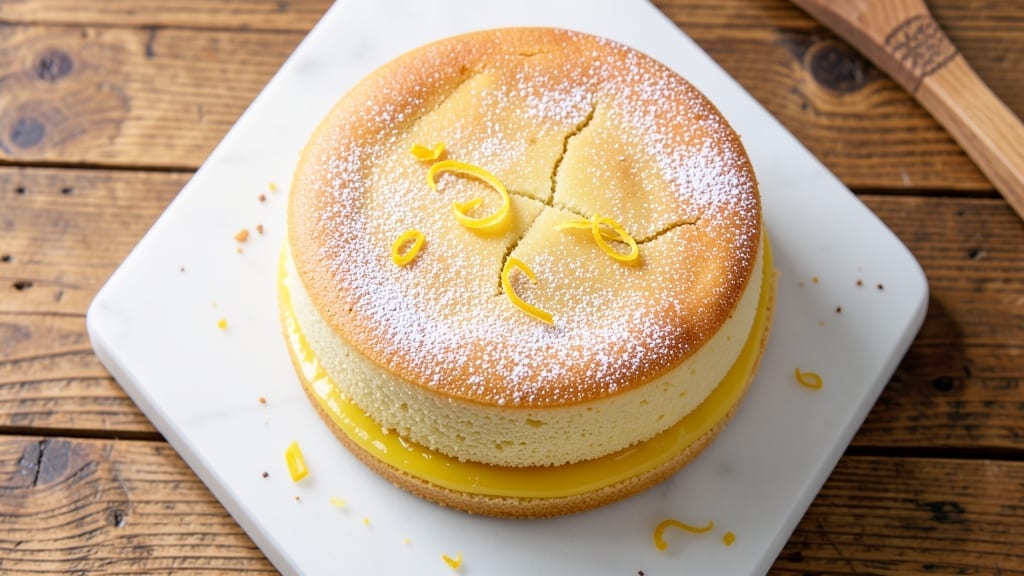
A 6-inch lemon cake delivers bright citrus layers and velvety buttercream in perfect proportion—ideal for special occasions or satisfying cravings. This recipe balances tender crumb with zesty lemon flavor, using simple techniques that yield professional results every time.
The key lies in precise measurements and proper baking times to ensure a moist cake that holds its shape.
What sets this recipe apart is the buttery frosting that complements the tangy lemon without overpowering it. We’ll use a classic vanilla buttercream, but you can easily swap in cream cheese frosting for added richness.
The cake’s height is carefully controlled through baking time and cooling, ensuring it’s sturdy enough for slicing yet light enough to melt in your mouth.
By the end, you’ll have a golden, moist cake with a bright lemon flavor that shines through each bite. The frosting adds a smooth, creamy finish that makes every slice feel like a treat. Whether for a celebration or a simple dessert, this recipe delivers restaurant-quality results with minimal effort.
Perfect for small gatherings or personal indulgence, this cake requires just 350°F and about 25-30 minutes of baking time. The ingredients are straightforward, and the instructions are designed to guide you through each step with confidence. Let’s get started on creating your perfect lemon cake!
Ingredients for 6 inch lemon cake
Bright citrus and velvety frosting—just twelve ingredients transform your kitchen into a bakery.
| Ingredient | Amount | Notes |
|---|---|---|
| All-Purpose Flour 🌾 | 1 ½ cups | Sifted for light texture |
| Granulated Sugar 🍚 | 1 ½ cups | White or light brown |
| Unsalted Butter 🧈 | 1 cup | Room temperature, full-fat |
| Fresh Lemon Juice 🍋 | ¾ cup | From 3-4 medium lemons |
| Large Eggs 🥚 | 2 whole | Room temperature, separated |
| Baking Powder 🧂 | 2 tsp | Aluminum-free preferred |
| Salt 🧂 | ½ tsp | Fine sea salt |
| Zest of 2 Lemons 🍋 | 2 tbsp | Finely grated, vibrant color |
| Vanilla Extract 🌿 | 1 tsp | Pure, high-quality |
| Powdered Sugar 🍚 | 2 cups | For buttercream, sifted |
| Heavy Whipping Cream 🥛 | 1 cup | Cold, full-fat |
| Unsalted Butter 🧈 | ½ cup | Cold, cubed for frosting |
The lemons are everything here. Use Meyer lemons if available—their sweeter juice balances the tartness perfectly. If you’re working with standard lemons, pick the juiciest ones at the store—squeeze them before buying to test. The zest needs to be vibrant, so avoid lemons with dull yellow skin. For the butter, room temperature is non-negotiable—it should be soft but not greasy. I always grab Land O’Lakes or Plugrá from the grocery store’s dairy case, but any good-quality brand works. Pro tip: zest your lemons right before mixing—it loses potency fast.
No Meyer lemons? Regular lemons plus 1 tbsp honey in the juice will mimic that sweet-tart balance. Short on powdered sugar? Sift granulated sugar works in a pinch, though it won’t be as smooth. The buttercream can be made ahead—up to 2 days in the fridge—but bring it to room temperature before whipping. For a richer frosting, swap half the powdered sugar for confectioners’ sugar. And if you’re feeling fancy, add 1 tsp lemon extract to the buttercream for extra zing. The eggs? Room temperature is key—they’ll whip better for the buttercream if they’re not straight from the fridge.
This cake keeps beautifully—3 days covered at room temperature or 1 week in the fridge. For longer storage, freeze the unfrosted cake for up to 3 months. The frosting? 2 days in the fridge, but bring it to room temperature before using. I always make a double batch of frosting—one for the cake, one for lemon bars—because it disappears fast. If your frosting isn’t coming together, it might be too warm. Pop it in the fridge for 10 minutes and try again. Trust me, the wait is worth it for that silky texture.
Why You’ll Love This Recipe
- No Fuss Mixing: I swear by this recipe—just creaming butter and sugar, then tossing in dry ingredients. No food processor, no weird ratios, and no waiting for eggs to come to room temp. Honestly, the only measuring I do is the lemon juice (and even that’s just eyeballing it if I’m in a rush).
- Zingy Magic: That bright lemon juice cuts through the richness of the butter like a dream. The cake stays tender but holds its shape, and the crust? Crisp enough to make you want to eat it with a fork. Between us, I’ve made this with bottled juice before, but fresh is where it shines.
- Portion Perfection: A 6-inch cake is my secret weapon for small gatherings or lazy afternoons. It’s big enough to feel special but small enough that I actually eat it all instead of letting it sit in the fridge for weeks. (Yes, even on a Tuesday night.)
- Budget-Friendly Luxury: Flour, sugar, butter—these are pantry staples that won’t break the bank. And because it’s a single cake, I can afford to use the good stuff (like fresh lemons) without guilt. Leftovers? They’re rare, but if they happen, they reheat beautifully with a quick zap in the microwave.
Step-by-step instructions for 6-Inch lemon cake
Here’s how to create a perfectly moist lemon cake with bright citrus flavor and velvety buttercream.
Prepare the Cake Batter
Preheat your oven to 350°F and grease a 6-inch round cake pan, then line the bottom with parchment paper. In a medium bowl, whisk together the 1.5 cups all-purpose flour, 2 tsp baking powder, and 0.5 tsp salt. Set aside—this is your dry mix.
In a large bowl, cream together the 1 cup unsalted butter and 1.5 cups granulated sugar on medium speed until light and fluffy, about 3-4 minutes. This step is crucial for a tender crumb. Add the 2 whole large eggs one at a time, mixing well after each addition. Scrape down the sides of the bowl to ensure even incorporation.
In a separate small bowl, combine the 0.75 cup fresh lemon juice and 2 tbsp lemon zest with the 1 tsp vanilla extract. Pour this vibrant lemon mixture into the butter-sugar-egg combination and mix until just combined. Gradually add the dry ingredients to the wet, mixing on low speed until the batter is smooth and no flour streaks remain. Be careful not to overmix—this can make your cake dense.
Bake the Lemon Layers
Divide the batter evenly between two 3-inch round cake pans (or bake in one pan and split the batter for two layers). Bake for 20-25 minutes or until a toothpick inserted into the center comes out clean. The edges should be golden brown, and the tops should spring back when gently pressed.
Here’s the thing—lemon cakes can dry out if overbaked. I pull mine out when the center still looks slightly underdone; the residual heat will finish cooking it. Let the cakes cool in their pans for 10 minutes before transferring to a wire rack to cool completely. This gradual cooling prevents cracking.
Make the Lemon Buttercream
While the cakes cool, make the buttercream by beating the 0.5 cup cold cubed butter with an electric mixer until creamy, about 2 minutes. Gradually add the 2 cups powdered sugar, mixing on low speed until combined. Increase the speed to medium and whip for 3-4 minutes until light and fluffy.
In a small bowl, whisk together 2 tbsp lemon juice (from an additional lemon if needed) and 1 tsp lemon zest. Add this to the buttercream and mix until fully incorporated. In a separate bowl, whip the 1 cup cold heavy whipping cream to stiff peaks. Gently fold the whipped cream into the buttercream until smooth and airy. This extra step gives you that professional, cloud-like frosting texture.
Assemble the Cake
Once your cakes are completely cool, level the tops if needed using a serrated knife. Place one cake layer on a cake stand or plate. Spread a generous layer of the lemon buttercream over the top, leaving a ½-inch border uncovered. This ensures clean sides when you stack the second layer.
Place the second cake layer on top and press down gently. Spread the remaining buttercream over the entire cake, then use an offset spatula to create a smooth finish. For extra flair, pipe a simple border around the edges or add a swirl pattern. Chill the cake in the refrigerator for 30 minutes before serving to let the frosting set slightly—this prevents melting during hot weather.
Pro Tips For Making 6 Inch Lemon Cake
- Whisk Eggs Like Butter: Beat the eggs and sugar together until they’re pale and thick—about 3-4 minutes with a hand mixer. I used to stop when the sugar dissolved, but this step actually incorporates air, making the cake lighter. (Yes, it’s tempting to rush, but resist.)
- Use Cold Butter: Cut the unsalted butter straight from the fridge into the dry ingredients—no need to soften it first. This keeps the texture tender and prevents the cake from turning greasy. I learned this the hard way after a batch turned out dense and heavy.
- Measure Flour Right: Spoon the all-purpose flour into the measuring cup, then level it off with a knife—don’t pack it down. Too much flour makes the cake dry, and nobody wants a crumbly lemon cake. (Trust me, I’ve made that mistake.)
- Bake Until Golden: Pull the cake out when the top is springy to the touch and a toothpick comes out clean—or with a few moist crumbs. Overbaking dries out the lemon flavor, and underbaking leaves it gummy. A 6-inch cake usually needs about 25-30 minutes at 350°F, but ovens vary.
Dietary considerations for these flavors
Gluten-Free Adaptation
Swap the 1.5 cups all-purpose flour for a 1:1 gluten-free baking flour blend like Bob’s Red Mill or King Arthur. These blends include xanthan gum, which mimics gluten’s structure.
Add ½ tsp extra baking powder to compensate for reduced lift. For best results, weigh your flour (1 cup = 120g) since gluten-free flours vary in density. 🌾
Dairy-Free Options
Replace the 1 cup unsalted butter with 1 cup dairy-free butter (like Earth Balance) or 1 cup coconut oil (solid). For the frosting, use ½ cup dairy-free butter and 1 cup coconut cream (chilled overnight) whipped to stiff peaks. The texture will be slightly denser but still delicious. 🥥
Lower Sugar Version
Reduce granulated sugar to 1 cup and replace the remaining ½ cup with ½ cup unsweetened applesauce. For the frosting, use 1.5 cups powdered sugar and add 1 tsp lemon extract to enhance flavor. The cake will be slightly less sweet but still moist and bright. 🍎
Nut-Free Considerations
All ingredients in this recipe are naturally nut-free, but always check labels on baking powder and vanilla extract for cross-contamination warnings. For extra safety, use certified nut-free brands like Anthony’s Goods for vanilla extract. The recipe remains safe for nut allergies as written. 🌟
Egg-Free Substitution
Replace the 2 eggs with 2 tbsp ground flaxseed mixed with 6 tbsp water (let sit for 5 minutes to thicken). For the frosting, use 1 cup dairy-free cream cheese (like Kite Hill) instead of heavy whipping cream. The texture will be slightly different but still creamy. 🥚
Nutrition facts
Frequently asked questions
Can I make this lemon cake in a different size pan?
Yes, but adjust your baking time and oven temperature. For a 8-inch cake, use the same batter but bake at 325°F for 35-40 minutes. For a 9-inch cake, increase batter by 50% and bake at 325°F for 40-45 minutes. Always check doneness with a toothpick—it should come out clean but slightly moist.
How do I prevent my lemon cake from drying out?
Keep the cake moist by brushing warm layers with 2 tbsp lemon syrup (equal parts sugar and water, heated until dissolved) while cooling. Store leftovers in an airtight container with a slice of bread to absorb excess dryness. For extra moisture, add 1 tbsp sour cream or yogurt to the batter.
Can I substitute bottled lemon juice?
Fresh lemon juice gives the best flavor, but bottled works in a pinch. Use ⅔ cup bottled lemon juice (instead of ¾ cup fresh) and add 1 tsp extra lemon zest to compensate for the lack of freshness. Avoid “artificial lemon flavor” additives—they’ll overpower the cake’s natural taste.
Why does my frosting look grainy?
Grainy frosting usually means the powdered sugar wasn’t sifted or the butter was too warm. Sift all powdered sugar before mixing and use cold butter (not melted). For extra smoothness, beat the frosting for 5-6 minutes total. If it’s still grainy, strain it through a fine-mesh sieve before using.
How can I make this cake gluten-free?
Replace the 1.5 cups all-purpose flour with a 1:1 gluten-free baking flour blend (like Bob’s Red Mill) and add ½ tsp extra baking powder. Weigh your flour (1 cup = 120g) for accuracy. The cake will be slightly denser but still moist. Let it cool completely before frosting to prevent crumbling.

- Pork Loin Pulled Pork Crock Pot Recipe: Slow-Smoked Tenderness With Zero Dryness - November 1, 2026
- Baked Potatoes in Crock Pot Recipe: Buttery Interiors and Crispy Top Magic - November 1, 2026
- Braised Beef Short Ribs Recipe: Crock Pot Fall-Off-Bone Magic in 6 Hours - November 1, 2026