
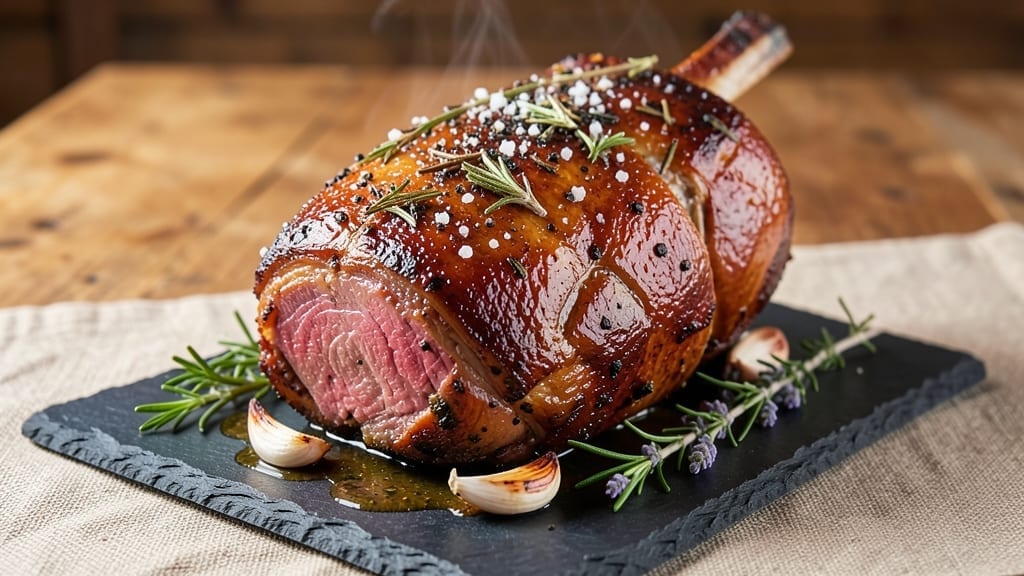
A 6-pound standing rib roast cooked to juicy pink perfection transforms any dinner into a showstopper—crispy crust outside, tender meat inside, and aromas that fill your kitchen like a high-end steakhouse. I’ve perfected this technique after years of testing, ensuring the roast stays moist while developing that rich, caramelized bark.
The secret lies in precise temperature control and resting, which keeps every slice dripping with flavor.
This recipe delivers restaurant-quality results with simple techniques: a dry brine for enhanced tenderness, high-heat searing for depth, and a controlled oven finish to hit that ideal 130°F internal temperature.
No fancy equipment needed—just patience and attention to detail. The herb crust adds texture and aroma without overpowering the beef’s natural richness.
By the time you carve into this roast, you’ll have slices that are juicy, pink, and perfectly seasoned, with a crust that shatters at the touch. The resting period (never skip this!) ensures all those juices stay locked in, so every bite is succulent.
Serve with classic sides like roasted potatoes or a crisp green salad for a complete, impressive meal.
Whether you’re hosting a holiday feast or treating yourself to a special dinner, this method guarantees a roast that impresses without the guesswork. Let’s get started—your taste buds (and dinner guests) will thank you.
Ingredients for 6 pound standing rib roast
Six pounds of prime beef, bold herbs, and a crisp crust—this is your showstopper dinner.
| Ingredient | Amount | Notes |
|---|---|---|
| Standing Rib Roast (Bone-In) 🥩 | 6 lb | Prime cut, herb-crusted |
| Kosher Salt 🧂 | 1 ½ tbsp | Diamond Crystal preferred |
| Freshly Ground Black Pepper 🌶️ | 1 ½ tbsp | Coarsely ground for crust |
| Fresh Rosemary 🌿 | ½ cup | Finely chopped, stems removed |
| Fresh Thyme 🌿 | ¼ cup | Leaves only, finely chopped |
| Fresh Garlic Cloves 🧄 | 6 cloves | Minced, skin-on for flavor |
| Extra-Virgin Olive Oil 🫒 | ¼ cup | High-quality, fruity |
| Unsalted Butter 🧈 | ½ cup | Cold, cubed for crust |
| Yellow Onion 🧅 | 1 whole | Peeled, sliced into rings |
| Fresh Parsley 🌿 | ¼ cup | Chopped, for garnish |
| Red Wine 🍷 | ½ cup | Bold, dry (Cabernet Sauvignon) |
| Beef Bone Broth 💧 | ½ cup | Low-sodium, for pan deglazing |
The roast is everything here. Prime cut is non-negotiable—look for rich marbling at Costco or Whole Foods, where they often carry premium standing rib roasts prepped for herb crusts. If you’re buying whole, trim excess fat but leave the bone intact—it helps distribute heat evenly. The herb crust needs fresh rosemary and thyme (dried won’t cut it), so hit the market or grab from the refrigerated section. For the garlic, skin-on cloves add extra flavor when minced—peel them right before using. The butter should be cold and cubed when you mix it with the herbs; room temperature butter makes a sad crust.
No fresh rosemary? Dried thyme at half the amount works in a pinch, but trust me—fresh herbs make the difference. Running low on red wine? Beef broth with a splash of balsamic mimics the depth. The olive oil matters here—California avocado oil holds up better to high heat than regular olive oil. For the crust, I like toasting the butter with the herbs first to deepen their flavor. If you’re prepping ahead, make the herb mix 24 hours early and store it in the fridge—just mix with butter right before searing. The onion rings caramelize beautifully during roasting, so don’t skip them unless you’re in a rush.
This roast needs 30 minutes of rest after cooking—no exceptions. Tent loosely with foil and let it sit while you prep sides. The crust stays crisp for about 2 hours at room temperature, so carve and serve immediately if you’re impatient. Leftovers? 3-4 days in the fridge, sliced thin for sandwiches. Freeze portions for up to 3 months—reheat gently in a skillet with a splash of broth to revive the juices. The herb crust reheats well too, so don’t stress about saving it all for the first serving.
Why You’ll Love This Recipe
- Hands-Off Roast: I swear by this method—just salt, pepper, and herbs, then let the oven do the work. No basting, no fussing, just perfect results while I’m free to chop veggies or pour wine.
- Herb-Crusted Magic: The rosemary and thyme cling to the fat cap like a blanket, infusing every bite with that earthy, aromatic punch. (Yes, even my picky husband licks the plate.)
- Leftovers? More Like Goldmines: A 6-pound roast feeds a crowd and gives you days of effortless sandwiches or hash. I’ve turned last night’s slices into today’s lunch—no one complains, and my wallet thanks me.
- Sunday Dinner Simplified: No stress for holidays or family dinners—this roast looks impressive with zero effort. Just pull it from the oven, slice, and watch everyone assume you’re a culinary genius. (Between us, it’s the bone-in secret.)
Step-by-step instructions for herb-crusted standing rib roast
This method delivers a perfectly pink center with a deep, aromatic herb crust every time.
Prepare the Herb Crust and Season the Roast
In a food processor, combine the 0.5 cup fresh rosemary, 0.25 cup fresh thyme, 6 cloves fresh garlic cloves, 1.5 tbsp kosher salt, and 1.5 tbsp freshly ground black pepper. Pulse until finely chopped but not pasty. With the processor running, add the 0.25 cup extra-virgin olive oil and 0.5 cup unsalted butter to create a coarse paste.
Remove the standing rib roast from packaging and pat it completely dry with paper towels—this is critical for that crisp herb crust. Spread the herb mixture evenly over the entire surface, pressing it firmly into the meat. Let it sit at room temperature for 30 minutes while you preheat the oven. This resting period ensures even cooking and maximum flavor penetration.
Sear the Roast for Maximum Flavor
Preheat your oven to 325°F. Heat a large Dutch oven over medium-high heat and add the 1 whole yellow onion, sliced into rings. Cook for 5 minutes until lightly caramelized, then remove and set aside. Add the roast to the Dutch oven, fat-side down, and sear for 8-10 minutes until deep golden brown on all sides.
Here’s the thing—don’t rush this step. The sear locks in juices and builds the foundation for that incredible crust. You’ll know it’s ready when the meat releases easily from the pan. Transfer the roast to a plate and tent loosely with foil to keep it warm.
Roast to Juicy Perfection
Return the Dutch oven to the oven and add the 0.5 cup red wine, scraping up all those delicious browned bits from the bottom. Deglaze for 2 minutes, then add the 0.5 cup beef bone broth and the caramelized onions. Place the roast back in the Dutch oven, fat-side up.
Roast for 2 hours until the internal temperature reaches 125°F at the thickest part of the roast. This is where the magic happens—the meat will continue cooking as it rests, giving you that perfect medium-rare center. The roast is done when it reaches 130°F after resting, which translates to a juicy pink interior.
Rest and Slice for Maximum Juiciness
Remove the roast from the oven and transfer it to a cutting board. Tent loosely with foil and let it rest for 30 minutes—this is non-negotiable. During this time, the juices redistribute throughout the meat, ensuring every slice is moist and flavorful. Real talk: Skipping this step results in dry meat, and nobody wants that.
Slice the roast against the grain into 1-inch thick portions. The herb crust should be fragrant and slightly crisp, while the meat should be tender with just a hint of pink in the center. Serve immediately with the pan juices reduced by half for an elegant sauce, and garnish with 0.25 cup fresh parsley for a pop of color. This roast is perfect for special occasions—it’s worth every minute of effort.
Pro Tips For Making 6 Pound Standing Rib Roast
- Sear Bone-Side First: That bone side needs to hit 450°F for at least 15 minutes—no excuses. The bone acts like a heat sink, so if you start with the meat side, you’ll end up with a dry crust and a lukewarm center. Flip it early, and let that bone render fat into flavor.
- Trim Rosemary Stems Roughly: I used to fuss over perfect sprigs, but here’s the truth: tear the stems into 1-inch chunks and scatter them directly on the roast. The leaves will cling better, and you won’t waste time fishing for fallen sprigs. (Yes, even if it looks messy.)
- Skip the Thermometer? Don’t.: A 6-pound bone-in rib roast needs patience—pull it at 125°F internal temp (130°F for medium-rare). I learned this after cutting into one that was almost done but still tough. Let it rest 15 minutes under foil before slicing, or you’ll lose all that juicy magic.
- Salt the Night Before: Generously coat the roast with kosher salt and refrigerate uncovered for 12–24 hours. This seasons deeper than last-minute dry-brining and keeps the crust crisp. (Pro move: Pat it very dry with paper towels before cooking—wet surfaces = sad crusts.)
Best sauces and condiments for 6 pound standing rib roast
Classic Red Wine Reduction
Use the pan drippings from your sear to create a rich, velvety sauce that ties everything together. After removing the roast, deglaze the Dutch oven with 0.5 cup dry red wine (Cabernet Sauvignon works best) and scrape up all those flavorful browned bits.
Simmer for 5-7 minutes until reduced by half—this concentrates the flavors beautifully. The sauce should coat the back of a spoon. Strain it if you prefer a silky texture, or leave it slightly chunky for added depth. 🍷
Garlic-Herb Butter Sauce
For a lighter option, whip 0.5 cup softened butter with 2 tbsp minced garlic, 1 tbsp fresh parsley, and a pinch of salt. Drizzle this over each slice just before serving—it melts into the warm meat for an instant flavor boost.
I like to add a splash of the red wine reduction to the butter for extra richness. This sauce pairs perfectly with the herb crust without overwhelming the beef’s natural taste.
Creamy Horseradish Cream
If you want a tangy contrast, mix 0.5 cup sour cream with 1 tbsp prepared horseradish, 1 tbsp Dijon mustard, and a splash of beef broth. This sauce cuts through the richness of the roast while adding a sharp kick.
Serve it chilled in a small bowl alongside the roast for dipping. The horseradish’s heat balances the beef’s richness beautifully, especially if you prefer a more robust flavor profile. 🌶️
Pan Gravy Upgrade
Take your basic pan gravy to the next level by adding 1 tbsp tomato paste and 1 tsp Worcestershire sauce to the reduction. These ingredients add umami depth that complements the herb crust.
For extra richness, stir in 2 tbsp cold butter at the end—this creates a silky, velvety finish. This gravy works wonders with mashed potatoes or roasted root vegetables, making every bite more satisfying.
Balsamic Glaze Drizzle
For a sweet-savory contrast, reduce 0.25 cup balsamic vinegar to a thick syrup (about 5 minutes on medium heat). Drizzle this over the sliced roast just before serving—it adds a glossy finish and brightens the flavors. The acidity cuts through the richness while adding a touch of elegance.
I like to pair this with a sprinkle of flaky sea salt for extra texture. This is my go-to for adding a restaurant-worthy touch with minimal effort. ✨
Nutrition facts
Frequently asked questions
Why does the recipe call for resting the roast for 30 minutes?
Resting is absolutely critical—it lets the meat’s juices redistribute evenly after cooking. When you cut into roast too soon, all those precious juices rush out, leaving you with dry slices. The 30-minute rest at room temperature ensures every bite stays moist and flavorful. Think of it as the secret to juicy perfection!
Can I cook this roast to medium or well-done?
You can, but the texture and flavor won’t be as ideal. For medium (145°F), reduce roasting time to 1 hour 45 minutes (still starting at 125°F internal). For well-done (160°F), roast until 145°F then finish in a 275°F oven for 15-20 minutes. The crust will still be amazing, but the meat will be firmer.
What’s the best way to reheat leftovers?
Slice leftovers thin and reheat in a skillet with 1 tbsp beef broth over medium-low heat for 3-4 minutes per side. Never microwave—it turns the meat rubbery. For the herb crust to stay crisp, reheat slices separately and assemble just before serving. Store in an airtight container for up to 4 days.
Do I need a meat thermometer?
Yes, absolutely! A good thermometer is your best friend for perfect results. Insert it into the thickest part of the roast (avoiding the bone) to check internal temps. For medium-rare (130°F after resting), aim for 125°F before resting. Without one, you’re guessing—and that’s how dry roasts happen.
Can I substitute other herbs in the crust?
You can, but stick to earthy flavors that complement beef. Try 1 tbsp dried sage or 1 tsp smoked paprika instead of thyme, but reduce amounts by half. Avoid delicate herbs like cilantro—they’ll burn during searing. The key is balancing rosemary’s piney notes with something milder. Fresh herbs always taste better than dried!

- Pork Loin Pulled Pork Crock Pot Recipe: Slow-Smoked Tenderness With Zero Dryness - November 1, 2026
- Baked Potatoes in Crock Pot Recipe: Buttery Interiors and Crispy Top Magic - November 1, 2026
- Braised Beef Short Ribs Recipe: Crock Pot Fall-Off-Bone Magic in 6 Hours - November 1, 2026