
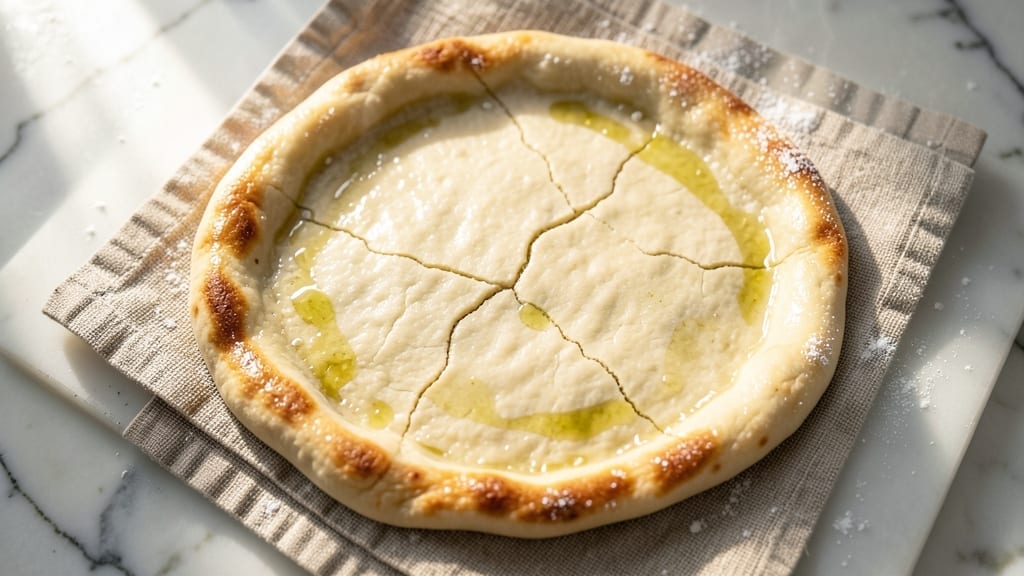
Creating restaurant-quality pizza dough in just 60 minutes is possible with this no-knead method that delivers a perfectly chewy crust every time. I perfected this recipe after years of experimenting with different techniques, and it’s the one I reach for when I need homemade pizza without the hours of waiting.
The secret lies in a simple combination of flour, yeast, and time—no fancy equipment or complicated steps required.
What makes this recipe stand out is the balance between speed and quality. While traditional pizza dough requires hours of rising and kneading, this method achieves the same results in under an hour.
The dough develops flavor as it rests, and the high-hydration ratio creates that signature chewy texture we all love. I’ve tested it countless times, and it never fails to impress—whether you’re making a quick weeknight dinner or hosting a pizza night with friends.
By the time you’re done, you’ll have a batch of golden-brown pizza dough that’s ready to shape and top with your favorite ingredients. The crust comes out perfectly crispy on the outside and chewy on the inside, with just the right amount of airiness.
This recipe is designed to be foolproof, so even if you’re new to making pizza dough, you’ll achieve professional results.
The best part? You can make the dough in the morning and let it rise in the fridge, so it’s ready to use whenever you are. Whether you’re craving a classic Margherita or a loaded meat lover’s pie, this dough is the foundation for endless possibilities.
Let’s get started on creating your perfect pizza crust.
Ingredients for 60 pizza dough
Four simple ingredients transform into chewy, restaurant-style pizza dough in under an hour.
| Ingredient | Amount | Notes |
|---|---|---|
| All-Purpose Flour 🌾 | 3 ½ cups | Spooned and leveled, not packed |
| Active Dry Yeast 🍞 | ¼ tsp | Or 1 packet instant yeast |
| Granulated Sugar 🍚 | ½ tsp | Feeds the yeast |
| Warm Water 💧 | 1 ¼ cups | 110°F (43°C) for best activation |
| Extra-Virgin Olive Oil 🫒 | 1 tbsp | Plus extra for oiling bowl |
| Salt 🧂 | 1 tsp | Kosher or sea salt preferred |
| Cornmeal 🌽 | 2 tbsp | For dusting work surface |
The yeast is the unsung hero here—King Arthur or Bob’s Red Mill brands are my go-to for consistent results. Keep it in the fridge until ready to use, but never let it sit in a warm spot longer than 10 minutes or it’ll activate too fast. The flour matters too: King Arthur or Caputo Tipo 00 if you want that authentic Italian texture, but all-purpose works perfectly fine. I always grab extra flour because it’s easy to spill during mixing. And for the olive oil? Trader Joe’s or Whole Foods have great affordable options—just avoid the cheap stuff that tastes like soap.
No instant yeast? Active dry yeast works at double the amount (0.5 tsp), but you’ll need to proof it first. Short on sugar? Honey or maple syrup at half the amount gives a subtle depth. The water temperature is critical—too hot kills the yeast, too cold and it won’t activate. 110°F is perfect, but if you don’t have a thermometer, let tap water sit for 10 minutes after boiling. For the salt, I always use Diamond Crystal—it dissolves better than table salt and gives you that true pizza flavor. Cornmeal? Any brand works, but Bob’s Red Mill is my favorite for its fine texture.
This dough keeps beautifully—3 days in the fridge wrapped tightly in plastic, or 3 months in the freezer if you make a double batch. I like to portion it into balls before freezing for easy use. When you’re ready to bake, let it sit at room temperature for 30-60 minutes before shaping. Pro tip: Oil your hands when stretching to prevent sticking. The dough actually improves overnight—make it in the morning and have fresh pizza ready for dinner.
Why You’ll Love This Recipe
- Pantry Magic: I’ll bet you already have everything—flour, yeast, sugar, oil—no last-minute grocery runs. Just toss it all in a bowl, let the yeast wake up in warm water, and boom, dough ready to shape. No fancy ingredients, no stress.
- Chef’s Crispy Secret: That olive oil isn’t just for flavor—it keeps the crust tender inside while giving you that perfect golden edge. Honestly, the difference between this and store-bought dough is night and day. You’ll taste it the second you take that first bite.
- Endless Topping Freedom: Weeknight dinner? Game night? Date night? This dough handles it all—classic marinara, spicy arrabbiata, or even breakfast pizza with eggs and cheese. I’ve made it for everything, and it never lets me down.
- Dough for Days: Make a batch, divide it, and freeze half. When you’re too tired to cook, pull it out, thaw it, and you’ve got a ready-to-bake pizza in minutes. Between us, I’ve fed my family for a week with one batch—no takeout guilt, just pure savings.
Step-by-step instructions for no-knead pizza dough
Here’s how to make chewy, restaurant-quality pizza dough in just 60 minutes—no kneading required.
Activate the Yeast for Perfect Rise
In a small bowl, combine the 1.25 cups warm water (about 110°F), 0.5 tsp granulated sugar, and 0.25 tsp active dry yeast. Let it sit for 5-10 minutes until the mixture becomes frothy and bubbly. This tells you the yeast is alive and ready to work its magic.
If the mixture doesn’t bubble after 10 minutes, your yeast might be dead. Start over with fresh yeast—this is the foundation of your dough. Once it’s active, we’ll move quickly to keep everything on schedule for that 60-minute goal.
Mix the Dough Ingredients
In a large bowl, whisk together the 3.5 cups all-purpose flour and 1 tsp salt. Make a well in the center and pour in the yeast mixture along with the 1 tbsp extra-virgin olive oil. Using a wooden spoon, gently stir until a shaggy dough begins to form.
This is where things get fun—don’t overmix. The dough will look messy at first, but that’s normal. Once it comes together, wet your hands slightly and perform 10-12 gentle folds by stretching the dough upward and folding it over itself. This develops just enough gluten for a chewy crust without requiring kneading.
Let the Dough Rest and Develop Flavor
Lightly oil the same bowl with a bit of olive oil, then transfer the dough back in. Cover the bowl with plastic wrap or a damp towel and let it rest at room temperature for 30 minutes. This initial rest allows the gluten to relax and the flavors to meld.
After 30 minutes, the dough should look slightly puffed and feel more cohesive. If it’s still sticky, let it rest another 10 minutes. The goal is to create a dough that’s easy to handle but still has enough structure to hold its shape when stretched later.
Shape and Rest Before Rolling
Lightly flour your work surface with 2 tbsp cornmeal (this prevents sticking and adds a nice texture). Turn the dough out onto the surface and gently shape it into a loose ball. Cover it again with the damp towel and let it rest for another 20 minutes. This second rest is crucial—it ensures the dough is pliable and ready for rolling without tearing.
During this time, preheat your oven to 475°F (or as high as it will go) with a pizza stone or baking sheet inside. A hot oven is key to getting that crispy, chewy crust we’re after. The dough should be noticeably more relaxed and easier to work with after this final rest.
Roll and Bake Your Pizza
After the 20-minute rest, roll the dough out on a floured surface to your desired thickness—about 1/8-inch thick for a classic crust. Transfer it to your preheated pizza stone or baking sheet, then add your favorite toppings. Bake for 10-15 minutes until the crust is golden brown and the cheese is bubbly.
Here’s the pro tip: If you’re using a pizza stone, slide the dough onto it with a piece of parchment paper for easy transfer. The high heat will create that perfect chewy crust you crave. And remember—less is more with toppings. A lighter load bakes faster and prevents a soggy crust.
Pro Tips For Making 60 Pizza Dough
- Test Your Yeast First: Skip the guesswork—mix 1 teaspoon of yeast with ¼ cup warm water and ½ teaspoon sugar, then wait 5–10 minutes for bubbles. If it’s flat after 15, your yeast is dead, and you’ll save yourself a sad, flat dough. (Yes, even if you’re impatient like me.)
- Measure Flour by Weight: That “1 cup” of flour? It’s a lie. Spoon it in, don’t scoop—then level it off. Or better yet, grab a kitchen scale: 600g of flour gives you consistent, stretchy dough every time. No more guessing why your pizza turns out dense or dry.
- Knead Until Elastic: Stop when the dough springs back slowly when poked—like a bouncy trampoline, not a limp rag. Over-kneading is easy, but under-kneading means chewy, tough pizza. Wet hands help; flouring the counter just makes cleanup worse.
- Oil the Bowl Right: Coat the mixing bowl with olive oil (not just a drizzle)—rub it all over the sides and bottom so the dough doesn’t stick when it doubles. A well-oiled bowl = less frustration when turning it out. (Pro move: Use the same bowl for bulk fermentation.)
Flavor customization for this 60 pizza dough
Herb-Infused Variations
Add 1 tbsp dried Italian herbs (like oregano, basil, or thyme) directly to the dough during mixing for a fragrant twist. I love using Penzeys Spices’ Mediterranean blend—it adds depth without overpowering.
For a fresh touch, fold in 2 tbsp finely chopped rosemary or sage after the first rest. These herbs develop beautifully during the final rise, giving your crust a subtle aromatic punch. 🌿
Spicy & Smoky Flavors
Kick things up with ½ tsp smoked paprika or ¼ tsp cayenne pepper—mix it into the flour before combining. For a deeper smoky profile, swap 1 tbsp of the olive oil for 1 tbsp rendered bacon fat (trust me, it’s a game-changer).
This works especially well with meaty toppings like pepperoni or sausage. The fat adds richness while the spices create a bold contrast. 🔥
Sweet & Savory Twists
For a dessert pizza, reduce the salt to ½ tsp and add 1 tbsp cinnamon to the dough. Top with Nutella, sliced strawberries, and a sprinkle of flaky sea salt after baking.
Another fun option: mix in 1 tbsp honey during yeast activation for a slightly sweet, chewy crust that pairs perfectly with savory toppings like prosciutto and figs. 🍯
Cheesy Dough Enhancements
Swap ½ cup of the flour for ½ cup grated Parmesan (or mozzarella) for a cheesy, airy crust. I recommend Parmigiano-Reggiano for its nutty depth. For a stretchy, mozzarella-style crust, replace ¼ cup flour with ¼ cup shredded low-moisture mozzarella.
The cheese melts slightly during baking, creating pockets of gooey goodness. Perfect for loaded pizzas! 🧀
Garlic & Umami Boosters
Infuse the dough with garlic by mixing 1 minced garlic clove into the olive oil before adding it to the flour. For extra umami, add 1 tsp fish sauce or ½ tsp soy sauce** to the yeast mixture.
These additions work wonders with toppings like mushrooms, caramelized onions, or even just extra cheese. The flavors meld beautifully during the rise, giving your pizza a restaurant-quality depth. 🧄
Nutrition facts
Frequently asked questions
Why does this dough only need 60 minutes?
This recipe uses a no-knead method with a high-hydration ratio that develops flavor and structure through strategic resting periods rather than long fermentation. The gentle folds create just enough gluten for chewiness, while the 30-minute rests allow the yeast to work efficiently without requiring hours. Perfect for busy schedules!
Can I make this dough ahead of time?
Shape the dough into balls, wrap tightly in plastic, and refrigerate for up to 3 days. For longer storage, freeze for 3 months. Thaw overnight in the fridge before using. The dough actually improves with time—great for meal prep!
What if my dough doesn’t rise properly?
Check your yeast first—it should be fresh (test by dissolving in warm water with sugar). Ensure your water is 110°F (not hot) and your kitchen is 70-75°F. If it’s too cold, place the dough in a slightly warm spot (like near the oven with light on). Patience is key—let it rest fully before handling.
How do I get a crispy crust like pizza places?
Preheat your oven to 475°F with a pizza stone or steel inside for at least 30 minutes. Use a pepperoni roller or your hands to stretch the dough thinly, and bake on the hottest rack. For extra crispiness, bake for 1-2 minutes on high broil at the end.
Can I use whole wheat flour in this recipe?
Yes, but replace 1 cup all-purpose flour with whole wheat for a nuttier flavor. Add 1 extra tbsp olive oil since whole wheat absorbs more moisture. The texture will be denser, but still delicious. For best results, use a 50/50 blend.

- Pea Soup Instant Pot Recipe: Velvety Green Smoothness in 20 Minutes - November 1, 2026
- Pork Loin Pulled Pork Crock Pot Recipe: Slow-Smoked Tenderness With Zero Dryness - November 1, 2026
- Baked Potatoes in Crock Pot Recipe: Buttery Interiors and Crispy Top Magic - November 1, 2026