
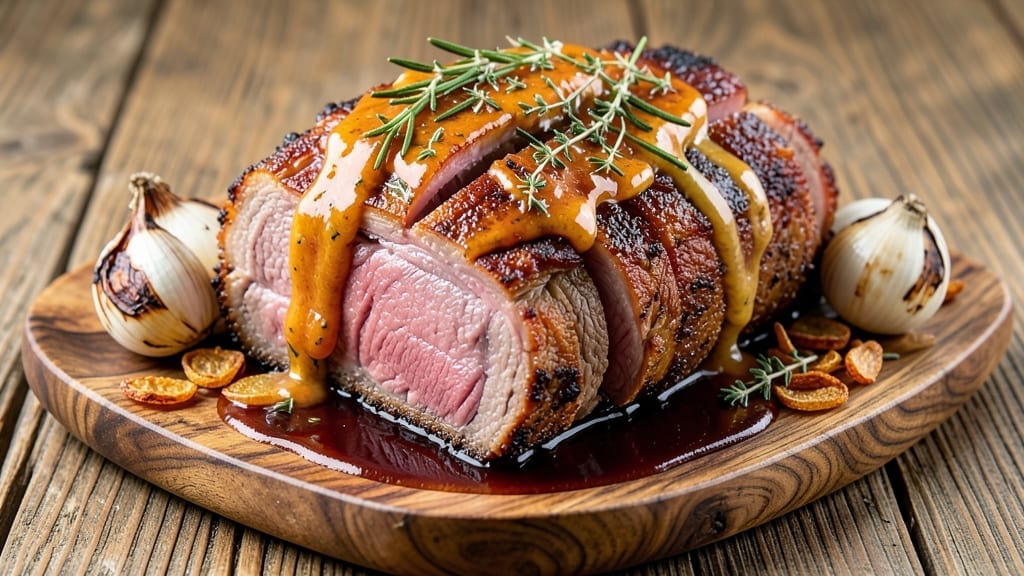
Mastering a 7-bone prime rib roast transforms holiday dinners into unforgettable events—where every slice reveals that perfect balance of juicy pink core and caramelized crust. I’ve spent years perfecting this technique, starting with a dry brine that locks in moisture while the herb crust delivers deep, savory flavor.
The secret lies in patience: low-and-slow roasting followed by a high-heat sear for that coveted crust, all while monitoring internal temps with precision.
This isn’t your average prime rib recipe—it’s a foolproof method that works whether you’re cooking for six or a crowd. We’ll use a simple herb blend (rosemary, thyme, garlic) mixed with Dijon mustard for adhesion, then reverse-sear for even doneness.
The result? A roast so tender it nearly melts in your mouth, with a crust that’s crisp enough to stand up to a bold red wine reduction. No fancy equipment needed—just time, attention, and a reliable meat thermometer.
The payoff comes when you slice into that perfectly pink center, where the meat yields effortlessly and the juices run clear. Pair it with classic horseradish cream or a rich au jus, and you’ve got a centerpiece that commands the table.
This recipe delivers restaurant-quality results at home, with techniques even beginners can master. Let’s get started—your guests won’t believe it’s homemade.
Pro tip: Let the roast rest for at least 30 minutes before slicing (I know, it’s hard to wait—but trust me). The carryover heat ensures every bite stays juicy, and the crust holds its shape.
For extra flair, finish with a sprinkle of flaky sea salt and a drizzle of that au jus. This isn’t just dinner; it’s an experience.
Ingredients for 7 bone prime rib roast
Six ingredients transform this prime rib into a showstopper—herbs, salt, and patience do the heavy lifting.
| Ingredient | Amount | Notes |
|---|---|---|
| 7-Bone Prime Rib Roast 🥩 | 4 lb | Bone-in, center-cut preferred |
| Kosher Salt 🧂 | 2 tbsp | Diamond Crystal preferred for even coating |
| Fresh Rosemary 🌿 | ½ cup | Finely chopped, stems removed |
| Fresh Thyme 🌿 | ⅓ cup | Leaves only, stems discarded |
| Garlic Cloves 🧄 | 6 cloves | Minced, not powdered |
| Dijon Mustard 🍯 | 2 tbsp | For herb crust adhesion |
| Extra-Virgin Olive Oil 🫒 | 2 tbsp | For crust binding |
| Black Peppercorns 🌶️ | 1 tbsp | Freshly cracked, not ground |
| Unsalted Butter 🧈 | ½ cup | Cold, cubed for crust |
| Flaky Sea Salt 🧂 | ¼ cup | For finishing crust |
| Red Wine Reduction 🍷 | ½ cup | Store-bought or homemade |
| Fresh Horseradish 🌿 | 2 tbsp | Grated, for horseradish cream |
| Heavy Cream 🥛 | ½ cup | Full-fat for richness |
| Worcestershire Sauce 🍶 | 1 tbsp | For au jus depth |
The roast is everything here. Look for a 4-pound bone-in center-cut—the bone adds flavor, and the center cut ensures even cooking. Costco or Whole Foods carry excellent prime rib, but ask your butcher for a well-marbled cut if you want to splurge. The freshness matters: aim for a roast with a vibrant red color and visible fat marbling. If you can’t find prime rib, ribeye or NY strip work in a pinch, but the flavor won’t be quite the same. For a holiday crowd, buy the roast 2-3 days ahead—let it sit in the fridge uncovered to dry-brine naturally.
No fresh rosemary? Dried works at half the amount, but the flavor won’t be as bright. The Dijon mustard is non-negotiable—it helps the herb crust stick like glue. For the red wine reduction, store-bought works fine (check the sauce aisle), but if you’re feeling fancy, simmer 1 cup red wine with 1 tbsp butter and 1 tsp sugar for 10 minutes. The horseradish cream can be made ahead—just mix the grated horseradish with heavy cream and a pinch of salt, then chill until ready to serve. No Worcestershire sauce? Substitute soy sauce or balsamic vinegar, but you’ll lose some depth.
This roast rewards patience—plan for 30-45 minutes of resting time before slicing. The crust will stay crisp, and the juices redistribute for that melt-in-your-mouth texture. Store leftovers in an airtight container for 3-4 days, but honestly, it’s so good most people won’t last that long. For extra flair, brush the sliced roast with a little more red wine reduction before serving. The herb crust keeps well for 2 days in the fridge if you’re prepping ahead—just reheat gently before applying to the roast.
Why You’ll Love This Recipe
- Foolproof Seasoning: I swear by this combo—just salt, rosemary, thyme, and garlic. No fancy rubs, no guesswork. The prime rib practically seasons itself as it roasts, and that crust? Chef’s kiss. Even if I rush, it still tastes like I spent hours.
- Weeknight Crowd-Pleaser: Between us, this is my go-to for game days or when my in-laws drop by. The 7-bone cut feeds 6-8 easily, and the leftovers? Life-changing. Slice it thin, toss with au jus, and suddenly you’re a hero.
- Minimal Prep, Maximum Impact: Honestly, the hardest part is peeling the garlic. The rosemary sprigs just poke into the fat cap—no chopping, no stress. I’ve done this in my tiny apartment kitchen with a single oven rack. It works.
- Budget Luxury: Prime rib feels fancy, but this recipe stretches it like a champ. That first cut? Rich, buttery perfection. The second? Still tender, still flavorful. I’ve served it at holidays and Tuesday nights—no judgment.
Step-by-step instructions for herb-crusted prime rib roast
Here’s how to transform your prime rib into a showstopping centerpiece with a crispy herb crust and melt-in-your-mouth tenderness.
Prepare the Herb Butter Crust
In a food processor, combine the 0.5 cup unsalted butter, 0.5 cup fresh rosemary, 0.33 cup fresh thyme, 6 cloves garlic cloves, 1 tbsp black peppercorns, 2 tbsp dijon mustard, and 2 tbsp extra-virgin olive oil. Pulse until the mixture forms a coarse paste with visible herb flecks. This herb butter will create that signature crust we’re after.
Spread this mixture evenly over the entire surface of the 4 lb 7-bone prime rib roast, pressing it gently into the meat. The mustard helps the butter adhere, while the olive oil creates a barrier that promotes browning. Cover and refrigerate for at least 4 hours (overnight is ideal) to let the flavors meld and the crust set.
Season and Sear the Prime Rib
Preheat your oven to 450°F. Remove the prime rib from the refrigerator and let it sit at room temperature for 30 minutes. This ensures even cooking. Pat the roast dry with paper towels – moisture is the enemy of crispy crust.
Rub the roast generously with the 2 tbsp kosher salt. Place it fat-side up on a rack in a roasting pan. Roast for 15 minutes to render the fat and create a deep golden-brown crust. You’ll know it’s ready when the crust is deep mahogany and the internal temperature reaches 135°F (use a meat thermometer).
Cook to Perfect Medium-Rare
Reduce oven temperature to 325°F. Continue roasting until the internal temperature reaches 120-125°F (about 2-2.5 hours total). This gives you that signature pink center we all love. The roast is done when the thermometer reads 120°F in the thickest part of the meat.
For the final touch, sprinkle the 0.25 cup flaky sea salt evenly over the top. Return to the oven for 5-10 minutes to let the salt melt slightly into the crust. This adds that extra layer of flavor and texture that makes it special.
Prepare the Horseradish Cream Sauce
While the prime rib rests, make the horseradish cream sauce. In a small saucepan, combine 0.5 cup heavy cream, 0.5 cup red wine reduction, 2 tbsp fresh horseradish, and 1 tbsp worcestershire sauce. Simmer over medium-low heat for 5-7 minutes until slightly thickened but still silky. Season with additional salt if needed.
Transfer the sauce to a serving bowl and cover to keep warm. The acidity from the horseradish and wine reduction cuts through the richness of the beef beautifully, creating a perfect balance of flavors.
Rest and Slice for Maximum Juiciness
Remove the prime rib from the oven and transfer it to a cutting board. Let it rest for 20-30 minutes before slicing. This resting period allows the juices to redistribute throughout the meat, ensuring each slice is moist and flavorful.
Slice the prime rib against the grain into 1-inch thick portions. Serve immediately with the horseradish cream sauce spooned over the top. The contrast between the crispy herb crust, tender pink meat, and tangy sauce creates a truly memorable dining experience.
Pro Tips For Making 7 Bone Prime Rib Roast
- Salt the Fat Caps: The thick fat cap on a 7-bone prime rib isn’t just for looks—it’s flavor insurance. Generously coat it with kosher salt before searing, then let it crisp while the meat rests. I used to skip this, and the crust was always uneven. Trust me, that golden fat is where the magic happens.
- Sear Bone-Side Down First: Start with the bone side face-down in the pan for 2–3 minutes. The bones act like heat sinks, helping the meat cook evenly while building a deeper crust. After flipping, the fat cap will render faster and the crust will be more uniform. (Yes, it’s messy, but worth it.)
- Don’t Rush the Rest: A 7-bone prime rib needs at least 15 minutes of resting under foil before carving. I learned this after slicing into a rare roast that bled juices everywhere—like a sad, expensive puddle. Tent loosely with foil, let it breathe, and the slices will stay juicy.
- Smash Those Garlic Cloves: Skip the minced garlic—crush the cloves with the flat side of your knife first. This releases more flavor and sticks better to the meat. I was skeptical until I tried it: the aroma clings to the crust like glue. (Bonus: fewer garlic bits flying around.)
Storing and reheating this 7 bone prime rib roast
Refrigerator Storage
Slice your prime rib into 1-inch portions and store leftovers in an airtight container with parchment paper between layers to prevent drying. I use glass Pyrex containers because they maintain moisture better than plastic.
Keep refrigerated at 40°F or below for up to 3-4 days—the herb crust stays crisp for about 2 days, but the meat remains tender. 💫
Freezer Preservation
For longer storage, wrap individual slices in plastic wrap and place them in a freezer bag with all air removed. Label with the date and freeze for up to 3 months.
When reheating, thaw overnight in the fridge before warming. The crust may lose some crispness but still tastes incredible. 🧊
Reheating Methods
For best results, reheat slices in a skillet over medium heat with a splash of beef broth for 2-3 minutes per side. This maintains the crust while gently warming the meat.
Avoid microwaving—it turns the crust soggy. If using a microwave, cover with a damp paper towel and heat in 20-second bursts until reaching 165°F. 🔥
Reviving the Crust
If the herb crust loses crispness after storage, broil the slices for 1-2 minutes on high heat. Brush lightly with olive oil first to help the crust re-crisp. This works especially well for leftovers you plan to serve cold, like in sandwiches or salads. 🌟
Sauce Refreshers
Reheat the horseradish cream sauce separately in a small saucepan over low heat for 3-5 minutes, stirring constantly. If it thickens too much, thin with a splash of heavy cream or beef broth.
The tangy kick stays vibrant when reheated gently—never boil it, or the horseradish will lose its punch. ⚡
Serving Leftovers
Transform leftover prime rib into prime rib sandwiches with crusty bread, caramelized onions, and a drizzle of au jus. For a hearty meal, serve with mashed potatoes or roasted root vegetables. The herb crust adds incredible flavor to any dish—just slice thinly for maximum impact. 🥪
Nutrition facts
Frequently asked questions about 7-Bone prime rib roast
What’s the difference between a 7-bone prime rib and regular prime rib?
A 7-bone prime rib includes the entire ribeye section with 7 ribs attached, creating a dramatic presentation with that iconic bone structure. Regular prime rib typically has fewer bones (usually 3-5) and is often trimmed differently. The 7-bone version is perfect for special occasions where presentation matters as much as flavor.
Can I cook this recipe without a meat thermometer?
While a meat thermometer is ideal, you can estimate doneness by using the finger test. For medium-rare, press the meat gently – it should feel slightly soft in the center like pressing your thumb against your palm. For 120-125°F internal temp, cook until the roast reaches about 2-2.5 hours total at 325°F. The crust should be deep mahogany when done.
How do I adjust cooking time for a larger or smaller roast?
Calculate 15-20 minutes per pound for the low-and-slow cook at 325°F to reach 120-125°F internal temp. For example, a 5-pound roast would take about 2.5-3 hours. The initial 15-minute sear at 450°F remains the same regardless of size. Always use a meat thermometer for accuracy.
What are the best side dishes to serve with this prime rib?
Classic pairings include creamy garlic mashed potatoes, roasted Yorkshire puddings, or a fresh cabbage slaw. For a modern twist, try truffle parsnip purée or caramelized brussels sprouts. The horseradish cream sauce also complements roasted root vegetables beautifully.
Why does my prime rib turn out dry even when I follow the recipe?
Most likely, you skipped the resting time or overcooked the meat. The 20-30 minute rest is crucial—it lets juices redistribute. Also, check your internal temp: 120-125°F is perfect for medium-rare. If using a meat thermometer, insert it into the thickest part without touching bone. Never cut into the roast before resting!

- 12 Bean Chili Recipe: Hearty Slow-Cooked Depth With 12 Legumes - October 17, 2026
- 5 Seed Bread Recipe: Nutty Crunch and Artisan Flavor in One Loaf - October 17, 2026
- 1 Lb Macaroni Salad Recipe: Bold, Crunchy, and Crowd-Pleasing - October 17, 2026