
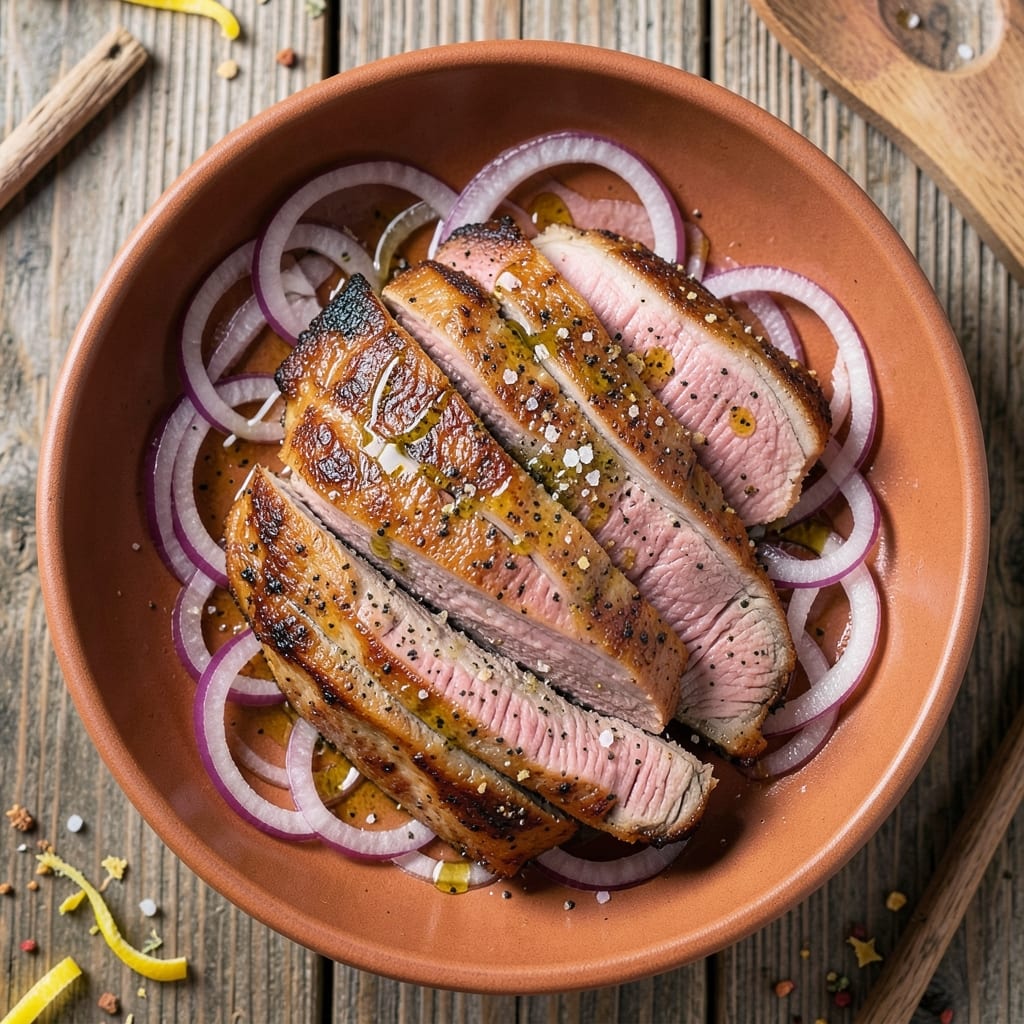
A 1-pound roast beef recipe with a juicy pink center transforms weeknight dinners into restaurant-worthy meals without the fuss. The reverse-sear method—slow-cooking followed by a high-heat sear—preserves moisture while creating a flavorful crust.
This technique works perfectly with affordable cuts like top round or sirloin, delivering tender results even for beginners.
The secret lies in precise temperature control: start with a low oven heat to cook the beef evenly, then finish with a screaming-hot cast-iron skillet for that coveted caramelized exterior. Seasoning is simple but impactful—just salt, pepper, and a touch of garlic powder—letting the beef’s natural flavor shine.
With just 20 minutes of active prep, you’ll have a dish that feels special without hours of effort.
What you’ll end up with is a perfectly cooked roast with a juicy pink center and a deeply flavorful crust, sliced into perfect medallions. The reverse-sear method ensures no dry edges or overcooked interiors, making this the ideal solution for quick yet impressive meals.
Serve it with roasted potatoes or a fresh salad for a complete, satisfying dinner.
This recipe is designed for flexibility—whether you’re feeding a family or treating yourself to a solo meal, the same technique delivers consistent, professional-quality results. The key is patience and attention to temperature, but the payoff is a roast beef that tastes like it came from a high-end steakhouse.
Let’s get started!
Ingredients for 1 lb roast beef
Precision-cut beef and simple seasonings deliver restaurant-quality results with minimal effort.
| Ingredient | Amount | Notes |
|---|---|---|
| Top Round Roast Beef 🥩 | 1 lb | Center-cut for even cooking |
| Kosher Salt 🧂 | 1 ½ tsp | Diamond Crystal preferred |
| Freshly Ground Black Pepper 🌶️ | ½ tsp | Cracked peppercorns preferred |
| Garlic Powder 🧄 | ¼ tsp | Freshly ground preferred |
| Extra-Virgin Olive Oil 🫒 | 1 tbsp | For high-heat searing |
| Yellow Onion 🧅 | 1 whole | Thinly sliced for garnish |
| Fresh Rosemary 🌿 | 2 sprigs | For aroma during cooking |
| Fresh Thyme 🌿 | 2 sprigs | Or 0.5 tsp dried thyme |
| Cast-Iron Skillet 🔥 | 1 whole | 10-12 inch preferred |
| Meat Thermometer 🌡️ | 1 whole | Instant-read preferred |
| Baking Sheet 🍽️ | 1 whole | For even heat circulation |
The beef selection is critical. Top round roast delivers the perfect balance of tenderness and flavor, with minimal fat to interfere with the reverse-sear technique. Look for cuts with visible marbling along the edges—this ensures juiciness without excessive fat. Most butchers will trim and tie the roast for you, but if you’re doing it yourself, ask for a 1-inch thick cut to ensure even cooking. For the best quality, shop at Whole Foods Market or a local specialty butcher—their cuts are consistently superior to standard supermarket offerings. If you’re on a budget, Kroger’s or Safeway carry reliable top round roasts, just verify the marbling when selecting.
Seasoning is intentionally minimal to let the beef’s natural flavor shine. Diamond Crystal kosher salt. For pepper, freshly cracked black peppercorns yield the best flavor—if you’re using pre-ground, look for brands like McCormick Gourmet Collection which specifies freshly ground. The garlic powder should be 100% pure with no anti-caking agents; brands like Simply Organic meet this standard. No fresh herbs? Dried thyme at one-third the amount works well, though fresh imparts superior aroma. The olive oil should be extra-virgin with a high smoke point—brands like California Olive Ranch or Bertolli are excellent choices for searing.
This recipe relies on precise temperature control, so your tools matter. The cast-iron skillet must be preheated until it’s nearly smoking—this creates the perfect crust. An instant-read thermometer is non-negotiable; digital models like Thermoworks provide the most accurate readings. For the low-and-slow phase, use a baking sheet on the middle rack to ensure even heat circulation. The roast should rest 10-15 minutes after cooking to allow juices to redistribute—this is where the magic happens. Store any leftovers in an airtight container for up to 4 days, or freeze for 3 months by wrapping tightly in butcher paper before plastic.
Why You’ll Love This Recipe
- The secret’s in the sear: a hot pan with olive oil turns the top round into a caramelized crust, while the inside stays tender enough to slice with a fork. Honestly, it’s the kind of texture that makes you slow down mid-bite.
- Five-Ingredient Magic: I swear by this lineup—just the beef, salt, pepper, garlic powder, and olive oil. That’s it. No fancy marinades or hours of prep, yet it delivers like a restaurant-worthy cut.
- Crispy-Creamy Payoff: The secret’s in the sear: a hot pan with olive oil turns the top round into a caramelized crust, while the inside stays tender enough to slice with a fork. Honestly, it’s the kind of texture that makes you slow down mid-bite.
- Leftover Hero: This roast practically begs to be repurposed—shred it for tacos, dice it into pasta, or toss it into a grain bowl the next day. My freezer’s always stocked with portions because it reheats like a dream.
Step-by-step instructions for reverse-seared roast beef
Master this technique for perfectly juicy beef with a caramelized crust every time.
Season and Sear the Roast
Pat the 1 lb Top Round Roast Beef completely dry with paper towels—this is crucial for that crisp crust. In a small bowl, combine 1.5 tsp Kosher Salt, 0.5 tsp Freshly Ground Black Pepper, and 0.25 tsp Garlic Powder. Rub this mixture all over the beef, pressing firmly to ensure even coverage. Let it sit at room temperature for 30 minutes while you prepare your tools.
Heat the 1 whole Cast-Iron Skillet over high heat until it’s screaming hot. Add 1 tbsp Extra-Virgin Olive Oil and swirl to coat. Place the beef in the skillet, fat-side down, and sear for 3-4 minutes until it develops a deep golden-brown crust. Flip carefully and sear the other side for another 3-4 minutes. The goal is to create a flavorful crust while keeping the interior cold—this is the foundation of the reverse-sear method.
Slow-Roast to Medium Temperature
Preheat your oven to 275°F. Transfer the seared beef to the 1 whole Baking Sheet and place it on the middle rack. Insert the 1 whole Meat Thermometer into the thickest part of the beef, ensuring it doesn’t touch bone. Roast for 30-40 minutes, checking the internal temperature every 10 minutes. You’re aiming for 130-135°F—this is the sweet spot for a juicy, pink center.
During this time, thinly slice the 1 whole Yellow Onion and remove the leaves from the 2 sprigs Fresh Rosemary and 2 sprigs Fresh Thyme, keeping only the needle-like parts. These will add aromatic depth to your dish. The slow roast ensures even heat penetration without overcooking the exterior, which is the magic of the reverse-sear technique.
Finish with a High-Heat Crust
Once the beef reaches 130-135°F, remove it from the oven and let it rest for 5 minutes. This brief rest prevents juices from escaping when you slice. Return the skillet to the stovetop over high heat until it’s blazing hot again. Place the beef back in the skillet, fat-side down, and sear for 1-2 minutes per side until it develops a fresh, caramelized crust.
While the beef finishes, place the sliced yellow onion, rosemary, and thyme in a small bowl. Lightly toss them with a pinch of the remaining Kosher Salt and Freshly Ground Black Pepper. This aromatic garnish will elevate the dish and tie all the flavors together. The high-heat finish creates that coveted crust while keeping the interior perfectly pink and tender.
Rest and Serve
Transfer the beef to a cutting board and let it rest for 10-15 minutes before slicing. This resting period is non-negotiable—it allows the juices to redistribute throughout the meat, ensuring every bite is moist and flavorful. Use a sharp knife to slice the beef against the grain into ¼-inch thick slices for maximum tenderness.
Arrange the slices on a warm platter, garnish with the seasoned yellow onion, rosemary, and thyme, and serve immediately. The result should be a perfectly juicy, pink center with a rich, caramelized crust that locks in all the flavors. This method guarantees a restaurant-quality roast beef that’s simple to execute at home.
Pro Tips For Making 1 Lb Roast Beef
- SEAR FIRST, THEN SLOW: Pat the roast dry with paper towels—really dry it—and sear it in a screaming-hot skillet with olive oil for 2-3 minutes per side before transferring to the oven. I learned this the hard way: skipping the sear means your crust turns to sad, gray mush instead of golden, flavor-packed armor.
- SALT LIKE YOU MEAN IT: Use about 1 teaspoon kosher salt per pound before searing, and don’t rub it in—just press it into the meat in one layer. After searing, add another ½ teaspoon directly on top of the roast before roasting. (Yes, it looks weird, but it works.)
- DON’T CUT INTO IT YET: Let the roast rest for at least 5 minutes under foil before slicing—even if you’re starving. I used to slice it straight out of the oven and end up with a pool of beef juice instead of tender, juicy slices. (Your future self will thank you.)
- GARLIC POWDER IS YOUR FRIEND: Sprinkle ½ teaspoon garlic powder after searing but before roasting—it sticks better than fresh minced garlic and won’t burn. I was skeptical until I tried it: the flavor’s consistent, and it doesn’t turn bitter. (Bonus: No chopping.)
Flavor customization for 1 lb roast beef
Classic Herb Crust
For a restaurant-worthy finish, create a fragrant herb crust by mixing 1 tbsp Dijon mustard, 1 tbsp chopped fresh parsley, 1 tbsp chopped fresh thyme, and 1 tbsp grated Parmesan cheese.
Spread this mixture on the beef after the initial sear but before the slow roast. The mustard adds tang while the herbs create an aromatic crust that pairs beautifully with the caramelized exterior. 🌿
Spicy Coffee Rub
Add depth and warmth by making a simple coffee rub: combine 1 tbsp finely ground coffee, 1 tsp smoked paprika, ½ tsp cayenne pepper, and ½ tsp garlic powder. Rub this mixture onto the beef after the initial sear and before the slow roast.
The coffee enhances the beef’s natural flavors while the cayenne adds a subtle kick that lingers on the palate.
Garlic Butter Glaze
Elevate your roast beef with a rich garlic butter glaze. After the slow roast but before the final sear, brush the beef with a mixture of 2 tbsp melted butter, 1 minced garlic clove, and ½ tsp lemon juice.
Return the beef to the skillet for the final sear, allowing the glaze to caramelize into a glossy finish. This adds a luxurious touch that feels like a special occasion.
Balsamic Reduction
For a tangy, sweet contrast, prepare a balsamic reduction by simmering ¼ cup balsamic vinegar with 1 tbsp brown sugar and 1 tsp Dijon mustard in a small saucepan until reduced by half.
Brush this glaze onto the beef during the final sear. The reduction adds complexity and a subtle sweetness that complements the rich beef flavors beautifully.
Smoked Paprika Dry Brine
Enhance the beef’s natural flavor with a dry brine: mix 1 tbsp smoked paprika, 1 tsp kosher salt, and ½ tsp black pepper, then coat the beef evenly. Let it sit for 30 minutes before searing.
The smoked paprika infuses the meat with a subtle smokiness, making it perfect for those who love a hint of smoky depth without actual smoking equipment.
Honey Mustard Glaze
Sweet and tangy flavors shine with a honey mustard glaze. Combine 2 tbsp honey, 1 tbsp Dijon mustard, and 1 tsp apple cider vinegar. Brush this mixture onto the beef during the final sear.
The glaze caramelizes beautifully, adding a touch of sweetness that balances the savory beef perfectly. This variation is especially great for family dinners where kids and adults alike will enjoy it. 🍯
Nutrition facts
Frequently asked questions
Can I use a different cut of beef for this recipe?
Yes! While top round is ideal, you can also use sirloin tip or chuck roast (trimmed of excess fat). For leaner cuts like sirloin, reduce the oven temperature to 250°F to prevent drying out. Avoid fatty cuts like ribeye—they won’t brown as nicely with this method.
What if my meat thermometer doesn’t have a probe?
No problem! Use a meat thermometer with a dial or even a candy thermometer inserted into the thickest part. For absolute accuracy, insert it at a 45-degree angle to avoid hitting bone. If you’re truly without one, cut into the beef at 135°F—the center should feel slightly springy but still warm.
How do I adjust this for a larger roast?
For every additional pound, increase cooking time by 15-20 minutes in the slow roast phase. Keep the final sear time the same (1-2 minutes per side). For example, a 2 lb roast would need 45-55 minutes at 275°F. Always use a thermometer—thicker cuts take longer to come to temperature.
Why does my roast beef turn out dry?
Overcooking is the #1 cause! The reverse-sear method relies on stopping at 130-135°F—never let it reach 145°F. Also, skipping the rest time causes juices to escape when slicing. For extra moisture, add 1 tsp beef broth to the pan during the final sear and baste the beef.
Can I make this ahead of time?
Cook the roast completely (to 145°F), then refrigerate for up to 3 days. Reheat in a 350°F oven for 15-20 minutes, then sear in a hot pan to restore the crust. For freezing, wrap tightly in butcher paper and plastic—thaw overnight in the fridge before reheating.

- 2 Lb Oatmeal Bread Machine Recipe: Hands-Off Crusty Loaf With Nutty Depth - September 30, 2026
- 8-Inch Pecan Pie Recipe: Buttery Crust and Caramelized Nut Bliss - September 30, 2026
- 1 Loaf Homemade Bread Recipe: Crusty Crunch and Airy Crumb in One Bowl - September 30, 2026