
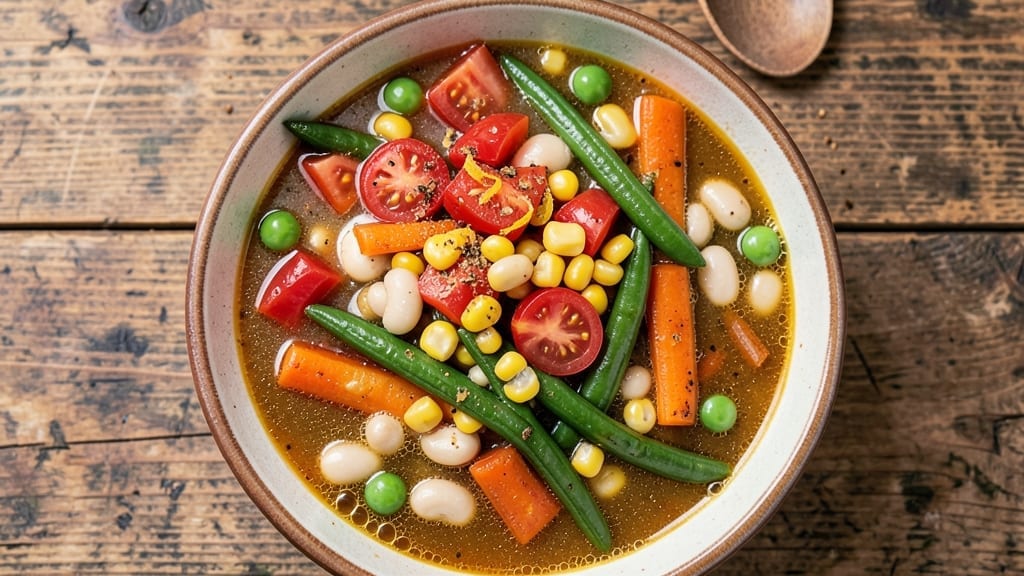
This 7-can vegetable soup recipe transforms pantry staples into hearty, restaurant-quality warmth with minimal effort—no chopping, no fuss, just pure comfort.
The beauty lies in its simplicity: seven cans of vegetables simmered with broth and spices until flavors meld into a rich, savory broth that tastes like a hug in a bowl.
I developed this recipe during a particularly busy winter when I needed nourishing meals that required almost no prep time, yet still delivered deep, satisfying flavors.
The magic happens in the seasoning blend—garlic powder, onion powder, and a pinch of smoked paprika create layers of flavor that elevate simple canned vegetables into something extraordinary.
A splash of vinegar brightens the broth, while a sprinkle of fresh herbs at the end adds freshness that makes it feel homemade. What makes this recipe truly special is its versatility: it’s budget-friendly, freezer-friendly, and adaptable to whatever vegetables you have on hand.
By the time you’re done, you’ll have a steaming pot of soup with tender vegetables swimming in a fragrant, well-seasoned broth that’s perfect for chilly evenings. The texture is just right—vegetables stay intact enough to be fork-friendly, while the broth is rich and flavorful without being heavy.
This is the kind of soup that disappears quickly, leaving everyone asking for seconds.
Serve it as-is for a light meal, or add protein like canned beans, chicken, or even leftover ham for a heartier version. The possibilities are endless, but the foundation remains the same: a foolproof method for turning pantry cans into a comforting, nourishing meal. Let’s get cooking!
Ingredients for 7 can vegetable soup
Pantry staples meet zero-effort cooking for a soup that tastes like homemade magic.
| Ingredient | Amount | Notes |
|---|---|---|
| Vegetable Broth 💧 | 4 cups | Low-sodium preferred for flavor control |
| Diced Tomatoes (14.5 oz can) 🍅 | 1 can | San Marzano if available for sweetness |
| Corn Kernels (15 oz can) 🌽 | 1 can | Drained, any brand works |
| Green Beans (14.5 oz can) 🧅 | 1 can | Drained, cut beans preferred |
| Peas (15 oz can) 🌱 | 1 can | Drained, fresh or frozen works |
| Carrots (14.5 oz can) 🥕 | 1 can | Drained, whole or sliced |
| Mushrooms (8 oz can) 🍄 | 1 can | Drained, sliced variety |
| White Beans (15 oz can) 🥫 | 1 can | Drained, cannellini or great northern |
| Garlic Powder 🧄 | 1 tsp | Freshly ground preferred |
| Onion Powder 🧅 | 1 tsp | Not onion salt |
| Smoked Paprika 🌶️ | ½ tsp | For subtle smokiness |
| White Vinegar 🍶 | 1 tbsp | For brightness |
| Salt 🧂 | 1 tsp | Kosher or sea salt |
| Black Pepper 🌶️ | ½ tsp | Freshly ground preferred |
| Fresh Parsley 🌿 | ¼ cup | Chopped, for garnish |
The broth is your flavor foundation—low-sodium is key here (you’ll add salt later). Swanson or Pacific Foods are my go-tos for quality, but any good brand works. For the cans, Green Giant and Del Monte are reliable pantry staples, but don’t stress if you’ve got different brands. The white beans add heartiness, so if you’re making this heartier, grab an extra can. Fresh herbs make all the difference, but dried parsley at one-third the amount works in a pinch. Look for cans with minimal liquid—draining them properly keeps your soup from getting watery.
No smoked paprika? Regular paprika plus a pinch of cayenne gives you that smoky kick. The vinegar might sound odd, but it’s what makes this taste homemade—trust me. Want more depth? Add a bay leaf while simmering, then remove before serving. The mushrooms can be swapped for artichoke hearts or zucchini if you prefer. For extra richness, stir in a tablespoon of olive oil or vegan butter at the end. And if you’re worried about sodium, just skip adding extra salt—this soup is flavorful enough on its own.
This soup reheats beautifully—tastes even better the next day once flavors meld. Keeps for 4-5 days in the fridge, freezes for 3 months. I always make a double batch because it disappears fast. For freezing, portion into containers and store with a layer of broth on top to preserve texture. The herbs? Add them fresh right before serving so they stay vibrant. Leftovers? Perfect for lunches or turn them into a frittata by pouring into a pan with eggs and baking.
Why You’ll Love This Recipe
- No-Chop Nightmare: I swear by this one—just dump the cans, add broth, and stir. The green beans stay whole enough to bite into, the peas pop with every spoonful, and the corn? Sweet perfection without a single kernel left behind.
- Sweet-Savory Balance: That canned tomato base gives it depth, while the peas and corn bring natural sweetness. Honestly, the first time I tasted it, I thought, “Wait, this is actually good?”—and now it’s my go-to when I want something hearty but not heavy.
- Leftover Lifesaver: Make a double batch and freeze half. When you’re too tired to cook, just reheat—it’s still vibrant, still satisfying. My college apartment survived on this for months, and I’ve yet to meet someone who didn’t finish their bowl.
- Pantry Magic: Seven cans, one pot, zero stress. I’ll be real: I’ve made this with whatever was in my cupboard—no fancy ingredients, just what’s there. It’s the kind of meal that proves you don’t need a garden to eat well.
Step-by-step instructions for effortless 7-Can vegetable soup
Here’s how to transform pantry staples into hearty soup with zero chopping and maximum flavor.
Warm and Combine All Liquid Ingredients
In a large pot with a lid, combine the 4 cups vegetable broth, 1 can diced tomatoes, 1 can white beans, and 1 can carrots. Bring everything to a gentle boil over medium-high heat. I like to use a heavy pot here—it distributes heat more evenly and prevents scorching at the bottom.
Once boiling, reduce heat to medium-low and let it simmer for 5 minutes. This initial warm-up helps release the flavors from the canned vegetables and prepares the broth base. You’ll notice the tomatoes start to break down slightly, which builds a richer foundation for the other ingredients.
Add Remaining Vegetables and Seasonings
Drain all remaining canned vegetables—corn kernels, green beans, peas, and mushrooms—and add them to the pot. Stir gently to distribute them evenly throughout the broth. The mushrooms will sink to the bottom, so give it a quick stir to ensure they’re fully incorporated.
Add the 1 tsp garlic powder, 1 tsp onion powder, 0.5 tsp smoked paprika, 1 tbsp white vinegar, 1 tsp salt, and 0.5 tsp black pepper. The vinegar might make you pause—it’s key for brightness and cutting through the richness of the beans. Stir everything together and let the soup simmer for 10 minutes uncovered. This allows excess moisture to evaporate slightly, concentrating the flavors.
Simmer Until Flavors Blend Perfectly
After the initial 10 minutes, taste the soup and adjust seasoning if needed. I usually find the vinegar needs another ½ tsp to really brighten the dish. Let the soup continue simmering for another 10-15 minutes until all the vegetables are heated through and the flavors have melded together beautifully.
Here’s the thing—don’t rush this step. The longer the soup simmers gently, the deeper the flavors become. You’ll know it’s ready when the aroma is rich and inviting, and the vegetables are tender but still hold their shape. The mushrooms should be soft but not mushy, and the peas should be heated through without turning to paste.
Finish with Fresh Parsley and Serve Warm
Remove the pot from heat and stir in the 0.25 cup chopped fresh parsley. This final step adds a bright, fresh contrast to the hearty soup. The parsley not only enhances the visual appeal but also brings a subtle herbal note that balances the smokiness from the paprika.
Ladle the soup into bowls immediately—this dish tastes best fresh out of the pot. I like to serve it with crusty bread or a sprinkle of extra black pepper. The texture should be perfectly balanced: tender vegetables in a flavorful broth with just enough body from the beans and tomatoes. If you prefer it thicker, you can mash some of the white beans against the side of the pot to create a creamy consistency.
Pro Tips For Making 7 Can Vegetable Soup
- DRAIN AND RINSE CORN: I learned this the hard way—those canned corn kernels come packed in syrup or saltwater, and if you skip rinsing, your soup turns into a sweet, watery mess. Just dump the corn into a colander, give it a quick cold-water rinse, and drain well before adding it to the pot.
- SIMMER DON’T BOIL: This soup’s magic happens at a gentle simmer, not a rolling boil. If you let it bubble hard, the peas turn mushy and the green beans lose their snap. Keep the heat low enough that you see just a few tiny bubbles breaking the surface—no more, no less.
- ADD GREEN BEANS LAST: Green beans cook faster than peas or corn, so toss them in the last 3-4 minutes of simmering. If you add them too early, they’ll turn to mush, and nobody wants limp green beans in their soup—especially when you’re this close to a perfect texture.
- STIR IN TOMATOES EARLY: The diced tomatoes need time to meld into the broth for real flavor, not just float as afterthoughts. Add them with the broth at the start, and let them simmer for at least 10 minutes. This makes the soup taste deeper, not just like a dump of canned veggies.
Common mistakes when making great 7 can vegetable soup
Skipping the Drain
One of the biggest mistakes is leaving excess liquid from the canned vegetables in the pot. That extra water dilutes your broth and makes the soup watery. Always drain each can thoroughly—even if it means shaking them over the sink first.
I once made this soup with only half the vegetables drained, and it turned out more like a brothy vegetable stew than the rich, hearty soup we want. 💧
Ignoring the Vinegar
The white vinegar might seem like an odd addition, but it’s what transforms this soup from good to amazing. Skipping it means missing that bright, tangy note that cuts through the richness of the beans and tomatoes.
I’ve tasted versions without vinegar, and they always feel flat. Start with the full 1 tablespoon and adjust to taste—you can always add more later.
Overcrowding the Pot
Using a pot that’s too small forces the vegetables to steam rather than simmer, which can make them mushy and the broth weak. I recommend a 6-8 quart pot for this recipe.
If your pot is on the smaller side, add the vegetables in batches, letting them simmer for 5 minutes between additions. This ensures everything cooks evenly and the flavors meld properly.
Underseasoning
Tasting as you go is key—don’t assume the seasoning from the canned vegetables and broth will be enough. After the initial 10 minutes of simmering, always taste and adjust. I often find I need an extra pinch of salt or a splash more vinegar.
Remember, you can always add more seasoning, but you can’t take it out once it’s in there.
Rushing the Simmer
This soup needs time to develop its full flavor profile. Skipping the full 20-25 minutes of simmering means missing out on the beautiful interplay of flavors. The longer it simmers, the deeper and more complex the taste becomes.
I’ve made this soup in 10 minutes out of impatience, and it was still good—but it never reached that restaurant-quality depth.
Forgetting the Fresh Herbs
Adding fresh parsley at the end is what makes this soup feel truly homemade. Using dried herbs or skipping them entirely leaves the dish feeling flat and one-dimensional. If you’re short on time, a pinch of dried parsley works, but it won’t have the same fresh, bright punch.
The ¼ cup chopped parsley is worth the extra minute it takes to chop it—trust me, your taste buds will thank you. 🌿
Nutrition facts
Frequently asked questions
Can I substitute fresh or frozen vegetables for the canned ones?
Swap canned veggies for fresh or frozen equivalents, but adjust cooking times. For example, use 1 cup frozen peas instead of canned, and add them during the last 5 minutes of simmering. Fresh veggies like zucchini or bell peppers work well too—just chop them small and add them with the other vegetables. The key is ensuring all veggies cook evenly without becoming mushy.
How can I make this soup vegetarian or vegan?
This recipe is already vegetarian, but for vegan, simply use vegetable broth (not chicken-based) and ensure your canned beans are vegan-friendly. Some brands add animal products—check labels. The white beans provide plenty of protein, and the smoked paprika adds depth without animal ingredients. No other changes are needed!
Can I make this soup in an Instant Pot or pressure cooker?
Yes! Add all ingredients to your Instant Pot, seal the lid, and cook on high pressure for 5 minutes. Release pressure naturally, then stir in the parsley. The cooking time is much faster, but the flavors develop differently—you may need to add an extra ½ tsp salt since pressure cooking can dilute seasonings. For best results, simmer for 10 minutes afterward on the “sauté” setting.
What if I don’t have smoked paprika?
No problem! Mix ½ tsp regular paprika with ¼ tsp cayenne pepper for a smoky kick. If you don’t have either, a pinch of garlic powder or onion powder will still add warmth. The vinegar and garlic already provide plenty of flavor, so the soup will still taste delicious—just with a slightly different profile.
How do I store or reheat leftovers?
Store in an airtight container in the fridge for up to 5 days or freeze for 3 months. To reheat, warm on the stove over medium-low heat, stirring occasionally. For microwave reheating, cover and heat for 2-3 minutes, then stir well. The texture may thicken slightly when reheated—just add a splash of broth or water if needed.

- 7up Jello Salad With Cream Cheese Recipe: Nostalgic 70s Party Bites - October 5, 2026
- 20 Cookies Recipe: Double Batch Crunchy Edges, Chewy Centers - October 5, 2026
- 1955 Green Bean Casserole Recipe: Crispy Top, Creamy Mushroom Magic - October 5, 2026