
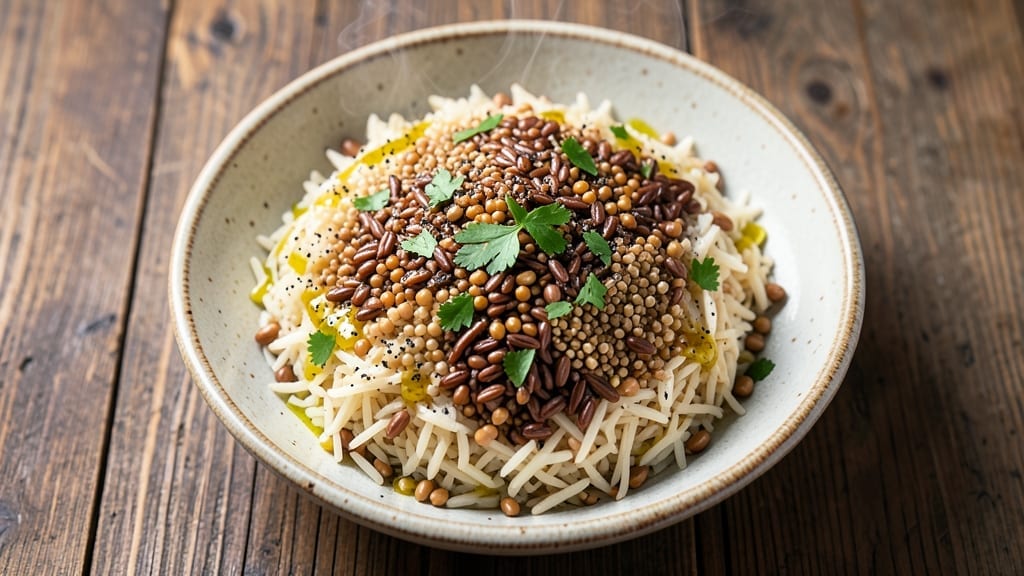
This 7-grain rice pilaf recipe transforms simple grains into a nutty, herbaceous masterpiece that elevates any meal. The secret lies in toasting the grains first—this unlocks deep, toasty flavors that store-bought blends can’t match.
I developed this method after years of experimenting with different grains, and it consistently delivers restaurant-quality results at home.
The beauty of this recipe is its versatility. You can use basmati, quinoa, millet, wild rice, and more, each bringing unique textures and flavors to the mix. The grains cook in aromatic broth infused with garlic, onions, and fresh herbs, creating a fragrant base that soaks into every kernel.
A final toss with toasted nuts and fresh parsley adds crunch and brightness.
What you’ll end up with is a perfectly balanced pilaf—chewy grains with crisp edges, infused with savory broth and bright herbs. The nutty crunch from toasted almonds or pistachios contrasts beautifully with the soft grains, while fresh parsley adds a pop of color and freshness.
This dish works as a side for roasted meats, a base for grain bowls, or even as a standalone vegetarian main.
Ready in just 30 minutes, this pilaf is ideal for weeknight dinners or special occasions. The grains stay warm and flavorful for hours, making it perfect for meal prep.
Whether you’re serving a crowd or cooking for two, this recipe delivers a restaurant-quality result that’s simple to make at home.
Ingredients for 7 grain rice
Seven grains, one pot, restaurant-quality flavor in 30 minutes—here’s what you’ll need.
| Ingredient | Amount | Notes |
|---|---|---|
| Basmati Rice 🌾 | 1 cup | Long-grain, uncooked |
| Quinoa 🌾 | ½ cup | Uncooked, rinsed well |
| Millet 🌾 | ½ cup | Uncooked, fine grain |
| Wild Rice Blend 🌾 | ⅓ cup | Uncooked, mixed varieties |
| Brown Rice 🌾 | ⅓ cup | Long-grain, uncooked |
| Barley 🌾 | ¼ cup | Pearl or hulled, uncooked |
| Chickpea Groats 🌾 | ¼ cup | Uncooked, rinsed |
| Yellow Onion 🧅 | 1 whole | Medium, finely diced |
| Garlic Cloves 🧄 | 4 cloves | Fresh, minced |
| Fresh Parsley 🌿 | ⅓ cup | Chopped, leaves only |
| Fresh Dill 🌿 | ¼ cup | Chopped, leaves only |
| Almonds 🥜 | ½ cup | Sliced, toasted |
| Extra-Virgin Olive Oil 🫒 | ⅓ cup | High quality, fruity |
| Chicken Broth 💧 | 4 cups | Low-sodium, homemade preferred |
| Salt 🧂 | 1 ½ tsp | Diamond Crystal preferred |
| Ground Black Pepper 🌶️ | ½ tsp | Freshly ground |
| Bay Leaves 🌿 | 2 whole | Fresh, dried if unavailable |
The grains are the foundation, and quality matters. Basmati and quinoa should be plump and firm, while millet and wild rice should have a vibrant color. Whole Foods or local bulk bins often carry the best varieties—look for organic labels if possible. The barley and chickpea groats can be found in the international aisle at most grocery stores. If you’re short on time, pre-rinsed grains save steps, but rinsing removes excess starch for better texture. Toast each grain separately in olive oil until fragrant—this step unlocks the nutty depth that makes this pilaf special.
No quinoa? Swiss chard stems or extra brown rice add texture. Short on wild rice? Black rice or extra millet works. Fresh herbs can be swapped for dried at one-third the amount, but parsley and dill are ideal here—their bright notes cut through the richness of the toasted grains. For the broth, homemade is best, but low-sodium store-bought works in a pinch. The almonds? Toasted walnuts or pistachios add different but equally delicious crunch. If you’re making this ahead, cook the grains fully and store separately from the nuts and herbs to keep everything crisp.
This pilaf reheats beautifully—just add a splash of water or broth to restore moisture. Keeps 4-5 days in the fridge, fully covered to prevent drying. For meal prep, portion into glass containers with tight lids. The grains stay warm for hours, making this perfect for potlucks or family dinners. Freezes for 3 months if stored in an airtight container. Pro tip: Toast fresh nuts right before serving to maximize crunch.
Why You’ll Love This Recipe
- One-Pot Magic: I swear by this recipe—just toss everything in one pot, add water, and walk away. No measuring cups for each grain, no separate timers. The wild rice blend and quinoa handle themselves while the basmati plumps up perfectly. (Yes, even when I forget to stir.)
- Nutty, Toasty, Addictive: That millet? It’s the star—crunchy little bits that add texture no plain rice ever could. The wild rice blend brings deep, earthy notes, and the basmati keeps it light. Honestly, I’ve caught myself eating it straight from the pot like popcorn.
- Meal Prep MVP: This holds up for days—better than day-old rice, if you can believe it. Pack it in lunches, toss it into stir-fries, or serve it cold with grilled chicken. I make a big batch Sunday night and don’t think about rice again until Thursday.
- Budget-Friendly Powerhouse: You’re getting five grains for the price of one, and they’re all shelf-stable. No fancy ingredients, just pantry staples that stretch meals without breaking the bank. My wallet and my family thank me every time.
Step-by-step instructions for 7-Grain rice pilaf
Toast each grain individually for maximum flavor, then combine with aromatic herbs and nutty crunch.
Toast the Grains Separately
Heat a large skillet over medium heat and add the 0.33 cup extra-virgin olive oil. Add the 1 cup basmati rice and toast for 2-3 minutes, stirring constantly until it turns a pale golden color and smells nutty. Remove and set aside in a large bowl.
Repeat the process with each grain: toast the 0.5 cup quinoa, 0.5 cup millet, 0.33 cup wild rice blend, 0.33 cup brown rice, 0.25 cup barley, and 0.25 cup chickpea groats separately, each for 2-3 minutes until fragrant. The grains should be lightly golden and smell toasty—this enhances their natural flavors and prevents mushiness.
I toast each grain separately because they cook at different rates. This ensures every component achieves perfect texture without overcooking any single grain.
Sauté Onion and Garlic
In the same skillet, add 0.33 cup extra-virgin olive oil and sauté the 1 whole yellow onion (finely diced) over medium heat for 5-6 minutes until soft and translucent. Add the 4 cloves garlic cloves (minced) and cook for another 30 seconds until fragrant—you should smell that sweet garlic aroma.
Don’t let the garlic burn; it should just barely turn golden. Remove from heat and stir in the 2 whole bay leaves. Pour this aromatic mixture into the bowl with the toasted grains and toss gently to combine.
Toast the Almonds and Herbs
In a separate small skillet, toast the 0.5 cup almonds over medium heat for 3-4 minutes, stirring constantly, until they turn a rich golden brown color and smell deeply nutty. Remove immediately and set aside to cool.
While the almonds toast, combine the 0.33 cup fresh parsley and 0.25 cup fresh dill in a small bowl. This herb blend will add bright freshness to balance the nutty grains.
Combine and Simmer
Return all the grains to the skillet and pour in the 4 cups chicken broth. Add the 1.5 tsp salt and 0.5 tsp ground black pepper, then bring to a gentle boil. Reduce heat to low and cover with a tight-fitting lid.
Simmer for 25-30 minutes until all grains are tender and the liquid has been absorbed. You’ll know it’s ready when the grains are plump and the texture is creamy but still has a slight bite. If it looks dry before 25 minutes have passed, add 2-3 tablespoons water to prevent burning.
Finish and Serve
Remove from heat and let sit covered for 5 minutes to allow any remaining steam to distribute. Fluff gently with a fork, then stir in the toasted almonds and herb mixture. Taste and adjust seasoning if needed.
This pilaf should have layers of texture—creamy grains, crisp almonds, and bright herbs. Serve warm as a side dish with grilled meats or roasted vegetables. The flavors will continue to meld as it cools, making it even more delicious the next day.
Pro Tips For Making 7 Grain Rice
- TOAST THE MILLET FIRST: I learned this the hard way—skipping this step makes millet taste bland and chalky. Dry-toast it in a separate pan over medium heat for 3-4 minutes until it smells nutty, then add it to the pot with the other grains. The extra effort makes a real difference in texture and flavor.
- RINSE THE BASMATI LAST: Rinse the basmati rice after adding it to the pot with the other grains, not before. The starches from the wild rice and brown rice will help it absorb moisture faster and stay fluffier—no more mushy basmati ruining the whole batch.
- WATCH THE WILD RICE: Wild rice blend takes longer than the rest, so don’t let it burn. If using a stovetop method, add it to the pot after the water has come to a boil, then reduce heat immediately to a steady simmer. Ignore this, and you’ll end up with bitter, overcooked grains.
- USE A LID, THEN STEAM: Cook the grains with the lid on for the first 15 minutes, then crack it open and let it steam uncovered for the last 5. This prevents the basmati from turning gummy while letting the millet and quinoa dry out just enough—no more sad, gluey rice.
Perfect pairings for 7 grain rice
Herb-Infused Broths
Swap the chicken broth for vegetable broth to keep this dish vegetarian—just add 1 sprig rosemary, 1 sprig thyme, and ½ tsp smoked paprika to the broth while simmering.
For a Middle Eastern twist, use turmeric-infused broth with ½ tsp turmeric, 1 cinnamon stick, and ½ tsp cumin for a golden hue and warm spices. 🌿
Protein Pairings
Serve this pilaf alongside grilled lemon-herb chicken for a complete meal. The bright citrus cuts through the richness of the grains beautifully. For a vegetarian option, pair with roasted eggplant and tahini drizzle—the smoky eggplant complements the nutty grains perfectly.
I love adding seared scallops on top for a luxurious touch at dinner parties.
Global Flavor Twists
For a Mediterranean-inspired version, stir in ½ cup crumbled feta and 2 tbsp lemon zest before serving. Add kalamata olives for briny contrast. A Japanese-inspired adaptation calls for toasted sesame seeds instead of almonds, 1 tbsp soy sauce in the broth, and a garnish of scallions.
The umami depth elevates the dish entirely. 🌍
Crunchy Garnishes
Beyond almonds, try toasted pumpkin seeds for a savory crunch or fried shallots for a crispy, onion-forward bite. For a sweet contrast, sprinkle with toasted coconut flakes—just 2 tbsp—and a pinch of red pepper flakes for heat.
The texture contrast makes every bite exciting. Store garnishes separately until serving to keep them crisp.
Beverage Pairings
A crisp Sauvignon Blanc from New Zealand pairs wonderfully with the herbaceous notes and bright acidity. For red wine lovers, a Pinot Noir from Oregon enhances the earthy grains without overpowering.
Non-alcoholic options? Try sparkling hibiscus tea—the tartness balances the richness beautifully. A cold sparkling water with cucumber and mint** also refreshes the palate between bites. 🍷
Nutrition facts
Frequently asked questions
Can I substitute any of the grains in this recipe?
The key is maintaining a balance of textures and cooking times. Swap quinoa for buckwheat or farro, or replace wild rice with black rice for deeper color. Just adjust cooking times—wild rice blends typically take 45-50 minutes while basmati cooks in 12-15 minutes. Toast each new grain separately for that nutty flavor boost!
Why does the recipe call for toasting each grain separately?
Toasting individually ensures each grain develops its own flavor profile and cooks to perfect doneness. Different grains have varying moisture levels and starch contents—brown rice needs more time than quinoa, for example. Separate toasting prevents some grains from overcooking while others stay underdone. Plus, that golden aroma? Pure flavor magic!
What’s the best way to reheat leftovers?
Reheat in a skillet over low heat with 1-2 tablespoons broth or water to restore moisture. Cover for 3-4 minutes, then fluff with a fork. Microwave reheating works too, but add 15 seconds and a splash of liquid to prevent drying. The almonds will stay crisp if added fresh after reheating!
Can I make this ahead of time?
Yes! Cook the grains fully and store them in an airtight container for up to 5 days in the fridge. Keep the toasted almonds and fresh herbs separate until serving to maintain crispness. For parties, assemble completely up to 2 hours ahead—just reheat gently before serving. The flavors actually deepen overnight!
How do I adjust the recipe for a larger crowd?
Double or triple all ingredients, but use a larger pot with a 2:1 liquid-to-grain ratio (e.g., 8 cups broth for 4 cups total grains). Toast grains in batches if needed, and use two skillets for sautéing onions. Keep an eye on cooking time—larger batches may need 5-10 extra minutes to absorb all liquid.

- 12 Bean Chili Recipe: Hearty Slow-Cooked Depth With 12 Legumes - October 17, 2026
- 5 Seed Bread Recipe: Nutty Crunch and Artisan Flavor in One Loaf - October 17, 2026
- 1 Lb Macaroni Salad Recipe: Bold, Crunchy, and Crowd-Pleasing - October 17, 2026