
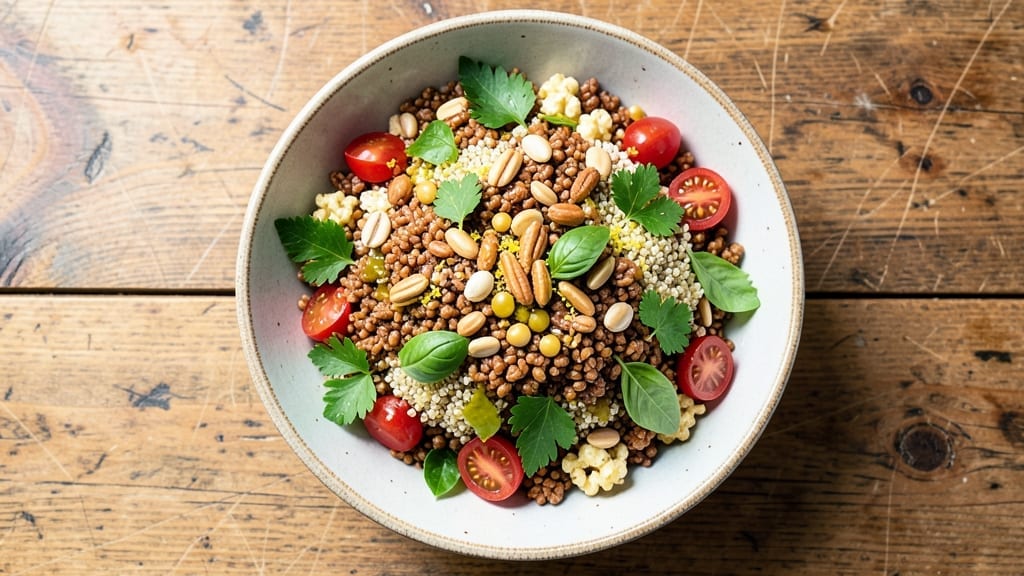
A 7-grain salad transforms simple ingredients into a nutritious powerhouse that delivers crunchy textures, nutty depth, and balanced flavors in every bite. This recipe combines farro, quinoa, barley, wheat berries, millet, amaranth, and buckwheat—each grain bringing its own unique texture and nutritional benefits.
The key lies in proper preparation: soaking grains overnight for even cooking and toasting them lightly for enhanced nuttiness, which elevates the salad from ordinary to extraordinary.
What sets this salad apart is the thoughtful assembly of ingredients: dried cranberries for tart contrast, toasted almonds for crunch, fresh parsley for brightness, and a tangy lemon-tahini dressing that binds everything together.
The dressing isn’t just a flavor enhancer—it’s the secret to keeping the grains tender while adding richness without overpowering the natural taste of the grains. This salad is designed to be adaptable, whether you’re serving it as a hearty main dish or a side that complements grilled proteins.
The result is a visually stunning, nutrient-packed bowl that’s as satisfying as it is healthy. Each bite delivers a mix of chewy, crunchy, and creamy textures, while the dressing adds a bright, zesty finish that cuts through the nuttiness of the grains.
Perfect for meal prep, potlucks, or a wholesome lunch, this salad proves that healthy eating can be both delicious and exciting.
Ready to assemble? Start by cooking each grain separately, then combine them with your choice of fresh vegetables, nuts, and herbs. The dressing should be made just before serving to maintain its freshness and vibrancy.
Whether you’re a seasoned cook or a beginner, this recipe is designed to deliver restaurant-quality results with minimal effort.
Ingredients for 7 grain salad
Seven distinct grains plus a few bright accents create this nutrient-dense, restaurant-worthy salad.
| Ingredient | Amount | Notes |
|---|---|---|
| Farro 🌾 | 1 cup | Uncooked, rinsed thoroughly |
| Quinoa 🌾 | 1 cup | Rinsed well to remove bitterness |
| Barley 🌾 | 1 cup | Pearled for faster cooking |
| Wheat Berries 🌾 | ½ cup | Whole, unprocessed grains |
| Millet 🌾 | ½ cup | Lightly toasted for nuttiness |
| Amaranth 🌾 | ½ cup | Uncooked, rinsed well |
| Buckwheat 🌾 | ½ cup | Uncooked, toasted briefly |
| Dried Cranberries 🍇 | ½ cup | Chopped for even distribution |
| Toasted Almonds 🥜 | ½ cup | Sliced for texture contrast |
| Fresh Parsley 🌿 | ¼ cup | Chopped finely for brightness |
| Extra-Virgin Olive Oil 🫒 | ½ cup | High-quality, fruity variety |
| Tahini 🥜 | ¼ cup | Sesame paste for creaminess |
| Lemon Juice 🍋 | ¼ cup | Freshly squeezed for tang |
| Honey 🍯 | 2 tbsp | Raw for natural sweetness |
| Salt 🧂 | 1 tsp | Diamond Crystal preferred |
| Garlic Cloves 🧄 | 2 cloves | Minced for subtle depth |
The grains are the foundation—each brings its own texture and flavor profile. Bob’s Red Mill carries all of them in bulk, making it easy to source in one trip. Farro and barley need the longest soak time (12 hours), while quinoa and amaranth cook in 15 minutes. Toast the grains lightly before cooking to deepen their nuttiness—just a few minutes in a dry pan with a pinch of salt. For the wheat berries, soak them overnight to ensure even cooking, as they’re the densest grain in the mix. The buckwheat and millet should be toasted separately before adding to the grains to prevent burning during the cooking process.
No farro? Substitute spelt or freekeh—both have a similar chewy texture. Running short on tahini? Substitute olive oil plus a pinch of garlic powder, though the flavor will be slightly less complex. The dried cranberries can be swapped for raisins or chopped dried apricots if you prefer a sweeter contrast. For the almonds, toasted pecans or walnuts work beautifully, though almonds provide the closest texture to the original. If you’re avoiding gluten, ensure your grains are certified gluten-free, as some brands process them in shared facilities. The lemon juice should always be freshly squeezed—bottled juice lacks the brightness needed to cut through the nuttiness of the grains.
Cooked grains keep well in the fridge for 5-6 days when stored in an airtight container. The dressing should be made fresh before serving to maintain its vibrancy, though you can prepare the components separately and combine them just before tossing with the salad. For meal prep, store the grains and dressing components in separate containers—combine them only when ready to eat. The almonds and cranberries will stay fresh for up to 2 weeks in a sealed container, making this salad ideal for batch cooking. If you prefer a lighter texture, reduce the dressing slightly and add extra fresh herbs just before serving.
Why You’ll Love This Recipe
- One-Pot Wonder: I swear by this—just toss all seven grains into a single pot with broth, simmer until tender, and call it a day. No measuring cups for each grain separately, no fussing with multiple pans.
- Nutty Earthy Magic: Between us, that millet adds this unexpected crunch, while the barley brings deep, chewy satisfaction. It’s like a grainy symphony where every bite has its own solo.
- Weeknight Meal Prep: Honestly, I make a giant batch on Sundays and eat it all week—cold in salads, warm with roasted veggies, even stuffed in wraps. The grains hold up perfectly, and I never waste a scrap.
- Budget-Friendly Powerhouse: These pantry staples (farro, quinoa, barley) are cheaper than takeout and way more filling. A single batch feeds my family for days, and I’m always reaching for seconds—no guilt, just good food.
Step-by-step instructions for 7 grain salad with crunchy textures
Here’s how to transform seven distinct grains into a harmonious, nutty bowl with perfect textures.
Cook Each Grain Separately for Optimal Texture
Begin by cooking the grains individually to ensure each maintains its unique texture and flavor profile. For the 1 cup farro and 1 cup quinoa, use a 2:1 water-to-grain ratio. Bring to a boil, then reduce heat to medium-low and simmer for 25-30 minutes until tender but still slightly al dente. The farro should have a satisfying chew, while the quinoa should be fluffy with distinct grains.
For the 1 cup barley, simmer in 2½ cups water for 40-45 minutes until fully tender but not mushy. The 0.5 cup wheat berries require the longest cooking time—simmer in 1½ cups water for 50-60 minutes until soft. Meanwhile, toast the 0.5 cup millet and 0.5 cup buckwheat in a dry skillet over medium heat for 3-4 minutes until fragrant, then cook in separate pots with 1 cup water each for 15-20 minutes. The 0.5 cup amaranth needs only 10-12 minutes in 1½ cups boiling water—it cooks quickly and develops a delightful pop when bitten.
Assemble the Base with Warm Grains and Crunchy Elements
Once all grains are cooked and cooled to room temperature, combine them in a large mixing bowl. Add the 0.5 cup dried cranberries and 0.5 cup toasted almonds, tossing gently to distribute evenly. The cranberries should be chopped into small pieces to prevent any single bite from being overly sweet. Fold in the 0.25 cup fresh parsley, reserving a small handful for garnish later. This is the structural foundation—each grain should be distinct yet cohesive, with the almonds adding crunch and the cranberries providing a tart contrast.
Here’s the thing—don’t overmix. You want each grain to retain its individual identity while coming together as a unified texture. The farro and quinoa should still be recognizable, while the lighter millet and amaranth add airiness. This layering creates the signature depth of this salad.
Create the Dressing with Balanced Flavors
In a separate bowl, whisk together the 0.5 cup extra-virgin olive oil, 0.25 cup tahini, 0.25 cup lemon juice, 2 tbsp honey, 1 tsp salt, and 2 cloves minced garlic. Start with a slow drizzle of olive oil while whisking vigorously to emulsify the tahini. The mixture should thicken slightly as you incorporate the remaining ingredients. Taste and adjust—you might need an additional ½ tsp salt or 1 tsp honey depending on your preference for sweetness and acidity.
This dressing is the soul of the salad. The tahini provides creaminess, while the lemon juice brightens and cuts through the richness. The honey balances the tartness of the cranberries and garlic, creating a harmonious flavor bridge between all components. Let the dressing sit for 5 minutes before using—this allows the flavors to meld and the tahini to fully incorporate.
Combine and Rest for Maximum Flavor Development
Drizzle the dressing over the grain mixture in a slow, steady stream while tossing gently with two forks. Start with about ⅓ of the dressing, mixing thoroughly, then add more as needed. The grains should be evenly coated but still retain their individual textures. If the salad seems dry, add an additional 1-2 tablespoons of olive oil or 1 tablespoon of lemon juice to reach your desired moisture level.
Cover the bowl and refrigerate for at least 1 hour before serving. This resting period allows all the flavors to fully integrate and the grains to absorb the dressing evenly. The cranberries will soften slightly, the almonds will remain crisp, and the parsley will release its bright aroma. When ready to serve, give it one final toss and garnish with the reserved parsley.
Serve with Confidence and Garnish Thoughtfully
Divide the salad among 6 serving bowls or plates, ensuring each portion contains a balanced mix of all grains. The visual presentation should showcase the variety of textures—chewy farro, fluffy quinoa, crisp almonds, and delicate amaranth. Garnish each serving with an additional sprinkle of toasted almonds and a few cranberry pieces to enhance both appearance and flavor.
Serve immediately to enjoy the perfect balance of temperatures—the warm grains contrast beautifully with cool dressing. Each bite should deliver a symphony of textures and flavors: the nutty depth of the grains, the crunch of almonds, the tartness of cranberries, and the bright, creamy dressing. This salad holds well for 2 days in the refrigerator, making it an excellent meal prep option.
Pro Tips For Making 7 Grain Salad
- Soak the Tough Grains: Farro and wheat berries will fight you if you don’t give them a head start. Toss them in warm water (not boiling) for 1-2 hours before cooking—this cuts their cook time by nearly half and keeps them from turning to mush. I used to skip this, and my salad always ended up gummy.
- Cook in Batches: Quinoa and millet cook fast (12-15 minutes), while barley and farro take 30+. Start the quick grains first, then add the slower ones to the same pot—just adjust water levels. My first time, I tried cooking everything together and ended up with half-cooked farro and overdone quinoa.
- Rinse Before Mixing: Drain each grain thoroughly after cooking and give them a quick cold-water rinse. This stops them from sticking together in the salad and keeps the texture light. I learned this after a particularly sad, clumpy batch that looked like birdseed glue.
- Toast the Barley: Dry-toast barley in a skillet for 2-3 minutes before cooking—it adds depth and prevents that bland, starchy taste. Just don’t walk away; it burns faster than you’d think. My grandmother swore by this, and she was right: the flavor jumps from “meh” to “worth making.”
Creative variations of this dish
Global Grain Swaps
This salad travels well across continents! In India, swap the buckwheat for brown rice and add mint leaves instead of parsley. The tahini dressing becomes even more essential here, balanced with a pinch of turmeric for warmth.
For Japan, replace the dried cranberries with umeboshi plums and use sesame seeds instead of almonds—this version pairs beautifully with miso soup. 🌍
Protein-Packed Upgrades
Turn this salad into a complete meal by adding grilled chicken (marinated in lemon and garlic) or crispy chickpeas for plant-based protein. I like tossing in 1 cup cooked lentils for extra fiber—just warm them through with the grains.
For a Mediterranean twist, add feta cheese and kalamata olives after assembling. The dressing will soften the feta slightly, creating a creamy contrast. 🍗
Seasonal Produce Swaps
Spring calls for asparagus and peas—simply blanch them and add to the warm grains. In summer, swap cranberries for cherry tomatoes and cucumber for a refreshing twist. For fall, roast sweet potatoes and pecans to add natural sweetness.
Winter works best with roasted Brussels sprouts and pomegranate seeds for a festive touch. Each seasonal swap keeps the salad vibrant year-round. 🍂
Dietary Adaptations
For gluten-free needs, ensure all grains are certified gluten-free (like quinoa, millet, and buckwheat) and avoid farro. Vegan? Skip the honey and use maple syrup instead—it adds a subtle earthiness.
For nut-free versions, replace almonds with sunflower seeds or pumpkin seeds. The tahini can also be swapped for avocado in the dressing for a creamy alternative. 🌱
Sweet & Savory Fusion
Add a savory-sweet contrast by incorporating caramelized onions or dried apricots. For a spicy kick, toss in chopped jalapeños or a pinch of smoked paprika. I love adding crumbled goat cheese for a tangy element—it melts slightly from the warm grains.
The dressing stays the same, but the flavor profile becomes bold and unexpected. 🌶️
Make-Ahead Mastery
Cook all grains 2 days ahead and store in separate containers to maintain texture. Prep the dressing components (olive oil, tahini, lemon juice) in jars—whisk together just before serving. The cranberries and almonds stay fresh for 1 week in airtight containers.
When ready to assemble, simply combine everything and toss with fresh herbs. This salad tastes better the next day as flavors meld! ⏰
Nutrition facts
Frequently asked questions
Can I use pre-cooked grains for this salad?
Pre-cooked grains like farro or quinoa from the store can save time, but they may lack the nutty depth of freshly cooked grains. If using them, rinse thoroughly to remove excess starch, then toast in a dry pan for 2-3 minutes to restore some of that toasted flavor. For the best texture, combine pre-cooked grains with freshly cooked ones like millet or amaranth.
How do I prevent the grains from getting mushy?
Cook grains separately using the right water-to-grain ratio (usually 2:1) and drain any excess water after cooking. For chewier textures, rinse grains before cooking and avoid overmixing after adding the dressing. The tahini dressing helps bind everything together without making the grains soggy—just toss gently and let it rest for 30 minutes before serving.
Can I make this salad gluten-free?
Yes! Skip the farro and barley, and use certified gluten-free grains like quinoa, millet, buckwheat, and amaranth. Double-check labels on pre-cooked grains, as some brands process them in shared facilities. The tahini dressing remains safe, but ensure your honey is also gluten-free if needed. The flavor won’t be compromised—just the texture profile!
What’s the best way to store leftovers?
Store cooked grains and dressing components separately in airtight containers for up to 5 days. Keep the almonds and cranberries in a sealed container for 1 week. When ready to eat, simply combine everything and toss with fresh herbs. The salad actually tastes better the next day as flavors meld—just give it a final toss before serving.
Why does my dressing separate?
This happens when tahini isn’t properly emulsified. Whisk the tahini with olive oil first until smooth, then slowly add lemon juice and honey. For extra stability, add 1 tsp Dijon mustard to the dressing. If separation occurs, simply whisk vigorously before using. The dressing should coat the back of a spoon without feeling greasy.

- Baked Potatoes in Crock Pot Recipe: Buttery Interiors and Crispy Top Magic - November 1, 2026
- Braised Beef Short Ribs Recipe: Crock Pot Fall-Off-Bone Magic in 6 Hours - November 1, 2026
- Crock Pot Cocoa Recipe: Velvety Warmth With Hidden Spice Magic - November 1, 2026