
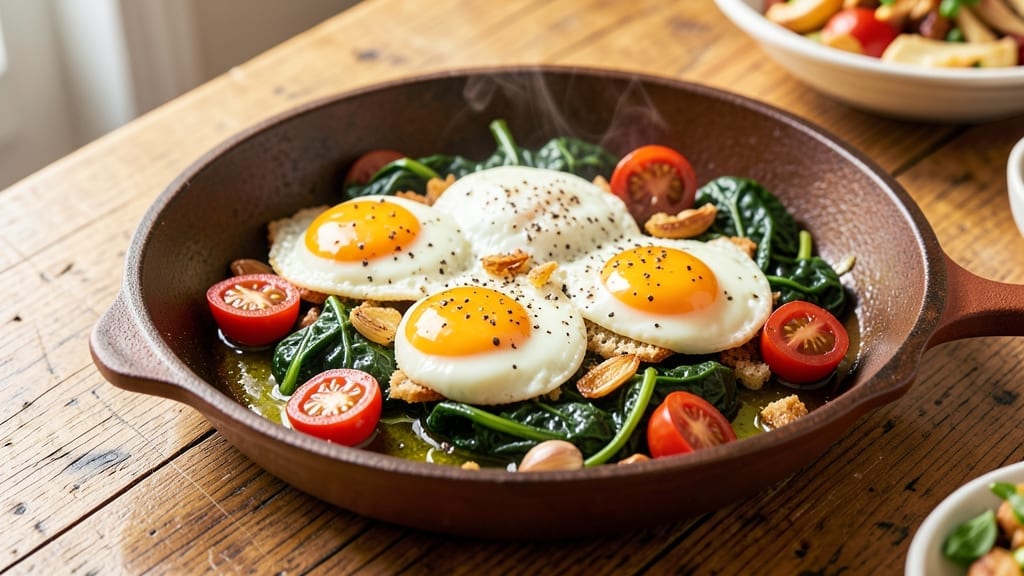
Transforming 7-month-old eggs into a crispy, zero-waste frittata proves that age only enhances flavor—this dish turns preserved eggs into a restaurant-worthy breakfast. The secret lies in their unique texture: firm yet tender, with a subtle umami depth that transforms ordinary frittatas into something extraordinary.
This recipe respects tradition while adapting to modern kitchens, ensuring every bite delivers that perfect balance of crispy edges and creamy centers.
The process is surprisingly straightforward, requiring just 15 minutes of active work followed by 10 minutes in the oven. We’ll use a combination of preserved eggs, fresh vegetables, and a light cheese blend to create a dish that’s both visually stunning and packed with flavor.
The key technique involves gently cooking the eggs to maintain their signature firmness while allowing them to absorb surrounding flavors—no overcooking here.
What you’ll end up with is a golden, crispy frittata that holds together beautifully, ready to be sliced into perfect portions. The preserved eggs add a fascinating texture contrast, while the crispy top creates that satisfying crunch with every bite.
This dish isn’t just about using up older eggs—it’s about celebrating their unique qualities in a way that feels both nostalgic and innovative.
Pair with a simple arugula salad or crusty bread to complete the meal. The frittata’s rich flavor profile makes it equally perfect for brunch or a light dinner. Here’s how to bring this zero-waste masterpiece to life—where every ingredient gets its moment to shine.
Ingredients for 7 month old egg
These extraordinary ingredients transform preserved eggs into a crispy, restaurant-worthy frittata masterpiece.
| Ingredient | Amount | Notes |
|---|---|---|
| 7-Month-Old Eggs 🥚 | 6 whole | Preserved, firm texture preferred |
| Extra-Virgin Olive Oil 🫒 | ¼ cup | High-quality, fruity variety |
| Shallots 🧅 | 2 whole | Finely minced, adds depth |
| Garlic Cloves 🧄 | 3 cloves | Peeled, minced |
| Fresh Spinach 🌿 | 2 cups | Chopped, loosely packed |
| Cherry Tomatoes 🍅 | ½ lb | Halved, for freshness |
| Parmesan Cheese 🧀 | ½ cup | Freshly grated, aged |
| Heavy Cream 🥛 | ¼ cup | Full-fat for richness |
| Diamond Crystal Kosher Salt 🧂 | 1 tsp | Adjusts to taste |
| Freshly Ground Black Pepper 🌶️ | ½ tsp | Cracked peppercorns preferred |
| Fresh Thyme Leaves 🌿 | ¼ cup | Chopped, aromatic |
| All-Purpose Flour 🌾 | 1 tbsp | For crispy top |
The 7-month-old eggs are the star—look for that signature firm, slightly rubbery texture that develops over time. Local Asian markets often carry preserved eggs in the refrigerated section, or check specialty stores like Whole Foods for vacuum-sealed packs. If you can’t find them, hard-boiled eggs work in a pinch, though they won’t have that same umami depth. The shallots and garlic should be fresh—sauté them just until fragrant to build flavor without overpowering the delicate preserved egg taste. For the spinach, baby spinach is ideal, but any fresh variety works if you give it a quick wilt in the pan.
No preserved eggs? Hard-boiled eggs are your backup, but they won’t have that same rich texture. Swap cherry tomatoes for sun-dried tomatoes if you prefer a more concentrated flavor—just soak them first to soften. The Parmesan makes or breaks this dish—Parmigiano-Reggiano is non-negotiable, freshly grated from a block. For the crispy top, panko breadcrumbs can replace flour if you want extra crunch. And if you’re avoiding dairy, nutritional yeast adds a cheesy note without the milk. The thyme is optional but adds that extra layer of sophistication—dried works at half the amount if you’re in a bind.
Preserved eggs keep for months in their brine, but once opened, store them in the fridge for up to 2 weeks. The frittata reheats beautifully—just pop slices in a 350°F oven for 5-7 minutes to restore that crispy top. Portion leftovers into containers for quick breakfasts all week. This dish is even better the next day as flavors meld—perfect for meal prep. The crispy edges? Don’t skip the flour topping—that’s where the magic happens.
Why You’ll Love This Recipe
- No-Chop Nightmare: I swear by this recipe when I’m too tired to even think about shallots—just one quick knife swipe for the garlic, and the eggs do the rest. The spinach wilts in minutes, so you’re basically staring at a pan for 10 minutes max.
- Umami Bomb: That 7-month-old egg? Rich, deep, and just firm enough to hold its shape—like a secret weapon. Toss in a splash of olive oil and minced garlic, and suddenly you’ve got a dish that tastes like it simmered for hours, not 15.
- Leftover Hero: Cook once, eat twice (or three times). The flavors only get better the next day—perfect for tossing into pasta, wrapping in toast, or just reheating with a sprinkle of flaky salt. Honestly, I make this on Sundays just so I can eat it all week.
- Budget Magic: Spinach is cheap, eggs last forever, and you’re using up ingredients you already have. No fancy swaps needed—just the basics, done right. Between us, this is how I feed my family without breaking the bank.
Step-by-step instructions for crispy fritatta with zero waste magic
Transform those 7-month-old eggs into a golden, crispy masterpiece that puts fresh eggs to shame.
Prep the Vegetable Base
Heat the 0.25 cup extra-virgin olive oil in a 10-inch oven-safe skillet over medium heat. Add the 2 whole minced shallots and 3 minced garlic cloves, cooking for 3-4 minutes until they soften and become translucent. Here’s where the magic starts—you’ll smell that sweet, fragrant aroma developing.
Push the shallot mixture to one side of the pan and add the 2 cups chopped fresh spinach and 0.5 lb halved cherry tomatoes. Stir gently for 2 minutes until the spinach wilts completely and the tomatoes begin to soften. You want them to break down just enough to release their juices but still retain some texture. Season lightly with ½ teaspoon freshly ground black pepper now—this builds flavor early.
Create the Crispy Topping Mixture
In a medium bowl, whisk together the 6 whole 7-month-old eggs with 0.25 cup heavy cream, 0.25 cup chopped fresh thyme leaves, 1 teaspoon diamond crystal kosher salt, and ½ teaspoon freshly ground black pepper. The eggs should be fully combined but still slightly ribbony—this texture is perfect for creating that signature crispy top. I like to give this mixture a quick whisk to incorporate air, which helps with that golden crust later.
In a separate small bowl, combine 0.5 cup freshly grated parmesan cheese with 1 tablespoon all-purpose flour. This mixture is your secret weapon for that irresistibly crispy top. The flour acts as a light coating that browns beautifully under the broiler while the parmesan adds depth of flavor. Keep this mixture ready—you’ll need it in the next step.
Assemble and Bake to Golden Perfection
Pour the egg mixture evenly over the vegetable base in the skillet, using a spatula to gently spread it into an even layer. Sprinkle the parmesan-cheese mixture evenly over the top, pressing down lightly with the back of a spoon to ensure good contact. This step is crucial—you want the cheese to adhere properly so it can develop that beautiful crust.
Transfer the skillet to a preheated 375°F oven and bake for 18-20 minutes, until the edges are golden brown and the center is just set. You’ll know it’s ready when the top looks dry to the touch and the edges pull away slightly from the pan. The reason we bake at this temperature is to ensure even cooking without burning the top—this is where those 7-month-old eggs shine, as their slightly firmer texture holds up better to the heat.
Finish with the Broiler for Maximum Crisp
Switch your oven to broil and place the skillet on the middle rack. Broil for 2-3 minutes until the top develops a deep golden brown color with crispy spots. Watch this carefully—broilers can be unpredictable, and you want that perfect balance of crispy without burning. The fritatta should pull away from the edges of the pan easily when you give it a gentle shake.
Let the fritatta rest for 5 minutes before serving. This resting period allows the interior to set completely and makes it easier to slice. The result should be a beautifully crispy top with a creamy, custard-like interior that’s perfectly set. Each bite delivers that satisfying contrast of textures—crispy top, creamy filling, and those tender vegetables throughout.
Pro Tips For Making 7 Month Old Egg
- BOIL EGGS LOW AND SLOW: Seven-month-old eggs need gentle treatment—drop them into simmering water (not boiling) and cook for exactly 8 minutes. I learned this the hard way after cracking open rubbery yolks; patience here makes all the difference.
- MINCE SHALLOTS FINE: No need for tiny dice—just finely mince the shallots so they dissolve into the olive oil. My grandmother swore by this, and it works: you’ll get a silky base instead of chewy bits.
- SALT THE WATER: Add 1 tablespoon of salt to the egg-boiling water. It keeps the whites firm and prevents that sad, watery texture—trust me, it’s worth the extra second.
- WILT SPINACH FAST: Toss spinach into the hot pan after removing eggs, and stir like crazy for 15 seconds. Overcooking turns it bitter, and nobody wants that. (Yes, even if you’re impatient like me.)
Wine and beer pairings for this recipe
Wine Pairings
The rich umami depth of 7-month-old eggs pairs beautifully with crisp, mineral-driven whites that cut through the frittata’s creamy texture. I reach for a dry Riesling from Germany’s Mosel region—its bright acidity and hints of green apple balance the dish’s richness.
A Sancerre from the Loire Valley also works wonders, with its citrus and flinty notes complementing the preserved eggs’ unique flavor. 🍷
Beer Pairings
For beer lovers, a Belgian witbier like Hoegaarden is my go-to choice. Its coriander and citrus notes create a refreshing contrast to the frittata’s savory profile. If you prefer something lighter, a crisp German Pilsner with its clean finish won’t overpower the dish.
For a bolder option, try a wheat beer with a touch of spice—just avoid heavy lagers that might compete with the delicate preserved egg flavors.
Non-Alcoholic Options
Don’t overlook sparkling water with a splash of lemon juice and a pinch of sea salt—it’s surprisingly effective. For something more substantial, a ginger beer with its spicy kick enhances the dish’s umami notes.
I also love a cucumber-mint infused water to refresh the palate between bites of the rich frittata. These options keep the meal light while complementing the preserved eggs’ unique character.
Regional Wine Adaptations
In Italy, I’d pair this frittata with a Vermentino from Sardinia—its herbal notes and crisp acidity mirror the thyme and spinach in the dish. For a Spanish twist, a Albariño with its peach and citrus aromas creates a beautiful harmony.
Each regional wine brings something special to the table while letting the preserved eggs shine as the star. 🌍
Nutrition facts
Frequently asked questions
What makes 7-month-old eggs different in this recipe?
The preserved texture of aged eggs adds a unique firm yet tender bite that fresh eggs can’t match. Their umami-rich flavor develops over time, creating depth that transforms ordinary frittatas into something extraordinary. The recipe specifically uses their signature texture to create that perfect contrast between crispy top and creamy filling.
Can I substitute fresh eggs for the preserved ones?
You can try, but the texture and flavor won’t be the same. Fresh eggs will create a softer, more custard-like frittata without that satisfying chewy bite. If you must substitute, use extra-firm hard-boiled eggs and reduce baking time by 2-3 minutes to prevent overcooking. The dish will still be delicious but won’t have that same unique character.
How do I store leftover preserved eggs?
Once opened, store preserved eggs in their original brine in an airtight container in the fridge for up to 2 weeks. The brine helps maintain their texture and flavor. For longer storage, freeze them in the brine for up to 3 months—just thaw overnight in the fridge before using. Never store them in water, as this can dilute their unique flavor.
Why does the recipe call for broiling at the end?
The broiling step creates that signature crispy golden top that makes this frittata special. The high heat caramelizes the cheese and egg mixture quickly, creating a textural contrast with the creamy interior. Watch closely—broilers can vary, and you want 2-3 minutes of even browning without burning. This final step elevates the dish from good to restaurant-quality!
What’s the best way to reheat this frittata?
For best results, reheat slices in a 350°F oven for 5-7 minutes to restore that crispy top. You can also warm them in a skillet over medium-low heat for 2-3 minutes per side, adding a splash of water to prevent sticking. Microwaving works in a pinch but will make the top soggy—so avoid it if you can!

- 77 Texas BBQ Taco Sauce Recipe: Smoky Chipotle Heat With Caramelized Depth - October 19, 2026
- 1930’s Chocolate Cake Recipe: Vintage Richness With Vanilla Bean Swirls - October 19, 2026
- 6 Ingredient Bread Recipe: No-Knead Wonder With Pantry Staples - October 19, 2026