
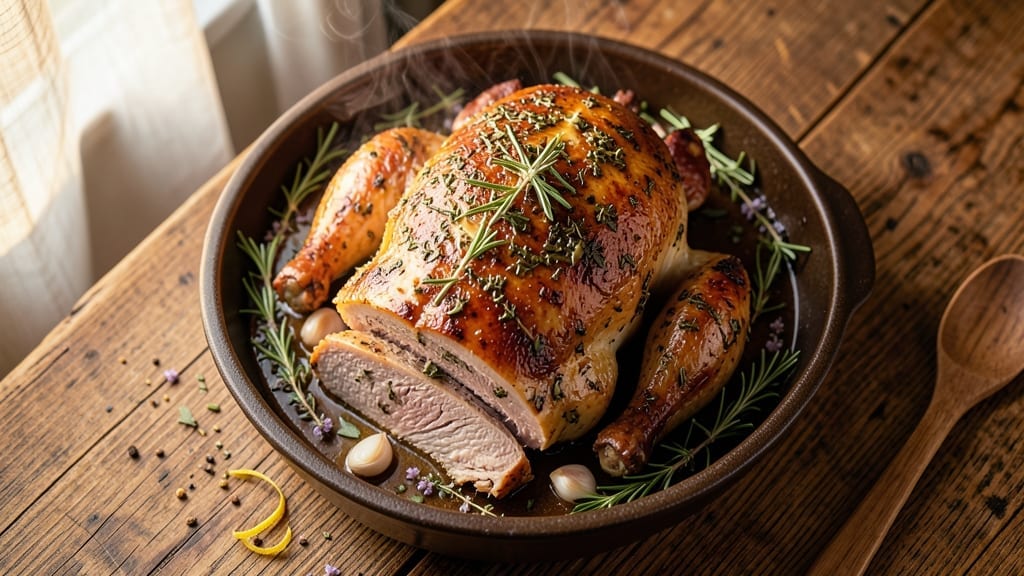
A 7-pound turkey recipe like this one delivers the perfect balance of golden skin and juicy meat—ideal for holiday feasts or special dinners. The secret lies in herbed butter basting, which keeps the turkey moist while creating a crispy, flavorful crust.
This method ensures every slice is tender and packed with rich, savory notes, making it the centerpiece of any meal.
What sets this recipe apart is the precise roasting technique, including a 325°F oven for even cooking and basting every 30 minutes. A meat thermometer ensures the turkey reaches 165°F in the thickest part, guaranteeing safety and perfection.
The herbed butter adds depth, while a simple brine (optional) enhances moisture and flavor.
By the time it emerges from the oven, your turkey will be golden, crisp-skinned, and impossibly juicy—the kind of result that makes every effort worthwhile. The aroma alone will fill your home with warmth, and the first slice will be worth every minute of preparation.
Serve with classic sides for a complete, unforgettable meal.
Whether you’re hosting Thanksgiving or a festive gathering, this recipe delivers restaurant-quality results at home. The key is patience and attention to detail—two things that pay off in a turkey so delicious, it becomes the highlight of any celebration. Let’s get cooking!
Ingredients for 7 pound turkey
This 7-pound turkey recipe transforms simple ingredients into restaurant-quality perfection through precise technique and herbed butter mastery.
| Ingredient | Amount | Notes |
|---|---|---|
| Fresh Whole Turkey 🦃 | 7 lb | Thawed if frozen, patted dry |
| Unsalted Butter 🧈 | ½ cup | Cold, cubed for basting |
| Fresh Rosemary 🌿 | ¼ cup | Finely chopped, stems removed |
| Fresh Thyme 🌿 | ¼ cup | Leaves only, finely chopped |
| Fresh Sage 🌿 | ¼ cup | Leaves only, finely chopped |
| Garlic Cloves 🧄 | 6 cloves | Minced for herbed butter |
| Diamond Crystal Kosher Salt 🧂 | 1 ½ tbsp | For herbed butter and brining |
| Freshly Ground Black Pepper 🌶️ | 1 tsp | Coarsely ground |
| Vegetable Oil 🫒 | 2 tbsp | For pan searing |
| Water 💧 | 4 cups | For optional brine |
| Granulated Sugar 🍚 | 2 tbsp | For brine balance |
| Turkey Brine 🥫 | 1 package | Optional, follow package instructions |
| Meat Thermometer 🌡️ | 1 whole | For precise doneness |
The turkey is the star, so source it from a trusted butcher or specialty grocer—look for one with even fat distribution and vibrant color. Whole Foods Market or Dartmouth Farms often carry high-quality birds that stay juicy during roasting. If brining, use the turkey brine packet or make your own with 4 cups water, 2 tbsp sugar, and 1.5 tbsp kosher salt. The herbs—rosemary, thyme, and sage—should be freshly harvested or purchased within 48 hours for maximum aroma. For the herbed butter, European-style unsalted butter (like Plugrá) melts more cleanly than American varieties. Prep the turkey 12 hours ahead if possible—it develops deeper flavor when rested.
No fresh herbs? Dried thyme and rosemary work at one-third the amount, but fresh delivers unmatched depth. Substitute garlic powder (1 tsp) for minced garlic if needed, though fresh garlic adds sweetness that powder lacks. For the brine, skip sugar if dietary restrictions apply—the turkey will still be moist. The meat thermometer is non-negotiable; instant-read models like Thermapen give precise 165°F readings in seconds. If you lack one, err on the side of caution and pull the turkey at 160°F—it’ll carry over to 165°F while resting. The vegetable oil for searing can be swapped for avocado or grapeseed oil if preferred, though they have higher smoke points.
Herbed butter basting requires 30-minute intervals—set a timer to avoid overcooking. Store prepped turkey (uncooked) in the fridge for up to 24 hours before roasting. Leftover turkey keeps 3-4 days in the fridge when properly wrapped; freeze portions for up to 3 months. For reheating, use low heat with a splash of broth to prevent drying. The herbed butter mixture can be prepped a day ahead and stored in the fridge—bring it to room temperature before basting. Always let the turkey rest 20-30 minutes after roasting; this ensures juices redistribute for perfect slices every time.
Why You’ll Love This Recipe
- No-Fuss Prep: I’ll be real—this turkey takes five minutes of actual work. Just pat the bird dry, rub it with softened butter, and tuck those rosemary sprigs under the skin. Honestly, the hardest part is waiting for it to cook.
- Herb-Packed Magic: That combo of rosemary, thyme, and sage? It’s like a flavor hug for your turkey. The butter bastes into a golden crust, while the herbs infuse the meat so deeply, every bite tastes like a holiday—even on a Tuesday.
- Leftovers That Shine: Between us, this recipe always gives me extra. Shred the rest for sandwiches, toss chunks into pasta, or slice it thin for turkey tacos. I’ve turned this one turkey into three meals without breaking a sweat.
- Budget-Friendly Feast: A 7-pound turkey stretches for a crowd without costing a fortune. Use the bones for broth, save the meat for days, and still have enough for seconds. It’s my go-to for gatherings where I’d rather spend money on wine than meat.
Step-by-step instructions for herbed butter roast turkey
Master this technique and you’ll achieve a turkey with crisp golden skin and moist, flavorful meat every time.
Prepare the Herbed Butter and Season the Turkey
In a medium bowl, combine the 0.5 cup unsalted butter, 0.25 cup finely chopped fresh rosemary, 0.25 cup fresh thyme leaves, 0.25 cup fresh sage leaves, 6 minced garlic cloves, 1.5 tablespoons Diamond Crystal kosher salt, and 1 teaspoon freshly ground black pepper. Mix thoroughly until the herbs are evenly distributed throughout the butter. This herbed butter will infuse the turkey with aromatic flavor while keeping the meat moist during roasting.
Remove the turkey from the refrigerator and let it sit at room temperature for 30 minutes to ensure even cooking. Pat the turkey completely dry inside and out with paper towels—this is crucial for achieving crispy skin. Gently loosen the skin over the breast and rub half of the herbed butter underneath. Spread the remaining butter evenly over the outside of the turkey, including under the skin of the wings and thighs. This step ensures maximum flavor penetration and helps prevent dryness.
Brine the Turkey (Optional but Recommended)
For extra juicy meat, prepare a brine by combining 4 cups water, 2 tablespoons granulated sugar, and 1 package turkey brine (if using) in a large container. Dissolve the sugar completely before adding the turkey. Place the turkey in the brine, ensuring it’s fully submerged, and refrigerate for 12-24 hours. The sugar helps balance the salt while the brine solution penetrates the meat, enhancing moisture retention during cooking.
If you choose not to brine, simply pat the turkey dry again after removing it from the refrigerator. Either way, the turkey should be at room temperature before roasting. This preparation ensures the turkey cooks evenly from edge to center, resulting in perfectly moist meat throughout.
Roast the Turkey with Precision
Preheat your oven to 325°F. Place the turkey on a rack set inside a roasting pan, breast-side up. Insert the meat thermometer into the thickest part of the thigh, avoiding the bone. Roast the turkey for 3 to 3.5 hours, or until the internal temperature reaches 165°F in the thickest part of the thigh. The turkey will continue to rise in temperature by 5°F after removal from the oven, so don’t overcook it.
To achieve crispy skin, baste the turkey with its accumulated juices every 45 minutes using a basting brush. If the skin begins to brown too quickly, tent the turkey loosely with aluminum foil. The goal is to develop a golden-brown crust while ensuring the meat remains juicy. Avoid opening the oven door frequently, as this can cause temperature fluctuations and prolong cooking time.
Rest and Carve for Maximum Juiciness
Once the turkey reaches the target internal temperature of 165°F, remove it from the oven and transfer it to a cutting board. Tent the turkey loosely with aluminum foil and let it rest for at least 30 minutes before carving. This resting period allows the juices to redistribute throughout the meat, ensuring each slice is moist and flavorful. During this time, you can prepare your gravy using the pan drippings and any remaining herbed butter.
To carve, first remove the legs and thighs by cutting through the skin and joints. Then, slice the breast meat against the grain into ½-inch thick slices. Serve the turkey immediately, accompanied by your favorite sides and gravy. The result should be a turkey with perfectly crisp golden skin, juicy meat, and a rich herbed butter flavor throughout.
Pro Tips For Making 7 Pound Turkey
- Brine Overnight: Skip the dry rub this time—submerge the turkey in a mix of cold water, 1/4 cup kosher salt, and 2 tablespoons sugar for 12-24 hours. The salt penetrates deeper than skin seasoning, and that crispy skin? It’s a given when you start with properly hydrated meat.
- Stuff the Cavity: Tuck loose rosemary sprigs, thyme, and sage stems into the turkey’s cavity after trussing, not before. The herbs will infuse the meat directly, and the butter you melt over them (yes, even if it’s just 2 tablespoons) will baste the bird from the inside out.
- Don’t Rush the Start: Let the turkey sit at room temp for 1-2 hours before roasting—yes, even if you’re eager. I used to skip this and ended up with uneven cooking, especially in the center. Cold meat holds heat poorly, and that’s a recipe for dry turkey.
- Butter the Skin: After searing, rub softened unsalted butter under the skin over the breast and thighs—don’t just dot it on top. This creates a flavor barrier and keeps the meat juicy while the skin crisps. (Pro move: Save the leftover butter for gravy.)
Pro cooking tips for great 7 pound turkey
Temperature Control
Your oven’s 325°F setting is non-negotiable for even cooking—lower temps prevent the outside from drying while the inside cooks. Use an oven thermometer to verify accuracy (many ovens run 25°F hotter than set).
I recommend the Thermoworks Oven Thermometer for precision. If your turkey browns too fast, tent it with foil and adjust the rack to the middle position for consistent heat circulation. 🌡️
Basting Like a Pro
Baste every 45 minutes with pan juices (not melted butter) to crisp the skin without steaming the meat. Use a basterspoon or silicone brush—avoid splashing juices onto the oven walls. For extra flavor, mix 2 tbsp turkey drippings with 1 tbsp herbed butter before basting.
Pro tip: Keep a bowl of ice water nearby to chill the baster between uses, preventing butter from separating.
Skin Secrets
Pat the turkey completely dry before roasting—moisture is the enemy of crispy skin. For extra crunch, rub the skin with ½ tsp smoked paprika 30 minutes before finishing. I also recommend a 5-minute broil at the end (watch closely!) to set the skin while keeping the inside warm.
Never skip the 30-minute rest—this lets juices settle, preventing dry slices when carved.
Thermometer Placement
Insert the thermometer into the thigh’s thickest part (avoid touching bone or fat). The 165°F reading should be in the center of the meat, not near the surface. For a 7-pound turkey, this typically takes 3-3.5 hours, but timing varies by bird.
If the breast browns too quickly, cover it with foil and continue roasting—it’ll finish cooking while resting.
Resting Matters
Never carve turkey immediately after roasting—juices will pool on your plate instead of distributing. Tent loosely with foil and let rest 20-30 minutes on a cutting board. This also allows the carryover cooking to push temps to 170°F, ensuring safety.
Use this time to make gravy from pan drippings—simmer 2 cups drippings with 2 tbsp cornstarch for a silky finish.
Equipment Must-Haves
Invest in a roasting rack (not a bed of foil) to allow air circulation and even browning. A meat thermometer is essential—never guess! For basting, I swear by the OXO Good Grips baster, which holds more liquid than disposable brushes.
If your pan lacks a rack, prop the turkey on a wire cooling rack in a deep roasting pan to prevent soggy skin.
Nutrition facts
Frequently asked questions
How long should I thaw a frozen 7-pound turkey?
Thaw your turkey in the refrigerator for 24 hours per 4-5 pounds. For a 7-pound bird, plan for 3-4 days of thawing. Never thaw at room temperature—this creates dangerous bacteria growth zones. Place the turkey in a pan to catch any juices that may leak out during thawing.
Can I stuff my 7-pound turkey?
For a 7-pound turkey, it’s better to skip stuffing. The bird is small enough that stuffing can overcook the center, leaving the meat dry. Instead, prepare your stuffing separately and serve it on the side. This ensures both the turkey and stuffing cook to perfect doneness.
What’s the best way to keep the turkey moist?
The herbed butter technique is key—it creates a flavorful barrier that locks in moisture. Also, roast at 325°F (not higher) and baste every 45 minutes with pan juices. Brining for 12-24 hours before roasting adds extra moisture protection. Never skip the 30-minute rest after cooking—this lets juices redistribute.
How do I adjust cooking time if my oven runs hot?
If your oven runs 25°F hotter than set (common issue), reduce the temperature to 300°F and add 15-20 minutes to your cooking time. Always use an oven thermometer to verify accuracy. For a 7-pound turkey, this means aiming for 3.5-4 hours total. Monitor with a meat thermometer for precise doneness.
What sides pair best with this turkey?
Classic sides like garlic mashed potatoes, roasted Brussels sprouts, and cranberry sauce complement the herbed butter perfectly. For a modern twist, try wild rice pilaf or honey-glazed carrots. The rich turkey flavor pairs well with slightly sweet or earthy vegetables. Don’t forget gravy made from pan drippings—it ties everything together beautifully.

- 12 Bean Chili Recipe: Hearty Slow-Cooked Depth With 12 Legumes - October 17, 2026
- 5 Seed Bread Recipe: Nutty Crunch and Artisan Flavor in One Loaf - October 17, 2026
- 1 Lb Macaroni Salad Recipe: Bold, Crunchy, and Crowd-Pleasing - October 17, 2026