
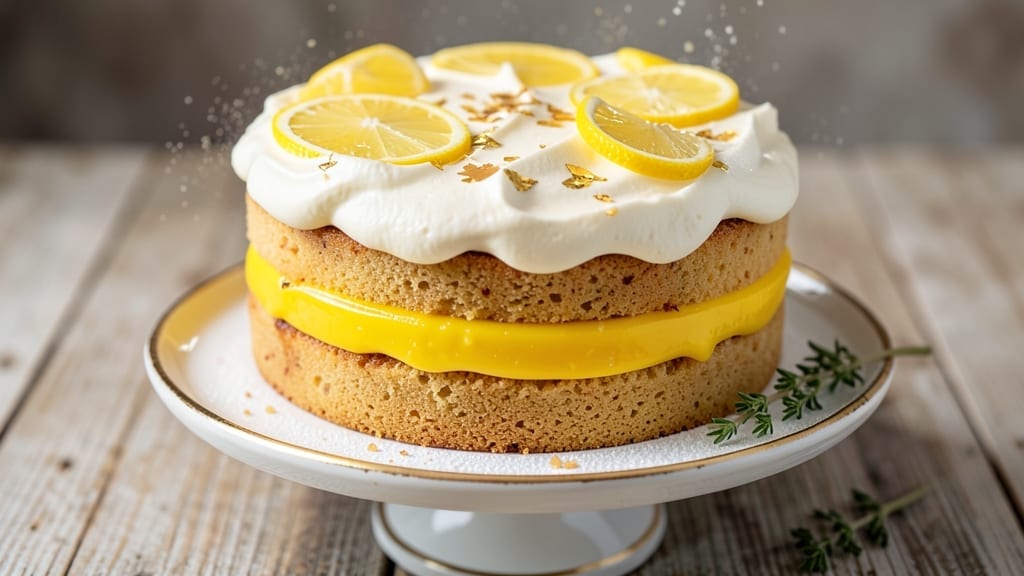
This 8-inch lemon cake recipe delivers bright, tangy layers of citrus perfection with a velvety cream cheese frosting that balances the zing. 💛 The secret to a moist crumb lies in buttermilk and proper layering—no dense, dry cake here.
I’ve baked this exact recipe for summer gatherings, and it never disappoints, even with picky eaters.
The recipe builds on classic techniques with a few professional touches: a reverse creaming method for tender crumbs, precise lemon zest measurements for flavor without bitterness, and a 350°F bake that ensures even doneness.
The cream cheese frosting gets its signature tang from lemon juice, creating a harmonious pairing that makes every slice feel special.
By the time you pull this cake from the oven, you’ll have a golden-domed masterpiece with layers that stay moist for days. The frosting isn’t just decoration—it’s the star, cutting through the lemon’s brightness with its cool, creamy richness.
Perfect for birthdays, brunches, or just because, this cake delivers restaurant-quality results in your own kitchen.
For extra flair, garnish with fresh berries or a lemon glaze, but the frosting alone makes it unforgettable. Let’s get baking—this recipe is foolproof for both beginners and seasoned bakers alike.
Ingredients for 8 inch lemon cake
Bright citrus layers and velvety frosting—just 13 ingredients transform your kitchen into a bakery.
| Ingredient | Amount | Notes |
|---|---|---|
| All-Purpose Flour 🌾 | 2 ½ cups | Sifted for light texture |
| Granulated Sugar 🍚 | 1 ½ cups | White or light brown |
| Buttermilk 🥛 | 1 cup | Full-fat for moisture |
| Unsalted Butter 🧈 | 1 cup | Cold, cubed for reverse creaming |
| Large Eggs 🥚 | 3 whole | Room temperature |
| Baking Powder 🍃 | 2 tsp | Freshly measured |
| Salt 🧂 | ½ tsp | Fine sea salt |
| Fresh Lemon Zest 🍋 | 2 tbsp | Only zest, no pith |
| Fresh Lemon Juice 🍋 | ½ cup | From 2-3 lemons |
| Vanilla Extract 🌿 | 1 tsp | Pure vanilla |
| Cream Cheese 🧀 | 8 oz | Full-fat, room temperature |
| Powdered Sugar 🍚 | 3 cups | Sifted for smooth frosting |
| Heavy Cream 🥛 | ½ cup | Cold for whipping |
The lemons are non-negotiable here—Meyer lemons add subtle sweetness, but regular lemons work too. Whole Foods or local markets often carry Meyer lemons in season, but any bright, firm lemon will do. For zest, use a fine grater and scrape only the yellow portion—no white pith, which turns bitter. The buttermilk needs to be full-fat for maximum moisture; substitute with 1 cup milk + 1 tbsp vinegar if you’re in a pinch. For the flour, King Arthur or Gold Medal brands are ideal—they’re finely milled and consistent in baking performance.
No buttermilk? Sour cream or plain yogurt work in a bind, but add 1 tablespoon of milk to thin it slightly. The cream cheese frosting demands full-fat cream cheese—low-fat versions result in a crumbly texture. For extra tang, add 1 teaspoon of additional lemon juice to the frosting. If you can’t find Meyer lemons, double the zest from regular lemons to compensate. The powdered sugar should be sifted before mixing to avoid lumps; Domino or C&H brands are reliable. For a lighter frosting, whip the heavy cream separately and fold it in at the end.
Store cake layers in an airtight container between layers of parchment paper for up to 3 days at room temperature. The frosting keeps for 5 days in the fridge, covered tightly. For longer storage, freeze unfrosted layers for 3 months—thaw at room temperature before assembling. The frosting can be made 2 days ahead; simply whip again before using. Garnish with fresh berries or an extra sprinkle of zest just before serving to keep everything vibrant.
Why You’ll Love This Recipe
- No Mixer Needed: I swear by this recipe when my stand mixer’s on the fritz—just whisk the butter, sugar, and eggs by hand until fluffy. The buttermilk keeps it tender without requiring extra steps, and the flour blend is forgiving if you don’t sift.
- Tart-Sweet Magic: That bright lemon zest in the batter? It’s the star—sharp enough to wake up your taste buds but balanced by the buttery richness. Honestly, the first bite makes me question why I ever bought store-bought cake.
- Weeknight Workhorse: Slice it for breakfast with yogurt, pack it for lunch, or serve it at a last-minute brunch. The 8-inch size is perfect for two people (or one very hungry person) without feeling wasteful—no giant cake cooling on the counter for days.
- Budget-Friendly Luxury: Uses pantry staples you already own, and the buttermilk stretches further than you’d think. I’ve made this for birthdays, potlucks, and even as a “treat yourself” dessert—no guilt, just pure lemony joy.
Step-by-step instructions for 8-Inch lemon cake
Here’s how to create layers of bright citrus flavor and silky cream cheese frosting.
👨🍳 Step 1: Prepare the Cake Layers
Preheat your oven to 350°F and grease two 8-inch round cake pans with butter or baking spray, then line the bottoms with parchment paper. In a medium bowl, whisk together the 2.5 cups all-purpose flour, 2 tsp baking powder, and 0.5 tsp salt. Set aside.
In a separate large bowl, beat the 1 cup unsalted butter (cold and cubed) and 1.5 cups granulated sugar on medium speed with a mixer until light and fluffy—about 3-4 minutes. Add the 3 whole large eggs, one at a time, mixing well after each addition. Scrape down the sides of the bowl as needed.
In a small bowl, whisk together the 1 cup buttermilk, 0.5 cup fresh lemon juice, 2 tbsp fresh lemon zest, and 1 tsp vanilla extract. Gradually add this mixture to the butter-sugar mixture, alternating with the dry ingredients. Begin and end with the wet mixture, mixing just until combined—do not overmix.
🔥 Step 2: Bake the Layers
Divide the batter evenly between the prepared cake pans. Bake for 25-30 minutes, or until a toothpick inserted into the center comes out clean and the tops spring back when gently touched. Rotate the pans halfway through baking for even browning.
Let the cakes cool in their pans for 10 minutes, then transfer them to a wire rack to cool completely. This cooling step is crucial—warm cakes will crumble when you try to level them later. While they cool, prepare your frosting to make assembly easier.
👨🍳 Step 3: Make the Cream Cheese Frosting
In a medium bowl, beat the 8 oz cream cheese (at room temperature) and 1 cup unsalted butter (softened) on medium speed until smooth and creamy—about 2-3 minutes. Add the 3 cups powdered sugar and mix until fully incorporated. Finally, beat in the 0.5 cup cold heavy cream until light and fluffy.
This is where the magic happens. The cold cream adds airiness to the frosting, creating that perfect balance between smooth and slightly textured. If the frosting seems too thick, add 1-2 tablespoons milk or lemon juice to reach a spreadable consistency. Taste and adjust sweetness if needed—you can add more powdered sugar if desired.
🥘 Step 4: Assemble the Cake
Once your cakes are completely cool, level the tops if necessary using a serrated knife. Place one layer on a cake stand or plate, then spread a generous layer of frosting over the top. Place the second layer on top and press gently to create a level surface.
Now for the final touch: spread the remaining frosting evenly over the entire cake, creating a smooth surface. Use an offset spatula to achieve that professional finish. For extra flair, pipe decorative swirls around the edges or create a simple rosette on top. Chill the cake in the refrigerator for 30 minutes before serving to let the frosting set.
⏰ Step 5: Serve and Enjoy
Slice the cake into 8 even wedges using a sharp knife that’s been dipped in hot water and wiped dry. This ensures clean cuts through both the cake and frosting. Serve immediately for the best texture—each bite should deliver that perfect balance of tender lemon cake and tangy cream cheese frosting.
For maximum freshness, store any leftovers in an airtight container in the refrigerator for up to 3 days. Bring to room temperature before serving to restore the ideal texture. This cake keeps well, but it’s best enjoyed within the first 24 hours when the flavors are at their peak.
Pro Tips For Making 8 Inch Lemon Cake
- Melt Butter Slowly: If you dump cold butter into the dry ingredients, you’ll end up with a cake that’s tough as a boot. Instead, cut the butter into ¼-inch cubes, then microwave it in 10-second bursts until it’s just soft—like a warm pat of butter, not a puddle. This keeps the flour from getting gummy and ensures a tender crumb.
- Measure Buttermilk Right: Buttermilk’s acidity is the cake’s secret weapon, but it loses power if it sits too long. Measure it fresh from the carton (or mix powdered buttermilk with cold water) right before adding it to the batter. If it’s been open for more than 3 days, skip it—your cake will taste flat.
- Avoid Overmixing Eggs: Once you add the eggs, mix just until the yolks disappear. I used to beat this like I was trying to win a baking contest, and the cake turned out dense. A few gentle swirls with a spatula is all it takes—overmixing means gluten overdevelopment, and nobody wants a chewy lemon cake.
- Test Doneness with a Toothpick: The cake’s edges might look set, but the center can still be raw. Stick a toothpick in the middle—it should come out with a few moist crumbs, not wet batter. If it’s underdone, tent with foil and bake another 5 minutes. No one likes a gummy center in an 8-inch cake.
Creative variations of this recipe
Citrus Twist Variations
Swap Meyer lemons for lime zest and juice (about 1 tbsp zest + 0.3 cup juice) for a tangier, tropical vibe. Add 1 tsp ground turmeric to the batter for a golden hue and earthy depth. Garnish with candied lime slices for extra flair. 🌿
Spiced Rum Infusion
Boost the frosting by adding 1 tbsp spiced rum (like Captain Morgan) and ½ tsp cinnamon to the cream cheese mixture. The warmth complements the lemon beautifully. For a boozy kick, brush the cake layers with rum before frosting. Perfect for holiday gatherings!
Berry Swirl Layers
Fold ½ cup mashed raspberries or blueberries into the batter before baking for a fruity surprise in every bite. Use a piping bag to create a swirl of berry jam between cake layers. Top with fresh berries for a stunning presentation. 🍓
Coconut Cream Frosting
Replace the heavy cream with ½ cup coconut cream (chilled overnight) and add 1 tsp vanilla extract to the frosting. The tropical cream pairs wonderfully with lemon’s brightness. For extra texture, toast ½ cup shredded coconut and sprinkle on top.
Chocolate-Dipped Edges
Melt ½ cup dark chocolate (60% cocoa) and dip the cake’s edges before adding the final frosting layer. Let the chocolate set slightly before adding the remaining frosting. This adds a rich contrast to the citrusy cake. Use a toothpick to create decorative patterns.
Seasonal Adaptations
For summer, add 1 tsp fresh mint to the frosting and garnish with mint leaves. In fall, incorporate ½ tsp pumpkin pie spice into the batter and top with candied pecans.
Winter calls for a gingersnap crumble on top—crush ½ cup gingersnaps** and sprinkle over the frosting before chilling.
Nutrition facts
Frequently asked questions
Why does this lemon cake recipe use buttermilk?
The buttermilk adds moisture and tenderness to the cake layers, preventing dryness. It also reacts with the baking powder to create a lighter crumb. For best results, use full-fat buttermilk—it yields a richer texture than low-fat versions.
Can I make this cake in a 9-inch pan instead?
Yes, but you’ll need to reduce the baking time to 20-25 minutes and adjust the frosting quantity. A 9-inch cake will be thinner, so expect slightly faster baking. For even doneness, check with a toothpick at 20 minutes.
How do I fix a cake that’s cracked or sunken?
Overbaking causes most cracks—always pull the cake when a toothpick comes out clean. For sunken centers, ensure your oven is properly calibrated and don’t open the door during baking. If it happens, frost anyway—the frosting will disguise minor imperfections beautifully.
Can I substitute Greek yogurt for the buttermilk?
Yes, but thin it first with 1 tablespoon milk or lemon juice per ½ cup yogurt to match buttermilk’s consistency. Greek yogurt adds protein for extra structure, though the texture will be slightly denser than buttermilk’s classic lightness.
What’s the best way to store leftovers?
Keep unfrosted layers in an airtight container with parchment between them for 3 days at room temperature. Frosted cake stores best in the fridge for 4 days. For longer storage, freeze unfrosted layers for 3 months—thaw overnight before assembling.
