
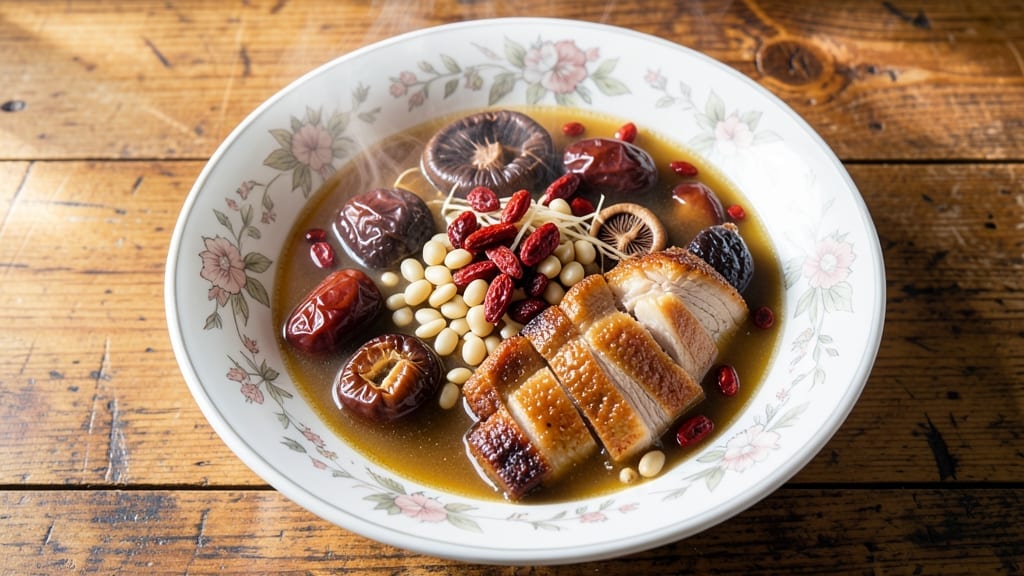
This 8 Treasure Soup recipe brings the heart of Mainland Chinese cuisine to your kitchen, where eight carefully selected ingredients—pork, mushrooms, goji berries, and more—simmer into a velvety, aromatic broth that carries deep cultural significance.
The dish, known as Bābǎo Tāng, has been a staple in Chinese households for generations, symbolizing prosperity and harmony through its balanced flavors and nourishing ingredients.
What sets this recipe apart is the precise technique of layering textures—tender meat, chewy mushrooms, and delicate dried fruits—all harmonized in a single pot.
Creating an authentic 8 Treasure Soup requires patience, as the broth must simmer for hours to develop its rich, umami depth while keeping the ingredients tender yet distinct. The key lies in selecting high-quality ingredients: fresh mushrooms for earthiness, plump goji berries for sweetness, and lotus seeds for subtle crunch.
Unlike quicker soups, this dish rewards careful preparation with a flavor profile that’s both comforting and sophisticated, making it ideal for family gatherings or special occasions.
The result is a soup that’s as visually stunning as it is delicious—steaming with aromatic herbs, studded with vibrant ingredients, and perfumed with the warmth of ginger and star anise.
Each spoonful delivers a symphony of textures and flavors, from the silky broth to the chewy mushrooms and the burst of sweetness from dried fruits.
Whether you’re serving it as a centerpiece for a holiday meal or a nourishing dish for recovery, this recipe captures the essence of Chinese culinary tradition.
For those looking to adapt the recipe, vegetarian versions replace seafood with additional mushrooms, tofu, or dried vegetables, while regional variations might include local ingredients like winter melon or shiitake mushrooms.
The beauty of 8 Treasure Soup lies in its flexibility—every ingredient plays a role, yet the dish remains deeply rooted in its cultural heritage. Let’s bring this timeless classic to life in your kitchen.
Ingredients for 8 treasure soup recipe mainland china
Eight treasures simmered into one velvety, aromatic broth—each ingredient playing its part in this Mainland Chinese classic.
| Ingredient | Amount | Notes |
|---|---|---|
| Pork Shoulder 🥩 | 1 ½ lb | Bone-in for richer flavor |
| Dried Shiitake Mushrooms 🍄 | 8 whole | Rehydrated before use |
| Fresh Shiitake Mushrooms 🍄 | ½ lb | Sliced for texture contrast |
| Dried Goji Berries 🍇 | ¼ cup | Plump and organic preferred |
| Dried Lotus Seeds 🌼 | ¼ cup | Soaked overnight for tenderizing |
| Dried Red Dates 🍯 | 6 whole | Pitted and sliced |
| Dried Scallops 🦪 | ¼ lb | Rehydrated in warm water |
| Fresh Ginger 🌿 | 2 tbsp | Grated, organic preferred |
| Star Anise 🌟 | 2 whole | Lightly crushed for aroma |
| Dried Tangerine Peel 🍊 | 2 tbsp | Candied, for subtle sweetness |
| Chinese Rock Sugar 🍬 | ½ cup | Or substitute brown sugar |
| Dried Rehmannia Root 🌿 | 1 tbsp | Optional for medicinal depth |
| Chicken Stock 💧 | 6 cups | Homemade preferred |
| Green Onions 🧅 | 4 whole | Sliced for garnish |
| Salt 🧂 | 1 ½ tsp | Adjust to taste |
The foundation starts with pork shoulder—bone-in for maximum flavor development during the long simmer. Look for marbled cuts at your local Asian market or butcher shop, as this ensures juiciness. Dried shiitake mushrooms should be plump and free of stems; Whole Foods or H Mart carry high-quality varieties. Fresh shiitakes add texture contrast—opt for thick stems to avoid mushiness. For the dried ingredients like goji berries and lotus seeds, organic brands (such as Sunrise or Navitas) ensure purity, though any reputable dried fruit section will suffice. The dried scallops are non-negotiable for authenticity—Asian grocery stores stock them in the dried seafood aisle. Fresh ginger should be organic and knobby, signaling potency.
No dried scallops? Rehydrated shrimp or extra mushrooms work in a pinch, though the texture differs. Substitute dried apricots for red dates if needed, but reduce to half the amount to avoid over-sweetening. Star anise can be omitted if unavailable, but the candied tangerine peel adds essential aroma—Trader Joe’s sells it pre-sliced for convenience. For the broth, homemade chicken stock elevates the dish, but store-bought low-sodium versions (like Kitchen Basics) suffice. The green onions should be bright green, not wilted, and sliced just before serving to preserve their freshness. Rock sugar can be replaced with brown sugar, though it lacks the same caramelized depth.
This soup demands patience—simmer for at least 3 hours to meld flavors without overcooking. Store the broth (without ingredients) in the fridge for up to 5 days or freeze for 3 months. Reheat gently on low heat, adding 1-2 tbsp water if it thickens. The dried ingredients can be prepped ahead: soak lotus seeds and scallops overnight, then drain before adding to the pot. Garnish with fresh ginger slices and green onions just before serving to highlight their vibrant colors. For leftovers, portion into containers—the broth reheats beautifully, while the ingredients can be added fresh when serving.
Why You’ll Love This Recipe
- One-Pot Magic: I swear by this soup because it’s basically hands-off after the initial chop. Toss in the pork shoulder, dried shiitakes, and those little treasure ingredients—goji berries and lotus seeds—and let the broth do the work. No stirring, no fuss, just deep flavor simmering away.
- Umami Bomb: That combo of pork, fresh and dried shiitakes? It’s a flavor explosion waiting to happen. The dried mushrooms add this earthy depth, while the fresh ones bring a meaty chew—plus, the lotus seeds and goji berries add a subtle sweetness that balances everything perfectly.
- Weeknight Workhorse: This soup is my go-to for busy nights because it doubles as a meal prep hero. Make a big batch on Sunday, and you’ve got hearty lunches all week. Honestly, I’ve served it for dinner, packed it for work, and even brought it to potlucks—it’s that reliable.
- Budget-Friendly Luxury: Pork shoulder and dried ingredients stretch this recipe into a full week’s worth of leftovers without breaking the bank. Between us, I’ve made this for under $10 per serving, and it still feels like a special meal. That’s the kind of value I love.
Step-by-step instructions for 8 treasure soup
A rich, velvety broth with eight distinct ingredients creates this iconic Chinese soup.
Prepare the Dried Ingredients
Begin by soaking the dried components overnight to ensure they rehydrate fully. Place the 8 whole dried shiitake mushrooms, 0.25 cup dried lotus seeds, 6 whole dried red dates, 0.25 lb dried scallops, and 1 tbsp dried rehmannia root in separate bowls and cover with warm water. Let them soak for at least 12 hours—this softens their texture and deepens their flavor. The dried scallops and mushrooms will plump significantly, while the lotus seeds will become tender and easy to chew.
After soaking, drain and rinse each ingredient thoroughly. For the dried shiitake mushrooms, trim off any tough stems and slice them into ¼-inch thick pieces. The dried scallops should be drained and patted dry before use. The dried red dates should be pitted and sliced into thin strips. These preparations ensure even cooking and optimal texture in the final soup.
Sear the Pork Shoulder and Aromatics
Cut the 1.5 lb pork shoulder into 1-inch cubes for even cooking. Heat a large pot or Dutch oven over medium-high heat and add a small amount of oil. Sear the pork cubes until they develop a golden-brown crust, about 3-4 minutes per side. Remove the pork and set it aside temporarily.
In the same pot, add the 2 tbsp fresh ginger and 2 whole star anise, lightly crushed. Sauté for 1 minute until fragrant. This step builds the aromatic foundation of the soup, infusing the broth with warm, earthy notes. The ginger will soften slightly, releasing its essential oils, while the star anise adds a subtle anise-like depth that complements the other ingredients.
Simmer the Broth with Ingredients
Add 6 cups chicken stock to the pot and bring to a gentle boil. Return the seared pork to the pot, along with the 0.5 cup Chinese rock sugar and 1.5 tsp salt. Stir to dissolve the sugar and salt completely. Reduce the heat to low and let the broth simmer for 30 minutes, allowing the pork to tenderize and the flavors to meld.
After 30 minutes, add the rehydrated dried shiitake mushrooms, dried scallops, dried lotus seeds, and dried red dates. Stir gently to combine, then continue simmering for an additional 20 minutes. The broth should now be infused with the flavors of all the ingredients, creating a harmonious balance of savory, sweet, and umami notes. The pork should be fork-tender, ready to absorb the rich broth.
Incorporate Fresh Ingredients and Finish
Add the 0.5 lb fresh shiitake mushrooms, sliced into ¼-inch pieces, and the 2 tbsp dried tangerine peel to the pot. Simmer for another 10 minutes to allow the fresh mushrooms to soften and the tangerine peel to release its citrusy aroma. The fresh mushrooms will add a delicate, earthy contrast to the dried ingredients, while the tangerine peel brings a subtle sweetness and brightness.
Taste the broth and adjust the seasoning with additional salt if needed. The soup should be sweet, savory, and slightly salty, with a velvety texture. Remove the 2 whole star anise and dried tangerine peel before serving, as they are used only for flavor and can be slightly bitter if overcooked.
Serve with Garnish
Ladle the soup into bowls and garnish each serving with 4 whole green onions, sliced diagonally into ¼-inch pieces. The green onions add a fresh, crisp contrast to the rich, warm broth. Serve immediately while the soup is hot, allowing the flavors to fully develop with each bite. This soup is traditionally enjoyed as a nourishing dish, often paired with steamed rice or noodles to soak up the delicious broth.
Pro Tips For Making 8 Treasure Soup Recipe Mainland China
- Parboil Pork First: I learned this the hard way—skipping the quick parboil means your pork shoulder stays tough. Simmer it 10 minutes in water before adding to the soup; it’ll shred like silk and absorb flavors better. (Yes, even if you’re impatient like me.)
- Soak Dried Shiitake: These mushrooms need a proper bath—soak dried shiitake in hot water for 20 minutes before slicing. Cold water? They’ll stay chewy. Hot water unlocks their texture and flavor, and the soaking liquid can go straight into the pot.
- Add Goji Berries Last: Tossing dried goji berries in early turns them to mush. Wait until the very end—just 2 minutes before serving—to keep them plump and chewy. (Your future self will notice the difference.)
- Toast Lotus Seeds: Sounds weird, but it works: dry-toast dried lotus seeds in a pan for 30 seconds until fragrant. This removes bitterness and makes them pop with texture. Skip this, and they’ll taste bland. (I know, I know—just do it.)
Flavor customization for 8 treasure soup recipe mainland china
Sweet and Savory Balance
The traditional 8 Treasure Soup thrives on its harmonious sweet-savory balance, where the natural sweetness of dried red dates and goji berries contrasts beautifully with the umami depth of pork and mushrooms.
To adjust sweetness, add 1 extra tablespoon of rock sugar for every 2 servings—this enhances the caramelized notes during simmering. For a less sweet version, reduce the sugar by 20% and rely more on the natural sweetness of the dates. 🍯
Spice Level Adjustments
While this soup is traditionally mild, you can introduce subtle heat by adding 1 teaspoon of chili flakes or ½ teaspoon of Szechuan peppercorns during the final 10 minutes of simmering. For a milder kick, use ½ teaspoon of ground white pepper instead—it adds warmth without overpowering.
If you love ginger’s sharpness, increase it to 3 tablespoons for a more pungent aroma. 🌶️
Vegetarian Adaptations
Replace the pork shoulder with extra-firm tofu (pressed and cubed) or shiitake mushrooms for a hearty vegetarian version. Add 1 cup of dried black beans or lotus root (sliced) to mimic the meaty texture.
Use vegetable stock instead of chicken stock and increase the rehmannia root to 2 tablespoons for a deeper herbal flavor. Garnish with toasted sesame seeds for added crunch. 🌱
Regional Variations
In Northern China, this soup often includes dried lily buds and bamboo shoots for a lighter texture. For a Southern Chinese twist, add tender young ginger slices and dried abalone (if available) for a luxurious touch.
In Cantonese-style versions, the broth is sometimes thickened with cornstarch slurry for a silkier consistency. Each region keeps the eight treasures concept but adapts ingredients based on local availability. 🗺️
Texture Customization
For a softer texture, add the fresh shiitake mushrooms and green onions 5 minutes earlier in the simmering process. To keep ingredients firm and chewy, reduce the simmering time for fresh additions to just 5 minutes.
If you prefer extra tenderness, increase the rehmannia root to 2 tablespoons—it naturally softens other ingredients during long simmering. 💫
Herb and Aroma Boosts
Infuse the broth with 1 cinnamon stick or ½ teaspoon of fennel seeds for a warmer aroma. For a citrusy brightness, add 1 extra tablespoon of dried tangerine peel.
If you love fresh herbs, stir in 1 tablespoon of chopped cilantro or thinly sliced lemongrass in the last 5 minutes of cooking. These additions elevate the soup’s complexity without altering its core flavors. 🌿
Nutrition facts
Frequently asked questions
What are the “eight treasures” in this soup?
Traditional 8 Treasure Soup features eight key ingredients: pork, shiitake mushrooms, goji berries, lotus seeds, red dates, scallops, ginger, and star anise. Each component represents a different flavor profile—savory, sweet, chewy, and aromatic—that comes together in perfect harmony.
Can I substitute any ingredients if I can’t find them?
For dried scallops, use rehydrated shrimp or extra mushrooms. Replace pork with tofu or extra mushrooms for vegetarian versions. The key is maintaining the balance of textures—chewy (mushrooms), tender (lotus seeds), and sweet (dates/berries). Always adjust simmering times accordingly.
How long should I simmer this soup for perfect results?
The soup requires a minimum 3-hour simmer for the pork to become tender and flavors to meld. For deeper umami, extend to 4 hours. The long cook time is essential—it develops the velvety texture and complex taste that makes this soup special. Never rush it!
What’s the secret to balancing the sweet and savory flavors?
The magic lies in the rock sugar and dried dates. Start with the full amount of sugar, then taste and adjust—reduce by 10-20% if you prefer less sweetness. The pork and mushrooms provide natural savory depth, while the goji berries add subtle sweetness. Taste as you go!
Can I make this soup ahead of time?
Yes! Prepare the broth (without fresh ingredients) up to 5 days ahead and store it refrigerated. For fresh ingredients, soak dried items overnight and store separately. When ready to serve, reheat the broth gently and add fresh components for 10-15 minutes of simmering. Freeze the broth for up to 3 months.
