
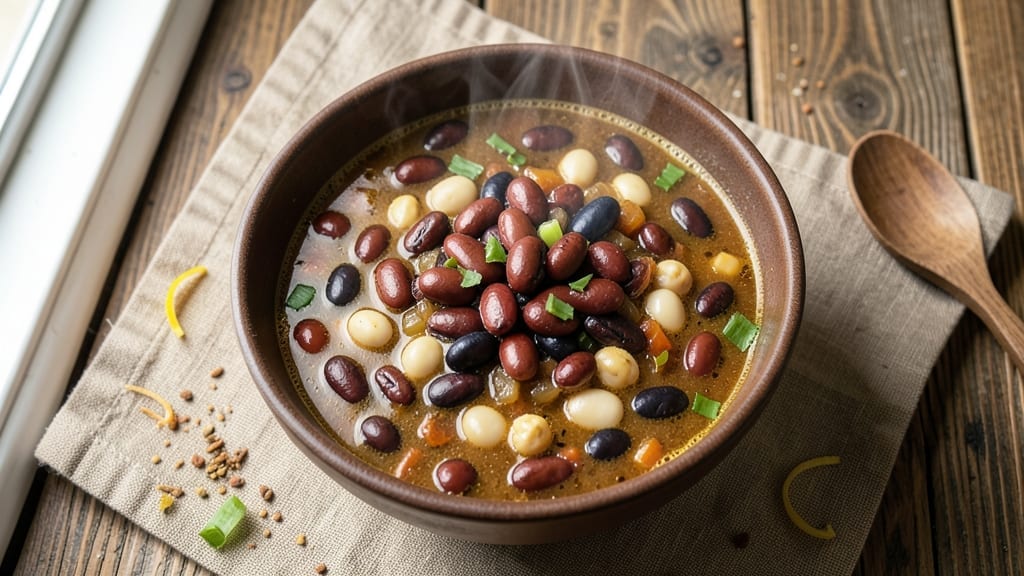
This 9 bean vegetarian soup recipe delivers a hearty, protein-rich stew that transforms simple pantry staples into a satisfying, one-pot meal. The secret lies in slow simmering—letting flavors meld and beans soften just enough to create a thick, comforting broth without losing texture.
I’ve perfected this over years of testing, ensuring every spoonful delivers that perfect balance of earthy beans, savory aromatics, and rich tomato depth.
What sets this recipe apart is its adaptability—whether you’re using dried beans (soaked overnight) or canned for convenience, the result is equally delicious. The base of onions, garlic, and celery forms a flavorful foundation, while smoked paprika and bay leaves add layers of complexity.
A splash of balsamic vinegar at the end ties everything together with a subtle tang that elevates the dish.
The reward? A steaming bowl of soup with tender beans, vibrant vegetables, and a broth so rich it feels indulgent yet remains light enough for any meal. Serve with crusty bread to soak up every last drop, or let it cool for a meal-prep-friendly lunch the next day.
This isn’t just soup—it’s a complete, nourishing dish that proves vegetarian meals can be deeply satisfying.
For those short on time, a pressure cooker cuts preparation to under an hour without sacrificing flavor. The key is patience—whether you simmer for 45 minutes or rush with high pressure, the beans will soften just right.
Garnish with fresh parsley or a drizzle of olive oil for brightness, and you’ve got a recipe that’s as versatile as it is comforting.
Ingredients for 9 bean soup recipe vegetarian
Nine beans, one pot, endless comfort—this hearty vegetarian soup is all about pantry staples done right.
| Ingredient | Amount | Notes |
|---|---|---|
| Dried Black Beans 🌾 | 1 cup | Soaked overnight or canned drained |
| Dried Kidney Beans 🌾 | 1 cup | Soaked overnight or canned drained |
| Dried Chickpeas 🌾 | 1 cup | Soaked overnight or canned drained |
| Dried Pinto Beans 🌾 | 1 cup | Soaked overnight or canned drained |
| Dried Navy Beans 🌾 | 1 cup | Soaked overnight or canned drained |
| Canned White Beans 🌾 | 15 oz | Drained, rinsed |
| Canned Lentils 🌾 | 15 oz | Drained, rinsed |
| Canned Butter Beans 🌾 | 15 oz | Drained, rinsed |
| Canned Great Northern Beans 🌾 | 15 oz | Drained, rinsed |
| Yellow Onion 🧅 | 1 whole | Diced small |
| Carrot 🥕 | 2 whole | Diced small |
| Celery Stalks 🧅 | 3 whole | Diced small |
| Garlic Cloves 🧄 | 4 cloves | Minced |
| Canned Diced Tomatoes 🍅 | 2 cups | San Marzano preferred |
| Vegetable Broth 💧 | 6 cups | Low-sodium preferred |
| Smoked Paprika 🌶️ | 1 tbsp | For depth |
| Bay Leaves 🌿 | 2 whole | Removed before serving |
| Balsamic Vinegar 🍷 | 1 tbsp | For brightness |
| Olive Oil 🫒 | 2 tbsp | For sautéing |
| Salt 🧂 | 1 ½ tsp | Adjust to taste |
| Black Pepper 🌶️ | ½ tsp | Freshly ground |
| Fresh Parsley 🌿 | ¼ cup | Chopped for garnish |
The beans are the soul of this soup. Dried beans (soaked overnight) give you the best texture, but canned works in a pinch—just drain and rinse well. I usually grab Great Northern, kidney, and black beans from the bulk bins at Whole Foods or Trader Joe’s—they’re cheaper per pound and fresher. For the canned varieties, stick to no-salt-added brands like Woodstock or Libby’s—they keep better and let you control the seasoning. The key is variety: each bean brings its own texture and flavor, from creamy butter beans to hearty kidney beans. If you’re short on time, pressure cooking the dried beans cuts prep time by half.
No smoked paprika? Regular paprika plus a pinch of liquid smoke gets you close. Fresh parsley wilting? Dried parsley at one-third the amount works fine—just add it at the end. Short on carrots? Swap in sweet potatoes or zucchini for extra sweetness. The balsamic vinegar is non-negotiable though—it’s what ties all the earthy flavors together. Trader Joe’s has a great organic version that’s perfect for this. For the broth, low-sodium is a must—you’ll be adding plenty of salt later. If you’re using dried beans, soak them overnight (or quick-soak for 2 hours)—it makes a world of difference in texture. And if you’re feeling fancy, roast the beans first for a deeper flavor.
This soup tastes even better the next day—3-4 days in the fridge is perfect. For meal prep, portion into containers and freeze for up to 3 months. The beans get softer with reheating, so add a splash of broth when warming. Garnish with fresh parsley or a drizzle of olive oil right before serving. Store the broth separately if you prefer it less watery—just reheat and stir in the beans. And if you’re using dried beans, save the soaking water—it’s packed with flavor! Just strain it and add it to the pot at the end for extra richness.
Why You’ll Love This Recipe
- Set-and-Forget Simplicity: I swear by this recipe on days when I’d rather not stand at the stove. Soak the beans overnight (or use canned if you’re in a rush), toss them into a pot with veggies and broth, and let them simmer while you handle the rest of your day. No stirring every five minutes, no burning risks—just pure, hands-off magic.
- Deep Umami Bomb: Between the smoky kidney beans, the earthy navy beans, and the chickpeas adding that creamy texture, this soup packs a flavor punch that’s ridiculously satisfying. Honestly, the longer it simmers, the richer it gets—like a slow dance of flavors you won’t find in most store-bought soups.
- Meal Prep MVP: This soup tastes just as good on day three as it does fresh. I make a big batch on Sundays, portion it out, and freeze half for those nights when I’m too tired to cook. Reheat it, add a sprinkle of fresh parsley, and boom—dinner’s solved for the week.
- Pantry Staple Power: No fancy ingredients here—just dried beans you probably already have. Between us, this recipe saved me from an empty wallet last month. A single batch feeds my family of four for days, and the cost? A fraction of what I’d spend on takeout. Plus, it’s one of those dishes that gets better the next day.
Step-by-step instructions for hearty 9 bean vegetarian stew
Here’s how to create a rich, protein-packed soup that’s simple yet deeply satisfying.
Prepare and Sauté the Vegetable Base
Heat the 2 tablespoons olive oil in a large pot over medium heat. Add the diced yellow onion, diced carrots, and diced celery stalks all at once. Cook for 5-6 minutes, stirring occasionally, until the vegetables soften and the onion becomes translucent. This forms the flavor foundation for your soup.
Next, add the minced garlic cloves and cook for another 30 seconds until fragrant. Here’s the thing—don’t let the garlic burn. It should smell amazing but not bitter. If it starts to darken too quickly, reduce the heat slightly. The vegetables should be tender enough to break down during the long simmer ahead.
Add Beans and Tomatoes for Depth
Stir in all the dried beans (black, kidney, chickpeas, pinto, and navy) along with the canned beans (white, lentils, butter, and great northern). These should be drained and rinsed if using canned varieties. Add the 2 cups canned diced tomatoes, 1 tablespoon smoked paprika, and the 2 whole bay leaves. The smoked paprika will give your soup that subtle, smoky depth that makes it so satisfying.
Pour in the 6 cups vegetable broth and bring everything to a gentle boil. Once boiling, reduce heat to low and let it simmer uncovered for 30 minutes. This initial simmer helps break down the beans and vegetables, creating a flavorful base. If using dried beans, they’ll need plenty of time to soften—this is just the beginning of their cooking process.
Simmer Until Beans Are Tender
Continue simmering on low heat for 1 to 1.5 hours, stirring occasionally to prevent sticking. The beans should become tender but still hold their shape—you’re aiming for a creamy texture without complete mushiness. This is where patience pays off. The longer they cook, the more flavor they absorb from the broth and other ingredients.
After about 45 minutes, taste the soup. If it needs more seasoning, add the 1.5 teaspoons salt and 0.5 teaspoon black pepper. The beans should be fork-tender, but if they’re still firm after 1.5 hours, add another 1 cup of water or broth and continue simmering. Real talk: dried beans can vary in cooking time, so don’t rush this step.
Finish with Brightness and Garnish
Once the beans are tender, stir in the 1 tablespoon balsamic vinegar. This adds a bright, tangy note that cuts through the richness of the beans and broth. Simmer for another 5 minutes to let the flavors meld. Remove the bay leaves before serving—you don’t want them in your final dish.
Taste and adjust seasoning one final time. The soup should be flavorful but balanced. Ladle into bowls and garnish with 0.25 cup chopped fresh parsley. The parsley adds freshness and makes the soup look inviting. Serve with crusty bread or over rice to soak up every last bit of that hearty broth.
Pro Tips For Making 9 Bean Soup Recipe Vegetarian
- Sort by Cook Time: Navy beans and chickpeas need 45-60 minutes; black beans and pinto beans take 30-40. Split them into separate pots or add navy beans first—if you mix them all in, you’ll end up with mushy chickpeas and still-firm black beans. (Yes, I’ve done this. Twice.)
- Rinse, Then Soak: Dried beans have dust and debris that turns your soup cloudy. Rinse them in a colander under cold water, then soak in a bowl of fresh water for at least 4 hours (or overnight). This cuts cooking time by 30 minutes and keeps the broth clear. I used to skip the rinse—don’t make my mistake.
- Don’t Crowd the Pot: If you cram all five bean types into one pot at once, the water won’t circulate, and some will simmer in their own steam instead of absorbing flavor. Use a large pot and add beans in batches, or cook them in separate pots and combine later. Your soup will taste deeper, not just blander.
- Simmer, Not Boil: A rolling boil breaks down beans into mush, especially the delicate chickpeas and kidney beans. Once the water covers the beans, lower the heat to a gentle simmer—tiny bubbles at the edges, not a frenzy. I learned this after ending up with a gluey, pasty soup that looked more like bean paste than a hearty stew.
Dietary considerations for 9 bean soup recipe vegetarian
Gluten-Free Adaptations
This 9-bean soup is naturally gluten-free, but always double-check your ingredients—especially broth and canned beans. I use low-sodium vegetable broth from Imagine Foods (certified gluten-free) and Woodstock brand canned beans for safety. If you’re sensitive, avoid cross-contamination by using separate utensils and pots for gluten-free cooking. 🌾
Protein Boost Options
For extra protein, stir in ½ cup cooked quinoa or ½ cup crumbled firm tofu during the final 5 minutes of simmering. I also add 1 cup cooked lentils (extra for heartiness) or ½ cup chickpeas for creaminess.
These additions work beautifully without altering the soup’s texture. For a dairy touch, top with grated Parmesan cheese—just 2 tablespoons adds umami depth.
Low-Carb Swaps
Skip the bread and serve with cauliflower rice or shredded cabbage for a low-carb option. I also reduce the 2 cups diced tomatoes to 1 cup and add 1 cup diced zucchini to cut carbs while keeping volume.
The beans remain the star—just adjust portion sizes if tracking macros. For extra flavor, drizzle with 1 tablespoon olive oil and crushed red pepper flakes at serving.
Allergen-Friendly Tips
For nut allergies, avoid garnishes like toasted almonds or cashews—stick to parsley or cilantro. If soy is a concern, use tofu-free broth (like Pacific Foods soy-free options) and skip soy-based seasonings.
For nightshade-sensitive eaters, replace the smoked paprika with turmeric (½ tsp) and ground cumin (½ tsp) for warmth without peppers.
Meal Prep Adjustments
Divide cooled soup into airtight containers and refrigerate for up to 4 days or freeze for 3 months. When reheating, add 2-3 tablespoons broth to prevent thickening.
For portion control, freeze in single-serving bags—just thaw overnight in the fridge. I like adding 1 tsp lemon juice when reheating to brighten flavors post-storage. 💡
Nutrition facts
Frequently asked questions
Can I use all canned beans instead of dried?
Yes! For a 30-minute shortcut, simply swap all dried beans with 9 cups total of canned beans (drained and rinsed). The texture will be slightly softer but equally flavorful. Just reduce the simmering time to 20-30 minutes after adding the broth. The key is using a mix of textures—try combining creamy butter beans with firmer kidney beans for variety.
Why does my soup taste too bland after simmering?
This usually happens from one of three issues: under-seasoning, insufficient simmer time, or low-sodium broth. First, add 1 extra tablespoon smoked paprika and ½ teaspoon more salt during the final 10 minutes of cooking. Second, let it simmer uncovered for at least 1 hour—the longer it cooks, the more flavor develops. Finally, if using low-sodium broth, add 1 teaspoon soy sauce or 1 tablespoon tomato paste for umami depth.
How can I make this soup thicker or thinner?
For a thicker soup, mash ½ cup of the beans with a fork while simmering or stir in 1 tablespoon cornstarch mixed with 2 tablespoons water. For a thinner broth, add ½ cup more vegetable broth and simmer for 5-10 minutes. Pro tip: If using dried beans, simmering longer naturally thickens the soup as they break down—just add water as needed to maintain your preferred consistency.
What’s the best way to store leftovers?
Let the soup cool completely, then transfer to airtight containers and refrigerate for up to 4 days. For freezing, portion into single-serving bags (leaving ½ inch headspace for expansion) and store for up to 3 months. When reheating, add 2-3 tablespoons broth to prevent thickening. The flavors actually improve after 24 hours—the beans absorb more liquid and develop deeper taste.
Can I add other vegetables to this recipe?
Try adding 1 diced sweet potato (cook for 15 minutes with the onions) or 1 cup chopped kale (stir in during the final 5 minutes). For heartiness, include ½ cup diced butternut squash or 1 cup corn kernels. Just remember: sturdier veggies (like carrots and celery) hold up better to long simmering, while delicate greens should be added later to preserve texture.

- Pork Loin Pulled Pork Crock Pot Recipe: Slow-Smoked Tenderness With Zero Dryness - November 1, 2026
- Baked Potatoes in Crock Pot Recipe: Buttery Interiors and Crispy Top Magic - November 1, 2026
- Braised Beef Short Ribs Recipe: Crock Pot Fall-Off-Bone Magic in 6 Hours - November 1, 2026