
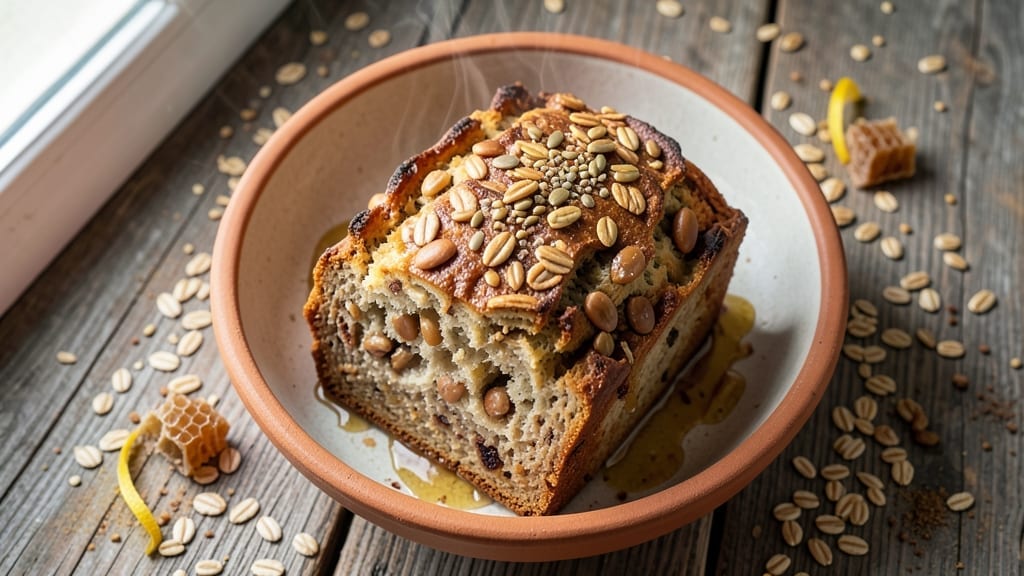
This 9-grain honey oat bread recipe delivers a symphony of textures and flavors—crisp golden crust, tender crumb, and a subtle sweetness from honey that lingers with every bite.
The combination of nine whole grains (including oats, wheat berries, and flaxseed) adds hearty nutrition and a satisfying crunch, while the honey infuses warmth and moisture that keeps the bread fresh for days.
I developed this recipe after years of experimenting with artisan breads, and it’s the one that finally earned me compliments from even the most discerning bakers.
The secret to this bread’s success lies in the hydration ratio and proofing time, which create a light yet sturdy structure. Unlike dense whole-grain loaves, this recipe balances moisture with structure, ensuring each slice stays soft without turning gummy.
The honey not only sweetens but also acts as a natural preservative, extending freshness while adding depth to the crust’s caramelized flavor. Perfect for toast, sandwiches, or simply enjoyed with butter, this bread is a foolproof addition to any kitchen.
With imperial measurements and clear steps, you’ll bake a loaf that rivals artisan bakeries—no special equipment required. The grains provide chewy texture and nutty undertones, while the honey adds a delicate sweetness that pairs beautifully with savory toppings.
Whether you’re feeding a family or prepping for meal prep, this recipe delivers restaurant-quality results in your own oven.
For best results, let the dough rest overnight for enhanced flavor development, and brush the crust with extra honey before baking for a glossy finish. The combination of grains and honey creates a loaf that’s as nutritious as it is delicious, making it a standout for health-conscious bakers.
Ready to bake? Here’s everything you need to get started.
Ingredients for 9 grain honey oat bread
Nine whole grains, honey’s warmth, and butter’s richness—this is your bread pantry transformed.
| Ingredient | Amount | Notes |
|---|---|---|
| Old-Fashioned Rolled Oats 🌾 | 2 cups | Steel-cut or quick oats work too |
| Wheat Berries 🌾 | ½ cup | Rinsed before adding to dough |
| Flaxseeds 🌱 | ¼ cup | Ground for better texture |
| Spelt Flour 🌾 | 1 ½ cups | Substitute whole wheat flour |
| Rye Flour 🌾 | ½ cup | Adds deep flavor complexity |
| Barley Flour 🌾 | ½ cup | Lightly toasted for nuttiness |
| Buckwheat Flour 🌾 | ¼ cup | Adds earthy depth |
| Millet Flour 🌾 | ¼ cup | Substitute quinoa flour |
| Cornmeal 🌽 | ¼ cup | For crust texture |
| Active Dry Yeast 🍞 | 2 ¼ tsp | Instant yeast works too |
| Honey 🍯 | ½ cup | Raw or wildflower preferred |
| Unsalted Butter 🧈 | ½ cup | Cold, cubed for dough |
| Warm Water 💧 | 1 ½ cups | 110°F for yeast activation |
| Sea Salt 🧂 | 1 ½ tsp | Diamond Crystal preferred |
| Ground Cinnamon 🌿 | ½ tsp | Warm spice for depth |
| Ground Ginger 🌿 | ¼ tsp | Freshly ground preferred |
| Extra Honey 🍯 | 2 tbsp | For crust brushing |
The grains are the heart of this loaf, so source them carefully. Bob’s Red Mill and King Arthur FlourWhole Foods or Sprouts—they’re fresher than pre-packaged. The flaxseeds should be light brown and toasted lightly to avoid bitterness. If you can’t find buckwheat flour, substitute quinoa flour at the same amount—it’s a 1:1 swap with similar texture. For the honey, local raw honey adds subtle floral notes that store-bought can’t match, but any quality honey works in a pinch.
No wheat berries? Substitute more oats or spelt flour—just reduce other flours by 0.25 cups to maintain balance. The butter matters here—use full-fat, unsalted for maximum flavor development. Short on cinnamon? Cardamom at half the amount gives a different but equally warm profile. The yeast is non-negotiable though—expired yeast means flat bread. Test it by dropping a packet in warm water with a pinch of sugar—it should foam within 5 minutes. For the honey, maple syrup works in a bind, but it lacks the floral complexity that makes this bread special. And if you’re gluten-sensitive, replace 0.5 cups of flours with certified gluten-free oat flour—just know the texture will be slightly denser.
The dough keeps beautifully—cover and refrigerate for up to 24 hours if you want to proof overnight. For longer storage, freeze the shaped loaf for up to 3 months—thaw at room temperature before baking. Once baked, let it cool completely on a wire rack (this prevents soggy bottoms). Store wrapped in a clean kitchen towel for 5-7 days. The crust stays crisp for about 2 days, but the interior remains soft for the full week. For meal prep, slice and freeze individual portions—toast straight from frozen for a quick breakfast.
Why You’ll Love This Recipe
- No-Fuss Mix-In: I just toss the oats, wheat berries, and flaxseeds into my food processor for 30 seconds—no chopping, no fuss. The rye and spelt flours blend right in while you’re making coffee, and the honey sweetens everything as it bakes.
- Honey-Rich Comfort: That sticky, golden honey glaze? It caramelizes just enough to give every slice a subtle crunch, while the rye flour adds a deep, earthy bite. Honestly, it’s the kind of bread that makes toast taste like a treat.
- Weeknight Workhorse: I slice it for breakfast, pack it for lunches, and even use it to soak up soups when dinner’s late. The wheat berries stay chewy for days, and the flaxseeds keep it fresh longer than store-bought loaves.
- Pantry Stretch: Between the oats, flax, and whole grains, this bread costs me half what artisanal loaves do—and feeds my family for days. I’ll be real: the leftovers disappear faster than I can reheat them.
Step-by-step instructions for 9-Grain honey oat bread
Here’s how to transform your pantry grains into a loaf bursting with nutty crunch and warm spice.
Prepare the Grains and Hydrate the Yeast
In a medium bowl, combine the 2 cups old-fashioned rolled oats, 0.5 cup wheat berries, and 0.25 cup flaxseeds. Toast them in a dry skillet over medium heat for 3-4 minutes until fragrant and lightly golden. This step enhances their nutty flavors and prevents a raw taste in the finished bread. Let cool completely before proceeding.
While the grains toast, proof the 2.25 teaspoons active dry yeast in a separate bowl with 1.5 cups warm water (about 110°F) and 2 tablespoons honey. Stir gently and let sit for 5-10 minutes until foamy. The yeast should create a light, bubbly foam—this confirms it’s active and ready to work. If it doesn’t foam after 10 minutes, your yeast may be expired or the water too hot.
Mix the Dough and Develop Gluten
In the bowl of a stand mixer fitted with the dough hook attachment, combine the 1.5 cups spelt flour, 0.5 cup rye flour, 0.5 cup barley flour, 0.25 cup buckwheat flour, 0.25 cup millet flour, 0.25 cup cornmeal, 1.5 teaspoons sea salt, 0.5 teaspoon ground cinnamon, and 0.25 teaspoon ground ginger. Mix on low speed for 30 seconds to aerate the flours.
Add the cooled toasted grains, yeast mixture, 0.5 cup honey, and 0.5 cup cold cubed unsalted butter. Mix on low speed until combined, then increase to medium speed for 5-7 minutes until the dough becomes smooth and elastic. The dough should pull away from the sides of the bowl and form a soft, tacky ball. If it’s too sticky to handle, add 1 tablespoon spelt flour at a time until it reaches a workable consistency.
Knead and Let the Dough Rise
Transfer the dough to a lightly floured surface and knead gently for 2-3 minutes to strengthen the gluten. Shape it into a round loaf and place it in a lightly greased 9×5-inch loaf pan. Cover the pan with a damp kitchen towel and let rise in a warm place for 1-1.5 hours, or until the dough has doubled in size. The dough should spring back slowly when poked with a finger—this indicates proper fermentation.
Preheat your oven to 375°F while the dough rises. The warm oven will help create a crispy crust. Once the dough has risen, brush the top generously with the 2 tablespoons extra honey and sprinkle with an additional 1 teaspoon cinnamon for extra warmth. This honey glaze will give your bread that signature golden sheen and subtle sweetness.
Bake to Golden Perfection
Bake the bread for 45-50 minutes until the top is deep golden brown and an instant-read thermometer inserted into the center reads 190-195°F. The bread should sound hollow when tapped on the bottom. If the top browns too quickly, tent the loaf with aluminum foil to prevent over-browning while it continues to bake.
Remove the bread from the oven and let it cool in the pan for 10 minutes, then transfer it to a wire rack to cool completely. The internal temperature will continue to rise as it cools, so don’t be concerned if it reads slightly lower than 190°F when you remove it. Slice while still slightly warm for the best texture—each slice should reveal a tender crumb with visible specks of toasted grains and a crispy crust.
Pro Tips For Making 9 Grain Honey Oat Bread
- SOAK THE WHOLE GRAINS: I learned this the hard way—skipping the overnight soak for wheat berries and oats means your bread will taste like a dense, chewy brick instead of a light, nutty loaf. Cover them in water (about 1.5 cups per cup of grains) with a splash of apple cider vinegar, then let them sit in the fridge for 12–16 hours. The texture transforms, and you’ll notice the difference when you bite into it.
- GRIND FLAXSEEDS FRESH: Store-bought ground flaxseed goes rancid fast, and pre-ground seeds lose their moisture-retaining magic. Crack whole flaxseeds in a clean coffee grinder or mortar and pestle right before mixing them into the dough—just a tablespoon or two. This keeps the bread tender longer and adds that subtle nutty depth without bitterness.
- STEAM THE FIRST 20 MINUTES: Your oven’s broiler isn’t the enemy here—use it, but wait. After scoring the loaf, blast it on high for 10 minutes to set the crust, then drop the heat to 350°F (175°C) and bake another 20–25 minutes with a tray of boiling water on the lower rack. This two-step approach prevents a burnt exterior while keeping the crumb soft. (Yes, even if you’re impatient like me.)
- WEIGH YOUR FLOURS: That “1 cup” measurement for spelt and rye flour is a lie—these flours pack differently than all-purpose. Use a kitchen scale for accuracy: spelt needs about 120g per cup, rye even more (130g). Overestimating? Your dough will be gummy. Under? It’ll crumble like a sad biscuit. A little extra effort here saves a lot of frustration later.
Make-ahead tips for leftovers
Overnight Proofing
For deeper flavor development, shape your dough into a loaf and refrigerate it overnight. Cover it tightly with plastic wrap or place it in an airtight container to prevent drying.
The cold slows fermentation, allowing the grains and honey to meld for 24 hours—this creates a more complex, nutty profile. In the morning, let it sit at room temperature for 1-2 hours before baking to activate the yeast again. 🌾
Freezer-Friendly Loaves
Shape your bread, wrap it tightly in plastic wrap, then place it in a freezer bag with all air removed. Label with the date—this bread keeps for up to 3 months without losing texture.
To bake from frozen, preheat your oven to 350°F, remove the plastic, and bake for 60-70 minutes until golden. The honey keeps it moist even after freezing. ❄️
Meal Prep Slices
Bake an extra loaf and store it in the fridge for 5-7 days. Wrap individual slices in parchment paper and freeze them in a single layer on a tray before transferring to a ziplock bag.
Toast straight from frozen for 3-4 minutes—the grains stay crisp, and the honey adds warmth to cold mornings. Perfect for quick breakfasts or sandwich prep. 🍞
Honey Glaze Variations
Brush the crust with 2 tbsp honey before baking for a classic sheen, but experiment with other glazes. Try 1 tbsp melted butter + 1 tsp cinnamon for a richer finish, or 1 tbsp maple syrup for a deeper caramel note.
For a savory twist, skip the honey and brush with olive oil before sprinkling with coarse sea salt. 🍯
Reviving Stale Bread
If your bread loses crispness, revive it by wrapping in a damp towel and microwaving for 15-20 seconds. For a crunchy crust, slice and toast for 2-3 minutes until golden.
The honey keeps the interior soft, so even “stale” slices stay tender. Store in a paper bag to maintain freshness longer. 🔥
Batch Baking Tips
Double the recipe and bake two loaves simultaneously on middle oven racks for even heat distribution. Use two 9×5-inch pans or one 9×13-inch pan for a single large loaf.
For large gatherings, bake one loaf fresh and freeze the second for later—this ensures you always have warm bread on hand. 💫
Nutrition facts
Frequently asked questions
Why does this bread use nine different grains?
Each grain contributes unique texture and flavor—oats add chewiness, wheat berries bring heartiness, while flaxseed and buckwheat introduce earthy depth. The combination creates a complex, nutty profile that’s more interesting than single-grain breads. Plus, the variety makes it more nutritious with balanced fiber and protein.
Can I substitute any of the flours or grains?
Yes, but maintain the same total volume. For example, swap buckwheat for quinoa flour (1:1 ratio) or replace wheat berries with extra oats. Avoid eliminating all gluten-containing flours if you want the classic bread texture. The honey and butter are non-negotiable for moisture and flavor—don’t skip them!
How do I know when the dough is properly proofed?
The dough should double in size and spring back slowly when poked with your finger (like pressing a balloon gently). If it springs back quickly, it needs more time. For best results, proof in a warm spot (like a turned-off oven with a bowl of hot water inside) for consistent temperature.
What if my bread turns out too dense?
Density usually means underproofing or overmixing. Next time, let the dough rise longer (up to 2 hours) and knead gently. Also ensure your yeast is fresh—it should foam within 5-10 minutes when mixed with warm water and honey. For extra lightness, try reducing flours by 1 tbsp if the dough feels too sticky.
How should I store this bread to keep it fresh?
Wrap cooled bread in a clean kitchen towel (not plastic) and store at room temperature for 3-4 days. For longer storage, freeze the whole loaf for up to 3 months. The honey acts as a natural preservative, but the grains stay crispest when stored properly. For extra freshness, slice and toast as needed.

- 6 Oz Chocolate Chip Cookie Recipe: Perfectly Balanced Crispy Edges and Chewy Hearts - September 25, 2026
- 6-Inch Coffee Cake Recipe: Vanilla Bean Swirls and Buttery Streusel Topping - September 25, 2026
- 1 Hour Soup Recipe: Velvety Richness Without the Wait - September 25, 2026