
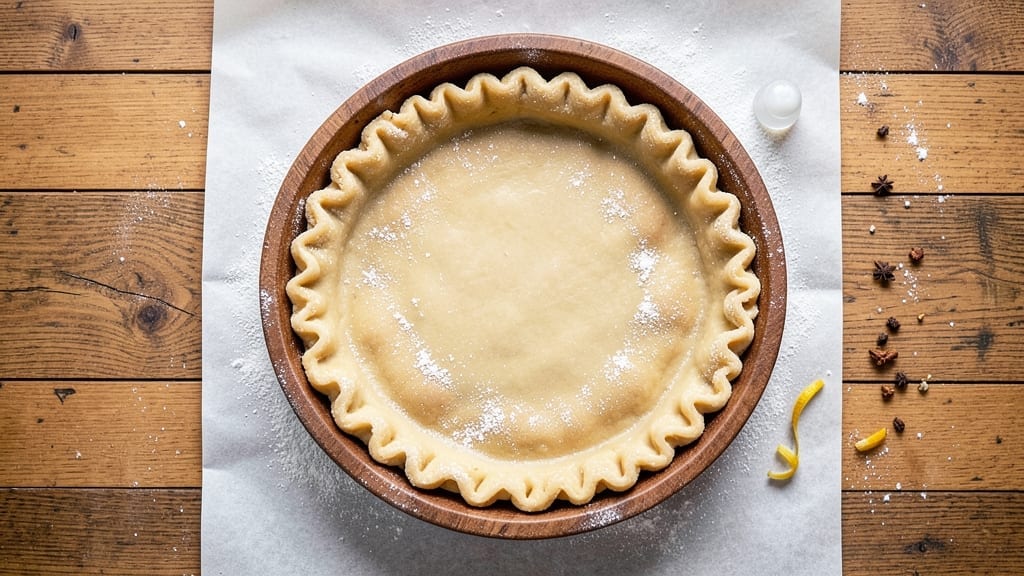
This 9.5-inch pie crust recipe reveals the secret to flaky layers that shatter at first bite, turning ordinary desserts into showstoppers. The secret lies in precise technique—chilling the dough thoroughly, handling it gently, and using cold butter for those signature crisp layers.
I’ve perfected this recipe after years of trial and error, ensuring it fits perfectly in a standard pie dish while delivering restaurant-quality texture.
This recipe starts with a simple combination of all-purpose flour, cold butter, and ice water, but the magic happens in the method. Cutting the butter into small cubes and working quickly to avoid warming the dough are critical steps.
For extra flakiness, I recommend folding the dough in thirds before rolling it out—this creates more layers without extra effort. Whether you’re baking a classic apple pie or experimenting with a modern twist, this crust provides a sturdy yet delicate foundation.
The result is a golden, crisp-edged crust with tender, melt-in-your-mouth layers that hold their shape perfectly in a 9.5-inch dish. Blind-baking it before adding fillings prevents sogginess, making it ideal for both fruit pies and savory quiches.
The dough is forgiving enough for beginners but refined enough to impress even seasoned bakers.
For variations, try a lattice crust by cutting the baked crust into strips, or adapt it for deep-dish pies by increasing the butter slightly. Gluten-free or vegan options are possible with substitutions, though texture may vary.
Once you try this crust, you’ll never settle for anything less than professional-quality flakiness again.
Ingredients for 9.5 inch pie crust
Cold butter, sifted flour, and ice water—these three simple ingredients create the perfect flaky crust.
| Ingredient | Amount | Notes |
|---|---|---|
| All-Purpose Flour 🌾 | 2 ½ cups | Sifted for even texture |
| Unsalted Butter 🧈 | 1 cup | Cold, cubed into 1/2-inch pieces |
| Ice Water 💧 | ½ cup | Chilled, not frozen |
| Diamond Crystal Kosher Salt 🧂 | ½ tsp | Fine grain preferred |
| Granulated Sugar 🍚 | 1 tbsp | For dough and sprinkling |
| White Vinegar 🍶 | 1 tsp | Adds tenderness |
| Cornstarch 🌾 | 1 tbsp | For dusting rolling surface |
| Egg 🥚 | 1 whole | Optional for egg wash |
| Milk 🥛 | 1 tbsp | Optional for egg wash |
The butter is non-negotiable here—use unsalted and keep it cold (store it in the freezer for 20 minutes before cutting). King Arthur or Gold Medal flour works best for that tender crumb, but any all-purpose will do in a pinch. I grab my butter from Trader Joe’s because their blocks stay cold longer, but any brand in a solid cube works. The ice water is key—use actual ice cubes melted into water (not warm tap water). The vinegar and sugar combo in the dough makes it extra tender, and the cornstarch prevents sticking when rolling. Pro tip: fold the dough in thirds before rolling for maximum flakiness—no extra effort, just better layers.
No butter? Vegetable shortening works (though it’s not as flavorful), or coconut oil for a vegan option. Running short on ice water? Freeze your water in ice cube trays ahead of time. The egg wash is optional, but if you skip it, brush the crust with melted butter before baking for a golden finish. For extra richness, add 1 tbsp sour cream to the dough. And if you’re making a lattice crust, cut the baked crust into 1/2-inch strips—they’ll hold their shape perfectly. The dough is delicate, so handle it gently (don’t overwork it), but it’s forgiving enough that even beginners get great results.
This dough must chill for at least 1 hour (up to 2 days in the fridge) before rolling—skip this step and you’ll get a tough crust. Wrap it tightly in plastic wrap to prevent drying. Once rolled, keep it covered with a damp towel while transferring to the pie dish. For blind-baking, use pie weights or dried beans to prevent puffing. The crust keeps well in the fridge for 3 days or frozen for 3 months—portion it into discs for easy use later. Reheat frozen dough on the counter for 10 minutes before rolling.
Why You’ll Love This Recipe
- No-Fuss Assembly: I swear by this crust because it’s three ingredients plus water—just cold butter, flour, and a pinch of salt. No food processor, no overworking the dough, and no waiting for it to rest. Honestly, I’ve made it while chatting on the phone, and it still turns out golden and flaky.
- Sweet-Salty Magic: That tiny bit of sugar in the butter isn’t just for show—it caramelizes into a crispy, buttery edge while keeping the center tender. Between us, the first bite of a warm slice with just a sprinkle of salt? It’s the little things that make life better.
- Pie for Any Occasion: Need a last-minute dessert for a potluck? A blank canvas for your favorite filling? This crust handles it all—apple, pumpkin, even savory galettes. I’ve used it for Thanksgiving, birthday cakes, and lazy Sunday breakfasts, and it never lets me down.
- Budget-Friendly Staples: Flour, butter, salt—these are the basics I already have. No specialty ingredients, no markup, and no waste. The leftovers? I freeze dough scraps for future pies, so I’m always ready for whatever craving hits next. (Yes, even on a Tuesday night.)
Step-by-step instructions for a 9.5-Inch pie crust
Here’s how to create a pie crust so flaky it’ll make your guests ask for the secret.
Mix Dry Ingredients and Cut in Cold Butter
In a large bowl, whisk together the 2.5 cups all-purpose flour, 0.5 teaspoon Diamond Crystal kosher salt, and 1 tablespoon granulated sugar. This dry mix should be completely smooth—no lumps—so the crust develops even layers. I like to use a whisk for this step to ensure everything is evenly distributed.
Next, add the 1 cup cold, cubed unsalted butter (about ½-inch cubes). Using a pastry cutter or your fingers, work the butter into the flour until you reach pea-sized crumbs. This means the butter pieces should be roughly the size of peas, no larger. If you see any large butter chunks, keep cutting—those will create steam pockets later, but they won’t be evenly distributed. The goal here is to create a uniform mixture where every bite of dough has the same flaky potential.
Add Wet Ingredients for Perfect Dough
In a separate small bowl, combine the 0.5 cup ice water, 1 teaspoon white vinegar, and 1 tablespoon cornstarch. The vinegar might seem odd, but it helps tenderize the gluten, making the crust more tender rather than tough. Stir this mixture well—it should be completely dissolved before adding it to the dry ingredients.
Slowly pour the wet mixture over the flour-butter mixture while gently stirring with a fork. Be careful not to overmix—just combine until the dough comes together. If it feels too dry, add 1 teaspoon more ice water. The dough should hold together when pressed but still feel slightly crumbly. This is the perfect consistency for rolling out without sticking.
Chill the Dough for Ease of Rolling
Divide the dough into two equal discs and flatten them slightly. Wrap each disc tightly in plastic wrap and refrigerate for at least 1 hour. Chilling is non-negotiable—it firms up the butter so it doesn’t melt when you roll it out, which keeps those beautiful flaky layers intact. If you’re in a rush, you can chill for 30 minutes in the freezer, but don’t skip this step entirely.
While the dough chills, prepare your rolling surface by dusting it with 1 tablespoon cornstarch. This prevents sticking and makes rolling much easier. I like to use a clean, flat surface or a silicone mat for best results. The chilled dough should be cold to the touch—if it feels warm, give it another 15 minutes in the fridge.
Roll and Fit the Crust into the Pan
Remove one disc of dough from the fridge and place it on the cornstarch-dusted surface. Using a rolling pin, roll the dough from the center outward, rotating the pan occasionally to ensure even thickness. Aim for about ⅛-inch thickness—too thin, and the crust will be crispy but not flaky; too thick, and it won’t bake evenly. If the dough starts to stick, lift it and dust the bottom with more cornstarch.
Carefully transfer the rolled dough to a 9.5-inch pie pan, gently shaping it to fit the bottom and sides. Trim any excess dough hanging over the edge with a sharp knife. For extra flakiness, I like to crimp the edges with my fingers or a fork. If you’re using the optional egg wash, beat the 1 whole egg and 1 tablespoon milk together and brush it lightly over the crust. This gives a golden finish, but it’s not required for flakiness.
Blind-Bake for a Perfect Foundation
Preheat your oven to 375°F. Line the crust with parchment paper and fill it with pie weights or dried beans to prevent shrinking. Bake for 15 minutes, then remove the weights and bake for another 5-10 minutes until the edges are lightly golden. The crust should look set but still slightly pale—it’ll finish baking when you add your filling. If the bottom browns too quickly, cover it loosely with foil.
Let the crust cool for 10 minutes before adding your filling. This prevents soggy bottoms and ensures the crust holds its shape. The result? A pie crust so flaky it’ll shatter with the first bite—just like you promised your guests. Now it’s time to fill and bake that masterpiece!
Pro Tips For Making 9.5 Inch Pie Crust
- CHILL THE BUTTER FIRST: Take that cold butter straight from the fridge—no thawing, no softening. Cut it into ¼-inch cubes and toss them in the freezer for 10 minutes before mixing. I learned this the hard way when my crust turned out greasy instead of flaky; cold butter is non-negotiable for a crisp 9.5-inch crust.
- WEIGH THE FLOUR: Scoop that flour straight from the bag? Nope. Use a kitchen scale for precision—this recipe needs 250 grams, not “a handful.” Flour varies wildly in density, and eyeballing it leads to either a dough too dry or one that sticks like glue.
- PRESS THE CRUST FAST: Once you roll out the dough, don’t fuss with it—press it into the pie dish in one smooth motion. If you stop and start, the edges will pucker, and you’ll end up with a lumpy mess. A quick, firm press guarantees a clean, even base.
- COOL THE DISH FIRST: Your pie dish is hot from the oven? Let it sit for at least 10 minutes before filling. A cold crust prevents soggy bottoms when you add your filling later—trust me, I’ve ruined more pies by skipping this step than I’d like to admit.
Serving suggestions for this 9.5 inch pie crust
Classic Fillings
Apple pie is the ultimate classic pairing—use 6 cups peeled and sliced tart apples (like Granny Smith or Honeycrisp) with ⅓ cup brown sugar, 2 tbsp lemon juice, and 1 tsp cinnamon.
For a Southern twist, try pecan pie with 2 cups pecans, 1 cup corn syrup, and 3 eggs. Both fillings need a 10-minute pre-bake at 375°F before adding the top crust. 🍏
Savory Options
Transform your crust into a quiche by adding 6 eggs, 1 cup heavy cream, and 1 cup shredded Gruyère cheese. For a chicken pot pie, layer with 2 cups cooked chicken, 1 cup mixed vegetables, and a creamy sauce.
Always pre-bake the bottom crust for 15 minutes to prevent sogginess. The flaky layers hold up beautifully to rich fillings. 🍗
Topping Ideas
For fruit pies, a simple lattice crust adds elegance—cut the baked bottom crust into ½-inch strips and weave them over the filling. A streusel topping (mix ½ cup flour, ¼ cup brown sugar, and ¼ cup cold butter) works for berry pies.
For savory dishes, sprinkle with crumbled feta or toasted nuts before baking. ✨
Garnishes
Fresh mint leaves or thinly sliced almonds add a pop of color to fruit pies. A drizzle of honey> or caramel sauce elevates the presentation. For savory pies, a sprinkle of flaky sea salt right before serving enhances flavors. Always add garnishes after baking to keep them crisp. 💫
Serving Suggestions
Serve warm apple pie with vanilla ice cream or whipped cream>. A scoop of salted caramel ice cream pairs perfectly with pecan pie. For quiche, offer a side of arugula salad> with balsamic dressing.
Always let pies cool for 20 minutes before slicing to prevent filling from leaking. 🍦
Nutrition facts
Frequently asked questions
Can I make this 9.5-inch crust without a rolling pin?
If you don’t have a rolling pin, use a wine bottle or even a clean glass jar. Place the dough between two sheets of parchment paper, then roll using the bottle in circular motions. For extra flakiness, fold the dough in thirds before rolling. The key is to keep it ⅛-inch thick—use a ruler to check.
Why does my crust turn out tough instead of flaky?
Overworking the dough or using warm butter are the most common culprits. Always keep the butter cold (even frozen cubes work) and handle the dough minimally. The dough should feel slightly crumbly, not smooth. If it’s tough, you likely overmixed or skipped the 1-hour chill—this step is non-negotiable for flakiness.
How do I adapt this for a deep-dish pie?
Increase the butter to 1.25 cups and add 1 extra tablespoon of ice water to the dough. Roll it slightly thicker (¼-inch) and press it firmly into a deep-dish pan. For extra support, blind-bake the bottom crust for 20 minutes before adding filling. The dough will hold its shape better with the extra fat.
Can I freeze the unbaked crust?
Yes! Wrap the chilled dough discs tightly in plastic wrap and place them in a freezer bag. Frozen crusts keep for up to 3 months. Thaw in the fridge overnight before rolling. For best results, let it sit at room temperature for 10 minutes after thawing to make handling easier.
What’s the best way to fix a cracked crust?
Brush the cracks with a beaten egg wash and sprinkle with extra flour or cornmeal. Bake as usual—the egg will seal the cracks while adding a golden finish. For deep cracks, patch with extra dough scraps before baking. The crust will still taste delicious, even if it’s not perfect!

- 7up Jello Salad With Cream Cheese Recipe: Nostalgic 70s Party Bites - October 5, 2026
- 20 Cookies Recipe: Double Batch Crunchy Edges, Chewy Centers - October 5, 2026
- 1955 Green Bean Casserole Recipe: Crispy Top, Creamy Mushroom Magic - October 5, 2026