
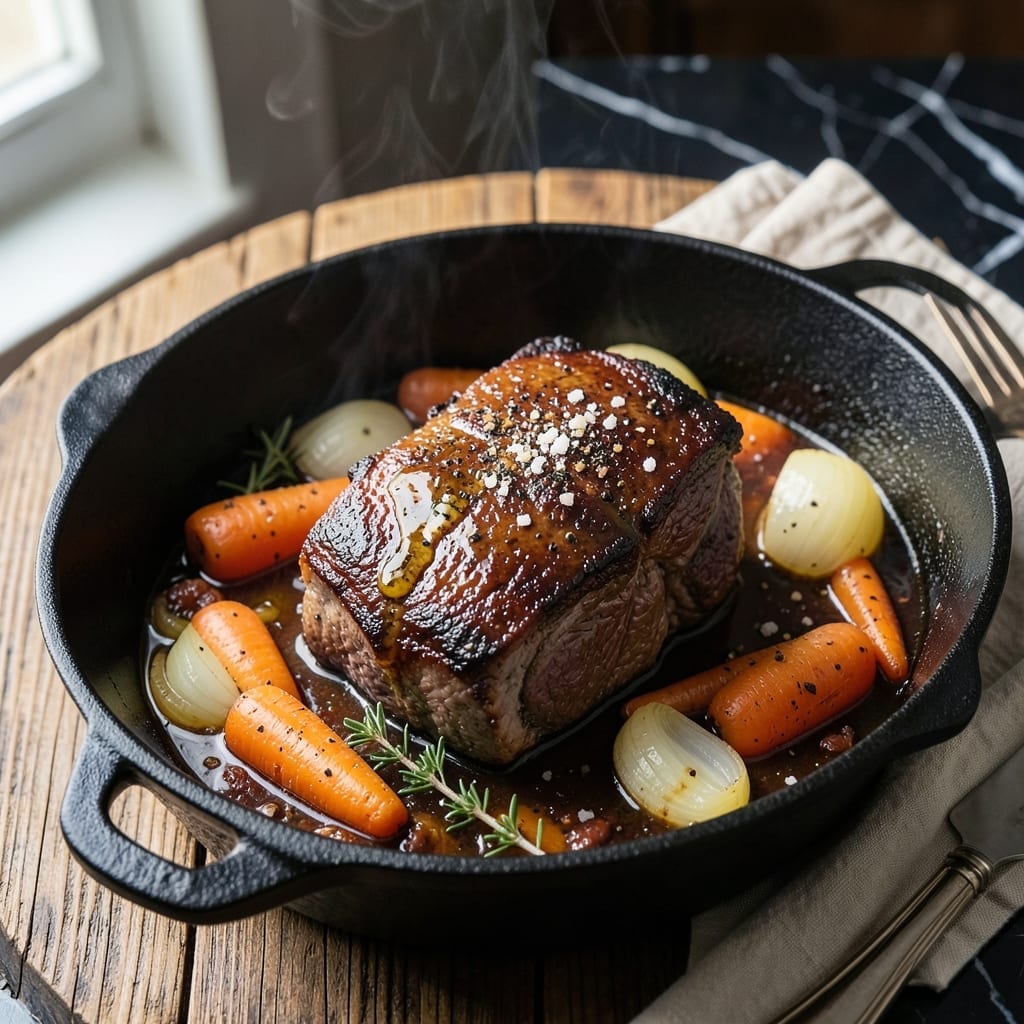
This pot roast recipe delivers the tender, fall-apart beef and rich gravy that made America’s Test Kitchen famous. A low-and-slow braise transforms tough cuts into melt-in-your-mouth perfection, with root vegetables soaking up every savory bite.
The technique is simple but precise: sear the beef first to build deep flavor, then braise it covered until fork-tender. The vegetables are added later to prevent mushiness, ensuring they stay perfectly tender-crisp.
What emerges is a dish that feels like a Sunday dinner classic—hearty, comforting, and packed with layers of flavor. The gravy, thickened naturally, is the star, coating every piece of beef and vegetable.
Serve with crusty bread to soak up the sauce. This is how pot roast should taste.
Ingredients for America’s Test Kitchen Pot Roast
A well-marbled chuck roast and root vegetables braise into melt-in-your-mouth perfection with rich gravy.
| Ingredient | Amount | Notes |
|---|---|---|
| Beef Chuck Roast 🥩 | 3 lb | Well-marbled, trimmed of excess fat |
| Kosher Salt 🧂 | 2 tsp | Diamond Crystal preferred for texture |
| Black Pepper 🌶️ | 1 tsp | Freshly ground for best flavor |
| Vegetable Oil 🫒 | 2 tbsp | High smoke point for searing |
| Yellow Onion 🧅 | 1 whole | Large, cut into thick slices |
| Carrots 🥕 | 3 whole | Medium, peeled and cut into chunks |
| Celery Ribs 🌿 | 2 whole | Cut into large pieces |
| Garlic Cloves 🧄 | 5 cloves | Smashed for bold flavor |
| Tomato Paste 🍅 | 2 tbsp | For depth and umami |
| Dry Red Wine 🍷 | 1 cup | Bold variety like Cabernet Sauvignon |
| Beef Broth 🥣 | 2 cups | Low-sodium for better control |
| Russet Potatoes 🥔 | 1 ½ lb | Peeled, cut into large chunks |
| Fresh Thyme Sprigs 🌿 | 3 pieces | Plus 1 tsp chopped for garnish |
| Bay Leaves 🍃 | 2 pieces | Dried, whole for infusion |
| All-Purpose Flour 🌾 | 2 tbsp | For thickening the gravy |
The beef is the foundation here. Chuck roast with visible marbling yields the most tender results—brisket or bottom round can work but require longer cooking. Source from Whole Foods or a trusted butcher for consistent quality. The tomato paste should be double-concentrated for optimal flavor depth. San Marzano tomatoes in the pantry can substitute if needed.
No red wine? Substitute with additional beef broth plus 1 tbsp balsamic vinegar for acidity. Fresh thyme is ideal but dried thyme at one-third the amount works in a pinch. For the potatoes, Yukon Golds hold their shape better than Russets if preferred. Vegetable oil can be swapped for avocado oil—its high smoke point is perfect for searing.
Store the roast in its juices for up to 4 days in the fridge. The gravy thickens further upon cooling—reheat gently with a splash of water. Freezes beautifully for 3 months. Always bring refrigerated leftovers to room temperature before reheating to preserve texture.
Why You’ll Love This Recipe
- One Pan Wonder: I sear the chuck roast in the same pot I cook it in—no extra dishes, just rich flavor building from start to finish.
- Fall-Apart Tender: The slow-cooked beef with onions and a simple salt-pepper rub turns into the most melt-in-your-mouth texture. Honestly, it’s ridiculous how good it is.
- Feeds a Crowd: This pot roast is my go-to for Sunday dinners, meal prep, or even a casual weeknight with leftovers for sandwiches.
- Budget Friendly: A tougher cut like chuck becomes a star here, so I get amazing flavor without the premium price. Between us, it’s my secret to stretching a grocery budget.
Step-by-Step Instructions for Slow-Braised Beef with Root Vegetables
Master the technique that transforms tough cuts into fork-tender perfection through careful browning and gentle braising.
Step 1: Sear and Season the Beef Chuck Roast
Pat the 3 lb Beef Chuck Roast thoroughly dry with paper towels. This critical step ensures a proper sear rather than steaming the meat. Season all sides generously with the 2 tsp Kosher Salt and 1 tsp Black Pepper, pressing the seasoning into the surface to create a flavorful crust.
Heat the 2 tbsp Vegetable Oil in a Dutch oven over medium-high heat until shimmering. Sear the roast on all sides for 8-10 minutes total, turning only when each side develops a deep mahogany brown color. This Maillard reaction builds complex flavor layers that define this dish.
Step 2: Build the Aromatic Base
Remove the seared roast and set aside. In the same pot, add the 1 whole Yellow Onion, 3 whole Carrots, and 2 whole Celery Ribs. Sauté for 5-7 minutes until the vegetables begin to soften and develop light caramelization at the edges.
Add the 5 cloves Garlic Cloves and 2 tbsp Tomato Paste, cooking for 1-2 minutes until the paste darkens slightly and coats the vegetables. This step intensifies the umami depth. Stir in the 2 tbsp All-Purpose Flour to create a roux that will thicken the braising liquid.
Step 3: Deglaze and Begin the Braise
Pour in the 1 cup Dry Red Wine, scraping the browned bits from the bottom of the pot with a wooden spoon. These fond particles dissolve into the liquid, infusing the sauce with concentrated beef flavor. Allow the wine to reduce by half over medium heat for 3-4 minutes.
Return the roast to the pot along with any accumulated juices. Add the 2 cups Beef Broth, 3 pieces Fresh Thyme Sprigs, and 2 pieces Bay Leaves. The liquid should come about halfway up the roast. Bring to a gentle simmer.
Step 4: Low and Slow Cooking
Cover the pot and transfer to a preheated 325°F oven. Braise for 2 hours, then add the 1.5 lb Russet Potatoes cut into large chunks, pressing them into the liquid. Continue cooking for another 1-1.5 hours until the beef is fork-tender and the potatoes are easily pierced.
The roast is done when a fork inserted into the thickest part twists out with minimal resistance. The vegetables should be tender but not mushy, having absorbed the rich braising liquid’s flavors.
Step 5: Rest and Serve
Carefully transfer the roast to a cutting board and tent loosely with foil. Let it rest for 15-20 minutes while you skim excess fat from the sauce if desired. The resting period allows the juices to redistribute throughout the meat.
Slice the roast against the grain into thick pieces and arrange on a platter with the vegetables. Spoon the braising liquid over the top and garnish with additional thyme if available. Serve immediately while hot.
Pro Tips For Making America’S Test Kitchen Pot Roast
- Sear It Hard: Crank the heat to medium-high and sear the chuck roast until deeply browned—this builds the flavor base that defines America’s Test Kitchen’s version. I learned this the hard way after ending up with gray, bland meat when I rushed it.
- Salt the Roast Early: Pat the beef dry, then season with kosher salt at least 40 minutes before cooking—this draws out moisture for a better sear and more even seasoning.
- Don’t Crowd the Pan: If your pot isn’t big enough for all the onions, cook them in batches. Steaming from overcrowding kills the caramelization that makes this dish sing.
- Use a Meat Thermometer: Pull the roast at 195-200°F for that perfect fall-apart texture. Guessing by time alone left me with dry or undercooked beef more times than I’d like to admit.
Dietary Considerations for This americas test kitchen pot roast
Gluten-Free Adaptation
This dish is naturally gluten-free if you swap the 2 tbsp All-Purpose Flour for cornstarch or gluten-free flour blend. Use 1 tbsp cornstarch mixed with 1 tbsp cold water as a slurry instead. I’ve tested this with Bob’s Red Mill 1-to-1 with great results.
Low-Carb Option
Reduce the 1.5 lb Russet Potatoes to 1 lb and add 2 cups cauliflower florets instead. The cauliflower soaks up the braising liquid beautifully while keeping carbs in check. I prefer large florets to prevent them from turning mushy during cooking.
Dairy-Free Notes
This recipe contains no dairy, making it naturally suitable for lactose-intolerant diners. Just ensure your 2 cups Beef Broth is dairy-free—Better Than Bouillon is a safe bet. The rich flavors come entirely from the beef and vegetables, so no compromises are needed. 💪
Lower-Sodium Version
Cut the 2 tsp Kosher Salt in half and use low-sodium beef broth. Boost flavor with 1 tbsp fish sauce or 1 tsp soy sauce instead. I’ve found this maintains depth without excessive salt. Taste and adjust seasoning at the end.
Vegetarian Alternative
Swap the 3 lb Beef Chuck Roast for 2 large portobello mushrooms or 1 lb seitan. Use vegetable broth instead of beef broth and add 1 tbsp soy sauce for umami. The cooking time reduces to 45-60 minutes for mushrooms.
Allergen Awareness
The primary allergens to watch are celery and wine (sulfites). For celery allergies, omit the 2 whole Celery Ribs and add extra carrots. Use beef broth plus 1 tbsp balsamic vinegar to replace the 1 cup Dry Red Wine if needed. 💡
Nutrition Facts
Frequently Asked Questions
What cut of beef works best?
Chuck roast is ideal for its marbling and connective tissue. 3 lb is the perfect size for even cooking. Avoid lean cuts like sirloin—they dry out during braising.
Can I make this in a slow cooker?
Yes! Sear the beef first, then transfer to a slow cooker with all ingredients. Cook on low for 8-10 hours or high for 5-6 hours.
Why add potatoes later?
Adding 1.5 lb Russet Potatoes after 2 hours prevents them from turning mushy. They absorb the braising liquid without overcooking.
How do I thicken the gravy?
Mix 2 tbsp All-Purpose Flour with cold water to create a slurry. Stir into the braising liquid at the end and simmer until thickened.

- 6 Oz Chocolate Chip Cookie Recipe: Perfectly Balanced Crispy Edges and Chewy Hearts - September 25, 2026
- 6-Inch Coffee Cake Recipe: Vanilla Bean Swirls and Buttery Streusel Topping - September 25, 2026
- 1 Hour Soup Recipe: Velvety Richness Without the Wait - September 25, 2026