
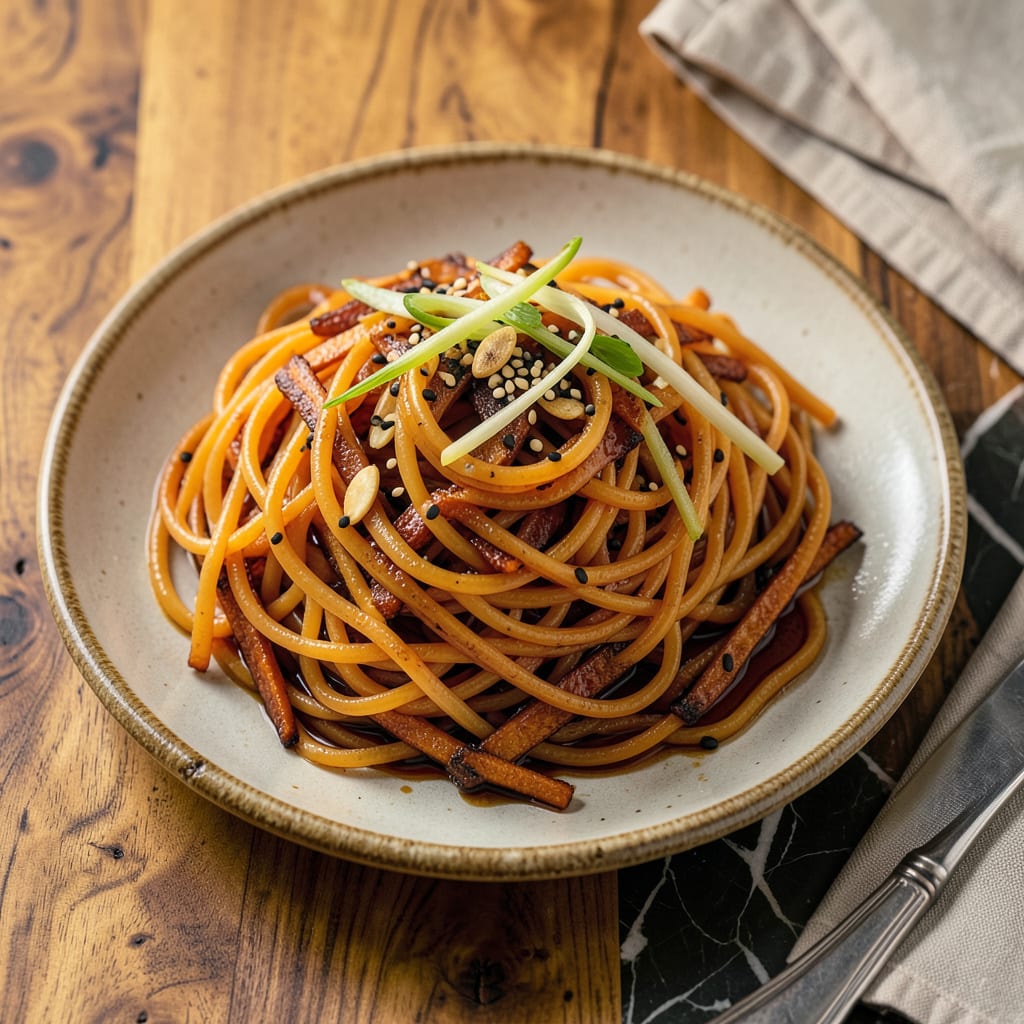
I’ve been obsessed with these chewy sweet potato noodles since my first bite at a tiny Korean spot downtown. There’s something magical about their springy texture against crisp-tender veggies—all tossed in that savory-sweet sauce that makes you go back for seconds.
This version cuts no corners but keeps it simple: parboil the noodles just right, stir-fry veggies in batches so they stay crisp, then toss everything with a sauce that balances soy, sesame, and a touch of sugar. Ready in 20 minutes with ingredients you probably already have. Vegan-friendly and packed with texture in every bite.
Ingredients for Asian Sweet Potato Noodles Bolay
Chewy noodles, crisp veggies, and a sauce that ties everything together—this is what 20-minute magic looks like.
| Ingredient | Amount | Notes |
|---|---|---|
| Sweet Potato Noodles 🍜 | 14 oz | Also called dangmyeon or glass noodles |
| Sesame Oil 🫒 | 2 tbsp | Toasted for best flavor |
| Soy Sauce 🫙 | ⅓ cup | Low-sodium preferred |
| Brown Sugar 🍚 | 2 tbsp | Or coconut sugar for depth |
| Garlic Cloves 🧄 | 4 cloves | Minced for maximum flavor |
| Fresh Ginger 🌿 | 1 tbsp | Grated or finely chopped |
| Red Bell Pepper 🌶️ | 1 whole | Thinly sliced for crunch |
| Carrots 🥕 | 2 whole | Julienned or matchstick-cut |
| Green Onions 🧅 | 4 whole | Thinly sliced, whites and greens separated |
| Shiitake Mushrooms 🍄 | 8 oz | Fresh, stems removed and sliced |
| Baby Spinach 🍃 | 2 cups | Packed, for quick wilting |
| Toasted Sesame Seeds 🌱 | 2 tbsp | For garnish and crunch |
| Vegetable Oil 🫒 | 2 tbsp | Neutral flavor for stir-frying |
| Rice Vinegar 🍚 | 1 tbsp | Balances sweetness in sauce |
| Red Pepper Flakes 🔥 | ½ tsp | Optional for heat |
The sweet potato noodles are the star here. Look for Korean dangmyeon at Asian markets (H Mart or 99 Ranch usually stock them) or grab them online. They’re gray when dry but turn translucent when cooked—don’t overboil or they’ll get mushy. For the mushrooms, fresh shiitake add meaty texture, but cremini work too. I always grab extra ginger and garlic—I use half in the sauce and save the rest for another stir-fry (or freeze it for later).
No sesame oil? Perilla oil (if you’ve got it) adds a similar nuttiness. Swap brown sugar for maple syrup or agave if you prefer liquid sweeteners. The soy sauce can be tamari for gluten-free, or coconut aminos for a lighter flavor. If shiitake mushrooms aren’t available, oyster mushrooms or even extra bell peppers keep the crunch factor. The red pepper flakes are totally optional—skip them if you’re sensitive to heat (or add more if you’re like me).
Prep the veggies ahead—they’ll keep in the fridge for 2-3 days if stored in airtight containers. The sauce can be mixed up to 5 days in advance (it actually tastes better after a day). Leftovers reheat beautifully—just splash a little water in the pan to loosen the noodles. Everything stays good for about 4 days in the fridge, though the noodles soak up sauce the longer they sit.
Why You’ll Love This Recipe
- I’ll be real: this reheats better than most takeout. The noodles keep their chew, the flavors deepen overnight, and it’s just as good cold in a lunchbox as it is hot. Double the batch—you’ll thank yourself on Wednesday.
- One-Pot Magic: Between us, I make this entire dish in a single skillet. Sweet potato noodles soak up that garlicky sesame-soy sauce while the caramelized edges develop—no colander, no extra bowls, just one spatula to wash.
- Sweet-Savory Obsession: Here’s what sold me—the brown sugar melts into the soy sauce creating this sticky, glossy glaze that clings to every noodle. Then the garlic hits, all mellow and fragrant from the sesame oil, and suddenly you’re eating straight from the pan. (Yes, I’ve done this.)
- Meal Prep MVP: I’ll be real: this reheats better than most takeout. The noodles keep their chew, the flavors deepen overnight, and it’s just as good cold in a lunchbox as it is hot. Double the batch—you’ll thank yourself on Wednesday.
Step-by-Step Instructions for Asian Sweet Potato Noodles Bolay
Here’s how to transform simple ingredients into a vibrant, flavor-packed stir-fry that’s ready faster than takeout.
Step 1: Prepare the Noodles and Sauce Base
Start by soaking the 14 oz Sweet Potato Noodles in warm water for 10-12 minutes until they’re pliable but still slightly firm. Drain them well and toss with 1 tbsp Sesame Oil to prevent sticking. This step ensures your noodles cook evenly later without turning mushy.
While the noodles soak, whisk together the sauce: 0.33 cup Soy Sauce, 2 tbsp Brown Sugar, 1 tbsp Rice Vinegar, and 0.5 tsp Red Pepper Flakes in a small bowl. The sugar should mostly dissolve, but a few granules are fine—they’ll melt when heated. Set this aside; you’ll add it to the pan at just the right moment.
Step 2: Stir-Fry the Aromatics and Vegetables
Heat 2 tbsp Vegetable Oil in a large skillet or wok over medium-high heat until it shimmers. Add the 4 cloves Garlic Cloves and 1 tbsp Fresh Ginger, stirring constantly for 30 seconds until fragrant but not browned. Immediately add the sliced shiitake mushrooms and cook for 3-4 minutes until they soften and release their moisture.
Now add the red bell pepper and carrots, stirring for another 2-3 minutes until the vegetables are crisp-tender. You want them to retain some bite—they’ll cook a bit more when combined with the noodles. Push everything to one side of the pan to make room for the noodles.
Step 3: Combine Noodles and Vegetables
Add the drained sweet potato noodles to the empty side of the pan along with the remaining 1 tbsp Sesame Oil. Stir-fry for 2-3 minutes, using tongs to separate any clumps. The noodles should turn translucent and develop a slight chew—this is when they’re perfectly cooked.
Pour the prepared sauce over the noodles and vegetables. Toss everything together for 1-2 minutes until the sauce coats the noodles evenly and the liquid reduces slightly. The sauce should glaze the noodles without pooling at the bottom of the pan.
Step 4: Finish with Greens and Garnish
Remove the pan from heat and stir in the 2 cups Baby Spinach and the white parts of the green onions. The residual heat will wilt the spinach perfectly in about 30 seconds. Taste and adjust seasoning if needed—you might want a splash more soy sauce or a pinch of sugar.
Transfer to serving plates and top with the green onion tops and 2 tbsp Toasted Sesame Seeds. The sesame seeds add a nutty crunch that contrasts beautifully with the chewy noodles. Serve immediately while the noodles are still warm and the vegetables retain their vibrant colors.
Regional Styles of This asian sweet potato noodles bolay
Korean Japchae Style
The original inspiration for this dish comes from Korean japchae, where sweet potato noodles are stir-fried with an array of colorful vegetables. The key difference is the sauce—traditional japchae uses soy sauce, sesame oil, and sugar with a touch of black pepper. I love adding toasted sesame seeds at the end for that authentic nutty crunch. 🌟
Thai-Inspired Version
For a Thai twist, swap the soy sauce for fish sauce (or vegan fish sauce) and add 1 tbsp lime juice to the sauce. Include thinly sliced Thai basil and crushed peanuts as garnishes. The bright, tangy flavors transform this into something completely different while keeping that chewy noodle base.
Japanese Adaptation
Japanese versions often feature a lighter sauce with mirin and dashi for umami depth. I recommend adding shredded nori strips and pickled ginger on the side. The noodles are typically served slightly cooler than stir-fried, making it perfect for bento boxes or summer meals.
Chinese Dan Dan Style
Channel Sichuan flavors by adding 1 tbsp chili oil and 1 tsp Sichuan peppercorns to the sauce. Toss with chopped peanuts and serve with a side of pickled mustard greens. This version packs serious heat and numbing spice—adjust the chili oil to your tolerance level!
Vietnamese Fresh Herb
Vietnamese cuisine would brighten this up with mint, cilantro, and Thai basil added at the end. The sauce becomes lighter with rice vinegar and a touch of palm sugar. I love serving this version with lime wedges and sriracha on the side for customizable heat. 🥗
Filipino Pancit Style
Filipino pancit often includes cabbage and green beans alongside the noodles. The sauce gets a tangy boost from calamansi juice (or lime). Top with crispy fried garlic and serve with extra sauce on the side—this version is all about bold, comforting flavors.
Nutrition Facts
Frequently Asked Questions
Why do my noodles turn out mushy?
Over-soaking is the most common culprit! Sweet potato noodles only need 10-12 minutes in warm water—they’ll finish cooking during stir-frying. Drain them immediately when pliable but still slightly firm. Stir-frying too long after adding sauce can also make them soft.
Can I make this ahead for meal prep?
The dish keeps well for 4 days refrigerated. Store in an airtight container once cooled. Reheat gently in a pan with a splash of water to loosen the noodles. The flavors actually deepen overnight as the sauce absorbs.
What’s the best way to cut the vegetables?
Uniform, thin cuts ensure even cooking. Use a mandoline for matchstick carrots and slice bell peppers into 1/4-inch strips. Mushrooms should be 1/8-inch thick. The goal is crisp-tender texture—no one wants soggy veggies!
How do I adjust the sauce for gluten-free?
Simply swap regular soy sauce for tamari (1:1 ratio). For extra depth, add 1 tsp coconut aminos. Both options maintain the umami balance while keeping it gluten-free. Always check labels for hidden gluten.
Why isn’t my dish as colorful as the photos?
Overcooking vegetables dulls their vibrant hues. Stir-fry mushrooms first (they take longest), then add carrots and peppers last. The spinach should go in at the very end—just long enough to wilt. Bright colors = perfect texture!

- 8 Bean Soup Recipe Crock Pot: Hearty Vegetable Medley in One Pot - September 25, 2026
- 4C Bread Crumbs Meatballs Recipe: Crispy Crust and Juicy Centers - September 25, 2026
- 6 Oz Chocolate Chip Cookie Recipe: Perfectly Balanced Crispy Edges and Chewy Hearts - September 25, 2026