
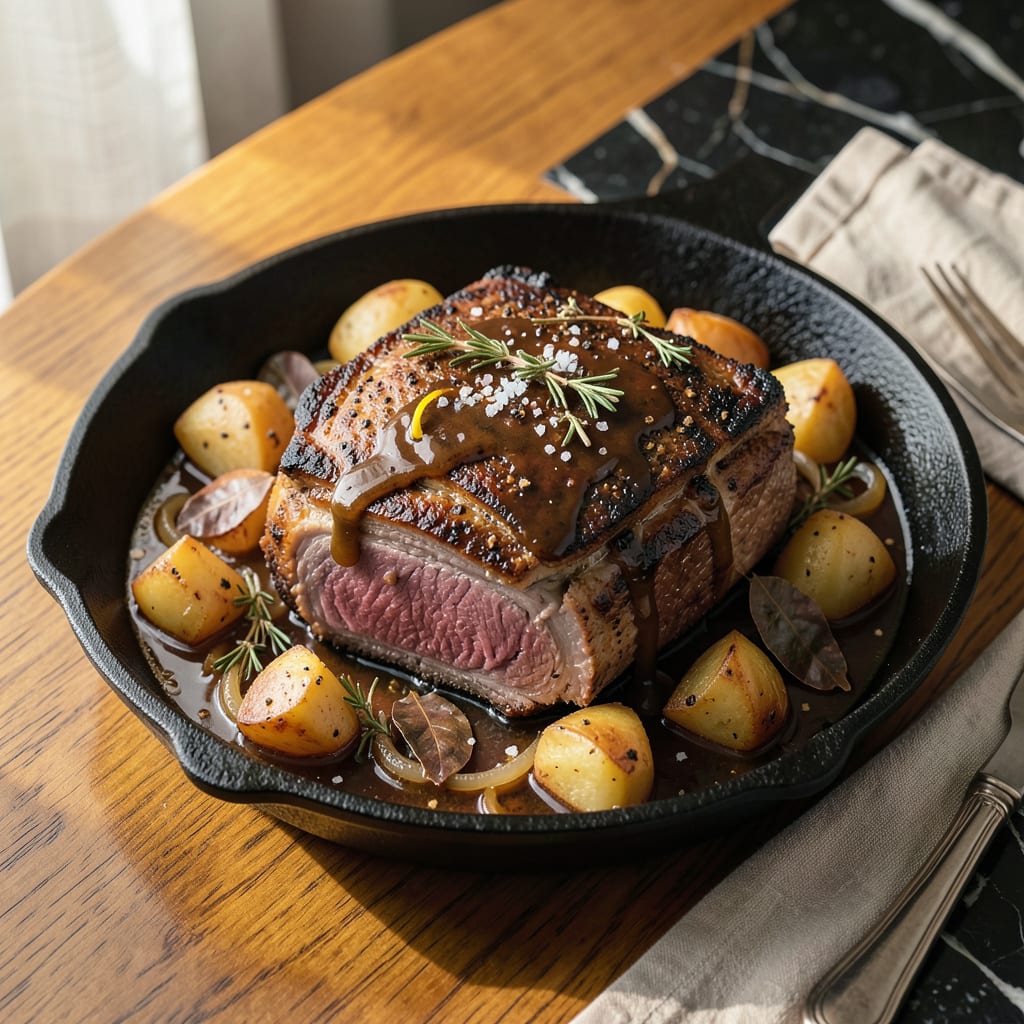
There’s a reason this pot roast has earned its award-winning reputation—it delivers fall-apart tender results with every bite. The secret lies in the slow braising process that transforms tough cuts of beef into succulent, flavorful meat that practically melts on your fork. I’ve perfected this method over years of testing, and it never fails to impress at family dinners or special occasions.
What sets this recipe apart is the careful balance of herbs, aromatic vegetables, and rich beef broth that infuse the meat with deep, complex flavors. The low-and-slow cooking technique ensures the roast stays moist while developing that signature tenderness. Whether you’re cooking for a crowd or meal prepping for the week, this pot roast delivers professional-quality results in your home kitchen.
Ingredients for Award Winning Pot Roast
This is where fall-apart tenderness begins—quality beef and aromatics that build layers of flavor during the long braise.
| Ingredient | Amount | Notes |
|---|---|---|
| Beef Chuck Roast 🥩 | 4 lb | Well-marbled, boneless preferred |
| Kosher Salt 🧂 | 2 tbsp | Diamond Crystal preferred for even seasoning |
| Freshly Ground Black Pepper 🌶️ | 2 tsp | Coarse grind for robust flavor |
| Dried Thyme 🌿 | 2 tsp | French thyme if available |
| Dried Rosemary 🌿 | 2 tsp | Crushed between fingers to release oils |
| Bay Leaves 🍃 | 2 whole | Turkish or California variety |
| Garlic Cloves 🧄 | 8 cloves | Smashed, not minced for slow cooking |
| Yellow Onions 🧅 | 2 whole | Large, quartered with skin on |
| Carrots 🥕 | 4 whole | Cut into 3-inch chunks |
| Celery Stalks 🌿 | 3 whole | Cut into 3-inch pieces |
| Tomato Paste 🍅 | 3 tbsp | Double-concentrated preferred |
| Dry Red Wine 🍷 | 2 cups | Full-bodied like Cabernet Sauvignon |
| Low-Sodium Beef Broth 🥘 | 4 cups | Homemade or high-quality boxed |
| Unsalted Butter 🧈 | 2 tbsp | For finishing sauce |
| All-Purpose Flour 🌾 | ¼ cup | For optional sauce thickening |
[recipeingredientscaler]
The beef is everything here. Chuck roast with visible marbling (those white fat streaks) is non-negotiable—it breaks down beautifully during the long cook. I get mine from Costco for big batches, but most grocery stores carry it pre-cut. If you’re buying a whole roast to trim yourself, look for USDA Choice grade—the marbling makes all the difference. The dried herbs should be fresh (check the expiration date) and preferably from a store with good turnover like Whole Foods or Trader Joe’s (their spices actually smell potent when you open them).
No red wine? Extra beef broth with 1 tbsp balsamic vinegar mimics the depth. Out of fresh garlic? Double the dried garlic powder (but fresh is better). The tomato paste can come from those handy squeeze tubes at Trader Joe’s—no waste, lasts months in the fridge. For the broth, Better Than Bouillon paste makes a rich substitute if you’re not using homemade. And if you’re gluten-free, swap the flour for cornstarch mixed with cold water at the end.
This actually tastes better the next day after the flavors meld. Store in the fridge for up to 5 days (the fat will solidify on top—just reheat gently). Freezes beautifully for 3 months—portion into quart containers for easy reheating. Pro tip: skim the fat after chilling if you prefer a leaner sauce, or leave it for extra richness (I always do).
Why You’ll Love This Recipe
- I’ll be real: this makes enough for dinner and three days of leftovers that taste even better. Shred it for tacos, pile it on mashed potatoes, or just eat it straight from the container—no judgment.
- Set and Forget: Honestly, this is the kind of recipe where you do 10 minutes of work, then walk away while the oven does the magic. Just sear the chuck roast, toss in the thyme and rosemary, and let it slow-cook—no babysitting required.
- That Fall-Apart Tender: Here’s what sold me—the way the salt and pepper form this crispy crust while the inside becomes so tender it nearly melts on contact. The dried herbs (yes, even the basic pantry ones) bloom into something rich and aromatic.
- Feeds a Crowd Twice: I’ll be real: this makes enough for dinner and three days of leftovers that taste even better. Shred it for tacos, pile it on mashed potatoes, or just eat it straight from the container—no judgment.
Step-by-Step Instructions for Award-Winning Pot Roast
This method transforms tough chuck roast into competition-worthy tenderness with minimal effort.
Step 1: Season and Sear the Beef Chuck Roast
Pat the 4 lb beef chuck roast completely dry with paper towels – this ensures a proper sear. Rub the roast generously with the 2 tbsp kosher salt and 2 tsp freshly ground black pepper, pressing the seasoning into all surfaces. The coarse grind of pepper creates little flavor pockets that penetrate as it cooks.
Heat a heavy Dutch oven over medium-high heat until smoking hot. Add the roast and sear for 4-5 minutes per side until you develop a deep, mahogany crust. Don’t move it during searing – that crust forms when proteins caramelize against the hot surface. Transfer the seared roast to a plate and set aside.
Step 2: Build the Aromatic Base
In the same pot, add the 2 whole yellow onions (quartered with skin on), 4 whole carrots, and 3 whole celery stalks. Cook over medium heat for 8-10 minutes, stirring occasionally, until the vegetables develop golden brown edges. The onion skins will deepen the broth color naturally.
Add the 8 cloves garlic cloves (smashed), 2 tsp dried thyme, 2 tsp dried rosemary (crushed between your fingers), and 2 whole bay leaves. Stir in the 3 tbsp tomato paste and cook for 2 minutes until it darkens slightly – this removes the raw tomato flavor and builds depth.
Step 3: Deglaze and Begin the Braise
Pour in the 2 cups dry red wine, scraping up all the browned bits from the bottom of the pot. These fond particles contain concentrated beef flavor. Bring to a simmer and cook for 5 minutes until the liquid reduces by about half. You’ll know it’s ready when the alcohol smell dissipates.
Return the seared roast to the pot along with any accumulated juices. Pour in the 4 cups low-sodium beef broth – it should come about halfway up the roast. Bring to a gentle simmer, then cover and transfer to a 325°F oven. The low, steady heat breaks down collagen without drying out the meat.
Step 4: Slow Cook to Fall-Apart Tenderness
Braise for 3-4 hours, turning the roast every 60 minutes, until it’s fork-tender – when a fork slides in and out with no resistance. The cooking time varies based on your roast’s size and your oven’s accuracy. Start checking at the 3-hour mark by piercing the thickest part.
You’ll know it’s done when the meat easily pulls apart with gentle pressure from a fork. The vegetables should be completely softened, and the braising liquid will have reduced to a rich, flavorful broth. If the liquid reduces too much during cooking, add ½ cup water to maintain the level.
Step 5: Finish with Rich, Velvety Sauce
Transfer the roast and vegetables to a serving platter and tent with foil. Skim excess fat from the braising liquid, then bring it to a boil over medium-high heat. For a thicker sauce, whisk the 0.25 cup all-purpose flour with 2 tbsp unsalted butter to form a paste, then whisk it into the simmering liquid.
Cook for 5-7 minutes until the sauce coats the back of a spoon. Taste and adjust seasoning – you might need a pinch more salt depending on your broth. Slice the roast against the grain and serve with the vegetables, spooning the rich sauce over everything. The meat should be so tender it nearly falls apart at the touch of your fork.
Perfect Pairings for award winning pot roast
Classic Comfort Sides
You can’t go wrong with creamy mashed potatoes to soak up that rich sauce. I make mine with Yukon Gold potatoes and whole milk for extra creaminess. The buttery texture pairs perfectly with the tender beef. For a twist, add roasted garlic to your mash. 🥔
Another winner is buttery egg noodles – the wide noodles catch all the delicious sauce. I prefer Reames frozen noodles for their homemade texture. Just boil for 3 minutes and toss with the pot roast juices.
Fresh Vegetable Pairings
Balance the richness with roasted Brussels sprouts tossed with balsamic glaze. Halve them, roast at 400°F for 20 minutes, then drizzle with reduced balsamic. The caramelized edges add a nice contrast to the tender meat.
For something lighter, try a kale salad with apple cider vinaigrette. Massage the kale with 1 tbsp olive oil first to soften it. The crisp acidity cuts through the richness beautifully.
Bread for Sauce Soaking
A warm crusty baguette from your local bakery is essential for mopping up every last drop of sauce. I love sourdough for its tangy contrast. Toast slices lightly with garlic butter for extra flavor.
For a Southern touch, serve with cornbread made with sharp cheddar. The sweetness and cheese complement the savory beef perfectly. I use Krusteaz mix for quick preparation.
Wine Recommendations
The same full-bodied red wine you cooked with (like Cabernet Sauvignon) is perfect for serving. Its bold tannins stand up to the rich beef. For white wine lovers, try a buttery Chardonnay – the oak notes pair surprisingly well. 🍷
Beer drinkers should reach for a malty amber ale or dark lager. The caramel notes in New Belgium Fat Tire complement the roast beautifully. Avoid hoppy IPAs that clash with the dish’s richness.
Nutrition Facts
Frequently Asked Questions
Why does my roast come out tough instead of tender?
Tough meat usually means it didn’t cook long enough or at the right temperature. The collagen in chuck roast needs 3-4 hours at 325°F to fully break down. Rushing the process or cooking at too high a temperature prevents that magical transformation.
Can I make this in a slow cooker instead of the oven?
Sear the meat first for flavor, then transfer everything to your slow cooker. Cook on Low for 8-10 hours or High for 5-6 hours. The results will be just as tender, though the sauce may need reducing afterward for ideal consistency.
What’s the best way to store and reheat leftovers?
Store in an airtight container with the sauce for up to 5 days in the fridge. Reheat gently on the stovetop with a splash of broth, covered, over medium-low heat for 10-15 minutes. This prevents drying out while restoring that just-cooked tenderness.
Can I substitute a different cut of beef?
For similar results, try beef short ribs or brisket. Both have excellent marbling and connective tissue that breaks down beautifully. Avoid lean cuts like sirloin—they’ll dry out during the long cooking process. The 4 lb weight is ideal for even cooking.

- 8 Bean Soup Recipe Crock Pot: Hearty Vegetable Medley in One Pot - September 25, 2026
- 4C Bread Crumbs Meatballs Recipe: Crispy Crust and Juicy Centers - September 25, 2026
- 6 Oz Chocolate Chip Cookie Recipe: Perfectly Balanced Crispy Edges and Chewy Hearts - September 25, 2026