
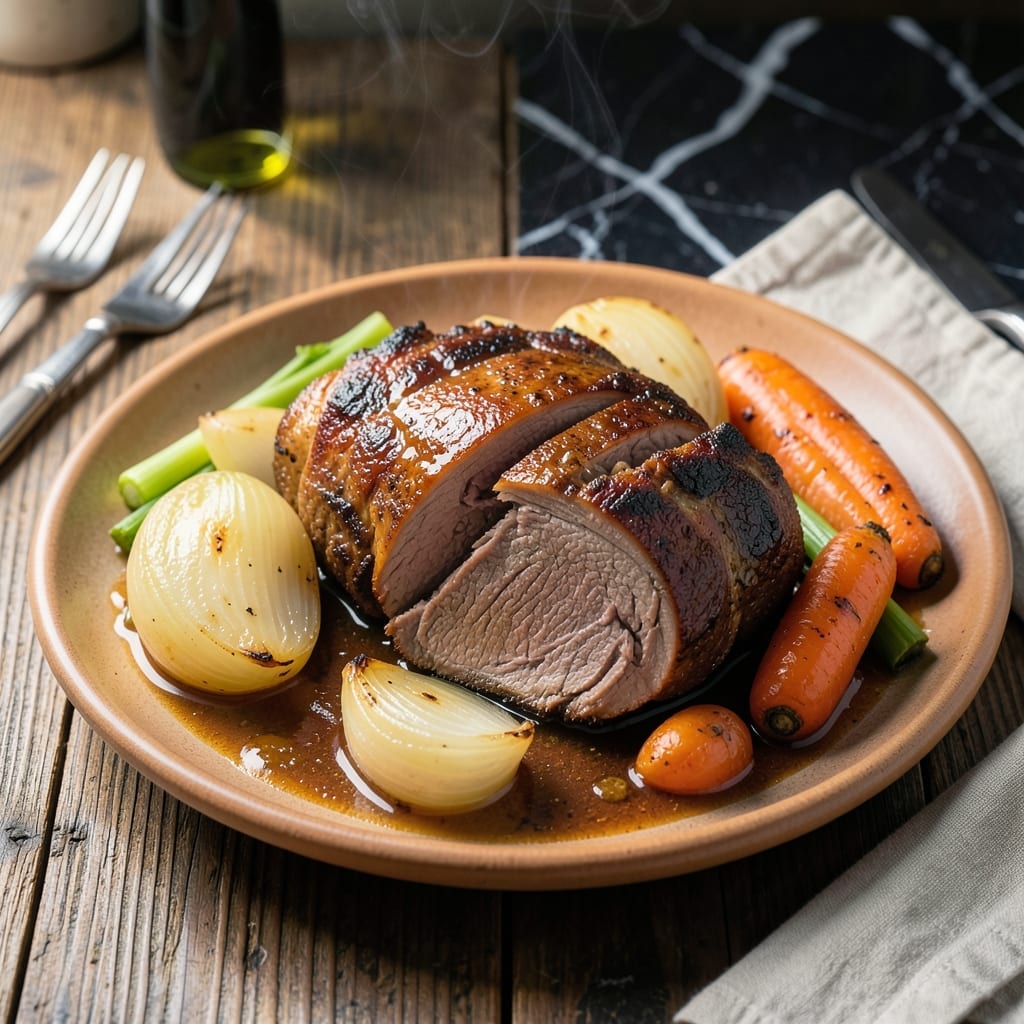
There’s a reason pot roast remains a Sunday dinner classic—it transforms tough cuts into fork-tender perfection through slow, gentle heat. This method relies on a Dutch oven to lock in moisture and develop deep, rich flavors that define comfort food.
The process begins with searing the beef to create a flavorful crust, then braising it with aromatics in liquid until it practically falls apart. Low and slow is key, allowing collagen to break down into silky, tender meat that soaks up every bit of the savory broth.
What emerges is a dish that’s hearty, satisfying, and infinitely adaptable. The meat becomes so tender it shreds with a fork, while the vegetables absorb the braising liquid, turning every bite into a flavorful experience.
Ideal for feeding a crowd or making ahead, this pot roast delivers consistent results with minimal effort. The Dutch oven does most of the work, ensuring a meal that’s as impressive as it is comforting.
Ingredients for Baked Pot Roast
Transform tough cuts into fork-tender perfection with these hearty, comforting ingredients.
| Ingredient | Amount | Notes |
|---|---|---|
| Chuck Roast 🥩 | 3 lb | Well-marbled, boneless preferred |
| Kosher Salt 🧂 | 2 tsp | Divided for seasoning and adjustment |
| Black Pepper 🌶️ | 1 tsp | Freshly ground preferred |
| Olive Oil 🫒 | 2 tbsp | For searing beef |
| Yellow Onions 🧅 | 2 whole | Large, quartered |
| Carrots 🥕 | 4 whole | Peeled, cut into 2-inch chunks |
| Celery Stalks 🥬 | 3 pieces | Cut into 2-inch chunks |
| Garlic Cloves 🧄 | 6 cloves | Smashed, peeled |
| Beef Broth 🍲 | 2 cups | Low-sodium preferred |
| Red Wine 🍷 | 1 cup | Dry variety like Cabernet |
| Tomato Paste 🍅 | 2 tbsp | For depth of flavor |
| Fresh Thyme Sprigs 🌿 | 4 pieces | Or 1 tsp dried thyme |
| Bay Leaves 🍃 | 2 whole | Dried, for braising liquid |
| Russet Potatoes 🥔 | 1 ½ lb | Peeled, cut into large chunks |
The beef is everything here. Chuck roast with good marbling breaks down beautifully—avoid lean cuts like round or sirloin. Most supermarkets carry pre-packaged chuck, but ask the butcher for a 3-lb piece from the shoulder if you want the best texture. Whole Foods and Costco have excellent options. Don’t trim all the fat; it adds flavor and moisture during the long braise.
No red wine? Substitute additional beef broth plus 1 tbsp balsamic vinegar for acidity. Fresh thyme is ideal, but dried thyme at one-third the amount works. If you’re out of tomato paste, 1 tbsp ketchup in a pinch (though the flavor profile shifts slightly). For the potatoes, Yukon Golds hold their shape better than russets if you prefer a firmer bite.
This tastes even better the next day. Store leftovers in an airtight container for up to 5 days in the fridge or freeze for 3 months. The braising liquid solidifies when chilled—perfect for skimming off excess fat before reheating. Always bring to a simmer when warming to revive the flavors.
Why You’ll Love This Recipe
- Set It and Forget It: Honestly, I just season the chuck roast with kosher salt and pepper, sear it, and let the oven do the work.
- Melt-in-Your-Mouth Good: The slow bake turns the onions into a sweet, caramelized base that soaks into every bite.
- Sunday or Wednesday: I’ve served this for fancy dinners and thrown it together for a regular Tuesday night—works every time.
- Leftovers for Days: One roast feeds us for two meals, and the extras make killer sandwiches the next day.
Step-by-Step Instructions for Baked Pot Roast
Here’s the method that transforms tough chuck roast into fall-apart tender perfection every time.
Step 1: Sear the Chuck Roast for Deep Flavor
Pat the 3 lb chuck roast completely dry with paper towels, then season all sides generously with 1 tsp black pepper and 1 tsp kosher salt. This dry surface ensures a proper sear rather than steaming the meat.
Heat the 2 tbsp olive oil in a Dutch oven over medium-high heat until shimmering. Add the roast and sear undisturbed for 4-5 minutes per side until deeply browned. You’ll know it’s ready to flip when it releases easily from the pot. Remove and set aside.
Step 2: Build the Aromatic Base
In the same pot, add the 2 whole yellow onions (quartered), 4 whole carrots, 3 pieces celery stalks, and 6 cloves garlic cloves. Cook for 5-6 minutes until the onions begin to soften and brown slightly.
Stir in the 2 tbsp tomato paste and cook for 1-2 minutes until it darkens in color. This step removes the raw taste and builds a rich foundation for the braising liquid. The mixture should become fragrant and slightly sticky.
Step 3: Deglaze and Add Braising Liquid
Pour in the 1 cup red wine and scrape up all the browned bits from the bottom of the pot with a wooden spoon. Let it simmer for 2-3 minutes until reduced by half. This deglazing captures all the concentrated flavor from searing.
Add the 2 cups beef broth, 4 pieces fresh thyme sprigs, and 2 whole bay leaves. Return the chuck roast to the pot along with any accumulated juices. The liquid should come about halfway up the meat.
Step 4: Braise to Fork-Tender Perfection
Cover the Dutch oven and transfer to a preheated 325°F oven. Braise for 2 hours, then add the 1.5 lb russet potatoes (peeled and cut into large chunks) around the meat. Continue braising for another 1-1.5 hours until the beef shreds easily with a fork.
The potatoes are ready when they pierce easily with a knife. The chuck roast should reach an internal temperature of 195-200°F for optimal tenderness. Baste the meat with the braising liquid once or twice during cooking.
Step 5: Rest and Serve
Carefully remove the chuck roast and potatoes to a serving platter. Skim excess fat from the braising liquid if desired, then adjust seasoning with the remaining 1 tsp kosher salt as needed. The sauce should coat the back of a spoon.
Let the meat rest for 10-15 minutes before slicing or pulling apart. Serve the pot roast with the vegetables and plenty of the rich braising liquid spooned over the top. The meat should be so tender it nearly falls apart at the touch of a fork.
Pro Tips For Making Baked Pot Roast
- Sear the Chuck: Use high heat and 2 tablespoons of olive oil to get a deep brown crust on the chuck roast before baking—this builds the flavor base that defines the dish.
- Season Aggressively: Don’t be shy with the kosher salt and black pepper; a heavy hand here actually changes the outcome, especially with a thick cut like chuck roast.
- Slice Onions Thick: Cut your yellow onions into ½-inch slices so they hold up during the long bake and don’t turn to mush by the time the meat is done.
- Rest Before Carving: Give the roast a solid 15 minutes under foil after baking—I learned this the hard way after serving dry meat twice in one month.
Troubleshooting This Dish
Tough Meat Issues
If your roast isn’t tender after braising, it likely didn’t cook long enough. Return it to the oven at 325°F for another 30-60 minutes. The collagen needs time to break down completely. I once pulled mine out too early and had to finish it in the slow cooker. 💡
Dry or Stringy Texture
This usually happens when there isn’t enough braising liquid. Check that the liquid covers at least half the meat during cooking. If it’s dry, add 1 cup hot beef broth and continue braising. Also, avoid peeking too often—each oven opening drops the temperature by 25-50°F.
Weak Flavor in Broth
If your braising liquid tastes bland, try reducing it on the stovetop after removing the meat. Simmer uncovered for 10-15 minutes to concentrate flavors. I also add 1 tbsp soy sauce for umami depth when needed.
Overly Greasy Sauce
Excess fat is normal with chuck roast. Let the braising liquid settle, then skim with a spoon. For a cleaner finish, chill the sauce and lift off solidified fat. A fat separator pitcher makes this process effortless.
Vegetables Mushy
Add potatoes and carrots only during the last 1-1.5 hours of cooking. If they’re already in the pot, check at 2 hours and remove if tender. Smaller chunks cook faster, so adjust size based on your preferred texture.
Burnt Bottom
This occurs when the heat is too high or liquid evaporates. Always use medium-low heat on the stovetop and check liquid levels at the 2-hour mark. A heavy Dutch oven like Le Creuset distributes heat more evenly. ⚡
Nutrition Facts
Frequently Asked Questions
What’s the best cut for this dish?
Chuck roast is ideal due to its marbling and connective tissue. Avoid lean cuts like sirloin—they’ll stay tough. Ask your butcher for a 3-lb well-marbled piece for the best results.
Can I make this without red wine?
Yes! Substitute 1 cup beef broth plus 1 tbsp balsamic vinegar for acidity. The flavor will be slightly different but still rich and delicious.
Why is resting the meat important?
Resting for 10-15 minutes lets juices redistribute, ensuring moist, flavorful meat. Slicing too soon causes juices to escape, leaving the roast dry.
How do I store leftovers?
Keep in an airtight container in the fridge for up to 5 days or freeze for 3 months. Reheat gently on the stove for best texture.

- 4C Bread Crumbs Meatballs Recipe: Crispy Crust and Juicy Centers - September 25, 2026
- 6 Oz Chocolate Chip Cookie Recipe: Perfectly Balanced Crispy Edges and Chewy Hearts - September 25, 2026
- 6-Inch Coffee Cake Recipe: Vanilla Bean Swirls and Buttery Streusel Topping - September 25, 2026