
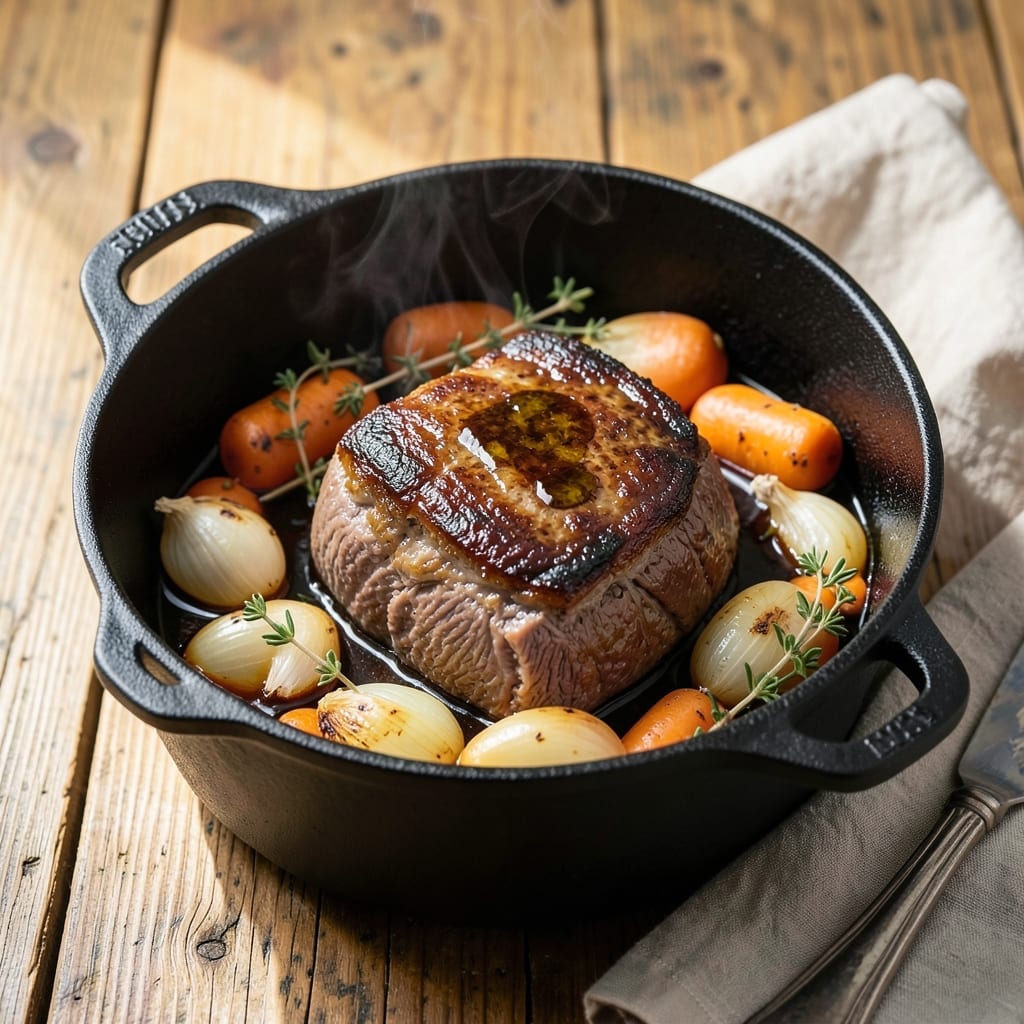
This slow-braised pot roast delivers restaurant-quality results with minimal effort on your part. The balsamic glaze transforms tough cuts of beef into fall-apart tender meat with rich, caramelized depth.
What makes this recipe special is the combination of time and technique. Low heat and a long cooking period allow the flavors to meld while the balsamic vinegar reduces into a sweet-tangy glaze that coats every bite.
You’ll end up with a pot roast that’s tender, flavorful, and surrounded by a sauce so good you’ll want to drink it. The vegetables soak up all that rich, meaty goodness, making them just as delicious as the beef itself.
Perfect for Sunday supper or a special occasion. Here’s how to make it.
Ingredients for Balsamic Pot Roast
Slow-braised richness starts with these pantry staples and a few fresh herbs. Nothing exotic here.
| Ingredient | Amount | Notes |
|---|---|---|
| Chuck Roast 🥩 | 3 lb | Well-marbled, trimmed of excess fat |
| Balsamic Vinegar 💧 | ¾ cup | Aged, high-quality for depth |
| Olive Oil 🫒 | 2 tbsp | Extra-virgin for searing |
| Yellow Onions 🧅 | 2 whole | Medium, thinly sliced |
| Garlic Cloves 🧄 | 6 cloves | Smashed, peeled |
| Carrots 🥕 | 4 whole | Large, cut into chunks |
| Celery Stalks 🌿 | 3 whole | Cut into large pieces |
| Dry Red Wine 🍷 | 1 cup | Bold, full-bodied variety |
| Beef Stock 🥣 | 2 cups | Low-sodium preferred |
| Tomato Paste 🍅 | 2 tbsp | Double-concentrated for richness |
| Fresh Thyme Sprigs 🌿 | 4 whole | Stems removed before serving |
| Fresh Rosemary Sprigs 🌿 | 2 whole | Stems removed before serving |
| Bay Leaves 🍃 | 2 whole | Dried, whole leaves |
| Kosher Salt 🧂 | 1 ½ tsp | Diamond Crystal preferred |
| Black Pepper 🌶️ | 1 tsp | Freshly ground for best flavor |
The beef is non-negotiable here. Chuck roast with good marbling is what you want—Costco or Whole Foods usually have great options. Look for pieces with visible fat streaks (that’s flavor). The balsamic vinegar needs to be aged—skip the cheap stuff. For the wine, any bold red works (Cabernet Sauvignon or Malbec are my go-tos).
No red wine? Beef stock with a splash of balsamic gets you close. Fresh out of thyme or rosemary? Dried herbs at half the amount work, but add them earlier so they rehydrate. If you’re missing tomato paste, ketchup in a pinch (don’t @ me). The carrots and celery can be swapped for parsnips or potatoes if that’s what you’ve got.
Leftovers taste even better the next day—4-5 days in the fridge, or freeze for 3 months. I like to portion the meat and sauce separately (trust me on this). The herbs? Strip the leaves and freeze them in water for future stocks.
Why You’ll Love This Recipe
- Set It and Forget: I brown the chuck roast, toss in the onions and garlic, then let the oven do the work for hours.
- Sweet and Tangy: The balsamic vinegar caramelizes with the beef juices into this rich, glossy sauce I could drink straight from the pot.
- Feeds My Crew: One pot makes enough for Sunday dinner plus Monday sandwiches—my teens actually fight over the leftovers.
- Budget Hero: A cheap chuck roast turns into company-worthy food with just a few pantry staples and time.
Step-by-Step Instructions for Balsamic Pot Roast
Here’s the method. Straightforward, tested, works every time.
Step 1: Sear the Chuck Roast to Lock in Flavor
Pat the 3 lb Chuck Roast completely dry with paper towels. This is non-negotiable—moisture prevents proper browning. Season all sides aggressively with the 1.5 tsp Kosher Salt and 1 tsp Black Pepper. Let it sit at room temperature for 30 minutes while you prep the remaining ingredients.
Heat the 2 tbsp Olive Oil in a heavy Dutch oven over medium-high heat until shimmering. Sear the chuck roast on all sides for 3-4 minutes per side until deeply browned. You’re not cooking it through—just building a flavor foundation. Transfer the meat to a plate and set aside.
Step 2: Build the Aromatic Base
In the same pot, add the 2 whole Yellow Onions (thinly sliced), 4 whole Carrots (in chunks), and 3 whole Celery Stalks (in large pieces). Cook over medium heat for 8-10 minutes, stirring occasionally, until the onions soften and begin to caramelize at the edges.
Stir in the 6 cloves Garlic Cloves (smashed) and 2 tbsp Tomato Paste. Cook for 1-2 minutes until the tomato paste darkens slightly—this intensifies its sweetness. The mixture should be fragrant and the vegetables should have developed some color.
Step 3: Deglaze and Add Braising Liquid
Pour in the 1 cup Dry Red Wine, scraping up all the browned bits from the bottom of the pot with a wooden spoon. These fond bits are pure flavor. Let the wine reduce by half, about 3-4 minutes.
Add the 2 cups Beef Stock, 0.75 cup Balsamic Vinegar, 4 whole Fresh Thyme Sprigs, 2 whole Fresh Rosemary Sprigs, and 2 whole Bay Leaves. Stir to combine, then return the seared chuck roast to the pot along with any accumulated juices.
Step 4: Braise to Tender Perfection
Bring the liquid to a gentle simmer, then reduce heat to low. Cover the pot and let it braise undisturbed for 3-3.5 hours. You want the liquid at a lazy bubble—not a rolling boil. The chuck roast is done when it shreds easily with a fork.
Resist the urge to check or stir during cooking. Every time you lift the lid, you add 20-30 minutes to the cooking time. The meat should be fall-apart tender and the braising liquid reduced to a rich, syrupy consistency with deep caramelized flavors.
Step 5: Rest and Serve
Carefully transfer the chuck roast to a cutting board. Remove the stems from the fresh thyme sprigs and fresh rosemary sprigs, and discard the bay leaves. Skim excess fat from the surface of the braising liquid if desired.
Let the meat rest for 10-15 minutes before shredding or slicing. Serve the pot roast with the vegetables and a generous spoonful of the braising liquid over the top. The sauce should be thick enough to cling to the meat, with a perfect balance of tangy, sweet, and savory notes.
Pro Tips For Making Balsamic Pot Roast
- Sear the Chuck: Brown the chuck roast in hot olive oil on all sides—about 4-5 minutes per side—until it develops a deep crust. I learned this the hard way: skipping this step means a bland, gray roast instead of rich, caramelized flavor.
- Deglaze with Balsamic: After searing, pour in ½ cup balsamic vinegar and scrape up those browned bits on the bottom of the pot. Sounds tedious, but it works: those bits dissolve into the sauce, adding layers of flavor to your pot roast.
- Don’t Rush the Onions: Cook the yellow onions until they’re soft and translucent—about 8-10 minutes—before adding garlic. My grandmother swore by this, and she was right: raw onions can leave a harsh bite in the finished dish.
- Use a Meat Thermometer: Pull the roast when it hits 195-200°F internally. I used to guess based on time and ended up with dry meat—now I know the thermometer is the only way to guarantee fall-apart tenderness.
Make-Ahead Tips for This Recipe
Overnight Prep
You can prep everything the night before to save time. Trim and season the 3 lb chuck roast, then store it in the fridge. Chop all vegetables and measure out liquids like the 0.75 cup balsamic vinegar and 1 cup dry red wine. Keep them in separate containers. 💡
Morning Assembly
In the morning, take the chuck roast out of the fridge 30 minutes before cooking to bring it to room temperature. This ensures even searing. While waiting, you can start cooking the vegetables as described in the recipe.
Slow Cooker Option
After searing the meat and building your aromatic base, transfer everything to a slow cooker. Cook on low for 8-10 hours or high for 5-6 hours. The result is just as tender and flavorful as the stovetop method.
Freezing Instructions
To freeze, let the pot roast cool completely, then portion the meat and sauce into airtight containers. It will keep well for up to 3 months. When ready to eat, thaw overnight in the fridge before reheating. ❄️
Reheating Tips
Reheat gently on the stovetop over medium-low heat for 15-20 minutes, adding a splash of water or beef stock if needed. For the microwave, use 50% power in 2-minute intervals, stirring between each.
Make-Ahead Sauce
The braising liquid can be made 2 days ahead and reheated. Skim the fat after chilling—it solidifies for easy removal. This actually improves the flavor as the balsamic vinegar has more time to mellow and blend with the other ingredients.
Nutrition Facts
Frequently Asked Questions
What cut of beef works best?
Chuck roast is ideal for its marbling and connective tissue that breaks down during the 3-3.5 hour braise. Avoid lean cuts like sirloin—they’ll dry out.
Can I use a different vinegar?
For best results, stick with aged balsamic. Apple cider vinegar works in a pinch but lacks the same depth. Use the same 0.75 cup quantity.
Why rest the meat before serving?
Resting for 10-15 minutes lets juices redistribute, keeping the roast moist. Slicing too soon causes dry, uneven results.
What if my sauce is too thin?
Simmer uncovered for 10-15 minutes to reduce. For faster results, mix 1 tbsp cornstarch with water and stir in.

- 4C Bread Crumbs Meatballs Recipe: Crispy Crust and Juicy Centers - September 25, 2026
- 6 Oz Chocolate Chip Cookie Recipe: Perfectly Balanced Crispy Edges and Chewy Hearts - September 25, 2026
- 6-Inch Coffee Cake Recipe: Vanilla Bean Swirls and Buttery Streusel Topping - September 25, 2026