
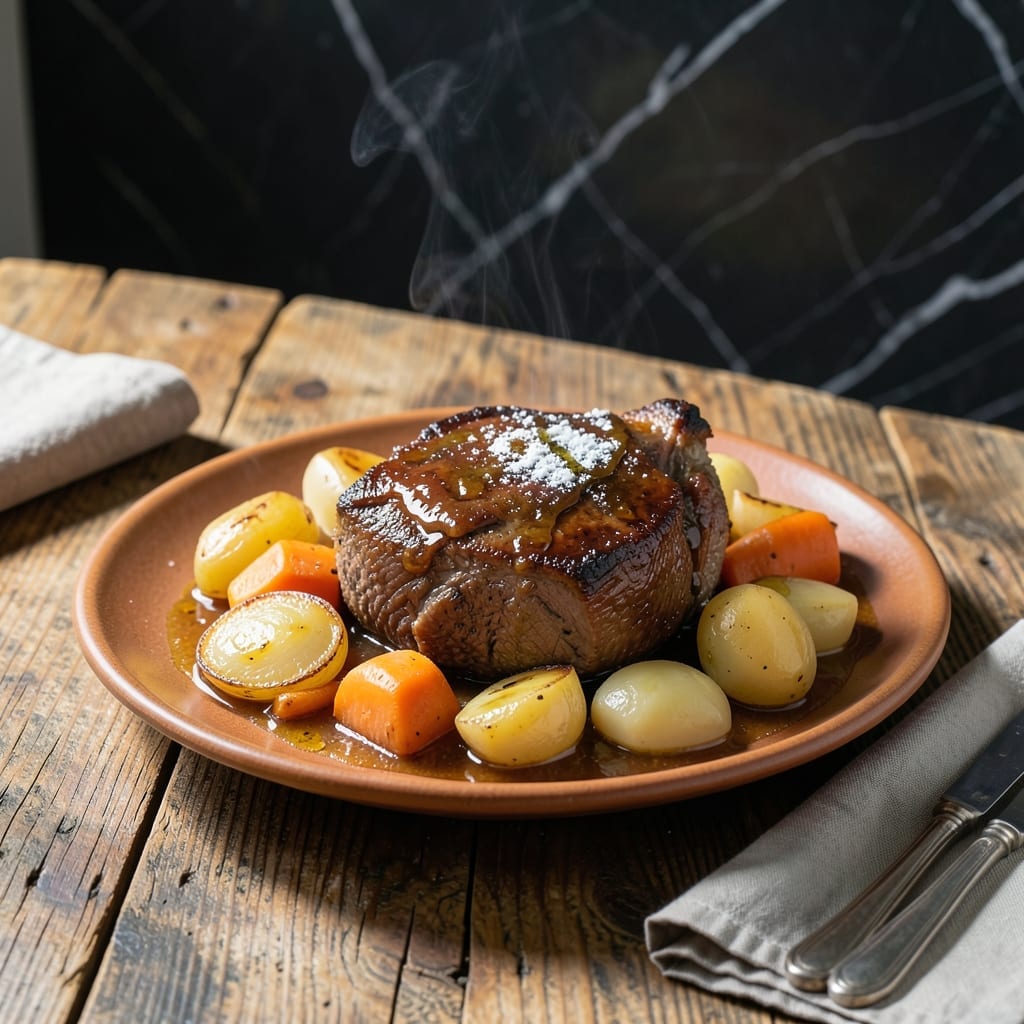
Sunday dinner doesn’t get more comforting than a perfectly braised pot roast, and this version delivers the kind of deep, savory flavor that turns a simple meal into a memorable gathering. The secret lies in a slow, steady cook that transforms tough cuts into fall-apart tenderness.
This method builds layers of flavor from the first sear to the final glaze, creating a rich gravy that soaks into every bite of meat and vegetables. A generous splash of red wine and fresh herbs elevate the dish without complicating the process.
What emerges from the oven is a tender, juicy roast with carrots and onions so soft they melt into the sauce. The aroma alone will have everyone gathering around the table before it’s even served.
Ideal for feeding a crowd or making Sunday feel special, this recipe proves that the best meals often come from the simplest techniques. Here’s how to make it right every time.
Ingredients for Barefoot Contessa Company Pot Roast
This is the kind of meal that turns Sunday dinner into something worth savoring.
| Ingredient | Amount | Notes |
|---|---|---|
| Chuck Roast 🥩 | 4 lb | Boneless, well-marbled preferred |
| Kosher Salt 🧂 | 2 tsp | Diamond Crystal or Morton |
| Freshly Ground Black Pepper 🌶️ | 1 ½ tsp | Coarsely ground for texture |
| All-Purpose Flour 🌾 | ¼ cup | For dusting the meat |
| Olive Oil 🫒 | 3 tbsp | Divided for searing and vegetables |
| Yellow Onions 🧅 | 2 whole | Large, cut into chunks |
| Carrots 🥕 | 4 whole | Large, peeled and cut |
| Garlic Cloves 🧄 | 6 cloves | Smashed, peeled |
| Fresh Thyme Sprigs 🌿 | 3 pieces | Tied with twine |
| Fresh Rosemary Sprigs 🍃 | 2 pieces | Tied with thyme |
| Dry Red Wine 🍷 | 2 cups | Bold and dry variety |
| Beef Stock 🥩 | 2 cups | Low-sodium preferred |
| Tomato Paste 🍅 | 2 tbsp | For depth of flavor |
| Bay Leaf 🌿 | 2 pieces | Dried or fresh |
The chuck roast is non-negotiable here—look for well-marbled cuts at your butcher or Whole Foods meat counter. Fat equals flavor, especially during the long braise. I always buy mine from a trusted butcher (the guys at Dickson’s Farmstand in NYC know what I need). The weight can vary slightly, but aim for even thickness so it cooks uniformly.
No red wine? Substitute with additional beef stock plus a splash of balsamic vinegar for acidity. Fresh herbs are ideal, but dried thyme and rosemary at half the amount work in a pinch. If you’re short on carrots, parsnips or celery add nice depth. For the stock, Better Than Bouillon makes a solid beef base if you’re not making it from scratch.
Pot roast tastes even better the next day. Store leftovers in an airtight container for up to 4 days in the fridge, or freeze for 3 months. The gravy thickens as it cools—reheat gently with a splash of stock to restore its silky texture.
Why You’ll Love This Recipe
- Set It & Forget It: Honestly, after searing the chuck roast in olive oil, it’s just a matter of letting the oven do the work.
- Rich, Deep Flavor: The flour crust on the beef creates this incredible golden-brown crust while keeping the inside fork-tender.
- Crowd-Pleasing Meal: I’ve served this at Sunday dinners and weeknight gatherings—always disappears fast.
- Leftovers for Days: Makes enough for sandwiches or tacos the next day, and it might taste even better reheated.
Step-by-Step Instructions for Company Pot Roast
Follow this method for melt-in-your-mouth beef with rich, aromatic gravy every time.
Step 1: Season and Sear the Chuck Roast
Pat the 4 lb chuck roast dry with paper towels—this ensures a good sear. Season all sides generously with 2 tsp kosher salt and 1.5 tsp freshly ground black pepper. Dredge the roast lightly in 0.25 cup all-purpose flour, shaking off excess.
Heat 2 tbsp olive oil in a large Dutch oven over medium-high heat until shimmering. Sear the roast for 4-5 minutes per side until deeply browned. You want a dark, caramelized crust—this builds the foundation of flavor. Transfer the roast to a plate.
Step 2: Sauté the Vegetables and Deglaze
In the same pot, add the remaining 1 tbsp olive oil. Add the 2 whole yellow onions (cut into chunks), 4 whole carrots (peeled and cut), and 6 cloves garlic cloves (smashed). Cook for 8-10 minutes until the vegetables begin to soften and brown.
Stir in 2 tbsp tomato paste and cook for 1-2 minutes until it darkens slightly. This step intensifies its sweetness and removes any raw flavor. Pour in 2 cups dry red wine, scraping up the browned bits from the bottom of the pot. Let it simmer for 3-4 minutes until reduced by half.
Step 3: Braise with Aromatics
Return the chuck roast to the pot along with any accumulated juices. Add 2 cups beef stock, 3 pieces fresh thyme sprigs, 2 pieces fresh rosemary sprigs, and 2 pieces bay leaf. The liquid should come about halfway up the roast—add water if needed.
Bring to a simmer, then cover the pot. Reduce heat to low and let it braise gently for 2.5 to 3 hours, turning the roast once halfway through. You’ll know it’s done when a fork slides in easily and the meat pulls apart with minimal resistance.
Step 4: Rest and Serve
Carefully transfer the chuck roast to a cutting board and tent loosely with foil. Skim excess fat from the surface of the gravy if desired, then remove the herb sprigs and bay leaf. Simmer the gravy for 5 minutes until slightly thickened.
Let the roast rest for 15-20 minutes before slicing against the grain. This resting period allows the juices to redistribute, ensuring each serving is moist and flavorful. Serve the pot roast with the vegetables and gravy spooned over the top.
Pro Tips For Making Barefoot Contessa Company Pot Roast
- Pat It Dry: Press the chuck roast with paper towels before seasoning—any moisture prevents the flour from sticking properly, and you’ll lose that perfect crust.
- Season the Flour: Mix kosher salt and black pepper into the all-purpose flour before dredging; it distributes the seasoning evenly and gives every bite real flavor.
- Sear in Batches: Don’t crowd the pan with olive oil—sear the roast in two stages if needed, or the meat will steam instead of brown, and the fond won’t build for the sauce.
- Let It Rest: After braising, give the pot roast a solid 15 minutes under foil before slicing; I learned this the hard way after watching all the juices run out onto the cutting board.
Serving Suggestions for Leftovers
Plating like Ina
Ina Garten would serve this on a large white platter to show off the deep brown roast and glossy vegetables. I arrange the beef in the center, then scatter the carrots and onions around it like a rustic crown. The gravy goes over everything just before bringing it to the table. 💛
Family-Style Service
For a cozy gathering, place the platter in the middle of the table with tongs and a ladle for the gravy. I like to serve it with crusty bread or buttered egg noodles to soak up every last bit of that rich sauce.
Garnish Simply
A sprinkle of chopped fresh parsley adds a pop of color and freshness. I also love a pinch of flaky sea salt like Maldon right before serving to enhance all the flavors. The contrast against the dark gravy is beautiful.
Wine Pairing
Since you’ve already used red wine in the braise, serve the same bottle at the table. A bold Cabernet Sauvignon or Syrah stands up to the rich meat and complements the deep flavors. Chill it slightly for the best experience.
Leftovers Reinvented
Shred any remaining pot roast and pile it onto toasted baguettes with the vegetables for incredible sandwiches. I also love using the leftovers in beef tacos or over mashed potatoes for a second meal that feels entirely new.
Nutrition Facts
Frequently Asked Questions
What cut works best for this braise?
Chuck roast is ideal due to its marbling and connective tissue, which break down during the 2.5-3 hour cook time. Avoid lean cuts like sirloin as they can dry out.
Can I make this in a slow cooker?
Yes! Sear the meat first, then transfer everything to a slow cooker. Cook on low for 8-10 hours or high for 5-6 hours for the same tender results.
Why does the wine need to reduce first?
Reducing the 2 cups wine by half concentrates its flavor and burns off alcohol. This step ensures your gravy is rich, not watery or boozy.
How do I prevent tough meat?
Don’t rush the braise! The meat must reach fork-tender stage. Also, let it rest for 15-20 minutes after cooking to redistribute juices.

- 6 Oz Chocolate Chip Cookie Recipe: Perfectly Balanced Crispy Edges and Chewy Hearts - September 25, 2026
- 6-Inch Coffee Cake Recipe: Vanilla Bean Swirls and Buttery Streusel Topping - September 25, 2026
- 1 Hour Soup Recipe: Velvety Richness Without the Wait - September 25, 2026