
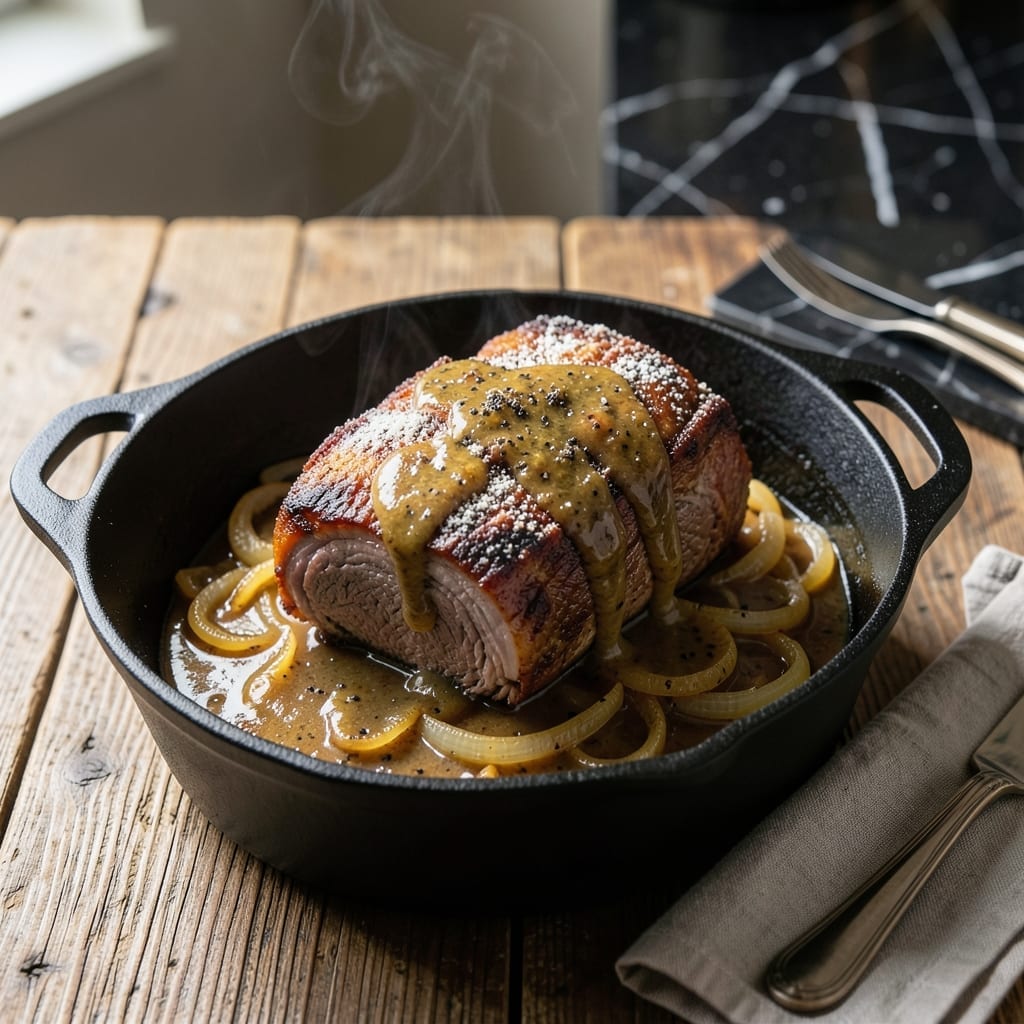
There’s a timeless comfort in a well-made pot roast, where beef becomes fork-tender through slow, gentle braising. This proven technique transforms a humble cut into something extraordinary without complicated steps or special equipment.
The secret lies in the low-and-slow approach, allowing the meat to break down naturally while root vegetables absorb the rich, savory broth. Every element cooks together in one pot, creating a complete meal with minimal effort and maximum flavor.
You’ll end up with fall-apart tender beef, perfectly cooked carrots and potatoes, and a deeply flavorful broth that begs to be soaked up with crusty bread. It’s the kind of dish that defines Sunday dinner.
Ideal for feeding a crowd or making ahead, this method delivers consistent, restaurant-quality results every time.
Ingredients for Basic Pot Roast
Classic ingredients for a Sunday dinner that defines comfort food at its finest.
| Ingredient | Amount | Notes |
|---|---|---|
| Beef Chuck Roast 🥩 | 3 lb | Well-marbled, trimmed of excess fat |
| Kosher Salt 🧂 | 2 tsp | Diamond Crystal preferred |
| Freshly Ground Black Pepper 🌶️ | 1 tsp | Coarse grind for texture |
| All-Purpose Flour 🌾 | ¼ cup | For dredging beef |
| Vegetable Oil 🫒 | 2 tbsp | High smoke point for searing |
| Yellow Onion 🧅 | 1 whole | Large, roughly chopped |
| Carrots 🥕 | 3 whole | Peeled, cut into chunks |
| Russet Potatoes 🥔 | 1 ½ lb | Peeled, quartered |
| Garlic Cloves 🧄 | 5 cloves | Smashed, peeled |
| Dried Thyme 🌿 | 1 tsp | Rubbed between fingers |
| Dried Rosemary 🍃 | 1 tsp | Crushed to release oils |
| Bay Leaves 🌿 | 2 pieces | Whole, for infusion |
| Beef Broth 🥣 | 3 cups | Low-sodium preferred |
| Red Wine 🍷 | 1 cup | Dry variety for depth |
| Tomato Paste 🍅 | 2 tbsp | For umami richness |
The beef chuck roast is non-negotiable here—look for heavy marbling at the butcher counter or Whole Foods meat section. A well-marbled cut ensures fork-tender results after the long braise. Avoid lean cuts like sirloin (they’ll dry out). The flour for dredging creates the foundation for a rich, thick gravy—King Arthur or Gold Medal are reliable choices.
No red wine? Substitute with additional beef broth and a tablespoon of balsamic vinegar for similar depth. Fresh herbs can replace dried at one-third the amount. If you’re out of tomato paste, ketchup in a pinch works (use half the quantity). The vegetables are flexible—parsnips or turnips can stand in for potatoes or carrots.
This keeps beautifully. Store leftovers in an airtight container for up to 4 days in the fridge or 3 months in the freezer. The flavors actually improve overnight, making it perfect for meal prep.
Why You’ll Love This Recipe
- Set It and Forget: I brown the chuck roast, dust it with flour, and let the oven do the rest—no stirring, no fuss.
- Melt-in-Your-Mouth Tender: Kosher salt and black pepper work their magic on the beef until it falls apart at the touch of a fork.
- Feeds the Whole Crew: Honestly, it’s my go-to for family dinners, Sunday suppers, or even a cozy solo meal.
- Leftovers for Days: Between us, the pot roast tastes even better the next day in sandwiches or over mashed potatoes.
Step-by-Step Instructions for Slow-Braised Beef With Root Vegetables
Master this classic technique for fall-apart tender beef and perfectly cooked vegetables every time.
Step 1: Sear and Season the Beef Chuck Roast
Pat the 3 lb Beef Chuck Roast dry with paper towels, then season both sides generously with the 2 tsp Kosher Salt and 1 tsp Freshly Ground Black Pepper. This step ensures a flavorful crust and proper Maillard reaction during searing.
Dredge the roast lightly in the 0.25 cup All-Purpose Flour, shaking off any excess. The flour creates a thin coating that will thicken the braising liquid later. Heat the 2 tbsp Vegetable Oil in a large Dutch oven over medium-high heat until shimmering.
Sear the beef for 4-5 minutes per side until deeply browned. You’ll know it’s ready to flip when it releases easily from the pan. Transfer to a plate and set aside.
Step 2: Sauté Vegetables and Build the Braising Liquid
In the same Dutch oven, add the roughly chopped 1 whole Yellow Onion, chunked 3 whole Carrots, and quartered 1.5 lb Russet Potatoes. Cook for 5 minutes, stirring occasionally, until the onions begin to soften and brown slightly.
Add the 5 cloves Garlic Cloves, 1 tsp Dried Thyme, 1 tsp Dried Rosemary, and 2 tbsp Tomato Paste. Stir constantly for 1-2 minutes until the tomato paste darkens in color and the herbs become fragrant. This step develops the flavor base for your braising liquid.
Pour in the 1 cup Red Wine, scraping up any browned bits from the bottom of the pan. Let it simmer for 2-3 minutes until reduced by half.
Step 3: Braise the Beef to Tenderness
Return the seared beef to the Dutch oven along with any accumulated juices. Add the 3 cups Beef Broth and 2 pieces Bay Leaves. The liquid should come about halfway up the side of the roast—add a little water if needed.
Bring to a simmer, then reduce heat to low. Cover and cook for 3 to 3.5 hours, turning the beef occasionally, until the meat is fork-tender and easily pulls apart. You’ll know it’s done when a fork slides in with no resistance.
During the last 45 minutes of cooking, check the vegetables. If they’re not yet tender, use a spoon to baste them with the braising liquid to help them cook through.
Pro Tips For Making Basic Pot Roast
- Sear in Batches: I learned this the hard way—crowding the pot steams the beef instead of browning it. Use about 2 tablespoons of oil and sear the chuck roast in batches if needed to get that deep, flavorful crust.
- Season Aggressively: Sounds weird, but it works: use more kosher salt and pepper than you think, especially since the flour coating can mute the seasoning. I coat the roast like I’m snowing it with salt and pepper.
- Deglaze the Pan: After searing, pour in a cup of liquid (water, broth, or wine) to scrape up those browned bits—this is where the real flavor hides. Skip this and your pot roast will taste flat.
- Low and Slow: My grandmother swore by this, and she was right: keep the oven at 300°F or lower and give it at least 3 hours. Rushing it with high heat turns the meat tough and dry.
Troubleshooting This Recipe
Tough Meat Problems
If your beef isn’t tender after the suggested time, it likely needs more cooking. Check the internal temperature—it should reach at least 195°F for proper collagen breakdown. I often find that extending the cook time by 30-60 minutes solves this. 🌡️
Dry Beef Fix
Dry meat usually means insufficient liquid. Add 1-2 cups hot beef broth or water, cover, and continue cooking. Also, ensure your Dutch oven has a tight-fitting lid to prevent moisture loss. I always check the liquid level halfway through cooking.
Vegetables Not Soft
If your carrots and potatoes remain hard, they may need more direct contact with the liquid. I recommend cutting them into smaller chunks next time or adding them to the pot earlier. For a quick fix, remove the beef and simmer the vegetables in the braising liquid for an additional 15-20 minutes.
Thin Gravy Solution
For gravy that’s too thin, mix 1 tbsp cornstarch with 1 tbsp cold water and stir it into the simmering liquid. Cook for 2-3 minutes until thickened. The flour from dredging should provide enough thickening, but sometimes it needs a little help.
Bitter Taste
A bitter flavor often comes from burnt tomato paste or over-browned fond. Deglaze the pan thoroughly with wine and broth to prevent this. If it happens, balance the bitterness with a pinch of sugar or a splash of balsamic vinegar. 💡
Uneven Cooking
If one side of your roast is more done than the other, rotate the beef every 45 minutes during cooking. Also, ensure your heat source is consistent—move the pot to a different burner if needed. I use a diffuser on my gas stove for even heat distribution.
Nutrition Facts
Frequently Asked Questions
What cut of beef works best for this method?
Chuck roast is ideal for its marbling and connective tissue. These break down during the 3-3.5 hour braise, creating tender results. Avoid lean cuts like sirloin as they can dry out.
Can I make this in a slow cooker?
Yes! Sear the beef first, then transfer everything to the slow cooker. Cook on low for 8-10 hours or high for 5-6 hours. The flavors develop beautifully with this method.
How do I thicken the gravy if it’s too thin?
Mix 1 tbsp cornstarch with 1 tbsp cold water and stir into the simmering liquid. Cook for 2-3 minutes until thickened to your liking.
Can I use a different wine for deglazing?
Any dry red wine works well. In a pinch, substitute with additional beef broth plus 1 tbsp balsamic vinegar for depth. Avoid sweet wines as they can make the dish cloying.

- 4C Bread Crumbs Meatballs Recipe: Crispy Crust and Juicy Centers - September 25, 2026
- 6 Oz Chocolate Chip Cookie Recipe: Perfectly Balanced Crispy Edges and Chewy Hearts - September 25, 2026
- 6-Inch Coffee Cake Recipe: Vanilla Bean Swirls and Buttery Streusel Topping - September 25, 2026