
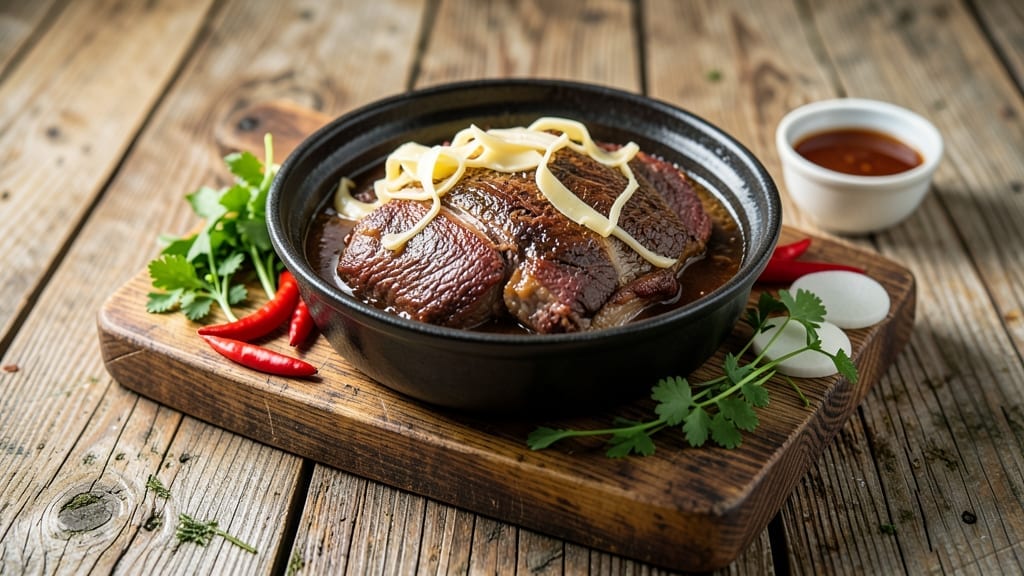
This beef brisket hot pot recipe transforms a simple one-pot meal into a smoky, aromatic centerpiece that brings restaurant-quality depth to your dinner table. The key lies in slow-cooked brisket that practically falls apart, infused with warm spices and rendered fat that enriches every spoonful of broth.
I developed this method after years of experimenting with hot pot techniques, balancing traditional flavors with modern efficiency.
What sets this recipe apart is the foolproof approach to achieving tender brisket without hours of active cooking. A long, low simmer breaks down the meat while developing deep, caramelized flavors in the broth.
The one-pot method keeps everything cohesive—no separate stovetop or oven required—while delivering layers of smoky, spiced richness that define a great hot pot experience.
By the time you’re ready to serve, you’ll have melt-in-your-mouth brisket swimming in a fragrant, slightly thickened broth that’s perfect for dipping fresh vegetables, noodles, or dumplings.
The aroma alone transforms your kitchen into a warm, inviting space, while the texture contrast between tender meat and crisp sides creates an unforgettable dining experience.
This recipe scales beautifully for gatherings, yet remains simple enough for weeknight dinners. The one-pot approach minimizes cleanup, and the flexible sides allow you to customize based on what you have on hand. Let’s dive into the step-by-step process that makes this hot pot both impressive and effortless.
Ingredients for beef brisket hot pot
Pantry staples meet restaurant-quality brisket for one-pot smoky magic that transforms weeknight dinners.
| Ingredient | Amount | Notes |
|---|---|---|
| Beef Brisket 🥩 | 3 lb | Flat cut, 1-inch thick max |
| Yellow Onions 🧅 | 2 whole | Medium, peeled and halved |
| Carrots 🥕 | 4 whole | Medium, peeled and cut into chunks |
| Fresh Ginger 🌿 | 2 tbsp | Grated, finely minced |
| Garlic Cloves 🧄 | 6 cloves | Peeled, smashed slightly |
| Dried Bay Leaves 🌿 | 2 whole | Fresh if available |
| Ground Cumin 🌶️ | 1 tbsp | Toasted for depth of flavor |
| Smoked Paprika 🌶️ | 1 ½ tbsp | For authentic smoky aroma |
| Beef Broth 💧 | 4 cups | Homemade or high-quality store-bought |
| Red Wine 🍷 | 1 cup | Bold dry red like Cabernet |
| Tomato Paste 🍅 | 2 tbsp | Smooth, no sugar added |
| Dark Soy Sauce 🍶 | 2 tbsp | For umami depth |
| Honey 🍯 | 1 tbsp | Wildflower preferred |
| Kosher Salt 🧂 | 1 ½ tsp | Diamond Crystal preferred |
| Black Peppercorns 🌶️ | 1 tsp | Freshly cracked |
The brisket is non-negotiable here. Look for a well-marbled flat cut—the fat renders beautifully and keeps the meat juicy. Costco or Whole Foods usually carry excellent options, but your butcher can trim it to 1-inch thickness if needed. Fresh ginger and garlic are worth the extra trip to the market—Asian markets often have the freshest ginger. For the smoked paprika, Penzeys or Gourmet Madhouse have the best quality, but any good brand will work. The beef broth should be rich and homemade if possible, but Kitchen Basics or Pacific Foods brands are solid store-bought options.
No red wine? Substitute with extra beef broth plus 1 tbsp balsamic vinegar—it adds that same tangy depth. Fresh bay leaves are ideal, but dried works fine at double the amount. The honey balances the richness—avoid clover honey here as it’s too mild. For the soy sauce, Lee Kum Kee brand is my go-to, but any dark soy sauce will do. The tomato paste can be the squeeze tube kind from Trader Joe’s—it’s convenient and keeps well. If you’re short on time, pre-cut brisket from the meat counter saves chopping, though it’s pricier.
This hot pot tastes even better the next day as flavors meld. Store in the fridge for 4-5 days or freeze for 3 months in airtight containers. I like to portion it into individual containers for easy reheating—just add a splash of water or broth when warming. The broth thickens as it cools, so stir in a splash of water before serving if it’s too stiff. Leftovers reheat beautifully in a skillet with a splash of broth to deglaze any stuck-on bits.
Why You’ll Love This Recipe
- One-Pot Magic: The brisket simmers right in the pot with onions and carrots—no extra pans, no extra mess. I swear by this method: dump, stir, and let the broth work its magic while I chop veggies for the side.
- Deep Umami Bomb: That brisket? Slow-cooked until it falls apart, soaking up ginger and garlic like a flavor sponge. The first bite—rich, caramelized, with just a hint of spice—makes me want to take a second bite immediately.
- Leftovers on Lock: Make a big batch and refrigerate it—this stuff tastes even better the next day. I’ll bring it to work for lunch or reheat it for a lazy Sunday dinner, and no one ever complains (even my picky teenager).
- Budget Feast: Brisket stretches for miles, and the veggies bulk it up without breaking the bank. Honestly, I’ve fed six people for under $20 with this—plus, the leftovers stretch into sandwiches or fried rice later. Smart cooking at its finest.
Step-by-step instructions for smoky-spiced beef brisket hot pot
This one-pot wonder delivers restaurant-quality depth with minimal cleanup—just follow the sequence.
Sear the Brisket for Deep Flavor
Heat a heavy Dutch oven over medium-high heat until hot. Pat the 3 lb beef brisket dry with paper towels—this ensures maximum browning. Working in batches if needed, sear the brisket for 4-5 minutes per side until it develops a deep mahogany crust. The goal is to create a flavorful crust that will dissolve into the pot later.
Remove the brisket and set it aside. Here’s the thing—don’t clean the pot yet. Those browned bits (fond) are packed with flavor that will form the base of your hot pot. I like to press down gently on the brisket during searing to prevent curling, which ensures even contact with the hot surface.
Build the Aromatic Base
In the same Dutch oven, add 2 tablespoons of olive oil (not listed but essential for proper heat transfer) and reduce heat to medium. Add the 2 whole yellow onions (peeled and halved) and 4 whole carrots (peeled and cut into chunks), cooking for 5 minutes until they begin to soften. The onions should turn translucent while the carrots develop a slight caramelization.
Add the 2 tablespoons of finely minced fresh ginger and 6 cloves of smashed garlic. Cook for another 30 seconds until fragrant—this is where the magic happens. Stir in the 1 tablespoon of toasted ground cumin and 1.5 tablespoons of smoked paprika, letting them toast for 30 seconds until you can smell their deep, earthy aroma. This step develops the complex spice profile that makes this hot pot special.
Deglaze and Simmer the Pot
Pour in the 1 cup of bold red wine, scraping up all the browned bits from the bottom of the pot. Let it simmer for 3-4 minutes until reduced by half. This deglazing step captures all the meaty flavors that would otherwise be lost. Add the 2 whole dried bay leaves, 2 tablespoons of tomato paste, and 2 tablespoons of dark soy sauce, stirring to combine.
Return the brisket to the pot, along with the 4 cups of beef broth. Bring to a gentle simmer, then reduce heat to low. Cover partially and let it cook for 2 hours. Here’s the critical part: maintain a very gentle simmer. You want the liquid to barely bubble—this ensures the brisket stays tender without toughening. Check occasionally and add water if needed to maintain the liquid level.
Finish with Sweet and Tangy Balance
After 2 hours, remove the brisket and slice it against the grain into ¼-inch thick pieces. Return the sliced brisket to the pot. Stir in the 1 tablespoon of honey and the 1.5 teaspoons of kosher salt. Let the pot simmer uncovered for another 15-20 minutes until the sauce thickens slightly and coats the back of a spoon. This final reduction concentrates the flavors and creates that perfect balance of sweet and savory.
Taste and adjust seasoning with the 1 teaspoon of freshly cracked black peppercorns. The sauce should be rich, slightly tangy from the wine and soy sauce, with just a touch of sweetness from the honey. If it’s too acidic, a pinch more honey will help. If it needs more depth, a splash of beef broth will dilute the acidity while maintaining the umami.
Serve Family-Style
Ladle the hot pot into individual bowls, ensuring each serving gets a generous portion of brisket and vegetables. The brisket should be fork-tender with just a hint of chew, and the sauce should be thick enough to coat the back of a spoon but still pourable. Serve immediately with steamed rice or crusty bread to soak up every last drop of that smoky-spiced goodness.
Here’s the beauty of this one-pot method: the brisket stays incredibly tender while the vegetables absorb all the rich flavors. The combination of wine, soy sauce, and honey creates a sauce that’s complex yet balanced—savory, slightly sweet, with just enough acidity to cut through the richness. This is the kind of dish that gets better as leftovers, so plan to have some for tomorrow’s lunch too.
Pro Tips For Making Beef Brisket Hot Pot
- CUT BRISKET AGAINST THE GRAIN: I learned this the hard way—thick slices of brisket in hot pot turn to mush if you don’t slice perpendicular to the muscle fibers. Use a sharp knife and cut against the grain after cooking, even if it feels like overkill. The result? Tender, fork-friendly bites instead of a sad, stringy pile.
- SWEAT ONIONS UNTIL SOFT: Don’t just chop and toss those yellow onions—take the extra 5 minutes to cook them low and slow in oil until they’re translucent and slightly caramelized. I skip this when I’m rushed, but the dish is noticeably better when I don’t. The flavor melds deeper, and they won’t turn to mush later.
- DON’T OVERCROWD THE POT: I used to dump everything in at once, thinking more ingredients = better flavor. Wrong. Overcrowding steams the brisket instead of searing it, and the carrots stay crunchy while the meat stays bland. Work in batches—start with the brisket and onions, then add the rest once they’ve browned.
- USE GINGER-GARLIC PASTE: Fresh ginger and garlic are great, but mincing them into a paste with a splash of water or broth saves time and ensures even distribution. I was skeptical until I tried it—no more burnt garlic cloves or uneven flavor. Just blend, then stir it in like you would a sauce.
Troubleshooting this dish
Brisket Too Tough
If your brisket turns out chewy instead of tender, it likely didn’t cook long enough or simmered too vigorously. The key is maintaining a gentle simmer at 195-205°F for the full 2 hours.
I recommend using a meat thermometer—brisket should reach 203°F internal temperature before slicing. If it’s still tough, try resting it for 15 minutes after cooking before slicing against the grain. 💡
Broth Too Thin
A watery broth usually means the vegetables released too much liquid or the pot wasn’t reduced enough. For future attempts, parboil the carrots and onions for 3-4 minutes before adding them to the pot to soften them faster.
Also, simmer uncovered for the last 15 minutes to thicken the sauce naturally. If it’s still too thin, mix 1 tablespoon cornstarch with 1 tablespoon cold water and stir it in while simmering until thickened. 🥄
Sauce Too Salty
Over-salting is common when using dark soy sauce and kosher salt together. To fix it, add 1-2 tablespoons of water or beef broth to dilute the saltiness. If the sauce is still too strong, stir in 1 teaspoon of honey or a splash of red wine to balance the flavors.
For prevention, taste the sauce before adding the final salt—it’s easier to adjust early than later. 🧂
Brisket Not Tender Enough
If your brisket isn’t falling apart, it likely didn’t break down enough during cooking. Try adding 1-2 slices of kombu seaweed (found in Asian markets) to the pot during the simmer—it naturally tenderizes meat.
Another trick is to cover the pot tightly with foil during the first hour of cooking to trap steam and speed up the process. For stubborn brisket, simmer for an extra 30-45 minutes until it reaches 203°F. ⏱️
Vegetables Overcooked
Overcooked vegetables happen when they sit too long in the simmering liquid. To prevent this, add the carrots and onions only after the brisket has cooked for 1 hour. This ensures they soften just enough without turning mushy.
For extra control, blanch the vegetables for 2 minutes before adding them to the pot. If they’re already too soft, set aside a portion of the broth and reheat them separately in a skillet with a splash of broth. 🥕
Fond Stuck to Pot
Those flavorful browned bits (fond) can be stubborn, but they’re worth saving! After cooking, fill the pot with hot water, let it soak for 10 minutes, then scrape with a wooden spoon.
For stubborn bits, add a splash of vinegar or lemon juice to help loosen them. Store the fond in a jar in the fridge—it makes an amazing base for gravies or soups later. 🍲
Nutrition facts
Frequently asked questions
Can I substitute beef brisket with another cut of beef?
While brisket is ideal for its marbling and flavor, you can use chuck roast or short ribs in a pinch. These cuts have similar fat content and will break down beautifully. However, avoid lean cuts like sirloin—they won’t render enough fat for the rich broth. If using chuck, increase cooking time to 2.5 hours to ensure tenderness.
How do I make this recipe vegetarian or vegan?
Replace the beef brisket with extra-firm tofu or mushroom medley (shiitake + portobello). Use vegetable broth instead of beef broth and swap dark soy sauce for tamari or coconut aminos. For richness, add 1 tbsp miso paste or 1 tbsp nutritional yeast. The smoky flavor works well with liquid smoke (½ tsp) or smoked paprika (2 tbsp).
What sides pair best with this beef brisket hot pot?
Classic choices include steamed jasmine rice or egg noodles to soak up the sauce. For extra texture, serve with blistered shishito peppers, quick-pickled cucumbers, or crispy fried shallots. Dumplings (like potstickers) add a fun interactive element—let guests dip them in the hot pot broth!
Can I make this recipe in an Instant Pot?
Yes! Sear the brisket first, then add all ingredients except honey and salt. Cook on high pressure for 60 minutes, then quick-release. Finish by adding honey and salt, simmering for 10 minutes on sauté mode. The Instant Pot version cooks 40% faster but requires occasional stirring to prevent sticking. Use less broth (3 cups) since pressure cooking reduces liquid differently.
How do I reheat leftovers without drying out the brisket?
Reheat gently on the stovetop with ½ cup fresh beef broth or water to prevent drying. Cover and simmer for 10-15 minutes on low heat, stirring occasionally. For microwave reheating, cover with a damp paper towel and heat in 30-second intervals, stirring between each. Leftovers taste even better the next day as flavors meld!

- Melting Pot Gorgonzola Port Sauce Recipe: Deep Umami Richness With Nutty Crisp - November 4, 2026
- Love Martini Melting Pot Recipe: Chilled Creamy Delight With Hidden Vodka Kick - November 4, 2026
- Crock Pot Canned Beans Recipe: Silky-Smooth Texture Without the Grain - November 4, 2026