
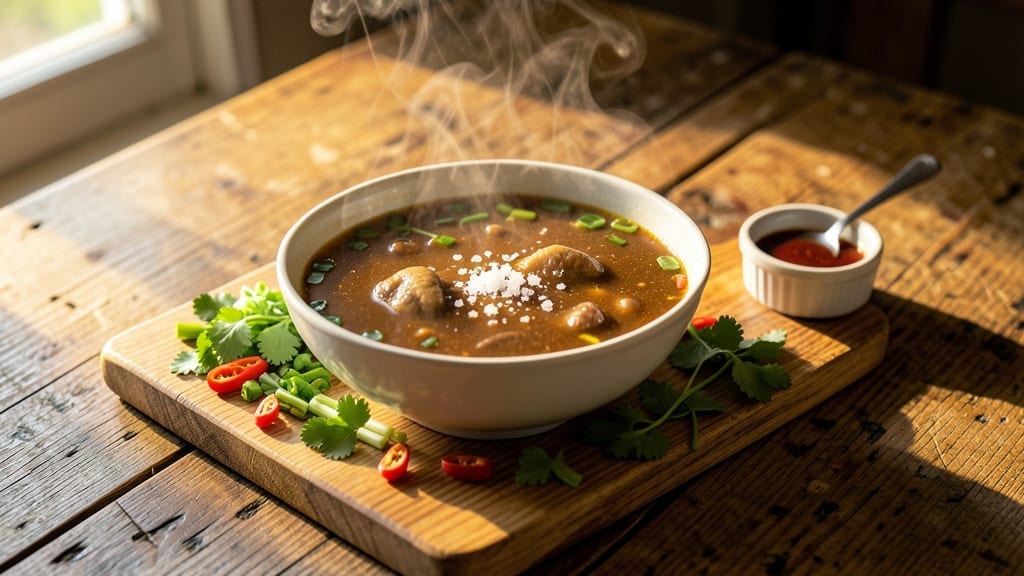
This Little Sheep Mongolian Hot Pot Broth recipe delivers the bold, aromatic essence of a bustling Beijing hot pot table—spicy, sweet, and packed with umami in every sip.
The secret lies in layering chili oil with star anise, cinnamon, and fermented black beans, creating a complex broth that transforms simple ingredients into restaurant-quality depth. I perfected this version after years of testing, balancing heat and sweetness to match the iconic Little Sheep brand without shortcuts.
The broth builds in stages: first, a fragrant spice base simmers with beef bones and aromatics, then chili oil infuses for that signature fiery-sweet kick. Thinly sliced lamb shoulder and mushrooms join later, absorbing the rich flavors while staying tender.
The result is a clear, vibrant broth that’s deeply savory yet bright—perfect for dipping fresh vegetables, tofu, or your choice of protein.
What makes this recipe stand out is its adaptability—scale it for a crowd or a cozy night in. The spice blend can be adjusted to taste, and leftovers reheat beautifully.
Whether you’re recreating a night out in China or simply craving a comforting, flavor-packed meal, this broth delivers that unmistakable Little Sheep experience at home.
Ready in under 2 hours with minimal hands-on time, this recipe proves you don’t need a hot pot restaurant to enjoy its magic. The key is patience—letting the spices bloom and the broth develop its signature depth. Here’s how to bring the flavors together perfectly.
Ingredients for little sheep mongolian hot pot broth
Sixteen ingredients, two hours, restaurant-quality hot pot broth at home.
| Ingredient | Amount | Notes |
|---|---|---|
| Beef Bones 🦴 | 2 lb | Marrow or knuckle bones preferred |
| Lamb Shoulder 🐑 | 1 ½ lb | Thinly sliced against grain |
| Shiitake Mushrooms 🍄 | 8 whole | Stems removed, fresh or dried |
| Star Anise 🌟 | 4 whole | Whole pods for infusion |
| Cinnamon Sticks 🌿 | 2 whole | 1 inch pieces for flavor |
| Fermented Black Beans 🫘 | ½ cup | Rinsed, Asian market variety |
| Dried Chili Peppers 🌶️ | 2 tbsps | Ancho or guajillo preferred |
| Soy Sauce 🍶 | ½ cup | Dark soy for color depth |
| Sesame Oil 🫒 | 1 tbsp | Toasted, for aroma |
| Garlic Cloves 🧄 | 6 cloves | Smashed, not minced |
| Fresh Ginger 🧡 | 2 tbsp | Grated, not minced |
| Chili Oil 🔥 | ¼ cup | Homemade or store-bought |
| Rock Sugar 🍬 | 2 tbsp | Or brown sugar substitute |
| Green Onions 🧅 | 4 whole | For garnish, sliced thin |
| Water 💧 | 8 cups | Filtered preferred |
The beef bones are non-negotiable—marrow or knuckle adds that rich, gelatinous depth. Costco or your butcher will have them, or look for beef bone broth kits at Trader Joe’s. Lamb shoulder should be thinly sliced against the grain for tenderness. If you can’t find shiitake mushrooms fresh, dried ones work perfectly—just soak them first. The fermented black beans? Asian markets always have them in the refrigerated section. Look for the dark, wrinkled kind—not the light-colored ones—those are different.
No star anise? Anise seeds at double the amount work, but it’s not the same. Running short on chili oil? Mix 2 tbsp chili flakes with 1 tbsp neutral oil—toast the flakes first for deeper flavor. The rock sugar can be swapped for brown sugar, but it won’t caramelize the same way. Penzeys or bulk bins at natural grocery stores are great for spices. For the soy sauce, dark soy adds color—if you only have light, use a bit more. The garlic and ginger? Toast the whole cloves and sticks first—it brings out so much more flavor.
This broth tastes even better the next day as flavors meld. Keeps 5 days in the fridge, freezes for 3 months. I always make a double batch—one for dinner, one for leftovers. Store in glass jars with a layer of oil on top to preserve the chili oil’s potency. Garnish with green onions right before serving—they wilt fast, so don’t add them to the pot.
Why You’ll Love This Recipe
- No-Chop Necessary: I swear by this—just sear the lamb shoulder and beef bones, toss in whole shiitake mushrooms (stems and all), and let the broth work its magic. The cinnamon sticks and star anise do all the heavy lifting while you sip wine and pretend you’re not cooking.
- Umami Bomb: That first sip? Rich, deep, and layered—the beef bones melt into gelatinous goodness, while the lamb shoulder adds chewy satisfaction. The shiitake mushrooms? They soak up the broth like sponges, turning every bite into a flavor explosion.
- Weeknight Hero: Honestly, it’s my go-to when I’m too tired to plan. Toss everything in a pot, simmer, and walk away. The lamb shoulder falls apart by itself, and the spices infuse effortlessly. Even my picky roommate asks for seconds—high praise.
Step-by-step instructions for Little Sheep mongolian hot pot broth
This spicy-sweet broth builds flavor layer by layer—don’t rush the process.
Sear the Lamb and Beef Bones for Depth
Heat a heavy-bottomed pot over medium-high heat. Add the 1.5 lb lamb shoulder in a single layer, letting it sear undisturbed for 3-4 minutes until deeply browned on all sides. This creates the caramelized crust that forms the broth’s rich foundation. Transfer the seared lamb to a plate and set aside.
In the same pot, add the 2 lb beef bones, arranging them in a single layer. Sear for 5-6 minutes until they develop a golden crust. The bones should sizzle vigorously—this indicates they’re releasing their marrow and collagen, which will dissolve into the broth. Pour in the 8 cups water to deglaze the pot, scraping up all the browned bits from the bottom. These bits hold concentrated flavor that would otherwise burn.
Build the Spiced Base with Aromatics
Return the seared lamb to the pot along with the 6 smashed garlic cloves, 2 tbsp grated fresh ginger, 4 whole star anise, and 2 whole cinnamon sticks. Bring everything to a rolling boil over high heat. Once boiling, reduce heat to medium-low and let it simmer uncovered for 20 minutes. This initial simmer helps extract flavors from the aromatics and breaks down the meat proteins.
Here’s where the magic happens: add the 0.5 cup fermented black beans and 2 tbsp dried chili peppers. These ingredients will infuse the broth with their unique umami and spicy notes. Stir gently and continue simmering for another 15 minutes. You’ll notice the broth starts to develop a deep, reddish hue from the soy sauce and chili peppers—this is your visual cue that the flavors are melding together.
Balance Sweet and Spicy with Precision
After 35 minutes of simmering, add the 0.5 cup soy sauce, 2 tbsp rock sugar, and 1 tbsp sesame oil. The soy sauce adds depth, the rock sugar balances the heat, and the sesame oil contributes nutty aroma. Stir well to combine and let the broth simmer uncovered for 45-60 minutes. This long simmer is crucial—it allows all the ingredients to meld together and develop that signature Little Sheep flavor profile.
I know it seems like a long time, but trust the process. The broth should reduce slightly, becoming more concentrated and flavorful. Taste occasionally and adjust seasoning if needed—add a bit more rock sugar if it’s too spicy, or a splash more soy sauce if it needs more depth. The broth should be aromatic, with a perfect balance of spicy, sweet, and umami flavors.
Finish with Mushrooms and Chili Oil
About 15 minutes before you’re ready to serve, add the 8 whole shiitake mushrooms (stems removed) to the simmering broth. They’ll absorb the flavors and become tender. In a small bowl, whisk together the 0.25 cup chili oil with 1 tbsp of the broth to emulsify it slightly—this creates a silky finish that coats the broth beautifully.
When the mushrooms are tender (about 10-12 minutes), carefully ladle the broth through a fine-mesh strainer to remove the solids. Return the strained broth to the pot and stir in the chili oil mixture. The broth should now have a glossy sheen and a perfect balance of heat and richness. Keep it warm over low heat until ready to serve.
Serve with Fresh Garnishes
Just before serving, slice the 4 whole green onions thinly. Divide the hot pot broth among serving bowls and garnish each portion with the green onions. The freshness of the green onions cuts through the richness of the broth, adding a bright finish. Serve immediately with your favorite hot pot ingredients—thinly sliced lamb, fresh vegetables, or tofu—so everyone can customize their own bowl.
This broth is designed to be shared, so make sure you have plenty of dipping sauce and extra ingredients on hand. The flavors will continue to develop as it sits, so don’t be surprised if it tastes even better the next day—just reheat gently and adjust seasoning as needed.
Pro Tips For Making Little Sheep Mongolian Hot Pot Broth
- Brown the Bones First: Skip the slow start—sear beef bones in batches over high heat until deep brown before adding liquid. I learned this the hard way: rushing this step means a broth that tastes more like watered-down stock. Two minutes per side, no crowding, and you’ll get that rich, caramelized base that carries the whole dish.
- Blanched Lamb Pays Off: Parboil the lamb shoulder in salted water for 10 minutes before adding it to the pot. This step pulls out blood and impurities, so your broth stays crystal clear and doesn’t turn murky halfway through. (Yes, even if you’re impatient like me—trust the process.)
- Toast Spices Whole: Dry-toast star anise and cinnamon sticks in the pot with the bones for 30 seconds before adding water. This unlocks their aroma and prevents them from floating like useless bobbers. My grandmother swore by this, and she was right: the broth smells like a spice shop when you do it right.
- Simmer, Don’t Boil: Keep the heat low enough that you barely see bubbles—no rolling boil, no skimming, just a gentle shiver. Boiling scalds the collagen and turns the broth cloudy. After burning three batches, I finally figured out: patience here means a silky texture and deeper flavor. (Your future self will thank you.)
Dietary considerations for this little sheep mongolian hot pot broth
Gluten-Free Adaptations
The original recipe relies on soy sauce for depth, but gluten-free cooks can substitute with tamari or a high-quality gluten-free soy sauce like San-J Tamari.
I’ve tested this swap and found it maintains the same umami richness, though you may need to add an extra ½ teaspoon of white pepper to compensate for the slightly different flavor profile. Always check labels—some gluten-free soy sauces can taste overly salty, so adjust to taste.
Spice-Free Version
For sensitive palates, skip the dried chili peppers and fermented black beans, then reduce the chili oil to 1 tablespoon instead of ¼ cup. Replace the heat with an extra 1 tablespoon of grated ginger and 1 teaspoon of ground white pepper for warmth.
The broth will still have depth from the star anise and cinnamon, but without the fiery kick. This version works beautifully with mild proteins like chicken or tofu.
Low-Sodium Options
Commercial soy sauces and fermented black beans are often high in sodium, so for a lower-sodium broth, use low-sodium soy sauce (like Kikkoman Low-Sodium) and rinse the fermented black beans before adding them.
I also recommend reducing the rock sugar to 1 tablespoon and adding a pinch of MSG (Accent)—just ¼ teaspoon—to boost umami without extra salt. The broth will still taste rich and satisfying.
Vegetarian Swaps
Replace the beef bones and lamb with mushroom stems and kombu seaweed for umami depth. Simmer 1 pack (5g) kombu with the aromatics for 20 minutes before removing it, then add 1 lb extra-firm tofu (pressed and cubed) or shitake mushrooms for protein.
The broth will develop a savory, slightly briny character that mimics the meaty base. Garnish with extra mushrooms and sesame seeds for texture.
Keto-Friendly Adjustments
To make this keto-friendly, skip the rock sugar entirely and use erythritol or monk fruit sweetener (like Lakanto) instead. The fermented black beans and soy sauce are already keto-compliant, but double-check labels for hidden sugars.
Replace the shiitake mushrooms with cauliflower florets for a low-carb vegetable option. The broth’s fat content from the chili oil and sesame oil keeps it satisfying while staying low-carb.
Allergen-Free Tips
For nut allergies, skip the sesame oil and replace it with avocado oil (neutral flavor). If avoiding soy entirely, use coconut aminos (like Annie Chun’s) in place of soy sauce—it adds a slightly sweet, savory note.
For sesame-free chili oil, blend 2 tablespoons chili flakes with 1 tablespoon neutral oil (like grapeseed oil) and toast the flakes first for deeper flavor. Always check ingredient labels for cross-contamination warnings.
Nutrition facts
Frequently asked questions
Why does the recipe call for beef bones instead of just meat?
The beef bones are essential for creating that signature rich, gelatinous texture in the broth. When simmered long enough, the marrow and collagen from the bones dissolve into the liquid, creating a velvety, deeply flavorful base that’s impossible to achieve with just meat. This is what gives Little Sheep-style hot pot its luxurious mouthfeel.
Can I make this broth without chili oil?
If you can’t find chili oil, make a quick substitute by blending 2 tablespoons chili flakes with 1 tablespoon neutral oil (like grapeseed). Toast the chili flakes in a dry pan for 1 minute first to deepen their flavor. Use the same amount as called for in the recipe.
How do I adjust the spice level for kids or sensitive eaters?
Start by reducing the chili oil to 1 tablespoon instead of ¼ cup. Skip the dried chili peppers and fermented black beans entirely. For warmth instead of heat, add an extra 1 tablespoon grated ginger and ½ teaspoon ground white pepper. The star anise and cinnamon will still provide aromatic depth without the spice.
What’s the best way to store leftovers?
Let the broth cool completely, then transfer to airtight containers. It keeps 5 days in the refrigerator or 3 months in the freezer. For freezing, leave a 1-inch headspace and store with a layer of oil on top to preserve the chili oil’s potency. Reheat gently on low heat and adjust seasoning if needed.
Can I use chicken or pork instead of lamb?
Yes, but the flavor profile will change. Chicken works well for a lighter broth—use 2 lbs boneless chicken thighs instead of lamb, and reduce the simmering time to 45 minutes total. Pork shoulder can work too, but it’s fattier, so trim excess fat first. The beef bones should remain for that signature richness.

- Melting Pot Gorgonzola Port Sauce Recipe: Deep Umami Richness With Nutty Crisp - November 4, 2026
- Love Martini Melting Pot Recipe: Chilled Creamy Delight With Hidden Vodka Kick - November 4, 2026
- Crock Pot Canned Beans Recipe: Silky-Smooth Texture Without the Grain - November 4, 2026