
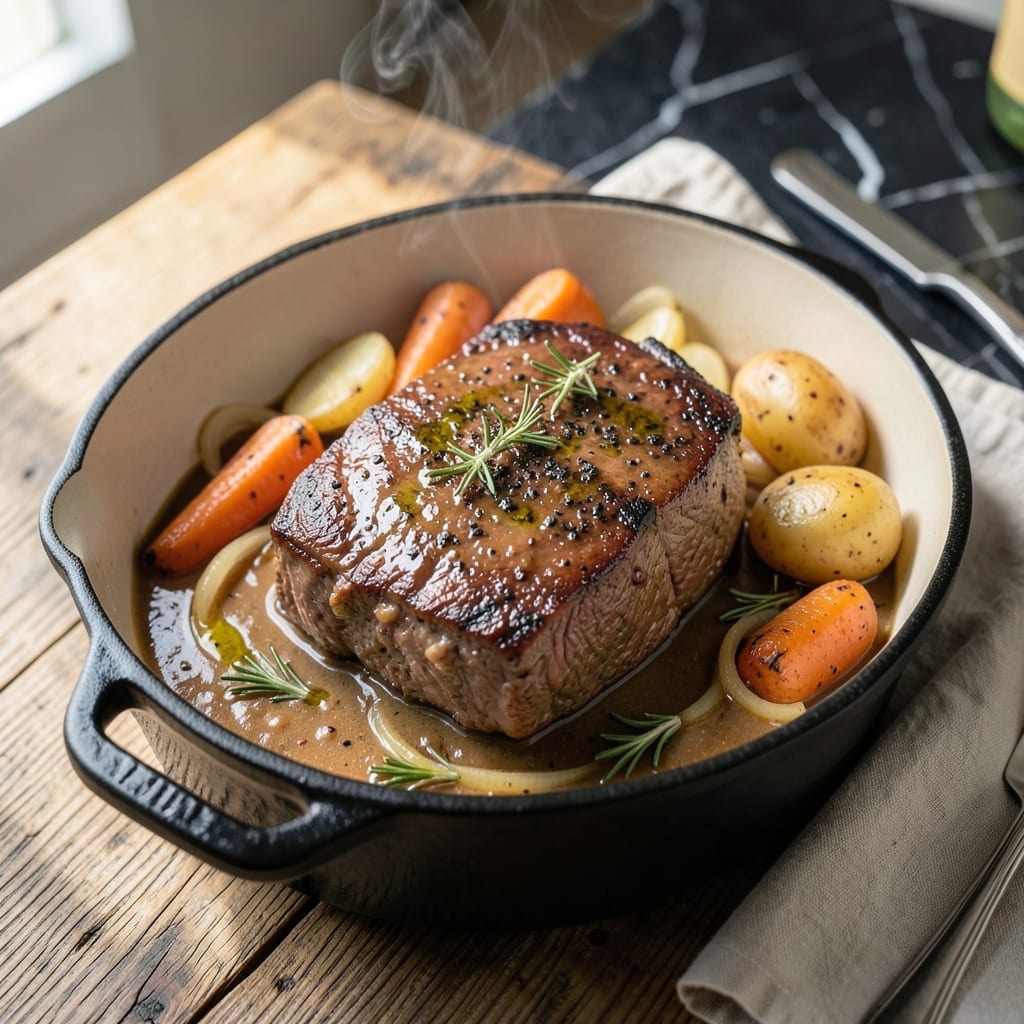
There’s nothing like a tender beef chuck pot roast slow-braised to perfection in a Dutch oven. This method transforms a humble cut into a melt-in-your-mouth centerpiece worthy of any dinner table.
The secret lies in patient cooking—low heat and plenty of time allow the connective tissue to break down into rich, velvety tenderness. A flavorful braising liquid ensures every bite is infused with deep, savory notes.
With simple ingredients and a hands-off approach, this dish delivers restaurant-quality results at home. The aroma alone signals a meal that’s both comforting and impressive.
Pair with mashed potatoes or crusty bread to soak up every last drop of the rich, savory juices. Here’s how to achieve it.
Ingredients for Beef Chuck Pot Roast
Transform a humble cut into a melt-in-your-mouth masterpiece with these carefully selected ingredients.
| Ingredient | Amount | Notes |
|---|---|---|
| Beef Chuck Roast 🥩 | 3 lb | Well-marbled, trimmed of excess fat |
| Kosher Salt 🧂 | 2 tsp | Diamond Crystal preferred for even seasoning |
| Black Pepper 🌶️ | 1 tsp | Freshly ground for optimal flavor |
| Olive Oil 🫒 | 2 tbsp | Extra-virgin for high-heat searing |
| Yellow Onion 🧅 | 1 whole | Large, diced into 1-inch pieces |
| Carrots 🥕 | 3 whole | Peeled, cut into 2-inch chunks |
| Celery Stalks 🥬 | 3 whole | Cut into 2-inch pieces |
| Garlic Cloves 🧄 | 4 cloves | Smashed for robust flavor |
| Dry Red Wine 🍷 | 1 cup | Bold variety like Cabernet Sauvignon |
| Beef Stock 🥘 | 2 cups | Low-sodium preferred for control |
| Tomato Paste 🍅 | 2 tbsp | Concentrated for depth of flavor |
| Fresh Thyme Sprigs 🌿 | 3 whole | Plus extra for garnish |
| Bay Leaf 🍃 | 1 whole | Dried, for aromatic braising liquid |
| All-Purpose Flour 🌾 | 2 tbsp | For thickening braising liquid |
| Water 💧 | 1 cup | For deglazing and adjustment |
The beef chuck roast is non-negotiable—look for generous marbling (those white fat streaks) at your butcher or Whole Foods meat counter. A well-marbled 3-pound roast from Costco works beautifully for larger gatherings. The wine should be bold and dry; avoid cooking wines with added salt. Fresh thyme from the produce section outperforms dried, though dried works in a pinch at half the quantity.
No red wine? Substitute with additional beef stock plus 1 tbsp balsamic vinegar for acidity. Out of celery? Extra carrots add sweetness, though the flavor profile shifts slightly. For a gluten-free version, cornstarch or arrowroot replaces the flour for thickening (use 1 tbsp). The tomato paste can be swapped with sun-dried tomato paste for a more concentrated flavor.
Store the raw roast in the coldest part of your fridge for up to 3 days before cooking. Leftovers keep 4-5 days refrigerated or 3 months frozen. The braising liquid solidifies when chilled—perfect for skimming off excess fat before reheating.
Why You’ll Love This Recipe
- Set and Forget: I toss the chuck roast in with salt, pepper, and onions, then let the oven do all the work for hours.
- Rich and Tender: The beef breaks apart with a fork, soaking up all that caramelized onion and olive oil goodness.
- Feeds a Crowd: One pot, one meal, and it’s filling enough for Sunday dinner with leftovers for sandwiches.
- Budget Stretch: Chuck roast is cheap but tastes like a million bucks after slow cooking with just a few pantry staples.
Step-by-Step Instructions for Beef Chuck Pot Roast
Master the technique for fall-apart tender beef with deep, complex flavors developed through proper browning and braising.
Step 1: Season and Sear the Beef Chuck Roast
Pat the beef chuck roast dry with paper towels to ensure proper browning. Season all sides generously with the kosher salt and black pepper, pressing the seasoning into the meat so it adheres well during searing.
Heat the olive oil in a Dutch oven over medium-high heat until it shimmers but doesn’t smoke. Add the beef chuck roast and sear for 4-5 minutes per side until a deep, rich brown crust forms. This step is crucial for developing the Maillard reaction that creates complex flavors in the finished dish. Don’t rush this process—wait until the meat releases easily from the pot before turning.
Step 2: Sauté the Aromatic Vegetables
Remove the beef chuck roast and set it aside. In the same Dutch oven, add the diced yellow onion, carrots, and celery stalks. Cook for 5-6 minutes, stirring occasionally, until the vegetables begin to soften and develop some color.
Add the garlic cloves and cook for an additional 1 minute until fragrant. Be careful not to let the garlic burn, as it can turn bitter. The vegetables should release some of their moisture, which will help deglaze the browned bits from the bottom of the pot.
Step 3: Build the Braising Liquid
Stir in the tomato paste and cook for 1-2 minutes to deepen its flavor. Sprinkle the all-purpose flour over the vegetables and stir to coat, cooking for another 1 minute to remove the raw flour taste. This creates a roux that will help thicken the braising liquid.
Pour in the dry red wine and scrape up any browned bits from the bottom of the pot. Let it simmer for 2-3 minutes until reduced by about half. Add the beef stock, water, fresh thyme sprigs, and bay leaf. The liquid should come about halfway up the beef when it’s returned to the pot.
Step 4: Braise to Fork-Tender Perfection
Return the beef chuck roast to the Dutch oven, along with any accumulated juices. The liquid should just cover the bottom third of the meat. Bring to a gentle simmer, then reduce heat to low, cover, and braise for 3-3.5 hours.
Check occasionally to ensure the liquid maintains a gentle simmer. The beef is done when it’s fork-tender and easily pulls apart with a gentle tug. The internal temperature should reach about 195-200°F for optimal tenderness. The vegetables should be soft and the braising liquid reduced to a rich, flavorful sauce.
Pro Tips For Making Beef Chuck Pot Roast
- Sear Hard First: Get your pan screaming hot before adding the chuck—2 tablespoons of olive oil, then don’t touch the meat for 3-4 minutes per side. I learned this the hard way after too many gray, steamed roasts.
- Salt Overnight: Dry-brine the roast with 1 tablespoon of kosher salt the night before. My grandmother swore by this, and she was right: it seasons deep and keeps the meat juicy.
- Skip the Cold Meat: Pull the chuck out of the fridge 45 minutes before searing. Sounds weird, but it works: cold meat seizes up and never browns right.
- Use Onion Twice: After searing, toss in rough-chopped yellow onion to soak up the fond, then use those same onions in your braising liquid. This isn’t the prettiest method, but it’s the tastiest.
Serving Suggestions for This Dish
Classic Plating Style
I love serving this dish family-style from the Dutch oven itself—it keeps the meat warm and makes for a dramatic presentation. Place the pot on a wooden board or trivet at the table. The sizzling sound as you pull apart the beef always impresses guests. 💛
Mashed Potato Base
Spoon creamy mashed potatoes onto each plate first to create a bed for the roast. I use Yukon Gold potatoes with ½ cup whole milk and 4 tbsp butter for the perfect texture. The potatoes soak up the braising liquid beautifully.
Vegetable Arrangement
The braised carrots, celery, and onions from the pot make excellent garnishes. Arrange them around the beef in a circular pattern. For extra color, I add steamed green beans or a simple pea and mint salad on the side.
Bread for Soaking
Always serve with crusty bread or dinner rolls to mop up the rich sauce. I prefer sourdough boules from my local bakery. Warm the bread for 5 minutes in a 350°F oven before serving. 🔥
Sauce Enhancement
Skim excess fat from the braising liquid and reduce it on the stovetop for 5-7 minutes if it seems thin. A sprinkle of fresh parsley or thyme on top adds a pop of color. I also like to serve horseradish cream on the side for a tangy contrast.
Nutrition Facts
Frequently Asked Questions
What’s the minimum cooking time for fall-apart tenderness?
Plan for at least 3 hours of braising at a gentle simmer. Anything less and the connective tissue won’t fully break down into that signature melt-in-your-mouth texture.
Can I make this in a slow cooker instead?
Yes! Sear the meat first, then transfer to a slow cooker with all ingredients. Cook on low for 8-10 hours or high for 5-6 hours for equivalent results.
Why is my pot roast tough?
This usually means the heat was too high or the cooking time too short. Keep the liquid at a gentle simmer, not a boil, and ensure the internal temp reaches 195-200°F.
Should I use chuck or another cut?
Chuck is ideal for its marbling and connective tissue, which transform into rich gelatin during braising. Brisket or short ribs work too, but avoid lean cuts like sirloin.

- 6 Oz Chocolate Chip Cookie Recipe: Perfectly Balanced Crispy Edges and Chewy Hearts - September 25, 2026
- 6-Inch Coffee Cake Recipe: Vanilla Bean Swirls and Buttery Streusel Topping - September 25, 2026
- 1 Hour Soup Recipe: Velvety Richness Without the Wait - September 25, 2026