
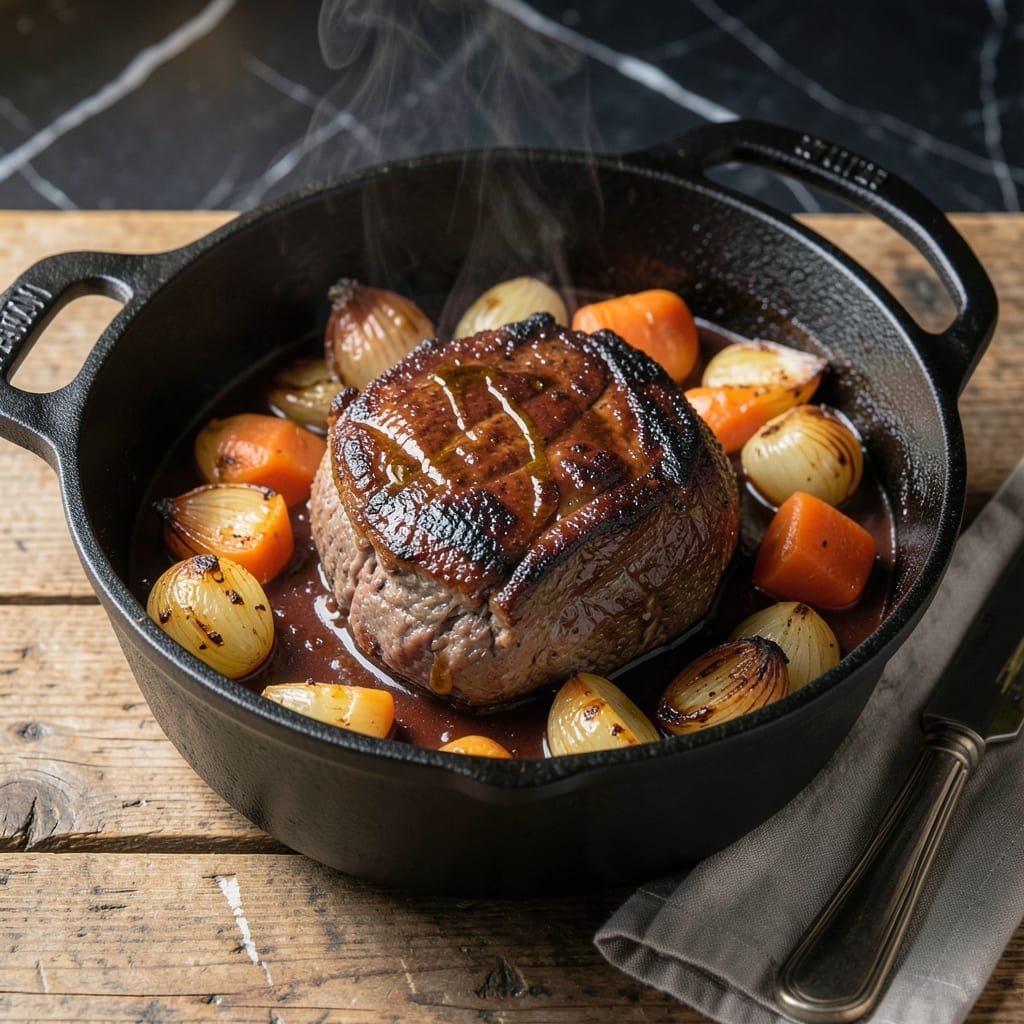
There’s a reason pot roast remains a timeless comfort food—this method transforms tough beef chuck into fall-apart tender perfection.
Using a Dutch oven allows for even heat distribution, ensuring the meat braises gently in its own juices alongside root vegetables. The low and slow approach coaxes out deep, rich flavors that shorter cooking methods simply can’t achieve.
What emerges is a dish with layers of taste: the beef becomes buttery and tender, while carrots, potatoes, and onions absorb the savory broth. The result is hearty, satisfying, and ideal for any dinner table.
This technique guarantees consistent, restaurant-quality results every time with minimal hands-on effort.
Ingredients for Beef Chuck Roast Pot Roast
A well-marbled chuck roast and humble root vegetables transform into restaurant-quality comfort food.
| Ingredient | Amount | Notes |
|---|---|---|
| Beef Chuck Roast 🥩 | 3 lb | Well-marbled, trimmed of excess fat |
| Kosher Salt 🧂 | 1 ½ tsp | Diamond Crystal preferred |
| Freshly Ground Black Pepper 🌶️ | 1 tsp | Coarse grind for texture |
| Olive Oil 🫒 | 2 tbsp | Divided for searing and sautéing |
| Yellow Onions 🧅 | 2 whole | Large, quartered through root end |
| Carrots 🥕 | 4 whole | Cut into 3-inch chunks |
| Yukon Gold Potatoes 🥔 | 1 ½ lb | Peeled, cut into large chunks |
| Garlic Cloves 🧄 | 6 cloves | Smashed, peeled |
| Fresh Thyme Sprigs 🌿 | 4 whole | Plus 1 tsp chopped for garnish |
| Fresh Rosemary Sprigs 🌿 | 2 whole | Plus 1 tsp chopped for garnish |
| Bay Leaves 🍃 | 2 whole | Dried, for braising liquid |
| Beef Stock 🥣 | 3 cups | Low-sodium preferred for control |
| Dry Red Wine 🍷 | 1 cup | Full-bodied like Cabernet Sauvignon |
| Tomato Paste 🍅 | 2 tbsp | For depth of flavor |
| Unsalted Butter 🧈 | 1 tbsp | For finishing the sauce |
The beef selection is critical here. Chuck roast with abundant marbling yields the most tender results after long braising. Costco or Whole Foods typically carry high-quality options with good fat distribution. For the best outcome, choose a roast that’s at least 1.5 inches thick—this ensures even cooking throughout. The vegetables should be fresh but not necessarily organic; vibrant color and firm texture indicate quality.
No red wine? Substitute with an additional cup of beef stock plus 1 tbsp balsamic vinegar for acidity. Fresh out of thyme? Dried thyme at one-third the amount works, though it won’t have the same aromatic presence. The tomato paste can be omitted in a pinch, but it adds a deep umami base that’s worth including. For a richer sauce, some cooks add 1 tbsp of Worcestershire sauce (contains anchovies—omit for strict vegetarian diets).
This dish tastes even better the next day after the flavors meld overnight. Store leftovers in an airtight container for up to 5 days in the refrigerator, or freeze for 3 months. The potatoes may soften further upon reheating, but the beef will remain exceptionally tender.
Why You’ll Love This Recipe
- Hands-Off Cooking: I brown the chuck roast, add onions, salt, pepper, and oil, then let the oven do the rest for hours.
- Fall-Apart Tender: The slow heat turns that tough chuck into meat that nearly melts on the tongue—no knife needed.
- Feeds My Crowd: One 4-pound roast, a few pantry staples, and I’ve got a hearty meal for six with barely any extra effort.
- Leftovers for Days: Honestly, it tastes even better the next day in sandwiches or over mashed potatoes.
Step-by-Step Instructions for Beef Chuck Roast Pot Roast
This method ensures tender beef and vegetables with rich, concentrated flavors every time.
Step 1: Season and Sear the Beef Chuck Roast
Pat the 3 lb Beef Chuck Roast completely dry with paper towels to ensure a proper sear. Season all sides aggressively with the 1.5 tsp Kosher Salt and 1 tsp Freshly Ground Black Pepper—this creates a flavorful crust and enhances the natural beef flavors.
Heat 1 tbsp Olive Oil in a Dutch oven over medium-high heat until it shimmers. Add the roast and sear for 4-5 minutes per side until deeply browned. You’ll know it’s ready to flip when it releases easily from the pot. Transfer the roast to a plate and set aside.
Step 2: Sauté Aromatics and Deglaze the Pot
Reduce heat to medium and add the remaining 1 tbsp Olive Oil to the Dutch oven. Add the 2 whole Yellow Onions, 4 whole Carrots, and 1.5 lb Yukon Gold Potatoes. Cook for 5-6 minutes, stirring occasionally, until the onions begin to soften and develop some color.
Add the 6 cloves Garlic Cloves, 2 tbsp Tomato Paste, 4 whole Fresh Thyme Sprigs, 2 whole Fresh Rosemary Sprigs, and 2 whole Bay Leaves. Stir for 1-2 minutes until the tomato paste darkens slightly and becomes fragrant. This builds the flavor base for your braising liquid.
Step 3: Deglaze and Begin Braising
Pour in the 1 cup Dry Red Wine and scrape up all the browned bits from the bottom of the pot with a wooden spoon. These fond bits are packed with flavor and will dissolve into your braising liquid. Let the wine reduce by half, about 3-4 minutes.
Return the seared roast to the pot along with any accumulated juices. Add the 3 cups Beef Stock. The liquid should come about halfway up the roast—this ensures proper braising without submerging the meat completely.
Step 4: Braise Until Fork-Tender
Bring the liquid to a simmer, then reduce heat to low to maintain a gentle simmer. Cover the Dutch oven and transfer to a preheated 325°F oven. Braise for 2.5 to 3 hours, turning the roast halfway through, until the beef is fork-tender and pulls apart easily with a gentle tug.
The vegetables should be tender but not mushy. If the braising liquid reduces too much during cooking, add a small amount of water to maintain the level. The roast is done when an instant-read thermometer inserted into the thickest part reads 195-200°F.
Step 5: Finish and Serve
Remove the pot from the oven and transfer the roast to a cutting board. Skim any excess fat from the surface of the braising liquid, then stir in the 1 tbsp Unsalted Butter to add a silky finish to the sauce. Taste and adjust seasoning if needed.
Slice the roast against the grain or pull it into large chunks. Serve the beef with the braised vegetables, spooning the rich sauce over everything. Garnish with chopped thyme and rosemary if desired.
Pro Tips For Making Beef Chuck Roast Pot Roast
- Sear It Hard: Crank the heat to medium-high and get that chuck roast deeply browned on all sides—this builds the flavor base that defines a great pot roast.
- Salt It Overnight: Rub the roast with kosher salt at least 12 hours before cooking; I learned this the hard way after my first few pot roasts came out bland.
- Don’t Rush the Onions: Cook the yellow onions until they’re soft and golden, about 8-10 minutes—skipping this step leaves them harsh and underdeveloped in the final dish.
- Use a Heavy Pot: A Dutch oven or heavy enameled pot distributes heat evenly and prevents scorching; my grandmother swore by this, and she was right.
Health Benefits of This beef chuck roast pot roast
Rich in Protein
This dish delivers a substantial protein boost—about 60 grams per serving from the beef alone. Protein is essential for muscle repair and growth, making this a satisfying meal that keeps you full for hours. The slow cooking preserves most of the beef’s natural nutrients. 💪
Iron and Zinc Powerhouse
Beef chuck roast is packed with heme iron, which your body absorbs more efficiently than plant-based iron. A single serving provides about 30% of your daily iron needs, plus zinc for immune support. This makes it a great choice for maintaining energy levels.
B Vitamin Complex
The beef in this recipe is loaded with B vitamins, particularly B12, which supports nerve function and red blood cell production. You’ll also get significant amounts of niacin and riboflavin, which help convert food into energy. These nutrients are vital for overall vitality.
Collagen Benefits
Slow cooking breaks down the collagen in chuck roast, turning it into gelatin that supports joint and skin health. The braising liquid becomes rich in these compounds, adding a nutritional boost to every bite. I notice my skin feels more hydrated when I include this dish regularly.
Root Vegetable Nutrients
The carrots and potatoes add fiber, vitamin A, and potassium to the meal. Carrots provide beta-carotene, which supports eye health, while potatoes offer a steady energy source. Together, they create a balanced, nutrient-dense dish. 🥕
Low-Carb Friendly
With most of the carbs coming from vegetables, this meal fits well into low-carb or keto diets if you reduce the potatoes. The beef provides healthy fats and protein without added sugars, making it a wholesome option for mindful eating.
Nutrition Facts
Frequently Asked Questions
How do I know when the roast is done?
Use a meat thermometer—it should read 195-200°F internally. The beef should pull apart easily with a fork.
Can I make this in a slow cooker?
Yes! Sear the beef first, then transfer everything to a slow cooker. Cook on low for 8-10 hours or high for 5-6 hours.
What if my sauce is too thin?
Remove the meat and veggies, then simmer the liquid uncovered for 10-15 minutes to reduce. Stir in 1 tbsp cornstarch mixed with water for thicker gravy.
Can I add other vegetables?
Try parsnips, mushrooms, or celery. Add heartier veggies at the start, delicate ones like peas during the last 30 minutes.

- 6 Oz Chocolate Chip Cookie Recipe: Perfectly Balanced Crispy Edges and Chewy Hearts - September 25, 2026
- 6-Inch Coffee Cake Recipe: Vanilla Bean Swirls and Buttery Streusel Topping - September 25, 2026
- 1 Hour Soup Recipe: Velvety Richness Without the Wait - September 25, 2026