
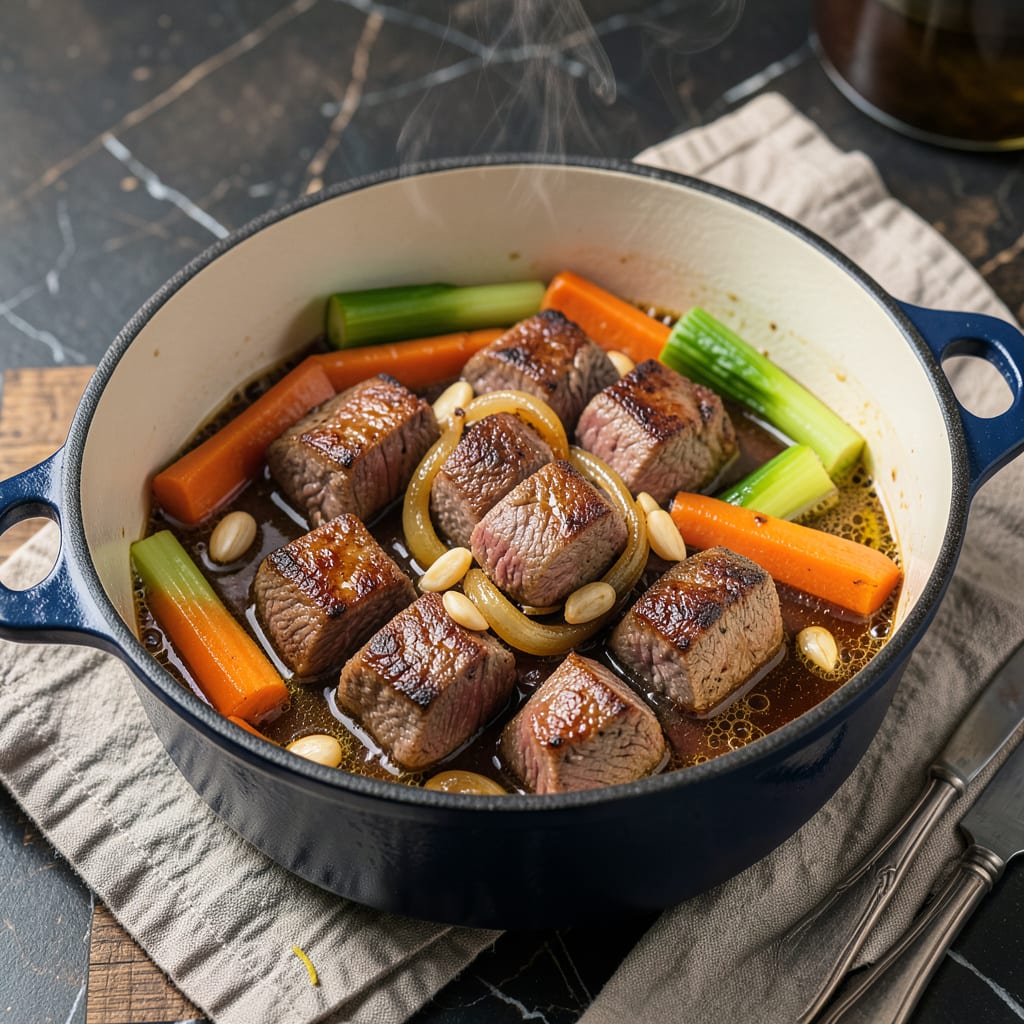
The Instant Pot transforms beef heart from a tough, underappreciated cut into a tender, flavorful centerpiece in under an hour. This method leverages pressure cooking to break down connective tissue while preserving moisture—no long braising required. The result is rich, beefy flavor with a texture closer to pot roast than traditional organ meat.
With precise timing and a simple aromatic base, you’ll achieve perfectly cooked beef heart that reaches the ideal 145°F internal temperature for safety and tenderness. High in iron and keto-friendly, this recipe makes nutritious offal approachable. Serve with roasted vegetables or mashed potatoes to balance the deep, savory notes.
Ingredients for Beef Heart Instant Pot
This recipe transforms beef heart using precise ingredients designed for optimal texture and deep, savory flavor development in pressure cooking.
| Ingredient | Amount | Notes |
|---|---|---|
| Beef Heart 🥩 | 2 lb | Trimmed of excess fat and sinew |
| Olive Oil 🫒 | 2 tbsp | Divided for searing and sautéing |
| Yellow Onion 🧅 | 1 whole | Medium, diced into 1/2-inch pieces |
| Carrots 🥕 | 2 whole | Peeled and cut into 1-inch chunks |
| Celery Stalks 🌿 | 2 whole | Cut into 1-inch pieces |
| Garlic Cloves 🧄 | 6 cloves | Minced for maximum flavor infusion |
| Tomato Paste 🍅 | 2 tbsp | High-quality for depth of flavor |
| Dry Red Wine 🍷 | ½ cup | Cabernet Sauvignon or Merlot preferred |
| Beef Broth 🥩 | 1 cup | Low-sodium for controlled seasoning |
| Bay Leaves 🌿 | 2 whole | Fresh or dried for aromatic depth |
| Fresh Thyme Sprigs 🌿 | 4 sprigs | Tied with kitchen twine for easy removal |
| Kosher Salt 🧂 | 1 ½ tsp | Diamond Crystal preferred for precision |
| Freshly Ground Black Pepper 🌶️ | 1 tsp | Coarse grind for texture |
| Unsalted Butter 🧈 | 2 tbsp | For finishing sauce enrichment |
| Fresh Parsley 🌿 | ¼ cup | Chopped, for garnish and brightness |
The beef heart requires careful selection for optimal results. Optimal quality requires fresh beef heart from a trusted butcher—look for vibrant red color with minimal odor. Professional kitchens use USDA-inspected sources, and home cooks should prioritize similar standards. The 2-pound portion specified ensures proper pressure cooking without overcrowding, which is essential for even cooking and tenderness. Trim all visible fat and sinew before cooking, as these don’t render well under pressure.
Substitutions must maintain the recipe’s structural integrity. For the red wine, beef broth with 1 tbsp balsamic vinegar provides comparable acidity. If avoiding alcohol entirely, 100% grape juice reduced by half offers depth without fermentation. The tomato paste can be replaced with sun-dried tomato purée at a 1:1 ratio, though the flavor profile will shift slightly. Fresh thyme is preferred, but dried thyme at one-third the quantity works in emergencies—add it with the liquids to prevent burning.
Storage considerations are critical for both raw and cooked components. Raw beef heart should be used within 24 hours of purchase or frozen for up to 3 months. Cooked beef heart maintains quality for 4 days refrigerated or 6 months frozen in airtight containers. The finished dish benefits from a 24-hour rest in its cooking liquid, allowing flavors to meld completely. Reheat gently in the Instant Pot using the ‘Sauté’ function to preserve texture.
Why You’ll Love This Recipe
- Dump-and-Go Magic: I love that this recipe is basically just chopping the onion, carrots, and celery—then letting the Instant Pot do the rest. The beef heart gets so tender it nearly falls apart, and I’m not stuck babysitting a stove.
- Rich Without the Fuss: Here’s what sold me—the slow-cooked flavor in a fraction of the time. The olive oil caramelizes the onions while the beef heart soaks up all that savory goodness from the veggies, no fancy techniques required.
- Meal Prep MVP: I make a big batch on Sunday, and it’s just as good reheated for lunches or tossed into tacos midweek. Honestly, it’s one of the few proteins that doesn’t dry out when stored, so leftovers actually feel like a win.
- Budget-Friendly Powerhouse: Beef heart costs a fraction of steak, but with the Instant Pot, it turns into something melt-in-your-mouth tender. I’ll be real: I’ve served this to guests who had no idea it wasn’t pricier cuts. (Yes, even on a Tuesday night.)
Instructions
This method transforms the beef heart into fall-apart tender morsels with rich, concentrated flavor in record time.
Step 1: Prepare and Sear the Beef Heart
Begin by trimming any remaining fat or sinew from the 2 lb beef heart, then cut it into 1½-inch cubes. Pat the pieces completely dry with paper towels—this ensures proper browning. Set your Instant Pot to “Sauté” mode and add 1 tbsp olive oil. When the oil shimmers, add half the beef heart in a single layer, being careful not to overcrowd the pot.
Sear the beef heart for 3-4 minutes per side until deeply browned. You’re looking for a rich, caramelized crust on all surfaces. Transfer the seared pieces to a plate and repeat with the remaining beef heart and the second 1 tbsp olive oil. This two-batch approach prevents steaming and guarantees proper browning, which is crucial for developing complex flavors in the final dish.
Step 2: Build the Aromatic Base
With the Instant Pot still on “Sauté” mode, add the yellow onion, carrots, and celery stalks. Cook for 5-6 minutes, stirring occasionally, until the onions become translucent and the vegetables begin to soften. Add the 6 cloves garlic cloves and cook for an additional 1 minute until fragrant but not browned.
Push the vegetables to one side of the pot and add the 2 tbsp tomato paste to the cleared space. Cook the tomato paste for 2 minutes, stirring constantly, until it darkens slightly and develops a brick-red color. This step intensifies the umami foundation of your dish. Deglaze the pot with the 0.5 cup dry red wine, scraping up all the browned bits from the bottom—these fond particles contain concentrated flavor that will enrich your final sauce.
Step 3: Pressure Cook to Perfect Tenderness
Return the seared beef heart to the pot along with any accumulated juices. Add the 1 cup beef broth, 2 whole bay leaves, 4 sprigs fresh thyme sprigs, 1.5 tsp kosher salt, and 1 tsp freshly ground black pepper. Stir to combine all ingredients, ensuring the beef heart is mostly submerged in the liquid.
Secure the Instant Pot lid and set the valve to “Sealing.” Cook on “High Pressure” for 35 minutes. The beef heart will transform during this time, becoming fork-tender while absorbing the complex flavors of the cooking liquid. When the cooking cycle completes, allow the pressure to release naturally for 10 minutes, then carefully switch the valve to “Venting” to release any remaining pressure.
Step 4: Finish and Reduce the Sauce
Remove the beef heart with a slotted spoon and set aside. Discard the bay leaves and thyme sprigs. Set the Instant Pot to “Sauté” mode again and bring the cooking liquid to a gentle simmer. Cook for 8-10 minutes, stirring occasionally, until the sauce reduces by about one-third and develops a slightly thicker consistency.
Whisk in the 2 tbsp unsalted butter until completely melted and incorporated. This final enrichment adds a velvety texture and glossy finish to your sauce. Return the beef heart to the pot and gently stir to coat each piece with the reduced sauce. The beef should be tender enough to cut with a spoon but still hold its shape.
Step 5: Rest and Serve
Transfer the beef heart and sauce to a serving dish. Let it rest for 5 minutes before serving—this brief pause allows the meat to reabsorb some of the juices, ensuring maximum tenderness. The sauce should cling lightly to each piece of beef heart without pooling excessively on the plate.
Garnish with the 0.25 cup fresh parsley just before serving. The bright green flecks provide a fresh contrast to the rich, deep flavors of the dish. Serve immediately with crusty bread or over mashed potatoes to soak up the luxurious sauce. Each bite should deliver tender beef heart with a perfect balance of savory, slightly sweet, and herbaceous notes.
Common Mistakes When Making This Recipe
Skipping the Trim
I know it’s tempting to skip trimming the beef heart—it’s already time-consuming enough—but those tough sinews and fat pockets won’t break down under pressure. I learned this the hard way when my first attempt had chewy bits throughout. Take the extra 10 minutes to remove all silver skin and visible fat with a sharp boning knife. 💡
Overcrowding the Pot
When searing the 1½-inch cubes, resist the urge to dump everything in at once. Overcrowding causes steaming instead of browning, which means you’ll miss out on that crucial caramelized crust. I sear in two batches with 1 tbsp olive oil each—it’s worth the extra dish. The fond you develop here builds the entire flavor foundation.
Rushing the Deglaze
After adding the 0.5 cup dry red wine, don’t just give it a quick stir and move on. Those browned bits stuck to the bottom are flavor bombs. Use a wooden spoon to scrape aggressively for at least 1 minute until the pot is completely clean. I use a flat-edged spatula for stubborn spots—this step separates good sauce from extraordinary.
Underestimating Cook Time
The 35 minutes under high pressure isn’t arbitrary—beef heart needs this exact time to become truly tender. I once cut it short at 25 minutes and ended up with rubbery results. Don’t rely on visual cues alone; use a meat thermometer to confirm 145°F internal temperature. The natural release is equally important for carryover cooking.
Skipping the Sauce Reduction
After pressure cooking, the liquid will be thin and watery. This is where most people go wrong—they serve it as-is. Take the extra 8-10 minutes to reduce the sauce on “Sauté” mode. I aim for a consistency that coats the back of a spoon. The 2 tbsp unsalted butter at the end isn’t just for richness; it emulsifies the sauce for that velvety finish. 🔥
Ignoring the Rest
That 5-minute rest before serving isn’t optional decorum—it’s science. When you cut into beef heart immediately, all those precious juices spill onto your cutting board. I transfer everything to a warm platter, tent loosely with foil, and let it sit. The meat reabsorbs the juices, making each bite more succulent. This is where patience pays off exponentially.
Nutrition Facts
Frequently Asked Questions
Why does beef heart need to be trimmed before cooking?
Beef heart contains tough sinews and fat pockets that won’t break down, even under pressure. Trimming ensures uniform texture and prevents chewy bits.
Use a sharp boning knife to remove all silver skin and visible fat—this takes about 10 minutes but makes a huge difference in the final dish.
Can I substitute the red wine in this recipe?
For non-alcoholic versions, use beef broth with 1 tbsp balsamic vinegar or reduced 100% grape juice. Both provide acidity without alcohol.
If using wine, opt for dry reds like Cabernet Sauvignon—they enhance the beef’s richness without overpowering it.
How do I know when the beef heart is fully cooked?
Use a meat thermometer to confirm 145°F internal temperature. The 35-minute pressure cook time ensures tenderness, but the thermometer guarantees safety.
The beef should be fork-tender but still hold its shape when pierced. Overcooking can make it mushy.
What’s the best way to store leftovers?
Cool completely, then refrigerate in an airtight container for up to 4 days. For longer storage, freeze for up to 6 months.
Reheat gently in the Instant Pot using “Sauté” mode to preserve texture. The sauce may thicken—add a splash of broth if needed.

- 8 Bean Soup Recipe Crock Pot: Hearty Vegetable Medley in One Pot - September 25, 2026
- 4C Bread Crumbs Meatballs Recipe: Crispy Crust and Juicy Centers - September 25, 2026
- 6 Oz Chocolate Chip Cookie Recipe: Perfectly Balanced Crispy Edges and Chewy Hearts - September 25, 2026