
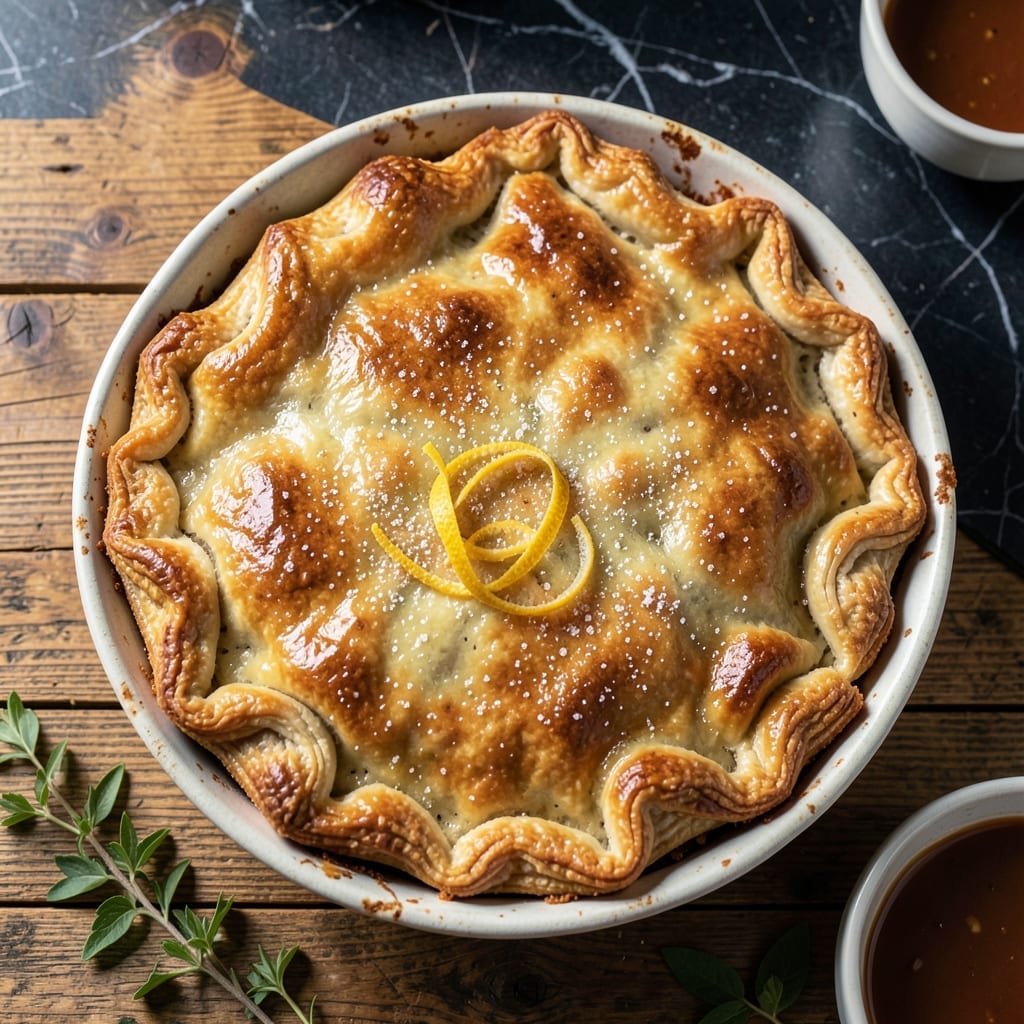
There’s nothing quite like a flaky, golden crust encasing a rich beef filling for the ultimate comfort meal. This recipe focuses on perfecting that buttery, layered pastry that makes or breaks your pot pie.
I developed this method after years of testing ratios and techniques to achieve a crust that stays crisp on the bottom while remaining tender and flaky on top. Cold ingredients and minimal handling are the secrets to success.
The result is a crust that bakes to a perfect golden brown, with layers that separate beautifully when cut. It holds up to the hearty filling without becoming soggy, delivering that satisfying crunch with every bite.
This crust transforms a simple beef pie into a restaurant-quality dish that will have everyone asking for seconds. The process takes time, but the payoff is worth every minute.
Ingredients for Beef Pot Pie Crust
Cold butter and minimal handling create that restaurant-quality flaky crust you crave in every bite.
| Ingredient | Amount | Notes |
|---|---|---|
| All-Purpose Flour 🌾 | 2 ½ cups | Spoon and level for accuracy |
| Unsalted Butter 🧈 | 1 cup | Cold and cubed, do not soften |
| Ice Water 💧 | ½ cup | Plus 1-2 tbsp as needed |
| Kosher Salt 🧂 | 1 tsp | Diamond Crystal preferred |
| Granulated Sugar 🍬 | 1 tsp | Balances salt in crust |
| Egg 🥚 | 1 whole | For egg wash finish |
| Heavy Cream 🥛 | 1 tbsp | Mixed with egg for wash |
| Ground Beef 🥩 | 1 ½ lb | 80/20 blend for filling |
| Yellow Onion 🧅 | 1 whole | Finely diced for filling |
| Carrots 🥕 | 2 whole | Peeled and diced small |
| Celery Stalks 🌿 | 2 pieces | Diced small for filling |
| Garlic Cloves 🧄 | 3 cloves | Minced for depth of flavor |
| Beef Stock 🥣 | 1 ½ cups | Low-sodium preferred for control |
| Peas 🌱 | 1 cup | Fresh or frozen, thawed |
| Fresh Thyme 🍃 | 1 tbsp | Chopped, stems removed |
The butter is non-negotiable here. Use European-style for higher fat content—it creates more layers and better flavor. Plugra or Kerrygold are my go-tos, but any unsalted European butter works. Keep it ice cold until the second it hits the flour. The flour matters too—King Arthur or Bob’s Red Mill all-purpose give consistent results. Skip the bleached stuff; it lacks structure for proper flaking.
No unsalted butter? Salted works at half the added salt. Out of all-purpose flour? Bread flour at a 1:1 ratio gives a slightly crispier crust. For a richer wash, replace the cream with melted butter. The beef stock can be store-bought (Better Than Bouillon is solid), but homemade will deepen the flavor. Fresh thyme not available? Dried at one-third the amount works in a pinch.
The dough can rest in the fridge for up to 2 days or freeze for 3 months. Baked crust stays crisp for 1 day at room temperature—reheat at 350°F for 10 minutes to revive. The filling holds well for 4 days refrigerated, though the crust may soften slightly over time.
Why You’ll Love This Recipe
- Five Ingredient Magic: I love that this crust comes together with just flour, butter, ice water, salt, and a pinch of sugar—no fancy pantry items.
- Buttery Crisp Perfection: The cold butter creates these flaky layers that shatter with every bite, while the sugar adds just a hint of sweetness to balance the savory beef filling.
- Freezer Friendly: I always double the batch and freeze half for next time. Honestly, it’s saved me on more than one busy weeknight.
- One Bowl Wonder: No food processor needed—just a bowl, a fork, and a little elbow grease for a crust that’s unfussy but impressive.
Step-by-Step Instructions for Beef Pot Pie Crust
This method delivers a buttery, flaky crust that perfectly complements the rich filling.
Step 1: Combine Dry Ingredients
In a large mixing bowl, whisk together the 2.5 cups All-Purpose Flour, 1 tsp Kosher Salt, and 1 tsp Granulated Sugar. This ensures even distribution of seasoning throughout the crust, which is essential for balanced flavor in every bite.
The sugar isn’t just for sweetness—it helps create that perfect golden-brown color as the crust bakes. Make sure your flour is spooned and leveled for accuracy, as too much can make the crust tough.
Step 2: Cut in Cold Butter
Add the 1 cup Unsalted Butter (cold and cubed) to the flour mixture. Using a pastry cutter or your fingers, work the butter into the flour until the mixture resembles coarse crumbs with some pea-sized butter pieces remaining visible.
This step is critical for flakiness. The cold butter creates steam as it bakes, which separates the layers of dough. Work quickly to prevent the butter from warming and softening—this is what guarantees those coveted flaky layers in your finished crust.
Step 3: Add Ice Water and Form Dough
Gradually drizzle in the 0.5 cup Ice Water while gently mixing with a fork. Add just enough water so the dough begins to come together when pressed. You may need an additional 1-2 tbsp of water, but don’t overdo it—too much water makes the crust tough.
The dough should hold together when pressed but not be sticky. If it feels too dry, add water 1 tsp at a time. Once it comes together, shape it into two equal discs, wrap in plastic, and refrigerate for at least 1 hour. This chilling step relaxes the gluten and makes the dough easier to roll out.
Step 4: Roll and Fit the Crust
On a lightly floured surface, roll out one disc of dough to a 12-inch circle about 1/8-inch thick. Transfer it to a 9-inch pie dish, pressing it gently into the bottom and sides. Trim the edges, leaving a 1/2-inch overhang.
For the top crust, roll out the second disc to the same size. Brush the edge of the bottom crust with a mixture of the 1 whole Egg and 1 tbsp Heavy Cream, then place the top crust over the filling. Trim and crimp the edges to seal, then cut several slits in the top to allow steam to escape.
Step 5: Blind Bake Bottom Crust (Optional)
For extra crispiness, you can blind bake the bottom crust before adding the filling. Line the crust with parchment paper, fill with pie weights or dried beans, and bake at 375°F for 15 minutes. Remove the weights and parchment, then return to the oven for an additional 5-7 minutes until the crust is just beginning to turn light golden brown.
This prevents a soggy bottom when you add the wet filling. If you choose this method, let the crust cool slightly before adding the filling to prevent the butter from melting prematurely.
Pro Tips For Making Beef Pot Pie Crust
- Chill the Butter: Cut your unsalted butter into small cubes and freeze for 15 minutes before mixing with flour—I learned this the hard way after ending up with a tough crust from melted butter.
- Use Ice Water: Fill a glass with water and ice cubes, then measure from that for the ice water. Sounds weird, but it works: the colder the water, the flakier your crust.
- Don’t Overwork Dough: Mix just until the dough comes together, even if it looks shaggy. After burning three batches, I finally figured out overworking develops gluten, making the crust chewy.
- Add Vinegar: Replace 1 tablespoon of the ice water with white vinegar—my grandmother swore by this, and she was right: it tenderizes the crust without affecting flavor.
Wine and Beer Pairings for This Recipe
Rich Red Wines
A bold Cabernet Sauvignon from Napa Valley cuts through the buttery crust and rich beef filling. The tannins stand up to the hearty flavors, while notes of blackcurrant and oak complement the dish beautifully. I prefer Caymus or Robert Mondavi for this pairing. 🍷
Medium-Bodied Reds
For a softer approach, try a Merlot from Washington State. Its plum and chocolate notes harmonize with the savory filling without overpowering the flaky crust. Chateau Ste. Michelle offers an excellent, affordable option.
Craft Beer Options
A malty amber ale like Fat Tire from New Belgium Brewing enhances the caramelized flavors in the crust. The beer’s biscuit-like malt profile mirrors the pastry, while its moderate hop bitterness cleanses the palate. 🍺
Dark Beer Pairings
A porter or stout adds depth with its roasted, coffee-like notes. Guinness or Founders Porter work wonderfully, as their creamy texture complements the crust’s flakiness.
White Wine Alternative
If you prefer white, a full-bodied Chardonnay with oak aging can stand up to the dish. Look for one from California, like Kendall-Jackson Vintner’s Reserve, with buttery notes that echo the crust.
Non-Alcoholic Choice
For a non-alcoholic option, a sparkling apple cider offers crisp acidity and effervescence. The sweetness balances the savory filling, while the bubbles refresh your palate between bites.
Nutrition Facts
Frequently Asked Questions
Why does my crust come out tough instead of flaky?
Overworking the dough develops too much gluten, making it tough. Use cold ingredients and handle the dough as little as possible. Stop mixing once it just comes together.
Can I make the crust ahead of time?
Yes! The dough can rest in the fridge for up to 2 days or be frozen for 3 months. Thaw overnight in the fridge before rolling out.
How do I prevent a soggy bottom crust?
Blind bake the bottom crust at 375°F for 15 minutes with pie weights. Also, let the filling cool slightly before adding it to the crust.
Can I use store-bought dough instead?
You can, but homemade tastes better and gives you control over thickness. If using store-bought, choose an all-butter version for the best flavor and flakiness.

- 4C Bread Crumbs Meatballs Recipe: Crispy Crust and Juicy Centers - September 25, 2026
- 6 Oz Chocolate Chip Cookie Recipe: Perfectly Balanced Crispy Edges and Chewy Hearts - September 25, 2026
- 6-Inch Coffee Cake Recipe: Vanilla Bean Swirls and Buttery Streusel Topping - September 25, 2026