
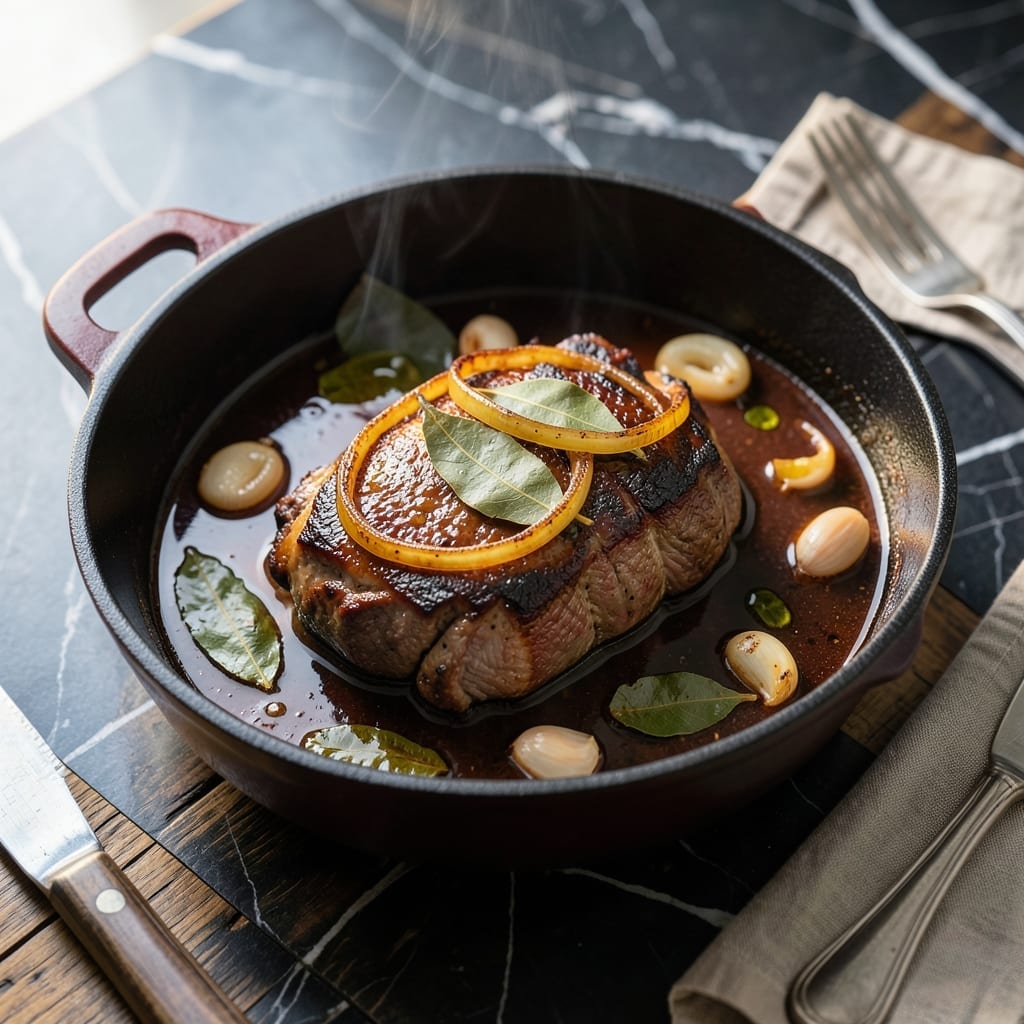
This Filipino-style beef pot roast transforms tough cuts into tender, fall-apart meat through slow cooking in a rich adobo-inspired sauce.
I developed this method after testing various braising techniques, finding that the combination of soy sauce, vinegar, and garlic creates depth without overpowering the beef.
The low and slow approach ensures the meat absorbs every bit of flavor while becoming tender enough to cut with a fork.
What emerges is a hearty dish with deeply savory sauce that pairs perfectly with steamed rice or crusty bread.
Ingredients for Beef Pot Roast Filipino
Rich, adobo-inspired ingredients transform tough beef into fork-tender perfection for this hearty dish.
| Ingredient | Amount | Notes |
|---|---|---|
| Beef Chuck Roast 🥩 | 2 ½ lb | Well-marbled, cut into large chunks |
| Soy Sauce 🫒 | ¾ cup | Regular or low-sodium preferred |
| White Vinegar 💧 | ½ cup | Cane or apple cider works too |
| Garlic Cloves 🧄 | 8 cloves | Peeled, smashed for maximum flavor |
| Yellow Onion 🧅 | 1 whole | Large, sliced into wedges |
| Bay Leaves 🍃 | 3 pieces | Dried, whole leaves |
| Black Peppercorns 🌶️ | 1 tbsp | Whole, lightly crushed |
| Beef Stock 🥣 | 1 ½ cups | Low-sodium for better control |
| Brown Sugar 🫙 | 2 tbsp | Light or dark, for balance |
| Carrots 🥕 | 3 whole | Large, cut into thick chunks |
| Potatoes 🥔 | 1 lb | Yukon Gold, peeled and quartered |
| Olive Oil 🫒 | 2 tbsp | For searing the beef |
| Salt 🧂 | 1 tsp | Kosher or sea salt |
The beef chuck roast is non-negotiable here. Look for well-marbled pieces—this fat renders down during the long cook, creating that signature tenderness. Costco has excellent pre-cut chuck, but any reputable butcher will have what you need. The soy sauce forms the backbone of the adobo flavor; Silver Swan or Datu Puti brands are authentic Filipino choices that elevate the dish significantly.
No white vinegar? Apple cider vinegar at equal amounts works without altering the profile much. For a deeper complexity, coconut vinegar (found at Asian markets) adds a subtle sweetness. The brown sugar can be substituted with coconut sugar for a more caramelized note. If you lack bay leaves, a pinch of ground allspice provides a similar aromatic depth.
This dish tastes even better the next day as flavors meld. Store leftovers in an airtight container in the fridge for up to 5 days or freeze for 3 months. Reheat gently on the stovetop to preserve the meat’s tenderness.
Why You’ll Love This Recipe
- Set It and Forget: I toss everything in one pot—beef, soy sauce, vinegar, garlic—and let it simmer while I do my thing.
- Umami Bomb: The soy sauce and vinegar combo hits this sweet-savory balance that’s honestly next-level with the beef.
- Feeds the Whole Crew: From Sunday lunch to weeknight leftovers, this stretches to feed my family of five with no fuss.
- Budget Hero: Chuck roast plus pantry staples means I’m serving a hearty meal without breaking the bank.
Step-by-Step Instructions for Adobo-Style Beef Pot Roast
This method delivers fall-apart tender beef with the tangy, savory depth characteristic of Filipino adobo.
Step 1: Sear and Develop Flavor Base
Heat the 2 tbsp olive oil in a Dutch oven over medium-high heat until shimmering. Pat the 2.5 lb beef chuck roast dry, season with the 1 tsp salt, then sear until deeply browned on all sides, about 5-7 minutes total. This creates a rich fond that will deepen the sauce.
Remove the beef and set aside. In the same pot, add the 1 whole yellow onion (sliced into wedges), the 8 cloves garlic (smashed), the 3 pieces bay leaves, and the 1 tbsp black peppercorns (lightly crushed). Sauté for 2-3 minutes until fragrant and the onion begins to soften.
Step 2: Build the Adobo Braising Liquid
Pour in the 0.75 cup soy sauce, 0.5 cup white vinegar, and 2 tbsp brown sugar. Stir to dissolve the sugar, scraping up any browned bits from the bottom of the pot. The vinegar’s sharpness will mellow during cooking, balancing the soy sauce’s saltiness.
Add the 1.5 cups beef stock and bring the mixture to a simmer. Return the beef chuck roast to the pot, along with any accumulated juices. The liquid should come about halfway up the meat—this ensures proper braising without submerging it completely.
Step 3: Slow Cook to Tenderness
Cover the pot and reduce the heat to low. Simmer gently for 2 to 2.5 hours, turning the beef occasionally, until it yields easily to a fork. Resist the urge to increase the heat—low and slow is essential for breaking down the connective tissue in the chuck roast.
After 1.5 hours, add the 3 whole carrots (cut into thick chunks) and the 1 lb potatoes (peeled and quartered). These vegetables will absorb the adobo flavors while adding heartiness to the dish. Continue cooking until the beef and vegetables are fork-tender.
Step 4: Reduce and Serve
Once the beef is tender, transfer it and the vegetables to a serving platter. Increase the heat to medium-high and simmer the braising liquid for 8-10 minutes until it reduces slightly and coats the back of a spoon. This step intensifies the sauce’s flavor and thickens it to the perfect consistency.
Discard the bay leaves and peppercorns, then pour the sauce over the beef and vegetables. Serve immediately, ensuring each portion includes a generous amount of the rich, tangy adobo sauce. The beef should be so tender it nearly collapses at the touch of a fork.
Pro Tips For Making Beef Pot Roast Filipino
- Sear the Chuck: I learned this the hard way—browning the beef chuck in batches in a hot pan with a little oil for 3-4 minutes per side locks in the juices and adds depth to the final dish.
- Balance the Vinegar: Sounds weird, but it works: use 1 part white vinegar to 2 parts soy sauce for the marinade to avoid an overpowering sour taste that can dominate the beef.
- Skip the Overcrowding: After burning three batches, I finally figured out that searing too many pieces at once steams the meat instead of browning it—keep it to 2-3 pieces max in the pan.
- Use Fresh Garlic: My grandmother swore by this, and she was right: mincing 6-8 fresh garlic cloves instead of using powder makes a real difference in the aroma and flavor of the pot roast.
Common Mistakes When Making Great beef pot roast filipino
Overcrowding the Pot
Using a pot that’s too small forces the beef and vegetables to steam rather than braise. I always choose a 5-6 quart Dutch oven to give everything room. The beef needs space to brown properly and develop that rich fond.
Skipping the Sear
This step builds the foundation of flavor through the Maillard reaction. I sear my beef chuck roast for 5-7 minutes until deeply browned on all sides. Without this, your dish will lack depth and richness. 🔥
Rushing the Cook
Braising is about patience. I maintain a gentle simmer at low heat for 2-2.5 hours. Higher heat toughens the meat instead of tenderizing it. The connective tissue needs time to break down properly.
Adding Vinegar Too Late
Some add vinegar at the end, but I include the 0.5 cup white vinegar from the start. This allows its sharpness to mellow during cooking while balancing the soy sauce’s saltiness throughout the entire braise.
Neglecting the Sauce
Don’t serve this with a watery sauce. I always reduce the braising liquid for 8-10 minutes at the end. This concentrates the flavors and creates a glossy, clingy sauce that coats every bite beautifully.
Cutting the Beef Wrong
Against the grain is non-negotiable. I slice my beef chuck roast perpendicular to the muscle fibers in 1-inch thick pieces. This shortens the muscle fibers, making each bite more tender and easier to chew.
Nutrition Facts
Frequently Asked Questions
Can I use a different cut of beef?
Chuck roast works best for its marbling, but brisket or short ribs are great alternatives. Avoid lean cuts like sirloin—they won’t get as tender during braising.
Why include vinegar in the braise?
The 0.5 cup white vinegar balances the soy sauce and tenderizes the meat. It mellows during cooking, adding signature Filipino adobo tang without overpowering.
When should I add the vegetables?
Add carrots and potatoes after 1.5 hours of cooking. This prevents them from turning mushy while ensuring they soak up the rich adobo sauce.
Can I make this in a slow cooker?
Yes! Brown the beef first, then cook on low for 8 hours or high for 5-6 hours. The flavors develop beautifully with this hands-off method.

- 4C Bread Crumbs Meatballs Recipe: Crispy Crust and Juicy Centers - September 25, 2026
- 6 Oz Chocolate Chip Cookie Recipe: Perfectly Balanced Crispy Edges and Chewy Hearts - September 25, 2026
- 6-Inch Coffee Cake Recipe: Vanilla Bean Swirls and Buttery Streusel Topping - September 25, 2026