
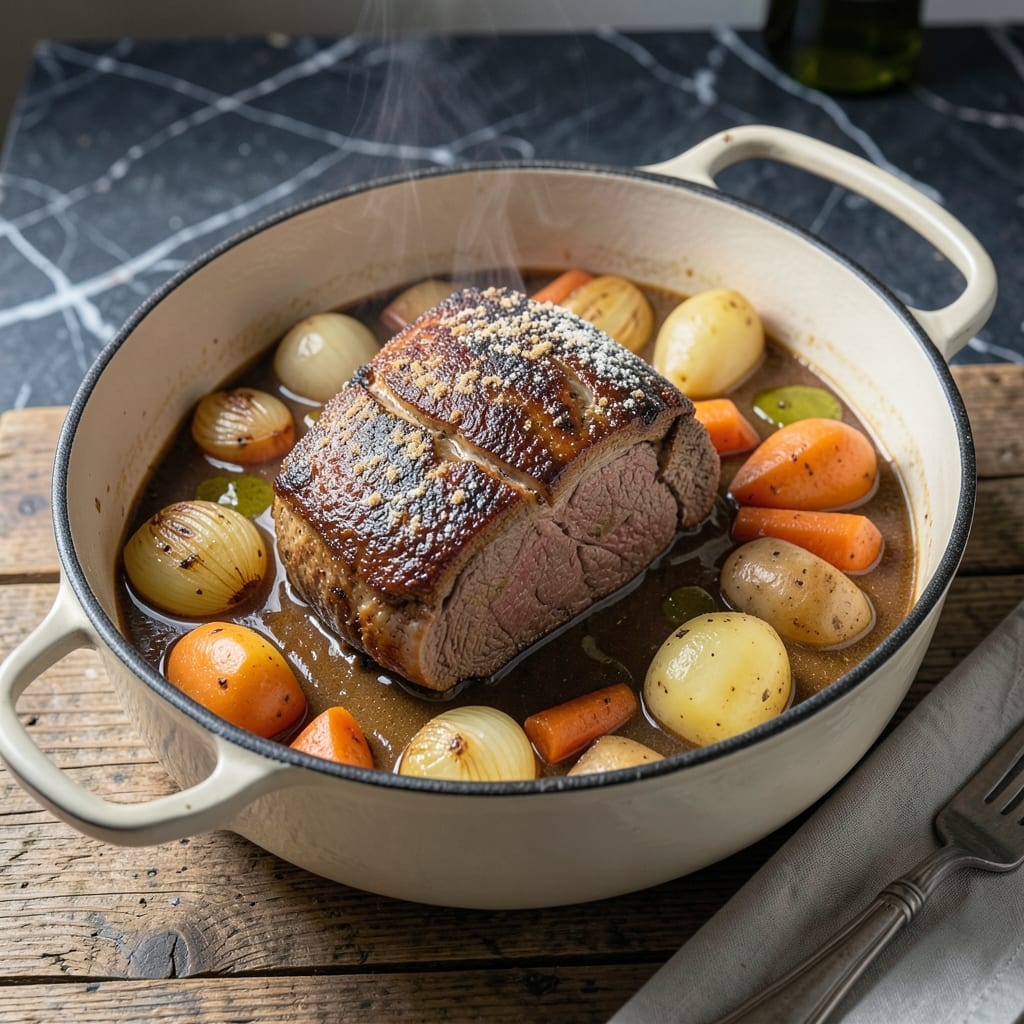
There’s nothing quite like a perfectly braised pot roast, where tough cuts of beef transform into fork-tender perfection. This stove-top method delivers rich, deep flavors without needing an oven.
Using a Dutch oven, I sear the beef first to lock in juices, then slowly braise it with vegetables and herbs. The result is meat that falls apart at the touch of a fork, with a gravy so flavorful you’ll want to soak it up with crusty bread.
The key is patience—low and slow cooking breaks down the connective tissue, creating that signature melt-in-your-mouth texture. Every bite delivers the comfort of a home-cooked meal.
This technique proves that some of the best dishes come from simple ingredients and time-honored methods. The aroma alone will have everyone gathering around the table.
Ingredients for Beef Pot Roast Recipe Stove Top
Transform tough beef into fork-tender perfection with these braising essentials.
| Ingredient | Amount | Notes |
|---|---|---|
| Beef Chuck Roast 🥩 | 3 lb | Well-marbled, cut into large chunks |
| Kosher Salt 🧂 | 2 tsp | Diamond Crystal preferred for even seasoning |
| Freshly Ground Black Pepper 🌶️ | 1 tsp | Coarse grind for texture |
| All-Purpose Flour 🌾 | ¼ cup | For dredging beef |
| Olive Oil 🫒 | 2 tbsp | Divided for searing and sautéing |
| Yellow Onions 🧅 | 2 whole | Medium-sized, roughly chopped |
| Carrots 🥕 | 3 whole | Peeled, cut into 2-inch pieces |
| Celery Stalks 🌿 | 3 whole | Cut into 2-inch pieces |
| Garlic Cloves 🧄 | 6 cloves | Smashed, peeled |
| Dry Red Wine 🍷 | 1 ½ cups | Bold variety like Cabernet Sauvignon |
| Beef Broth 🥫 | 2 cups | Low-sodium preferred |
| Tomato Paste 🍅 | 2 tbsp | For depth of flavor |
| Fresh Thyme Sprigs 🌿 | 3 whole | Tied with kitchen twine |
| Fresh Rosemary Sprigs 🌿 | 2 whole | Tied with kitchen twine |
| Bay Leaves 🍃 | 2 whole | Dried, for aromatic depth |
The beef chuck roast is non-negotiable for this method. Look for well-marbled cuts with visible fat streaks—this ensures the meat stays moist during the long braise. Most butcher shops or Whole Foods will have quality chuck; avoid pre-cut stew meat as it lacks the connective tissue needed for that melt-in-your-mouth texture. The flour for dredging should be all-purpose, and the wine must be dry and bold enough to stand up to the rich beef flavors.
No red wine? Substitute with an additional cup of beef broth plus 1 tbsp balsamic vinegar. Fresh herbs can be replaced with dried—use 1 tsp dried thyme and 1 tsp dried rosemary instead of the sprigs. If tomato paste is unavailable, 1/4 cup tomato sauce works in a pinch, though the flavor will be slightly less concentrated. The vegetables can be adjusted based on preference, but onions, carrots, and celery form the essential aromatic base.
Store the beef chuck roast in the coldest part of your fridge for up to 3 days before cooking. Leftovers keep beautifully, actually improving in flavor over 4-5 days in the refrigerator. For longer storage, freeze the cooled pot roast in its gravy for up to 3 months. Reheat gently on the stove to preserve texture.
Why You’ll Love This Recipe
- One Pot Magic: I sear the chuck roast right in the same pot it’ll simmer in—olive oil, flour, and a hot stove do all the work.
- Unbeatable Depth: That crust from the flour and black pepper? It locks in the most ridiculous juiciness while it slow-cooks.
- Feeds the Week: I make a big batch Sunday, and honestly, the leftovers taste even better sliced into sandwiches or over mashed potatoes.
- Budget Winner: A chuck roast stretches far, and with just salt, pepper, and flour, it’s a filling, fancy-tasting meal that won’t break the bank.
Step-by-Step Instructions for Beef Pot Roast Stove Top
This method delivers melt-in-your-mouth beef with rich, concentrated flavors in one pot.
Step 1: Sear and Brown the Beef Chuck Roast
Pat the 3 lb Beef Chuck Roast dry with paper towels, then season all over with 2 tsp Kosher Salt and 1 tsp Freshly Ground Black Pepper. Dredge the pieces in 0.25 cup All-Purpose Flour, shaking off any excess. The flour creates a light crust that thickens the sauce later.
Heat 1 tbsp Olive Oil in a Dutch oven over medium-high heat until shimmering. Working in batches to avoid crowding, sear the beef for 4-5 minutes per side until deeply browned. You’ll know it’s ready to flip when it releases easily from the pot. Transfer the browned beef to a plate and set aside.
Step 2: Sauté the Aromatic Vegetables
In the same Dutch oven, add the remaining 1 tbsp Olive Oil. Add the 2 whole Yellow Onions, 3 whole Carrots, and 3 whole Celery Stalks, cooking for 6-8 minutes until the onions soften and begin to caramelize at the edges. Stir occasionally to prevent sticking.
Add the 6 cloves Garlic Cloves and 2 tbsp Tomato Paste, stirring constantly for 1-2 minutes until the tomato paste darkens slightly. This step builds a flavor base that deepens the sauce. The mixture should be fragrant and slightly thickened.
Step 3: Deglaze and Braise to Fork-Tender Perfection
Pour in the 1.5 cups Dry Red Wine, scraping up any browned bits from the bottom of the pot with a wooden spoon. Let the wine reduce by half, about 3-4 minutes. This deglazing step captures all the concentrated flavors from searing.
Return the beef to the pot along with any accumulated juices. Add the 2 cups Beef Broth, 3 whole Fresh Thyme Sprigs, 2 whole Fresh Rosemary Sprigs, and 2 whole Bay Leaves. The liquid should just cover the beef. Bring to a simmer, then reduce heat to low.
Step 4: Simmer Until Tender and Serve
Cover the Dutch oven and let the pot roast simmer gently for 3 to 3.5 hours, turning the beef occasionally, until it is fork-tender. You’ll know it’s done when the meat pulls apart easily with a fork and the internal temperature reaches 195°F.
Remove the beef and vegetables to a serving platter. Skim any excess fat from the surface of the sauce, then adjust seasoning with additional Kosher Salt and Freshly Ground Black Pepper if needed. Serve the beef and vegetables with the rich, reduced braising liquid spooned over the top.
Pro Tips For Making Beef Pot Roast Recipe Stove Top
- Sear Until Dark: Get that chuck roast deeply browned in the olive oil before adding liquids—this builds the rich flavor base that defines a great pot roast. I learned this the hard way when my first few attempts tasted flat.
- Pat Meat Dry: Blot the beef with paper towels before seasoning and searing. Sounds tedious, but it’s the only way to get that proper crust instead of a sad, steamed exterior.
- Don’t Crowd the Pan: If your pot isn’t big enough for the whole roast, sear it in batches. Steaming from overcrowding ruins the browning, and that’s non-negotiable for flavor.
- Use a Heavy Pot: A thick-bottomed Dutch oven distributes heat evenly and prevents scorching during the long simmer. My first few pot roasts stuck terribly until I switched to cast iron.
Best Sauces and Condiments for This beef pot roast recipe stove top
Classic Horseradish Cream
I always serve this dish with a dollop of horseradish cream—mix ½ cup sour cream with 2 tbsp prepared horseradish and 1 tsp lemon juice. The sharp kick cuts through the richness perfectly. It’s my secret weapon for balancing the deep flavors. 💫
Herb-Infused Gravy
Strain the braising liquid and reduce it by half for an intense gravy. I stir in 1 tbsp butter at the end for silkiness. For extra depth, add 1 tsp Worcestershire sauce while reducing—it adds umami without overpowering.
Tangy Mustard Sauce
A simple Dijon mustard sauce works wonders. Whisk 3 tbsp Dijon, 2 tbsp honey, and 1 tbsp apple cider vinegar. The sweet-tangy combo elevates every bite. I drizzle it over the beef just before serving.
Pickled Vegetables
Quick-pickled red onions or carrots add a bright contrast. Thinly slice 1 onion and soak in ½ cup vinegar, 1 tbsp sugar, and 1 tsp salt for 30 minutes. The acidity refreshes your palate between bites.
Creamy Mashed Potatoes
No pot roast is complete without mashed potatoes to soak up the gravy. I fold ½ cup roasted garlic into mine for extra flavor. Use Yukon Golds for the creamiest texture—they hold up well to the rich sauce.
Crusty Bread
A warm baguette or sourdough loaf is essential for mopping up every last drop of sauce. Toast slices lightly with olive oil and garlic for an easy upgrade. It’s the simplest way to stretch this meal into a feast. 🔥
Nutrition Facts
Frequently Asked Questions
What’s the best cut for stove-top braising?
Chuck roast is ideal due to its marbling and connective tissue. This cut breaks down beautifully during the long, slow cook, creating that signature fork-tender texture. Avoid lean cuts like sirloin—they’ll dry out.
Can I use a regular pot instead of a Dutch oven?
A heavy-bottomed pot with a tight lid works in a pinch. However, Dutch ovens distribute heat more evenly and retain it better, which is crucial for consistent 3-3.5 hour braising. Expect slightly less even cooking with substitutes.
How do I know when it’s done?
The meat should pull apart easily with a fork. For precision, use a meat thermometer—it’s ready at an internal temperature of 195°F. Don’t rush it; the collagen needs time to melt into gelatin for that perfect texture.
Why does my sauce turn out thin?
This usually happens if you skip deglazing or don’t reduce the wine enough. After adding the 1.5 cups wine, let it simmer for 3-4 minutes to concentrate flavors. For thicker gravy, remove the lid during the last 30 minutes of cooking.

- 6 Oz Chocolate Chip Cookie Recipe: Perfectly Balanced Crispy Edges and Chewy Hearts - September 25, 2026
- 6-Inch Coffee Cake Recipe: Vanilla Bean Swirls and Buttery Streusel Topping - September 25, 2026
- 1 Hour Soup Recipe: Velvety Richness Without the Wait - September 25, 2026