
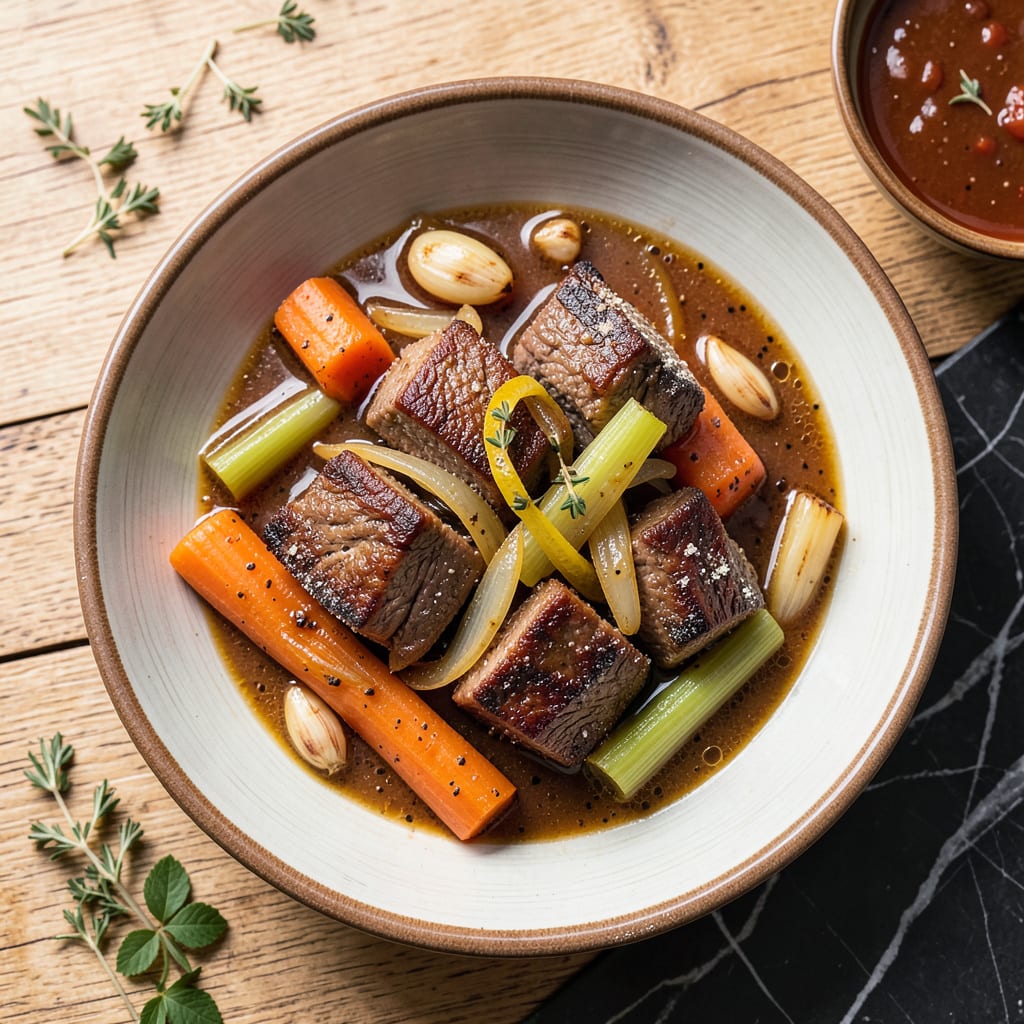
Rich, deeply flavorful beef stew doesn’t need potatoes to deliver hearty comfort. This recipe focuses on achieving tender beef that falls apart at the touch, surrounded by sweet carrots and aromatic vegetables in a velvety broth. The secret lies in proper browning and a slow simmer that transforms tough cuts into melt-in-your-mouth perfection.
What sets this version apart is its refined simplicity. By omitting potatoes, the beef and carrots take center stage, absorbing the complex flavors of red wine, garlic, and fresh herbs. The result is a sophisticated yet approachable stew that satisfies without heaviness—ideal for both weeknight dinners and special occasions.
Ingredients for Beef Stew No Potatoes
This refined ingredient list delivers melt-in-your-mouth beef and caramelized carrots in a velvety, wine-infused broth without heaviness.
| Ingredient | Amount | Notes |
|---|---|---|
| Beef Chuck Roast 🥩 | 2 lb | Cut into 1.5-inch cubes, well-marbled |
| Carrots 🥕 | 4 whole | Large, peeled and cut into 1-inch chunks |
| Yellow Onion 🧅 | 1 whole | Large, diced into 1/2-inch pieces |
| Celery Stalks 🌿 | 3 whole | Cut into 1/2-inch slices |
| Garlic Cloves 🧄 | 6 cloves | Minced for maximum flavor infusion |
| Tomato Paste 🍅 | 2 tbsp | Double-concentrated preferred |
| Dry Red Wine 🍷 | 1 ½ cups | Bold, dry variety like Cabernet Sauvignon |
| Low-Sodium Beef Broth 🥘 | 4 cups | High-quality, preferably homemade |
| Fresh Thyme Sprigs 🌿 | 4 whole | Plus 1 tsp leaves for garnish |
| Bay Leaves 🍃 | 2 whole | Dried, for aromatic depth |
| Extra-Virgin Olive Oil 🫒 | 3 tbsp | Divided for browning and sautéing |
| All-Purpose Flour 🌾 | ¼ cup | For dredging beef cubes |
| Diamond Crystal Kosher Salt 🧂 | 2 tsp | Divided, plus more to taste |
| Freshly Ground Black Pepper 🌶️ | 1 tsp | Coarsely ground preferred |
| Unsalted Butter 🧈 | 1 tbsp | For enriching finished stew |
The beef selection is paramount for optimal texture. Chuck roast with visible marbling ensures tender results after slow cooking. Optimal sourcing includes Costco for bulk purchases or Whole Foods for premium grass-fed options. The carrots should be large, sweet varieties (preferably organic) to maintain structural integrity during prolonged simmering. Professional kitchens utilize double-concentrated tomato paste for deeper umami development without excess liquid.
For wine substitutions, bold red grape juice reduced by half provides similar depth without alcohol. Fresh thyme may be replaced with 1 tsp dried thyme added during the final 30 minutes. The beef broth should be low-sodium to control seasoning precision; Better Than Bouillon paste offers excellent flavor concentration. Celery alternatives include fennel bulb for anise notes or additional carrots for sweetness balance.
Proper storage maintains ingredient integrity. Raw beef keeps 3-4 days refrigerated or 6-12 months frozen in vacuum-sealed portions. Fresh herbs remain vibrant 5-7 days when wrapped in damp paper towels. Completed stew develops richer flavor when cooled overnight and reheated gently. Portion into airtight containers for 5-day refrigeration or 3-month freezing with minimal quality degradation.
Why You’ll Love This Recipe
- One-Pot Magic: Honestly, I love that this whole dish comes together in a single Dutch oven. No extra bowls, no mountain of dishes—just brown the beef, toss in the carrots, onion, celery, and garlic, then let it simmer while you ignore it. (Yes, even on a Tuesday night.)
- Deep, Rich Comfort: That beef chuck roast breaks down into buttery, fall-apart pieces after slow cooking with the garlic and celery—it’s the kind of flavor that makes you pause mid-bite. The carrots soak up all that savory broth, turning sweet and tender without the distraction of potatoes stealing the show.
- Meal Prep MVP: I make a double batch on Sundays and portion it into containers—it reheats like a dream, and the flavors actually get better overnight. Perfect for packing lunches or those nights when takeout starts calling your name.
- Budget Stretch: A pound of chuck roast feeds my family for two meals, easy. The veggies are cheap, the prep is minimal, and leftovers taste even richer the next day. Between us, it’s my secret weapon for keeping grocery bills in check without sacrificing satisfaction.
Step-by-Step Instructions for Beef Stew Without Potatoes
This method delivers rich, comforting flavor with perfectly tender beef and vegetables every time.
Step 1: Sear the Beef for Maximum Flavor
Pat the 2 lb beef chuck roast cubes completely dry with paper towels. Season generously with 1 tsp freshly ground black pepper and 1 tsp of the diamond crystal kosher salt. Dredge the cubes in the 0.25 cup all-purpose flour, shaking off any excess. This creates a light crust that will thicken the stew later.
Heat 2 tbsp of the extra-virgin olive oil in a large Dutch oven over medium-high heat until shimmering. Working in batches to avoid crowding, add the beef and sear for 3-4 minutes per side until deeply browned. You want a rich, dark crust on all sides. Transfer the seared beef to a plate and set aside.
Step 2: Build the Aromatic Base
In the same Dutch oven, add the remaining 1 tbsp extra-virgin olive oil if needed. Add the diced yellow onion, carrots, and celery and cook over medium heat for 6-8 minutes, stirring occasionally, until the vegetables begin to soften and develop color around the edges.
Add the minced garlic cloves and 2 tbsp tomato paste and cook for 1-2 minutes, stirring constantly, until the tomato paste darkens slightly and coats the vegetables. This step develops the deep, savory foundation of the stew. Be careful not to let the garlic burn.
Step 3: Deglaze and Simmer to Perfection
Pour in the 1.5 cups dry red wine and scrape up any browned bits from the bottom of the pot with a wooden spoon. Bring to a simmer and cook for 3-4 minutes until the liquid reduces by about half. This process incorporates all the flavorful fond into your stew base.
Return the seared beef to the pot along with any accumulated juices. Add the 4 cups low-sodium beef broth, 4 fresh thyme sprigs, and 2 bay leaves. Bring to a gentle simmer, then reduce heat to low, cover, and let it cook for 2-2.5 hours, stirring occasionally, until the beef becomes fork-tender and the flavors meld together beautifully.
Step 4: Finish and Adjust Seasoning
Once the beef is tender, remove and discard the thyme sprigs and bay leaves. Stir in the 1 tbsp unsalted butter to add a final layer of richness to the stew. Taste and adjust seasoning with the remaining 1 tsp diamond crystal kosher salt if needed.
The stew should have a thick, velvety consistency with beef that falls apart at the touch of a fork. If the liquid seems too thin, simmer uncovered for an additional 10-15 minutes to reduce slightly. The carrots should be tender but still hold their shape, providing a pleasant contrast to the melt-in-your-mouth beef.
Step 5: Rest and Serve for Optimal Flavor
Remove the stew from heat and let it rest for 10-15 minutes before serving. This allows the flavors to fully develop and the liquid to thicken slightly. The resting period ensures each bite delivers maximum comfort and tenderness.
Ladle the stew into deep bowls, making sure each serving includes plenty of beef, carrots, and the rich, aromatic broth. Garnish with fresh thyme leaves if desired. Serve with crusty bread to soak up every last drop of the flavorful sauce.
Regional Styles of This beef stew no potatoes
French Country Style
In Provence, this stew becomes daube provençale—rich with herbes de Provence and orange zest. I add 1 tsp dried lavender and zest of 1 orange with the thyme. The citrus brightens the deep beef flavors while lavender adds floral complexity. Serve with crusty baguette to soak up the aromatic sauce. 🌿
Italian Rustic Version
Northern Italian cooks transform this into stracotto by adding 1 can (14 oz) crushed San Marzano tomatoes and 1 tsp fennel seeds. The tomatoes create a thicker, heartier base while fennel adds subtle licorice notes. Finish with grated Parmigiano-Reggiano and serve over polenta instead of bread.
British Pub Classic
Across the pond, they’d call this beef and ale stew. Replace the red wine with 1.5 cups dark ale (like Guinness) and add 1 tbsp Worcestershire sauce. The ale’s malty sweetness balances the beef’s richness. I love serving this with Yorkshire pudding on the side for ultimate comfort.
German Hearty Twist
In Bavaria, this becomes Rindergulasch with the addition of 1 tbsp sweet paprika and 1 tsp caraway seeds toasted in the oil before browning the beef. The paprika adds warmth while caraway provides earthy depth. Serve with spaetzle or buttered egg noodles to complete the meal.
Moroccan Spiced Variation
North African flavors transform this stew with 1 tbsp ras el hanout and 1 cinnamon stick added with the broth. The spice blend‘s warmth pairs beautifully with the beef. Stir in ½ cup chopped dried apricots during the last 30 minutes for sweet contrast. Garnish with toasted almonds and fresh cilantro. ✨
American Southwest Style
For a Tex-Mex twist, add 1 tbsp ground cumin, 1 tbsp chili powder, and 1 chopped chipotle in adobo with the garlic. The smoky heat complements the beef beautifully. Top with avocado slices and serve with warm flour tortillas for scooping up every flavorful bite.
Nutrition Facts
Frequently Asked Questions
What can I use instead of potatoes to thicken the stew?
Carrots naturally break down during cooking to help thicken the broth. For extra body, try adding 1 cup chopped parsnips or ½ cup mashed turnips in the last 30 minutes. These vegetables add creaminess without overpowering the beef flavor.
How do I know when the beef is perfectly tender?
The beef should fall apart easily when pierced with a fork after 2-2.5 hours of simmering. If it still resists, cook for an additional 20-30 minutes on low heat. Overcooking is nearly impossible with chuck roast—it only gets more tender with time.
Can I make this in a slow cooker instead?
After browning the beef and sautéing vegetables, transfer everything to a slow cooker. Cook on low for 8 hours or high for 4-5 hours. The flavors will develop beautifully, though the texture may be slightly less concentrated than stovetop versions.
What’s the best way to store leftovers?
Cool completely before transferring to airtight containers. Refrigerate for up to 5 days or freeze for 3 months. The stew actually tastes better the next day as flavors continue to meld. Reheat gently on the stovetop with a splash of broth.

- 8 Bean Soup Recipe Crock Pot: Hearty Vegetable Medley in One Pot - September 25, 2026
- 4C Bread Crumbs Meatballs Recipe: Crispy Crust and Juicy Centers - September 25, 2026
- 6 Oz Chocolate Chip Cookie Recipe: Perfectly Balanced Crispy Edges and Chewy Hearts - September 25, 2026