
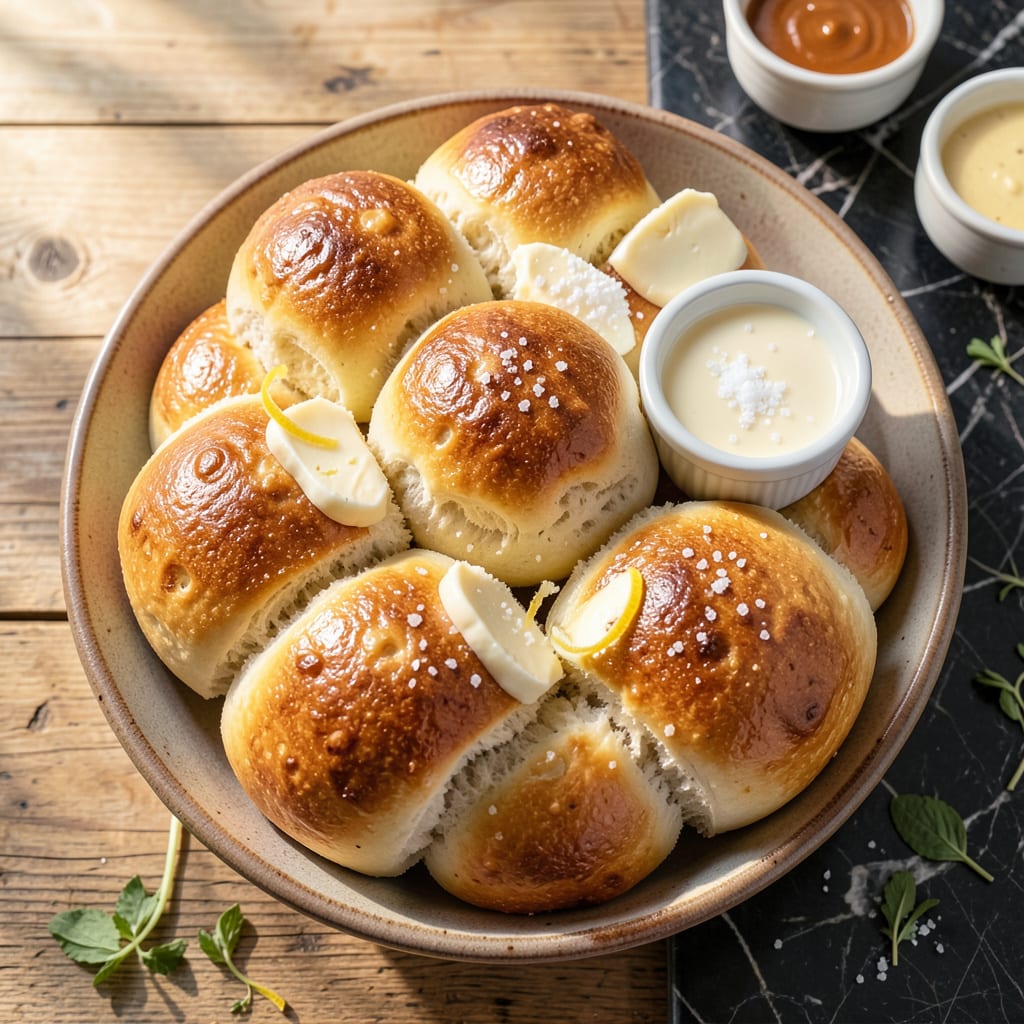
There’s something deeply satisfying about pulling apart warm, pillowy soft yeast rolls fresh from the oven.
This recipe delivers big fat rolls with tender interiors and golden crusts, finished with a sweet honey butter glaze that takes them over the top.
Ingredients for Big Fat Yeast Roll
These rich ingredients create pillowy soft rolls with a golden honey butter finish.
| Ingredient | Amount | Notes |
|---|---|---|
| Active Dry Yeast 🍞 | 2 ¼ tsp | Or one 0.25 oz packet |
| Warm Milk 🥛 | 1 cup | 110-115°F, whole milk preferred |
| Granulated Sugar 🍚 | ¼ cup | Divided for dough and glaze |
| Unsalted Butter 🧈 | ½ cup | Melted and cooled, plus extra for greasing |
| Large Egg 🥚 | 1 whole | Room temperature, lightly beaten |
| All-Purpose Flour 🌾 | 4 ½ cups | Spoon and level method, plus extra for dusting |
| Salt 🧂 | 1 ½ tsp | Fine sea salt or table salt |
| Honey 🍯 | ¼ cup | For the sweet glaze |
| Vanilla Extract 🌿 | 1 tsp | Pure extract for best flavor |
| Bread Flour 🍞 | ½ cup | For extra softness and structure |
The yeast is critical here—check the expiration date and store it in the freezer for maximum potency. Whole milk yields the richest flavor and softest texture, but 2% works in a pinch. For the flour, King Arthur or Gold Medal brands are reliable. Bread flour in the mix gives these rolls their signature pillowy structure without turning them dense.
No yeast? You’re out of luck—this is a yeast roll recipe after all. For the milk, warm oat milk works as a dairy-free alternative (use unsweetened). Short on honey? Maple syrup or corn syrup can substitute at a 1:1 ratio. The vanilla is optional but highly recommended—it adds depth to the glaze. If your butter is salted, reduce the added salt by half.
Dough can be made a day ahead—cover tightly and refrigerate. Bring to room temperature before shaping. Baked rolls stay fresh for 2-3 days in an airtight container. For longer storage, freeze unbaked dough balls on a tray, then transfer to a bag for up to 1 month.
Why You’ll Love This Recipe
- I’ll be real: these freeze beautifully, so I always make extra to pull out for surprise guests or lazy mornings.
- One Bowl Wonder: I love that I can mix the warm milk, yeast, and sugar right in the same bowl I’ll use for rising—no extra dishes piling up.
- Buttery Clouds: That unsalted butter makes them rich but still light, with a melt-in-your-mouth fluffiness that’s hard to resist.
- Holiday or Tuesday: Honestly, they’re just as welcome at Thanksgiving dinner as they are with weeknight soup.
Step-by-Step Instructions for Big Fat Yeast Rolls
Master the technique for achieving cloud-like texture and golden-brown crust in every batch.
Step 1: Activate the Yeast and Prepare Wet Ingredients
In a large mixing bowl, whisk together the 2.25 tsp Active Dry Yeast with the 1 cup Warm Milk and 1 tablespoon of the 0.25 cup Granulated Sugar. The milk should be between 110-115°F—hot enough to activate the yeast but not so hot it kills it.
Let the mixture stand for 5-10 minutes until foamy and bubbly. This visual confirmation means your yeast is active and ready to work. Meanwhile, melt the 0.5 cup Unsalted Butter and let it cool to room temperature. In a separate small bowl, lightly beat the 1 whole Large Egg.
Step 2: Combine Dry Ingredients and Form the Dough
In a medium bowl, whisk together the 4.5 cups All-Purpose Flour, 0.5 cup Bread Flour, remaining granulated sugar, and 1.5 tsp Salt. The bread flour adds structure and extra softness to your rolls, a professional baker’s trick for pillowy texture.
Once the yeast mixture is foamy, add the cooled melted butter, beaten egg, and 1 tsp Vanilla Extract. Gradually incorporate the dry ingredients into the wet mixture, stirring until a shaggy dough forms. The dough will be slightly sticky—that’s perfect.
Step 3: Knead and First Rise
Turn the dough onto a lightly floured surface and knead for 8-10 minutes until smooth and elastic. You’ll know it’s ready when it springs back slowly after poking it with your finger. This develops the gluten, which gives the rolls their soft yet sturdy structure.
Place the dough in a greased bowl, turning once to coat the surface. Cover with a clean kitchen towel and let it rise in a warm, draft-free place for 1 to 1.5 hours, or until doubled in volume. The dough should look puffy and jiggle slightly when gently shaken.
Step 4: Shape, Second Rise, and Bake
Punch down the risen dough to release the air, then divide it into 12 equal portions. Roll each piece into a smooth ball and place them in a greased 9×13-inch baking pan. Cover and let rise again for 30-45 minutes until puffy and nearly touching.
Preheat your oven to 375°F. Bake the rolls for 18-22 minutes until they’re golden brown on top and sound hollow when tapped. Avoid overbaking—you want them soft, not dry.
Step 5: Glaze and Serve Warm
While the rolls bake, prepare the glaze by warming the 0.25 cup Honey slightly to make it easier to brush. As soon as the rolls come out of the oven, brush the tops generously with the honey. This locks in moisture and adds a subtle sweetness.
Let the rolls cool in the pan for 5 minutes, then transfer them to a wire rack. Serve warm, pulling apart the soft, buttery layers. The glaze will give them a beautiful sheen and an irresistible aroma that signals they’re ready to enjoy.
Pro Tips For Making Big Fat Yeast Roll
- Test Your Yeast First: I learned this the hard way—always bloom your active dry yeast in the warm milk with a pinch of sugar for 5-10 minutes until foamy. If it doesn’t bubble, your rolls won’t rise, no matter how long you wait.
- Use Room-Temp Egg: After ruining a batch with cold eggs, I now pull mine out 30 minutes early. Room-temperature egg blends smoothly into the butter and milk, so your dough stays uniform and rises better.
- Don’t Overheat the Milk: Warm milk should feel like a baby’s bath—around 110°F. Any hotter and you’ll kill the yeast; I use a thermometer now after guessing wrong too many times.
- Soften Butter Right: Your butter should dent when pressed, not melt. I cut mine into cubes and let it sit for 20-30 minutes—it incorporates evenly without making the dough greasy.
Troubleshooting This Recipe
Dough Won’t Rise
If your dough isn’t rising, the yeast may be inactive or the milk was too hot. Always check that your milk is 110-115°F and the yeast is foamy after 5-10 minutes. Expired yeast is a common culprit—store it in the freezer.
Dense Rolls
Dense rolls usually mean under-kneaded dough or not enough rising time. Knead for the full 8-10 minutes until smooth, and let it rise until doubled—about 1-1.5 hours for the first rise. Patience here is key.
Rolls Brown Too Fast
If the tops brown too quickly, tent the pan with aluminum foil after 15 minutes of baking. Your oven may run hot, so consider lowering the temperature to 350°F next time. 🔥
Glaze Runs Off
Brushing glaze on rolls too soon can cause it to pool. Wait until the rolls are out of the oven, then brush the honey glaze immediately. The warmth helps it adhere better to the crust.
Uneven Sizes
Use a kitchen scale to divide the dough into 12 equal portions (about 3.5 oz each). Rolling each piece into a smooth ball ensures even baking and consistent size across the batch.
Dry Texture
Overbaking is the main cause of dry rolls. Start checking at 18 minutes—they’re done when golden and hollow-sounding. Brushing with extra melted butter after glazing adds moisture back in.
Nutrition Facts
Frequently Asked Questions
How do I know when the dough is ready to shape?
It should double in size and feel puffy when gently pressed. The dough is ready after rising for 1-1.5 hours in a warm spot. If it springs back slowly when poked, it’s perfect.
Can I make these rolls ahead of time?
Yes! Shape the dough and refrigerate overnight. Let them rise at room temperature for 1 hour before baking. Baked rolls stay fresh for 2-3 days in an airtight container.
Why are my rolls dense instead of fluffy?
This usually means the dough was under-kneaded or didn’t rise long enough. Knead for the full 8-10 minutes and ensure the first rise doubles the volume. Patience is key!
Can I use instant yeast instead of active dry?
Use the same amount but skip the activation step. Add it directly to the dry ingredients. The texture will be just as soft and pillowy.

- 8 Bean Soup Recipe Crock Pot: Hearty Vegetable Medley in One Pot - September 25, 2026
- 4C Bread Crumbs Meatballs Recipe: Crispy Crust and Juicy Centers - September 25, 2026
- 6 Oz Chocolate Chip Cookie Recipe: Perfectly Balanced Crispy Edges and Chewy Hearts - September 25, 2026