
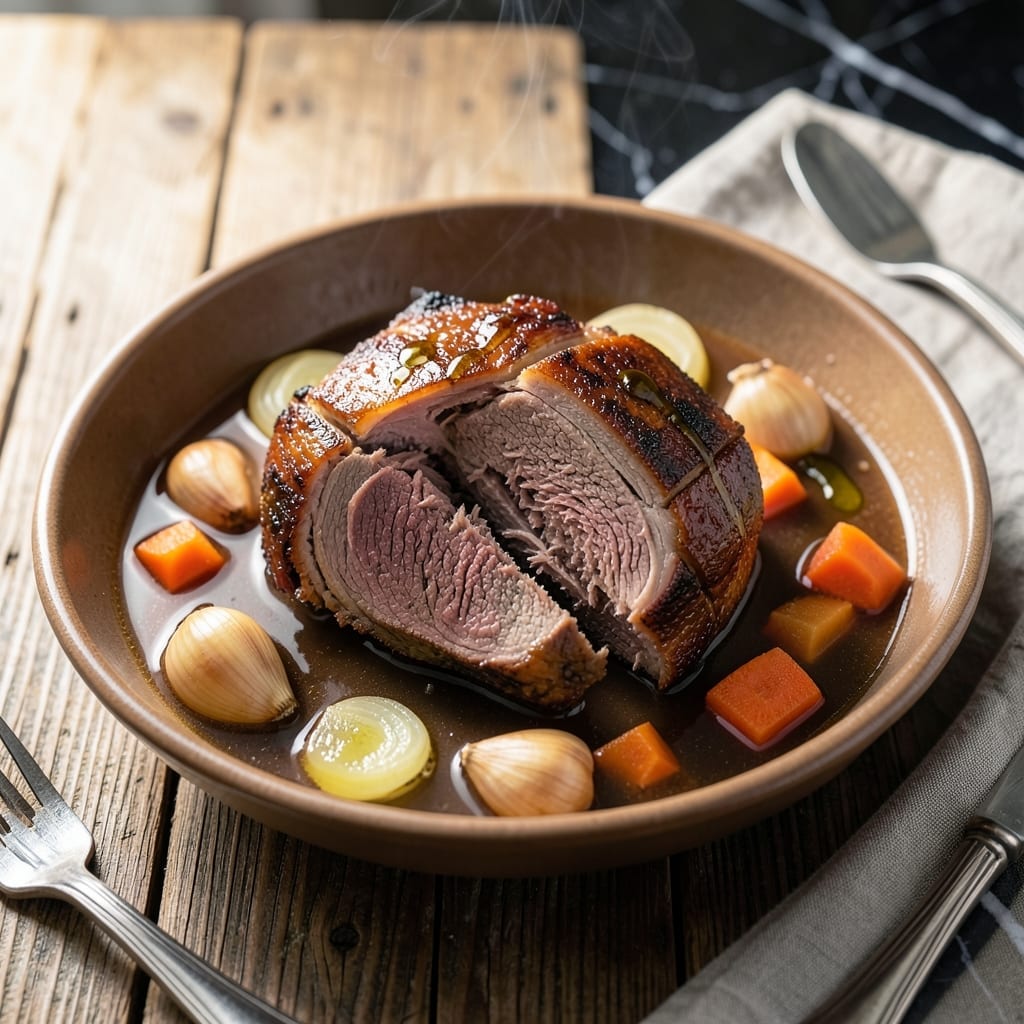
Slow cooking transforms tough bison chuck into fall-apart tender perfection with almost no hands-on effort. This method coaxes maximum flavor from wild game while keeping preparation simple and reliable.
The crock pot works its magic over 6-8 hours, allowing connective tissue to break down gradually. Low, steady heat ensures the bison stays moist and develops deep, savory richness without drying out.
What emerges is a melt-in-your-mouth roast with complex flavors that belie the minimal prep. The meat absorbs every spice and aromatics, creating a dish that feels special yet approachable.
Ideal for busy days when you want restaurant-quality results with set-it-and-forget-it convenience. Here’s how to achieve that perfect texture every time.
Ingredients for Bison Chuck Roast Crock Pot
Quality ingredients transform tough wild game into tender, restaurant-worthy perfection with minimal effort.
| Ingredient | Amount | Notes |
|---|---|---|
| Bison Chuck Roast 🥩 | 2 ½ lb | Well-marbled, trimmed of excess fat |
| Kosher Salt 🧂 | 1 ½ tsp | Diamond Crystal preferred for even seasoning |
| Black Pepper 🌶️ | 1 tsp | Freshly ground for maximum aroma |
| Garlic Cloves 🧄 | 6 cloves | Minced for even distribution |
| Yellow Onion 🧅 | 1 whole | Large, diced into 1-inch pieces |
| Beef Broth 💧 | 2 cups | Low-sodium preferred for control |
| Tomato Paste 🍅 | 2 tbsp | Concentrated for depth of flavor |
| Worcestershire Sauce 🫒 | 1 tbsp | Adds umami complexity to wild game |
| Dried Thyme 🌿 | 1 tsp | Rubbed between fingers to release oils |
| Dried Rosemary 🍃 | 1 tsp | Crushed to enhance fragrance |
| Bay Leaves 🌿 | 2 pieces | Whole, removed before serving |
| Olive Oil 🫒 | 1 tbsp | For searing roast |
| Carrots 🥕 | 3 whole | Peeled, cut into 2-inch chunks |
| Celery Stalks 🌿 | 2 whole | Cut into 2-inch pieces |
The bison chuck roast is paramount for this preparation. Sourced from reputable wild game suppliers or specialty grocers like Whole Foods, look for pieces with visible marbling—this fat renders down during the long cook, ensuring moisture. The roast should be deep red, not brown, indicating freshness. Avoid pre-cut stew meat; a whole chuck allows you to control the size and quality of each piece.
No bison available? Beef chuck roast works as a substitute, though it lacks the gamey depth. Vegetable broth can replace beef broth at a 1:1 ratio, but the flavor profile will be lighter. Fresh herbs can be used at three times the amount of dried. For the Worcestershire sauce, soy sauce plus a pinch of sugar mimics the tangy-savory balance if needed.
The roast can be prepped the night before—sear, season, and refrigerate until morning. Cooked bison keeps 4-5 days in the fridge or freezes beautifully for 3 months. Strain and reduce the cooking liquid for a rich sauce to serve alongside the meat.
Why You’ll Love This Recipe
- Set and Forget: I toss everything in the crock pot before work and come home to a house that smells like a cozy cabin.
- Rich, Hearty Taste: That bison chuck roast soaks up the garlic and onion flavors in a way that makes every bite deeply satisfying.
- Feeds the Freezer: One batch gives me leftovers for tacos, sandwiches, and stew—honestly, it’s my meal prep MVP.
- Budget-Friendly Luxury: I get that gourmet taste without the steakhouse price, and bison’s lean richness feels like a treat.
Step-by-Step Instructions for Bison Chuck Roast Crock Pot
This method ensures fall-apart tender meat with rich, developed flavors using your slow cooker.
Step 1: Sear the Bison Chuck Roast
Heat the 1 tbsp olive oil in a large skillet over medium-high heat until shimmering. Pat the 2.5 lb bison chuck roast dry and season aggressively with the 1.5 tsp kosher salt and 1 tsp black pepper, pressing the seasoning into the meat.
Sear the roast for 4-5 minutes per side until deeply browned on all surfaces. This step builds a flavorful crust and renders some fat before the slow cook. Don’t rush—you want a rich, dark sear that will translate into deeper flavor in the final dish.
Step 2: Prepare Aromatics and Deglaze
In the same skillet, add the 1 whole yellow onion, 3 whole carrots, and 2 whole celery stalks. Sauté for 3-4 minutes until the vegetables begin to soften and develop color.
Add the 6 cloves garlic cloves, 2 tbsp tomato paste, 1 tsp dried thyme, 1 tsp dried rosemary, and 1 tbsp Worcestershire sauce. Cook for 1 minute, stirring constantly, until fragrant. Deglaze with ½ cup of the 2 cups beef broth, scraping up all browned bits.
Step 3: Slow Cook Until Tender
Transfer the seared bison chuck roast to your crock pot. Pour the vegetable mixture and remaining 1½ cups beef broth over the roast. Add the 2 pieces bay leaves, ensuring they’re submerged in the liquid.
Cover and cook on low for 8-10 hours or high for 5-6 hours. The roast is done when it shreds easily with a fork and reaches an internal temperature of 195-200°F. The long, slow cooking time breaks down the connective tissue in the bison, transforming it into melt-in-your-mouth tenderness.
Step 4: Rest and Serve
Carefully remove the bison chuck roast from the crock pot and place it on a serving platter. Discard the bay leaves. Let the meat rest for 10 minutes to allow the juices to redistribute.
Skimming excess fat from the cooking liquid is optional. I prefer to serve the roast with the vegetables and a generous ladle of the rich, savory cooking liquid over the top. Shred or slice against the grain before serving to showcase the incredible tenderness achieved through this method.
Pro Tips For Making Bison Chuck Roast Crock Pot
- Sear the Bison: I learned this the hard way—skipping the sear leaves the roast bland. Use a hot pan with a little oil to brown the bison chuck on all sides before it hits the crock pot.
- Slice Onions Thick: Thin slices disappear into the sauce; cut your yellow onion into ½-inch chunks so they hold up and add texture after 6-8 hours of cooking.
- Resist Overcrowding: Sounds weird, but it works: leave at least an inch of space at the top of the crock pot so the heat circulates evenly and the bison doesn’t steam instead of braise.
- Add Garlic Late: After burning three batches, I finally figured out that tossing whole garlic cloves in during the last hour prevents bitterness and keeps their flavor fresh.
Dietary Considerations for This Recipe
Lean Protein Power
Bison is naturally leaner than beef, with about 2.4 grams of fat per ounce compared to beef’s 8-10 grams. This makes it an excellent choice for heart-healthy meals without sacrificing flavor. The slow cooking process ensures the meat stays moist despite its lower fat content. 💪
Gluten-Free Friendly
This recipe is naturally gluten-free as written. The only potential concern is the Worcestershire sauce, which often contains malt vinegar. Look for brands like Lea & Perrins that offer gluten-free versions to keep the dish completely safe.
All other ingredients—bison, vegetables, herbs, and broth—are inherently gluten-free, making this a worry-free option for anyone with sensitivities.
Low-Carb Adaptations
To reduce carbs, simply omit the carrots or replace with 1 cup chopped mushrooms. This cuts the carb count by about 12 grams per serving while maintaining the dish’s hearty texture. The tomato paste contributes minimal carbs at just 3 grams per tablespoon.
Allergen Notes
This recipe contains no dairy, nuts, or eggs, making it suitable for most common allergies. However, always check your beef broth label—some brands contain soy or milk derivatives. I recommend Bonafide Provisions for clean, simple ingredients.
Paleo-Friendly
The entire ingredient list aligns with paleo guidelines. Bison is a grass-fed, wild game protein, and all vegetables and seasonings are whole-food based. Just ensure your Worcestershire sauce is paleo-approved, as traditional versions may contain sugar or additives. 🥗
Nutrition Facts
Frequently Asked Questions
Do I need to sear the bison before slow cooking?
Yes, searing is highly recommended. It develops a flavorful crust and enhances the depth of the finished dish. Spend 4-5 minutes per side over medium-high heat for best results.
Can I use beef instead of bison?
Use the same weight of beef chuck roast. The cooking time remains identical, though beef may have slightly more fat. The flavor will be milder than gamey bison.
How do I know when it’s done?
The roast is ready when it reaches 195-200°F internally and shreds easily with a fork. This typically takes 8-10 hours on low or 5-6 hours on high.
What if my roast turns out dry?
This usually means it cooked too long or at too high a temperature. Next time, check at the earlier end of the time range and ensure there’s enough liquid in the pot.

- 6 Oz Chocolate Chip Cookie Recipe: Perfectly Balanced Crispy Edges and Chewy Hearts - September 25, 2026
- 6-Inch Coffee Cake Recipe: Vanilla Bean Swirls and Buttery Streusel Topping - September 25, 2026
- 1 Hour Soup Recipe: Velvety Richness Without the Wait - September 25, 2026