
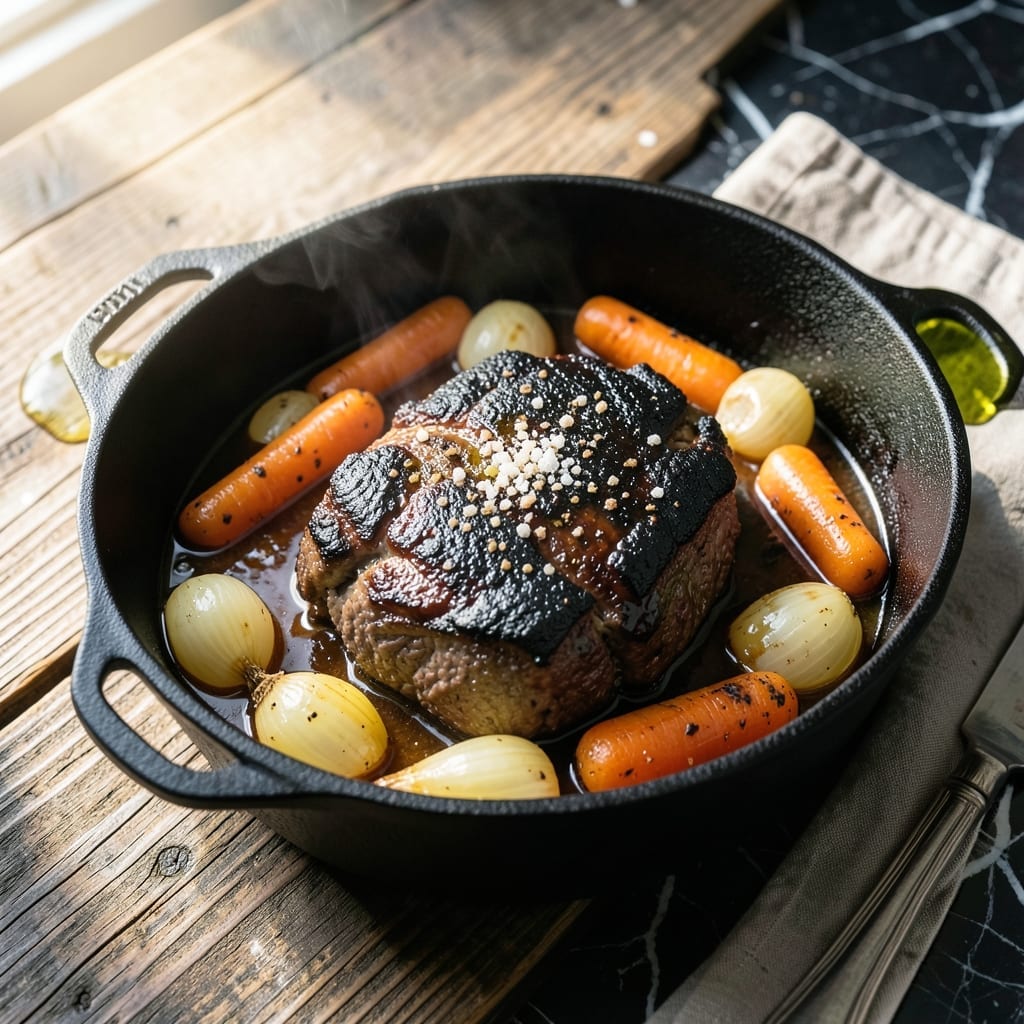
This slow-braised pot roast delivers deeply flavorful beef that falls apart at the touch of a fork. The low and slow cooking method transforms tough cuts into tender, juicy perfection while building a rich gravy from the natural juices.
What makes this recipe stand out is the careful browning of the meat and vegetables before braising. This creates a fond that dissolves into the cooking liquid, adding layers of depth to the final gravy.
The result is a hearty, comforting dish with beef so tender it nearly melts in your mouth, surrounded by vegetables that have absorbed all the savory flavors. The gravy is thick enough to coat every bite without being heavy.
Perfect for Sunday dinners or special occasions, this pot roast serves a crowd and tastes even better the next day.
Ingredients for Black Pot Roast
Slow-braised beef and hearty vegetables create a deeply flavorful, comforting meal.
| Ingredient | Amount | Notes |
|---|---|---|
| Chuck Roast 🥩 | 4 lb | Well-marbled, boneless preferred |
| Kosher Salt 🧂 | 2 tsp | Diamond Crystal recommended |
| Black Pepper 🌶️ | 1 tsp | Freshly ground preferred |
| Olive Oil 🫒 | 2 tbsp | Divided for browning |
| Yellow Onions 🧅 | 2 whole | Medium-sized, rough chopped |
| Carrots 🥕 | 4 whole | Large, peeled, cut into chunks |
| Celery Stalks 🥬 | 3 pieces | Cut into 2-inch pieces |
| Garlic Cloves 🧄 | 6 cloves | Smashed, peeled |
| Red Wine 🍷 | 2 cups | Dry variety like Cabernet |
| Beef Stock 🥩 | 3 cups | Low-sodium preferred |
| Tomato Paste 🍅 | 2 tbsp | For depth of flavor |
| Fresh Thyme Sprigs 🌿 | 4 pieces | Or 1 tsp dried thyme |
| Bay Leaves 🍃 | 2 pieces | Dried, whole |
| All-Purpose Flour 🌾 | 2 tbsp | For thickening gravy |
| Water 💧 | 1 cup | As needed for gravy |
The chuck roast is non-negotiable here—it’s the marbling that melts into the gravy after hours of braising. Look for a well-marbled piece at Whole Foods or your local butcher. Avoid lean cuts like sirloin; they’ll dry out. The wine should be dry and drinkable (if you wouldn’t sip it, don’t cook with it). Trader Joe’s has great affordable options that work perfectly for cooking.
No red wine? Substitute beef broth with 1 tbsp balsamic vinegar for acidity. Fresh thyme not available? Use one-third the amount of dried. The tomato paste can be swapped for 1 tbsp ketchup in a pinch, though the flavor will be slightly sweeter. For the stock, Better Than Bouillon makes a rich base if you’re using concentrate.
This tastes even better the next day—store in the fridge for up to 4 days. Freeze portions for up to 3 months. Reheat gently on the stove with a splash of water to thin the gravy (it thickens as it cools).
Why You’ll Love This Recipe
- I’ll be real: a chuck roast is cheap, and with just salt, pepper, and onions, it tastes like a fancy meal.
- Set and Forget: Honestly, I just sear the chuck roast, toss in onions, salt, pepper, and let the oven do the work for hours.
- Deep Rich Flavor: The slow cooking turns the olive oil and caramelized onions into this ridiculous gravy that soaks into every bite.
- Feeds Everyone: Between us, this one pot serves my whole family plus leftovers for sandwiches the next day.
Step-by-Step Instructions for Black Pot Roast
Here’s the method. Straightforward, tested, works every time.
Step 1: Sear the Chuck Roast to Lock in Flavor
Pat the 4 lb chuck roast dry with paper towels and season generously with the 2 tsp kosher salt and 1 tsp black pepper. Heat 1 tbsp olive oil in a large Dutch oven over medium-high heat until shimmering.
Add the roast and sear for 4-5 minutes per side until deeply browned. You want a rich, dark crust—this builds the foundation for your gravy. Don’t rush this step; the Maillard reaction needs time to develop complex flavors. Transfer the roast to a plate and set aside.
Step 2: Sauté Aromatics and Deglaze the Pan
In the same pot, add the remaining 1 tbsp olive oil if needed. Add the 2 whole yellow onions, 4 whole carrots, and 3 pieces celery stalks, cooking for 5-6 minutes until softened and beginning to caramelize.
Stir in the 6 cloves garlic cloves and 2 tbsp tomato paste, cooking for 1-2 minutes until the tomato paste darkens slightly. Pour in the 2 cups red wine, scraping up all the browned bits from the bottom of the pot. Let it simmer for 3-4 minutes until reduced by half.
Step 3: Braise the Roast Until Fork-Tender
Return the seared roast to the pot. Add the 3 cups beef stock, 4 pieces fresh thyme sprigs, and 2 pieces bay leaves. The liquid should come about halfway up the roast. Bring to a simmer, then cover and transfer to a preheated 325°F oven.
Braise for 2.5 to 3 hours, turning the roast halfway through, until it’s fork-tender and the internal temperature reaches 195-200°F. The meat should pull apart easily with a fork—this ensures melt-in-your-mouth tenderness.
Step 4: Make the Rich Gravy
Remove the roast and strain the braising liquid into a saucepan, discarding solids. Skim off excess fat. In a small bowl, whisk the 2 tbsp all-purpose flour with 1 cup water until smooth. Slowly whisk this slurry into the simmering liquid.
Cook for 5-7 minutes until the gravy thickens enough to coat the back of a spoon. Taste and adjust seasoning with additional kosher salt or black pepper if needed. The gravy should be rich, glossy, and full of depth from the braising process.
Pro Tips For Making Black Pot Roast
- Sear the Chuck: Use high heat and a heavy pot to get a deep brown crust on the chuck roast—this builds the rich flavor base for your black pot roast. I learned this the hard way after skipping it once and ending up with a bland, gray roast.
- Season Aggressively: Don’t be shy with the kosher salt and black pepper; the chuck roast needs a thick, even coating to stand up to the long cooking time. I use about 1 tablespoon of salt per pound—sounds like a lot, but it works.
- Don’t Rush the Onions: Cook the yellow onions until they’re deeply caramelized, almost jammy, before adding any liquids. After burning three batches, I finally figured out that low and slow is the only way to get that sweet, rich depth.
- Rest Before Slicing: Let the chuck roast rest for at least 15 minutes under foil after cooking—this keeps all the juices inside the meat instead of on your cutting board. My grandmother swore by this, and she was right.
Common Mistakes When Making This Dish
Skipping the Sear
I know it’s tempting to save time, but skipping the sear means missing out on the Maillard reaction that creates deep, complex flavors. Those browned bits form the base of your gravy. Always take the 4-5 minutes per side to develop that rich crust.
Using the Wrong Cut
Lean cuts like sirloin won’t work here—you need the marbling from a chuck roast to stay juicy after hours of braising. I always ask my butcher for a well-marbled, 4 lb piece. The fat melts into the gravy, making every bite luxurious.
Overcrowding the Pot
If you add all the vegetables at once, they’ll steam instead of caramelize. Sauté the onions, carrots, and celery in batches if needed. This ensures each piece gets proper browning, adding layers of flavor to your dish.
Not Enough Liquid
The braising liquid should come about halfway up the roast. Use the full 3 cups beef stock plus 2 cups red wine—this keeps the meat moist and creates enough gravy. Check halfway through cooking and add 1 cup water if it’s looking dry. 💡
Rushing the Braise
Low and slow is the only way to achieve fork-tender meat. Don’t crank the oven above 325°F—this can make the roast tough. I set a timer for 2.5 hours and check for doneness then. The internal temp should hit 195-200°F.
Forgetting to Skim
After braising, skim off the excess fat from the liquid before making gravy. This prevents a greasy finish. I use a fine-mesh skimmer to remove the layer of fat that rises to the top—it only takes a minute but makes a big difference.
Nutrition Facts
Frequently Asked Questions
What’s the best cut for this dish?
Use a well-marbled chuck roast for the juiciest results. The fat content keeps it moist during the long braise and melts into the gravy.
Can I make this in a slow cooker?
Yes! Sear the roast first, then cook on low for 8-10 hours or high for 5-6 hours. The flavor will be slightly less complex than oven-braising.
How do I know when it’s done?
The meat should pull apart easily with a fork. Check that the internal temperature reaches 195-200°F. This ensures perfect tenderness.
What can I use instead of red wine?
Substitute beef broth with 1 tbsp balsamic vinegar for acidity. The vinegar mimics the wine’s depth and balances the rich flavors.

- 4C Bread Crumbs Meatballs Recipe: Crispy Crust and Juicy Centers - September 25, 2026
- 6 Oz Chocolate Chip Cookie Recipe: Perfectly Balanced Crispy Edges and Chewy Hearts - September 25, 2026
- 6-Inch Coffee Cake Recipe: Vanilla Bean Swirls and Buttery Streusel Topping - September 25, 2026