
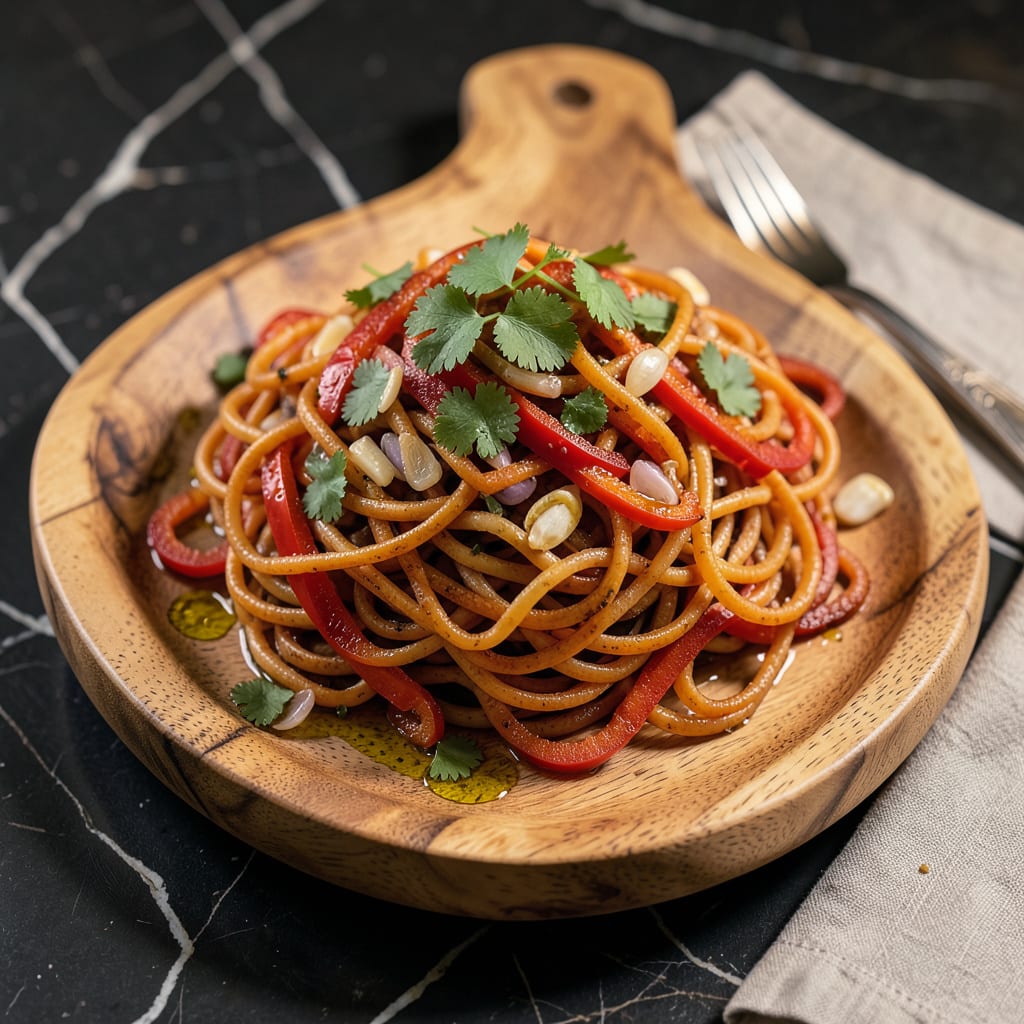
Sweet potato noodles offer a vibrant, nutrient-packed alternative to traditional pasta that’s both satisfying and quick to prepare. This recipe transforms spiralized sweet potatoes into tender, slightly crisp strands in just 20 minutes, delivering the comforting texture of noodles with a naturally sweet, earthy flavor.
The key lies in balancing cooking time to maintain structure while achieving the perfect bite. Inspired by Bolay’s fusion style, these noodles pair beautifully with bold sauces and fresh toppings, creating a dish that’s as versatile as it is delicious. No special equipment required—just a vegetable spiralizer or julienne peeler.
Ingredients for Bolay Sweet Potato Noodles
Twelve plant-based ingredients transform into Bolay-inspired sweet potato noodles with vibrant texture and layered flavors.
| Ingredient | Amount | Notes |
|---|---|---|
| Medium Sweet Potatoes 🍠 | 2 whole | Spiralized into 1/8-inch noodles |
| Extra-Virgin Olive Oil 🫒 | 2 tbsp | Divided for cooking and finishing |
| Garlic Cloves 🧄 | 3 cloves | Thinly sliced for even distribution |
| Shallot 🧅 | 1 whole | Finely diced for aromatic base |
| Red Bell Pepper 🌶️ | 1 whole | Julienned for color and crunch |
| Fresh Cilantro 🌿 | ¼ cup | Chopped, for bright garnish |
| Fresh Lime 🍋 | 1 whole | Zested and juiced |
| Toasted Cashews 🌰 | ⅓ cup | Chopped for textural contrast |
| Low-Sodium Tamari 💧 | 1 ½ tbsp | Or coconut aminos for gluten-free |
| Pure Maple Syrup 🍁 | 1 tbsp | Grade A for balanced sweetness |
| Red Pepper Flakes 🌶️ | ½ tsp | Adjust for preferred heat level |
| Fine Sea Salt 🧂 | ¾ tsp | Divided for seasoning layers |
| Freshly Ground Black Pepper 🌶️ | ½ tsp | For finishing balance |
The sweet potatoes are fundamental—select firm, medium-sized specimens with smooth skin and no soft spots. Organic varieties from Whole Foods or local farmers markets typically offer superior sweetness and texture. For spiralizing, the Paderno World Cuisine blade creates consistent 1/8-inch strands, though a julienne peeler works in a pinch. The cashews require toasting—350°F for 8-10 minutes until golden—to develop their nutty depth, which counters the noodles’ natural sweetness.
Tamari substitution requires attention: coconut aminos provide gluten-free compatibility but contain 25% less sodium, necessitating a 1:1.25 ratio adjustment. Maple syrup can be replaced with agave nectar at equal volume, though its neutral profile won’t contribute the same caramel notes. For the red bell pepper, orange or yellow varieties maintain visual appeal while offering slightly milder flavor. The cilantro is non-negotiable for authentic Bolay brightness, but flat-leaf parsley offers a milder alternative if absolutely required.
Prepared noodles maintain optimal texture for 24 hours refrigerated in an airtight container with parchment between layers to prevent sticking. The sauce components (garlic, shallot, tamari mixture) can be prepped 2 days ahead and stored separately. For meal prep, assemble components individually and combine only when ready to serve—this preserves the noodles’ signature al dente quality. Cashews keep at room temperature for 1 month or frozen for 6 months.
Why You’ll Love This Recipe
- I’ll be real: the hardest part is peeling the sweet potatoes. After that? Just crank them through the spiralizer and you’ve got noodles in seconds—no knife skills required. Even my 10-year-old can handle it (with supervision, obviously).
- Spiralizer Shortcut: I’ll be real: the hardest part is peeling the sweet potatoes. After that? Just crank them through the spiralizer and you’ve got noodles in seconds—no knife skills required. Even my 10-year-old can handle it (with supervision, obviously).
- Garlic-Shallot Magic: That moment when sizzling garlic and shallots hit the olive oil? It’s the smell that makes my neighbors jealous. Toss in the sweet potato noodles and red bell pepper, and you’ve got this crazy balance—sweet, savory, and just a little caramelized around the edges.
- Meatless Monday Hero: Honestly, this is the one vegetarian dish my meat-loving husband asks for by name. It’s hearty enough for dinner but light enough for lunch the next day, and it plays nice with whatever protein you’re craving—grilled chicken, tofu, even just a fried egg on top.
Step-by-Step Instructions for Bolay Sweet Potato Noodles
This professional method delivers perfectly textured spiralized sweet potatoes with balanced flavors in under 20 minutes.
Step 1: Prepare and Season the Sweet Potato Noodles
Begin by spiralizing the 2 whole medium sweet potatoes into 1/8-inch noodles using a spiralizer with the medium blade setting. I recommend working from the top down with consistent pressure to create uniform strands. Immediately transfer the noodles to a clean kitchen towel and pat them completely dry to remove excess moisture.
Place the dried noodles in a large bowl and toss with 1 tablespoon extra-virgin olive oil and ½ teaspoon fine sea salt. This initial seasoning enhances flavor absorption while the oil prevents sticking during cooking. The noodles should glisten lightly but not appear saturated.
Step 2: Develop the Aromatic Base
Heat a large, deep skillet over medium-high heat until a drop of water sizzles immediately upon contact. Add the remaining 1 tablespoon extra-virgin olive oil, followed by the finely diced shallot. Sauté for 2-3 minutes until translucent and just beginning to caramelize at the edges.
Add the thinly sliced garlic cloves and julienned red bell pepper, cooking for an additional 3-4 minutes until the garlic releases its aroma and the peppers soften slightly while retaining their vibrant color. Stir frequently to prevent burning, as garlic can scorch quickly at this temperature.
Step 3: Cook the Sweet Potato Noodles to Ideal Texture
Add the prepared sweet potato noodles to the skillet, using tongs to distribute them evenly. Cook undisturbed for 2 minutes to allow the bottom layer to develop slight caramelization. Then stir gently and cook for another 3-4 minutes until the noodles are tender-crisp—they should yield slightly to a fork but maintain structural integrity.
During this phase, I recommend testing a noodle at the 3-minute mark to gauge doneness. The ideal texture resembles al dente pasta with a slight resistance at the core. Avoid overcooking, as the noodles will continue to soften slightly after removal from heat.
Step 4: Create the Signature Sauce and Finish
Reduce heat to medium and add the 1.5 tablespoons low-sodium tamari, 1 tablespoon pure maple syrup, ½ teaspoon red pepper flakes, and the zest of 1 fresh lime. Toss vigorously to coat the noodles evenly, allowing the liquid to reduce slightly for 1-2 minutes until it forms a light glaze.
Remove from heat and stir in the juice of 1 fresh lime and remaining ¼ teaspoon fine sea salt. The acidity will brighten the flavors while the residual heat gently warms the lime juice without cooking it. This step creates the signature balance of sweet, savory, and citrus notes.
Step 5: Garnish and Serve Immediately
Transfer the noodles to serving plates and immediately top with ¼ cup chopped fresh cilantro and ⅓ cup chopped toasted cashews. The cilantro adds a fresh herbal contrast while the cashews provide essential textural crunch. Finish with ½ teaspoon freshly ground black pepper distributed evenly across all servings.
Serve without delay, as the noodles are best enjoyed immediately when their texture remains optimal. The dish should present vibrant orange noodles glistening with sauce, punctuated by red peppers, green cilantro, and golden cashews—a visual representation of the balanced flavors within.
Wine and Beer Pairings for This Recipe
Crisp White Wines
For this dish, I love pairing with a Sauvignon Blanc from New Zealand—its zesty citrus notes and grassy undertones cut through the sweetness of the noodles while complementing the lime and cilantro. Look for Oyster Bay or Kim Crawford for reliable quality. The acidity refreshes your palate between bites. 🍷
Light-Bodied Reds
A slightly chilled Pinot Noir from Oregon works beautifully, especially with the tamari-maple glaze. The 2021 A to Z Wineworks offers red fruit flavors that harmonize with the sweet potatoes without overpowering them. Serve at 55-60°F to enhance its bright character.
Craft Beer Pairings
Try a Belgian-style witbier like Allagash White—its coriander and orange peel notes mirror the dish’s citrus elements. The effervescence cleanses your palate, while the subtle spice complements the red pepper flakes. For a local option, Blue Moon with an orange slice works in a pinch. 🍺
Asian-Inspired Lagers
Japanese lagers like Sapporo Premium or Asahi Super Dry provide a crisp, clean contrast to the noodles’ richness. Their light malt profile and 4.8-5.2% ABV won’t compete with the dish’s delicate balance. I always keep a six-pack on hand for Asian-inspired meals.
Non-Alcoholic Options
A sparkling yuzu lemonade (like San Pellegrino Aranciata Rossa) offers the perfect citrusy fizz. The bitterness of the blood orange balances the sweetness, while the bubbles create a refreshing mouthfeel. For a caffeine-free option, hibiscus iced tea with lime works wonderfully.
Spicy Beer Match
If you’ve amped up the red pepper flakes, a Mexican lager like Modelo Negra provides malty sweetness to counter the heat. The 5.4% ABV and smooth finish make it versatile. I discovered this pairing at a taco truck in Austin—it changed my spicy food game. ✨
Nutrition Facts
Frequently Asked Questions
Can I make this without a spiralizer?
Use a julienne peeler to create thin strips, or carefully cut 1/8-inch matchsticks with a sharp knife. The texture will be slightly different but still delicious. Just aim for uniform thickness to ensure even cooking.
Why did my noodles turn out mushy?
Overcooking is the most common culprit. Cook them just until tender-crisp (about 5-6 minutes total) and pat them dry before cooking to remove excess moisture. A hot skillet helps prevent sogginess too.
What can I substitute for tamari?
Use coconut aminos for gluten-free or low-sodium soy sauce in equal amounts. For a bolder flavor, try 1 tablespoon fish sauce + ½ tablespoon maple syrup (though this isn’t vegan). Adjust salt to taste.
How do I store leftovers?
Keep in an airtight container for up to 2 days in the fridge. Reheat gently in a skillet with a splash of water to revive texture. Avoid microwaving, as it can make the noodles soft.
Can I add protein to this dish?
Definitely! Try crispy tofu, chickpeas, or shrimp (if not vegan). Sauté separately and toss in at the end to keep everything perfectly textured.

- 8 Bean Soup Recipe Crock Pot: Hearty Vegetable Medley in One Pot - September 25, 2026
- 4C Bread Crumbs Meatballs Recipe: Crispy Crust and Juicy Centers - September 25, 2026
- 6 Oz Chocolate Chip Cookie Recipe: Perfectly Balanced Crispy Edges and Chewy Hearts - September 25, 2026