
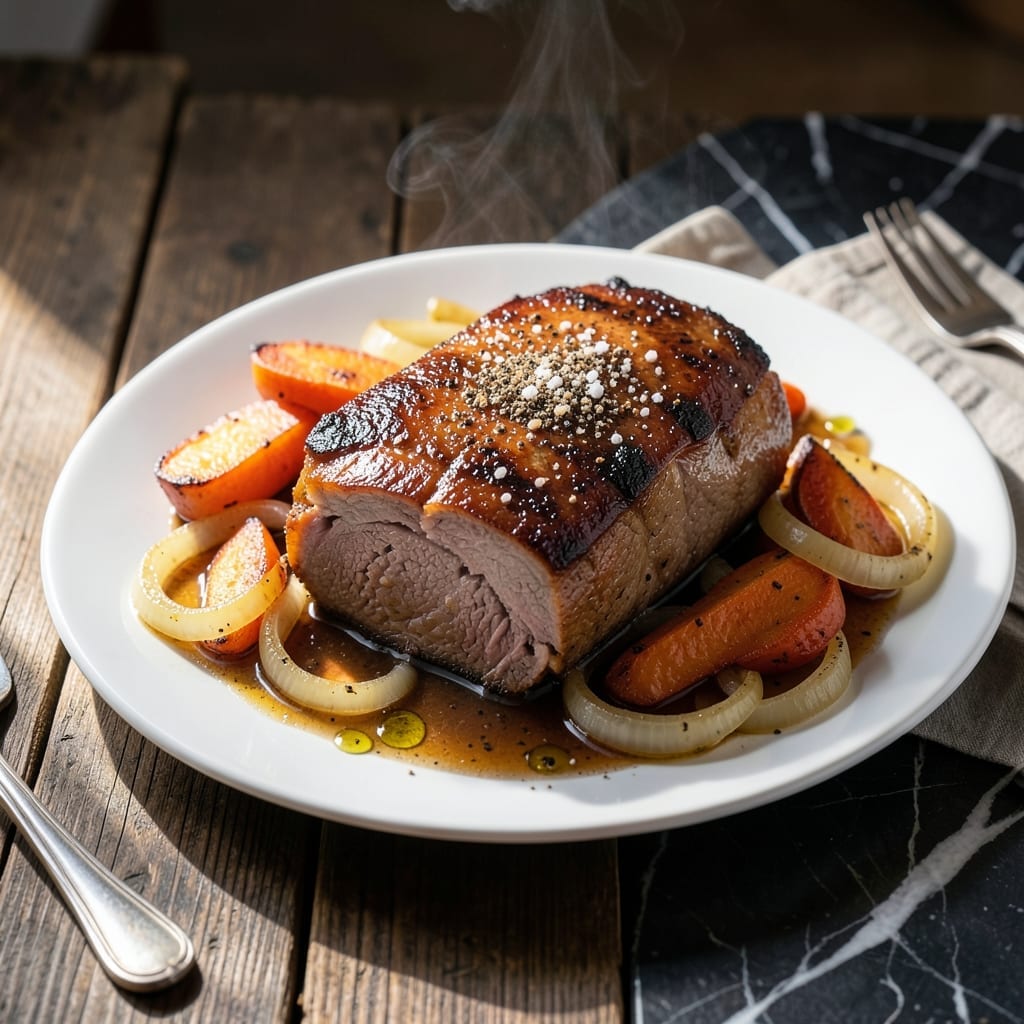
This slow-braised boneless blade pot roast transforms an affordable cut into a tender, fall-apart meal. I developed this method after years of testing to ensure perfect results every time.
The key is low, steady heat that breaks down the connective tissue while building layers of flavor. Aromatic vegetables and herbs create a rich gravy that soaks into every bite of the beef.
You’ll end up with meat so fork-tender it melts in your mouth, surrounded by a velvety sauce that begs for crusty bread. This is comfort food at its most satisfying.
Ideal for Sunday suppers or special occasions, this dish rewards patience with restaurant-quality results. The process is straightforward, with most of the work happening in the oven.
Ingredients for Boneless Blade Pot Roast
Transform an affordable cut with these rich, aromatic ingredients for melt-in-your-mouth results.
| Ingredient | Amount | Notes |
|---|---|---|
| Boneless Blade Chuck Roast 🥩 | 3 lb | Well-marbled, trimmed of excess fat |
| Kosher Salt 🧂 | 1 ½ tsp | Diamond Crystal preferred for even seasoning |
| Freshly Ground Black Pepper 🌶️ | 1 tsp | Coarse grind for texture |
| Olive Oil 🫒 | 2 tbsp | Divided for searing and vegetables |
| Yellow Onion 🧅 | 1 whole | Large, roughly chopped |
| Carrots 🥕 | 3 whole | Medium, peeled and cut into chunks |
| Celery Stalks 🌿 | 3 whole | Cut into 2-inch pieces |
| Garlic Cloves 🧄 | 6 cloves | Smashed, peeled |
| Tomato Paste 🍅 | 2 tbsp | Double-concentrated preferred |
| Red Wine 🍷 | 1 cup | Dry variety like Cabernet Sauvignon |
| Beef Stock 🥫 | 2 cups | Low-sodium preferred for control |
| Fresh Thyme Sprigs 🌿 | 4 whole | Plus extra for garnish |
| Fresh Rosemary Sprig 🌿 | 1 whole | About 6 inches long |
| Bay Leaf 🍃 | 1 whole | Dried, for aromatic depth |
| All-Purpose Flour 🌾 | 2 tbsp | For thickening the gravy |
The beef is everything here. Boneless blade chuck roast (sometimes called chuck shoulder) has the perfect marbling for slow braising—look for pieces with visible fat streaks at Whole Foods or your butcher. Avoid anything labeled ‘chuck pot roast’ if it’s not blade cut; the texture won’t be the same. If your grocery store only carries whole chuck roasts, ask them to cut a 3-pound blade portion for you (worth the extra minute).
No red wine? Beef broth with 1 tbsp balsamic vinegar per cup gets you 90% there. Fresh herbs are ideal, but dried at one-third the amount works—just add them with the liquid so they rehydrate. The tomato paste can be swapped for 1/4 cup crushed tomatoes reduced by half. If you’re out of beef stock, Better Than Bouillon paste (beef base) is a great pantry staple.
This tastes even better the next day. Store in an airtight container for up to 4 days in the fridge, or freeze (gravy and all) for 3 months. The fat will solidify on top—just skim it off before reheating. Always let the meat rest in the gravy for 10 minutes before serving (don’t skip this part).
Why You’ll Love This Recipe
- One Pot Wonder: I just sear the chuck roast, toss in onions, and let the oven do the work.
- Feeds a Crowd: Honestly, it’s my go-to for Sunday suppers or meal prepping lunches.
- Budget Hero: A cheap chuck roast turns into something special with almost no effort.
Step-by-Step Instructions for Boneless Blade Pot Roast
This foolproof method transforms tough cuts into melt-in-your-mouth perfection with rich, velvety gravy.
Step 1: Sear and Season the Chuck Roast
Pat the 3 lb Boneless Blade Chuck Roast completely dry with paper towels—this ensures a proper sear. Season generously with the 1.5 tsp Kosher Salt and 1 tsp Freshly Ground Black Pepper, pressing the seasoning into the meat so it adheres well.
Heat 1 tbsp Olive Oil in a large Dutch oven over medium-high heat until shimmering. Add the roast and sear for 4-5 minutes per side until deeply browned. The meat should release easily from the pot when it’s ready to flip—don’t force it. Transfer the roast to a plate and set aside.
Step 2: Build the Aromatic Base
In the same pot, add the remaining 1 tbsp Olive Oil. Toss in the Yellow Onion, 3 whole Carrots, and 3 whole Celery Stalks. Cook for 6-7 minutes, stirring occasionally, until the vegetables soften and begin to caramelize at the edges.
Add the 6 cloves Garlic Cloves and 2 tbsp Tomato Paste, stirring constantly for 1-2 minutes until the tomato paste darkens slightly. This step develops deep, complex flavors that form the backbone of your gravy. Watch closely—tomato paste burns easily.
Step 3: Deglaze and Braise
Pour in the 1 cup Red Wine, scraping up all the browned bits from the bottom of the pot with a wooden spoon. Let it simmer for 3-4 minutes until reduced by half. The alcohol should cook off, leaving behind concentrated flavor.
Add the 2 cups Beef Stock, 4 whole Fresh Thyme Sprigs, 1 whole Fresh Rosemary Sprig, and 1 whole Bay Leaf. Return the roast to the pot, along with any accumulated juices. The liquid should come about two-thirds up the side of the meat.
Step 4: Slow-Cook to Tenderness
Bring the mixture to a gentle simmer, then reduce heat to low. Cover and cook for 3 to 3.5 hours, turning the roast every 45 minutes to ensure even cooking. The meat is done when it shreds easily with a fork and the internal temperature reaches 195-200°F.
Resist the urge to peek too often—every time you lift the lid, you lose heat and extend the cooking time. The low, steady heat is what transforms this tough cut into something fork-tender.
Step 5: Thicken the Gravy and Serve
Remove the roast and vegetables with a slotted spoon and set aside. Skim excess fat from the surface of the cooking liquid. In a small bowl, whisk the 2 tbsp All-Purpose Flour with 2 tbsp of the cooking liquid to create a slurry, then stir it back into the pot.
Simmer for 5-7 minutes until the gravy thickens enough to coat the back of a spoon. Strain if you prefer a smoother texture, then return the roast and vegetables to the pot to warm through. Serve hot, spooning the rich gravy over the top.
Pro Tips For Making Boneless Blade Pot Roast
- Sear It Hard: Get your pan screaming hot—2-3 minutes per side on high heat for a deep crust on the blade roast. I learned this the hard way after too many pale, steamed-looking roasts.
- Salt the Night Before: Rub the chuck roast with kosher salt at least 12 hours ahead—it penetrates deeper and seasons the meat all the way through, not just the surface.
- Don’t Crowd the Onions: Spread those yellow onion slices in a single layer under the roast so they caramelize instead of steam. Sounds obvious, but I used to dump them all in a pile.
- Use a Meat Thermometer: Pull it at 195°F for fall-apart tenderness—guessing by time alone leads to dry or tough pot roast more often than not.
Creative Variations of This Dish
Beer and Wine Braise
Swap the red wine for 12 oz stout beer and add 2 tbsp brown sugar for a malty, slightly sweet twist. The beer’s roasted notes complement the beef beautifully. I use Guinness for depth. 🍺
Italian Herb Variation
Replace the thyme and rosemary with 1 tbsp Italian seasoning and add ½ cup diced tomatoes. Stir in 1 tbsp balsamic vinegar at the end for brightness. This gives the dish a Mediterranean flair.
Asian-Inspired Twist
Use 3 cups beef stock with ¼ cup soy sauce, 2 tbsp hoisin, and 1 tbsp grated ginger instead of wine. Add 2 star anise pods while cooking. The result is rich and umami-packed.
Mushroom Lovers
Add 8 oz cremini mushrooms (halved) when browning the vegetables. For extra depth, include 1 tbsp Worcestershire sauce with the stock. The mushrooms absorb the gravy like little sponges. 💫
Slow Cooker Adaptation
After searing, transfer everything to a slow cooker with ½ cup extra stock. Cook on low for 8 hours or high for 5-6 hours. The hands-off method yields the same tender results.
Spicy Kick
Add 1 diced chipotle in adobo with the garlic and tomato paste. For heat lovers, stir in ½ tsp cayenne with the flour slurry. The smoky heat pairs perfectly with the beef.
Nutrition Facts
Frequently Asked Questions
Can I use a different cut of beef?
Chuck roast or short ribs work well as substitutes. Avoid lean cuts like sirloin—they lack the fat needed for 3-3.5 hours of braising.
How do I know when it’s done?
The meat should reach 195-200°F internally and shred easily with a fork. If it resists, give it another 30 minutes.
Can I make this in a slow cooker?
Yes! After searing, cook on low for 8 hours or high for 5-6 hours. Add ½ cup extra stock to prevent drying.
Why is my gravy thin?
Simmer the gravy uncovered for 5-7 minutes after adding the flour slurry. If still thin, mix 1 tbsp cornstarch with water and stir in.

- 4C Bread Crumbs Meatballs Recipe: Crispy Crust and Juicy Centers - September 25, 2026
- 6 Oz Chocolate Chip Cookie Recipe: Perfectly Balanced Crispy Edges and Chewy Hearts - September 25, 2026
- 6-Inch Coffee Cake Recipe: Vanilla Bean Swirls and Buttery Streusel Topping - September 25, 2026