
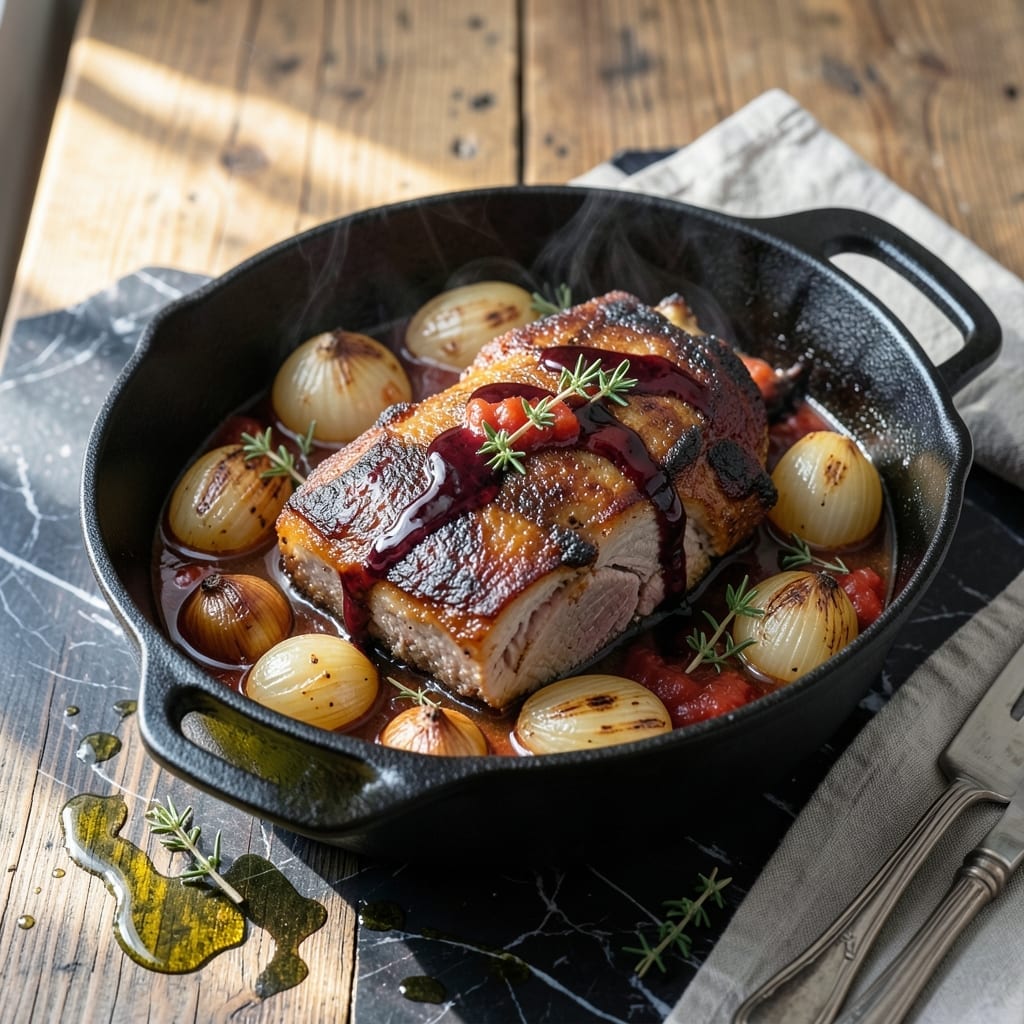
This slow cooker method transforms tough pork shoulder into fall-apart tender pot roast with minimal effort.
The secret lies in low, steady heat that breaks down collagen into rich, velvety gelatin. Caramelized onions add deep sweetness while maintaining their structure throughout the long cooking process.
You’ll achieve perfectly seasoned meat that shreds easily with a fork, swimming in a flavorful broth that begs to be soaked up with crusty bread.
Serve with mashed potatoes or roasted vegetables for a complete, comforting meal that tastes like it simmered all day.
Ingredients for Boston Butt Pot Roast
Transform pork shoulder into succulent pot roast with these essential ingredients for slow cooker magic.
| Ingredient | Amount | Notes |
|---|---|---|
| Boston Butt Pork Shoulder 🥩 | 3 lb | Boneless, well-marbled preferred |
| Yellow Onions 🧅 | 3 whole | Large, thinly sliced for caramelizing |
| Garlic Cloves 🧄 | 6 cloves | Peeled, smashed for robust flavor |
| Beef Broth 💧 | 2 cups | Low-sodium preferred for control |
| Dry Red Wine 🍷 | ½ cup | Cabernet Sauvignon or Merlot recommended |
| Tomato Paste 🍅 | 2 tbsp | For depth and umami |
| Apple Cider Vinegar 🍏 | 2 tbsp | Balances richness with acidity |
| Dijon Mustard 🟡 | 1 tbsp | Adds tangy complexity |
| Dried Thyme 🌿 | 1 tsp | Rubbed between fingers to release oils |
| Dried Rosemary 🍃 | 1 tsp | Crushed for maximum aroma |
| Bay Leaves 🌿 | 2 pieces | Whole, removed before serving |
| Kosher Salt 🧂 | 2 tsp | Diamond Crystal or Morton recommended |
| Black Pepper 🌶️ | 1 tsp | Freshly ground for best flavor |
| Olive Oil 🫒 | 2 tbsp | Extra-virgin for searing |
The pork shoulder is critical—Boston butt (despite the name) is actually pork shoulder with exceptional marbling. Source from Whole Foods or Costco for consistent quality. Look for pieces with visible fat streaks, as this renders down into that signature velvety texture. Caramelizing onions requires patience; use sweet yellow onions for the best balance of flavor and structure.
No dry red wine? Additional beef broth with 1 tbsp balsamic vinegar mimics the depth. Fresh herbs can substitute dried at one-third the amount. White wine vinegar works in place of apple cider in a pinch. For the mustard, whole-grain Dijon adds pleasant texture. If avoiding alcohol entirely, grape juice reduced by half offers similar sweetness without the wine.
Store raw pork in the fridge for up to 3 days or freeze for 6 months. Caramelized onions keep 5 days refrigerated. The cooked roast tastes even better the next day—reheat gently in its juices to maintain moisture.
Why You’ll Love This Recipe
- Set It and Forget: I just sear the pork, dump in the onions, garlic, broth, and wine, then let the oven do the work.
- Rich and Deep: The red wine and beef broth braise the Boston butt into this melt-in-your-mouth tenderness with layers of savory goodness.
- Feeds the Crew: I make it for Sunday supper and have enough for tacos or sandwiches the next day—my family never complains.
- Budget Hero: A cheap cut like pork shoulder turns into a showstopper with minimal effort, and leftovers stretch for days.
Step-by-Step Instructions for Boston Butt Pot Roast
Master these techniques for melt-in-your-mouth pork with rich caramelized depth.
Step 1: Sear the Pork Shoulder
Heat the 2 tbsp Olive Oil in a large Dutch oven over medium-high heat until shimmering. Pat the 3 lb Boston Butt Pork Shoulder dry with paper towels, then season aggressively with the 2 tsp Kosher Salt and 1 tsp Black Pepper, ensuring all surfaces are evenly coated.
Sear the pork on all sides for 8-10 minutes total, turning only when each side releases easily from the pan. You’re aiming for a deep mahogany crust—this Maillard reaction creates complex flavors that will infuse the entire dish. Don’t rush this step; under-searing means lost depth in your final result.
Step 2: Caramelize the Onions and Build the Base
Remove the pork and reduce heat to medium. Add the 3 whole Yellow Onions, thinly sliced, and cook for 10-12 minutes, stirring occasionally, until they turn a deep amber color. The natural sugars will caramelize, creating a sweet foundation that balances the pork’s richness.
Add the 6 cloves Garlic Cloves, smashed, and cook for 1 minute until fragrant. Stir in the 2 tbsp Tomato Paste, 1 tbsp Dijon Mustard, 1 tsp Dried Thyme, and 1 tsp Dried Rosemary, cooking for 2 minutes to toast the spices and deepen their aromas.
Step 3: Deglaze and Slow Cook
Pour in the 0.5 cup Dry Red Wine and scrape up all browned bits from the bottom of the pot with a wooden spoon. This deglazing step dissolves the fond—those caramelized bits into liquid gold. Let the wine reduce by half, about 3-4 minutes.
Return the pork to the pot and add the 2 cups Beef Broth, 2 tbsp Apple Cider Vinegar, and 2 pieces Bay Leaves. The liquid should come about halfway up the pork. Bring to a simmer, then cover and transfer to a 325°F oven for 2.5-3 hours.
Step 4: Finish and Rest
The pork is done when it shreds easily with a fork and reaches an internal temperature of 195-200°F. The meat will be fall-apart tender, and the onions will have melted into a rich, jammy consistency that coats every bite.
Remove the Bay Leaves and let the pot roast rest in its juices for 15 minutes before serving. This resting period allows the collagen to fully break down and the flavors to meld. Serve the pork shredded or in chunks, spooning the caramelized onions and braising liquid over the top.
Pro Tips For Making Boston Butt Pot Roast
- Sear the Pork Hard: Get your pan screaming hot before adding the Boston butt—about 2 minutes per side. I learned this the hard way: a weak sear means a bland roast, no matter how long it braises.
- Use Full-Bodied Wine: Skip the cooking wine and grab a dry red you’d actually drink, like Cabernet. The tannins break down the pork’s fat, and the flavor difference is night and day.
- Don’t Rush the Braise: After adding broth and wine, keep it at a gentle simmer, not a boil, for at least 3 hours. Sounds tedious, but it’s the only way to get that fall-apart texture without drying it out.
- Skim the Fat Later: Let the roast cool slightly in the liquid, then skim the fat—it floats to the top and solidifies, making it easy to remove. I used to do it hot and ended up pouring out half the flavor.
Wine and Beer Pairings for boston butt pot roast
Bold Red Wines
For this rich, savory dish, I love a full-bodied Cabernet Sauvignon with dark fruit notes and firm tannins to cut through the pork’s fat. A Napa Valley Cab like Caymus or Robert Mondavi pairs beautifully. The wine’s acidity balances the caramelized onions perfectly.
Smooth Alternatives
A Merlot from Washington State offers softer tannins with plum and chocolate notes. I find Chateau Ste. Michelle provides excellent value. The wine’s velvety texture complements the fall-apart tenderness of the pork.
Beer Pairings
For beer lovers, a dark lager like Negra Modelo brings caramel and toasted malt flavors that echo the dish’s depth. The crisp carbonation cleanses your palate between bites. A porter with coffee notes also works wonderfully. 🍺
White Wine Option
Surprisingly, a rich Chardonnay with oak aging can stand up to this dish. Look for California styles like Kendall-Jackson Vintner’s Reserve with buttery notes that complement the pork’s richness. The wine’s acidity prevents the dish from feeling too heavy.
Non-Alcoholic
For alcohol-free pairings, try sparkling black cherry juice or a robust hibiscus iced tea. The deep fruit flavors mimic red wine’s complexity. I serve these chilled to contrast the warm, comforting meal. ✨
Nutrition Facts
Frequently Asked Questions
Can I use a different cut of pork?
Pork shoulder works best, but pork butt is ideal for its fat marbling. Avoid lean cuts like tenderloin as they dry out during long cooking. The fat renders into that signature velvety texture.
How do I know when it’s done?
It’s ready at an internal temperature of 195-200°F. The meat should shred easily with a fork. If it resists, cook for 30 more minutes and check again.
Can I make this in a slow cooker?
Yes! Sear the pork first, then transfer everything to your slow cooker. Cook on low for 8-10 hours or high for 5-6 hours for the same tender results.
What if my sauce is too thin?
Remove the pork and simmer the liquid uncovered for 10-15 minutes to reduce. For extra thickness, mix 1 tbsp cornstarch with 1 tbsp water and stir in.

- 4C Bread Crumbs Meatballs Recipe: Crispy Crust and Juicy Centers - September 25, 2026
- 6 Oz Chocolate Chip Cookie Recipe: Perfectly Balanced Crispy Edges and Chewy Hearts - September 25, 2026
- 6-Inch Coffee Cake Recipe: Vanilla Bean Swirls and Buttery Streusel Topping - September 25, 2026