
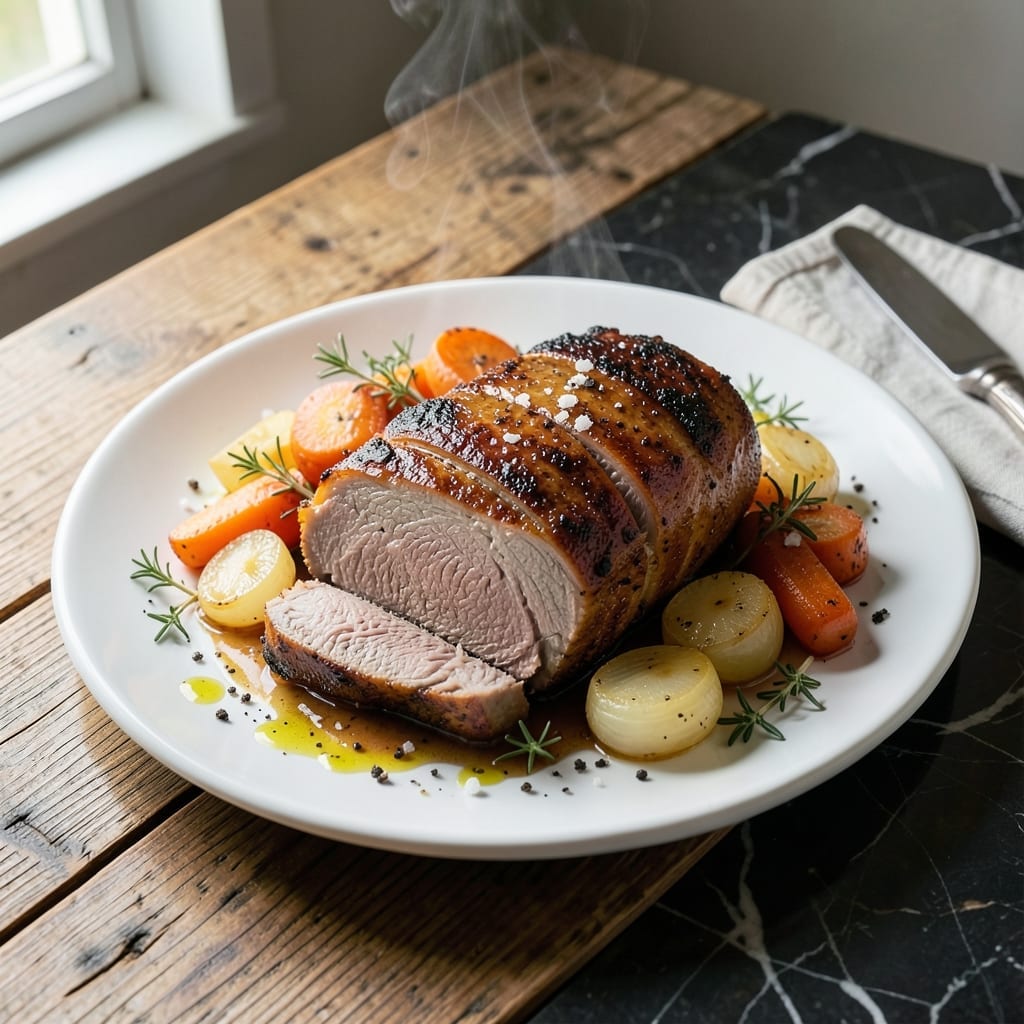
There’s a reason bottom blade pot roast remains a timeless favorite—it transforms tough cuts into fall-off-the-bone tenderness with minimal effort. This one-pot method locks in rich, beefy flavor while vegetables soak up the savory juices.
The key is low, slow cooking. A 3-hour braise at 325°F breaks down the connective tissue, yielding meat so tender it nearly melts. Aromatic herbs and a splash of red wine deepen the sauce into a velvety finish.
Every bite delivers layers of beefy depth, caramelized vegetables, and a gravy so thick you’ll want to sop it up with crusty bread. The entire dish comes together in a single pot, making cleanup as simple as the process.
Serve this hearty meal with mashed potatoes or buttered noodles to complete the experience. The results are worth every minute.
Ingredients for Bottom Blade Pot Roast
Pantry staples and a well-marbled roast make this dish shine.
| Ingredient | Amount | Notes |
|---|---|---|
| Bottom Blade Roast 🥩 | 2 ½ lb | Well-marbled, boneless preferred |
| Olive Oil 🫒 | 2 tbsp | Divided for searing and cooking |
| Kosher Salt 🧂 | 1 ½ tsp | Diamond Crystal preferred |
| Black Pepper 🌶️ | 1 tsp | Freshly ground |
| Yellow Onions 🧅 | 2 whole | Large, quartered |
| Carrots 🥕 | 3 whole | Peeled, cut into chunks |
| Celery Stalks 🌿 | 3 whole | Cut into 2-inch pieces |
| Garlic Cloves 🧄 | 5 cloves | Smashed, peeled |
| Dry Red Wine 🍷 | 1 cup | Bold, dry variety |
| Beef Broth 🥩 | 2 cups | Low-sodium preferred |
| Tomato Paste 🍅 | 2 tbsp | For depth of flavor |
| Fresh Thyme Sprigs 🌿 | 3 whole | Tied with kitchen twine |
| Fresh Rosemary Sprigs 🌿 | 2 whole | Tied with kitchen twine |
| Bay Leaves 🍃 | 2 whole | Dried, for aromatic base |
The bottom blade roast is the star. Look for good marbling—that fat melts into the meat during the long braise. Costco has great options, but most grocery stores carry it too (sometimes called flat iron roast). Don’t trim the fat—it adds flavor. The onions, carrots, and celery form the classic mirepoix base that builds the sauce’s depth.
No red wine? Extra beef broth with a tbsp of balsamic vinegar works in a pinch. Dried herbs can replace fresh—use one-third the amount. If you’re short on time, pre-cut mirepoix from the store saves chopping. The tomato paste might seem like a small amount, but it packs a punch. Squeeze tubes from Trader Joe’s are perfect for this.
This actually tastes better the next day. Store in the fridge for up to 4 days, or freeze for 3 months. The fat solidifies when chilled, making it easy to skim off before reheating. Always reheat gently to keep the meat tender.
Why You’ll Love This Recipe
- I’ll be real: this one pot feeds six, with leftovers that taste even better the next day.
- Set It and Forget: That first sear in olive oil takes five minutes, then the oven does all the work while I fold laundry.
- Feeds the Crew: I’ll be real: this one pot feeds six, with leftovers that taste even better the next day.
- Budget Hero: Bottom blade costs half of ribeye but still delivers that rich, beefy flavor I crave.
Step-by-Step Instructions for Bottom Blade Pot Roast
This one-pot method delivers melt-in-your-mouth tenderness with minimal effort.
Step 1: Sear the Roast for Deep Flavor
Pat the 2.5 lb Bottom Blade Roast completely dry with paper towels. Season all sides generously with the 1.5 tsp Kosher Salt and 1 tsp Black Pepper. This creates a flavorful crust and ensures proper browning.
Heat 1 tbsp Olive Oil in a large Dutch oven over medium-high heat until shimmering. Add the roast and sear for 4-5 minutes per side until deeply browned. Don’t move it until it releases easily from the pan—this builds the fond that’ll flavor your sauce.
Step 2: Build the Aromatic Base
Remove the roast and set aside. Add the remaining 1 tbsp Olive Oil to the pot, then toss in the 2 whole Yellow Onions, 3 whole Carrots, and 3 whole Celery Stalks. Cook for 5 minutes until the vegetables start to soften and brown slightly.
Add the 5 cloves Garlic Cloves and 2 tbsp Tomato Paste, stirring constantly for 1-2 minutes until the tomato paste darkens slightly. This step develops the rich, complex base for your braising liquid.
Step 3: Deglaze and Add Liquids
Pour in the 1 cup Dry Red Wine, scraping up all the browned bits from the bottom of the pot with a wooden spoon. Let it simmer for 2-3 minutes until reduced by about half. This deglazing step captures all that caramelized flavor.
Add the 2 cups Beef Broth, then return the roast to the pot. Tuck the 3 whole Fresh Thyme Sprigs, 2 whole Fresh Rosemary Sprigs, and 2 whole Bay Leaves around the meat. The liquid should come about halfway up the roast.
Step 4: Braise to Tenderness
Bring the liquid to a simmer, then cover the pot and transfer it to a 325°F oven. Braise for 2.5 to 3 hours, turning the roast halfway through. You’ll know it’s done when the meat pulls apart easily with a fork.
The vegetables should be fork-tender and the braising liquid reduced to a rich, flavorful sauce. If the liquid reduces too much during cooking, add a splash of water or additional beef broth to maintain the level.
Step 5: Rest and Serve
Carefully transfer the roast to a cutting board and tent with foil. Let it rest for 15 minutes before slicing or pulling apart. This allows the juices to redistribute throughout the meat.
Skimming excess fat from the braising liquid gives you a cleaner sauce. Serve the roast with the vegetables and plenty of the cooking liquid spooned over the top. The meat should be fall-off-the-bone tender with a rich, deeply flavored sauce.
Pro Tips For Making Bottom Blade Pot Roast
- Sear It Hard: I learned this the hard way—get your pan screaming hot before adding the roast, and don’t touch it for at least 3-4 minutes per side to develop a proper crust on that bottom blade.
- Salt the Roast Overnight: Pat the roast dry, then salt it generously (about 1 tsp per pound) and let it sit uncovered in the fridge for 12-24 hours. Sounds weird, but it works: the salt penetrates deeply and seasons the meat all the way through.
- Don’t Crowd the Onions: Slice those yellow onions thick—about ½ inch—and spread them in a single layer under the roast so they caramelize instead of steam. I used to dump them all in a pile and ended up with soggy, sad onions.
- Use a Meat Thermometer: Bottom blade is forgiving, but pull it at 195-200°F for that perfect fall-apart texture. After overcooking a few to dryness, I finally bought a thermometer and never looked back.
Pro Cooking Tips for This Dish
Perfect Searing Technique
Pat the roast completely dry with paper towels before seasoning—this ensures a proper sear. I use Diamond Crystal kosher salt for even coverage. Heat your Dutch oven until the oil shimmers, then add the meat without crowding the pan.
Deglaze Thoroughly
After searing, pour in the 1 cup red wine and scrape aggressively with a wooden spoon to release all the browned bits. This fond is pure flavor. Let it reduce by half before adding the 2 cups beef broth for maximum depth. 💡
Herb Placement Matters
Tuck the thyme, rosemary, and bay leaves under the liquid and around the meat. This ensures their aromatic oils infuse the entire dish. I tie my herbs with kitchen twine for easy removal later.
Oven Temperature Control
Maintain a steady 325°F throughout the braise. If your oven runs hot, check at 2 hours and adjust. The liquid should gently simmer, not boil—boiling makes the meat tough.
Resting is Non-Negotiable
Let the roast rest for 15 minutes before slicing. This allows the juices to redistribute. I tent with foil and place on a warm spot on the stove. Skim fat during this time for a cleaner sauce. 🔥
Check for Doneness
The meat should pull apart easily with a fork. If it resists, return to the oven for 30 more minutes. The internal temp should reach 195-200°F for that fall-apart texture.
Nutrition Facts
Frequently Asked Questions
Can I use a slow cooker instead?
Sear the meat first, then transfer everything to your slow cooker. Cook on low for 8 hours or high for 5-6 hours until fork-tender.
Why is my pot roast tough?
Likely the temperature was too high or cooking time too short. Braising requires low heat and 2.5-3 hours to break down collagen. Boiling toughens the meat.
What can I substitute for red wine?
Use 1 cup beef broth with 1 tbsp balsamic vinegar for acidity. Non-alcoholic red wine also works. Avoid white wine—it lacks the needed depth.

- 4C Bread Crumbs Meatballs Recipe: Crispy Crust and Juicy Centers - September 25, 2026
- 6 Oz Chocolate Chip Cookie Recipe: Perfectly Balanced Crispy Edges and Chewy Hearts - September 25, 2026
- 6-Inch Coffee Cake Recipe: Vanilla Bean Swirls and Buttery Streusel Topping - September 25, 2026